A small kind action can change someone's whole day. When you help, you make life easier, calmer, and happier for another person. Helping is something you can do when you learn online, when you play, and when you are with family or friends.
Helping means doing something kind or useful for someone else. You might pass a toy, say kind words, wait for a turn, or help clean up. These actions show responsibility. Responsibility means doing what is kind, safe, and needed.
Helping also builds a community. A community is a group of people who care for one another. Your family, your online class group, your play group, and your neighborhood can all be part of your community.
Help means doing something kind or useful for another person. Kindness means caring actions and caring words. Safe helping means helping in ways that do not put you or someone else in danger.
Sometimes helping is big, like telling a grown-up when someone is hurt. Sometimes helping is small, like picking up blocks after play. Small helpful actions matter a lot because they happen every day.
During online learning, helping can look gentle and simple. You can look at the screen, listen when someone else is talking, and wait for your turn. When you do that, you help everyone learn.
[Figure 1] You can also help by using kind words. You might say, "Your turn," "Good job," or "I can wait." If a classmate is talking, you can stay quiet and listen. If your teacher asks everyone to get ready, you can sit calmly and be prepared.
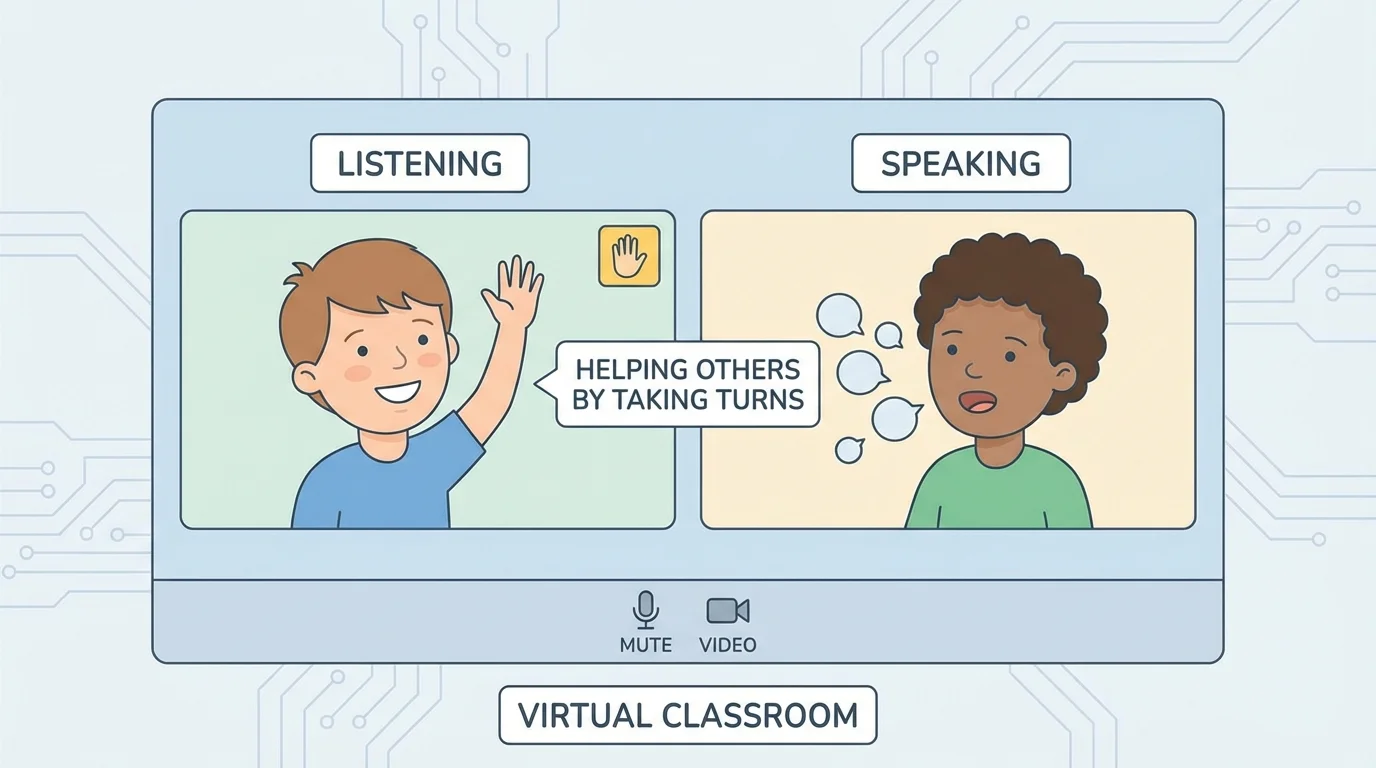
If someone cannot find a button or feels confused, you can say, "Let's ask a grown-up," or "It's okay." That is a caring way to help. You do not have to fix everything by yourself.
Online helping example
Step 1: You notice someone is speaking.
You keep your voice quiet and wait.
Step 2: You want to talk.
You raise your hand or wait for your turn.
Step 3: A friend looks upset.
You say, "You can do it," or ask a grown-up to help.
These actions help your group feel calm and fair. That is part of good civic engagement. For young children, civic engagement means joining in with caring actions that help people around you.
Play is full of chances to help. You can share toys, take turns, help put pieces together, or make space for someone to join a game. These are kind ways to include others.
[Figure 2] If someone drops crayons, blocks, or puzzle pieces, you can help pick them up. If someone feels sad because a tower fell down, you can say, "Let's build again." If someone is waiting, you can say, "Now it's your turn."
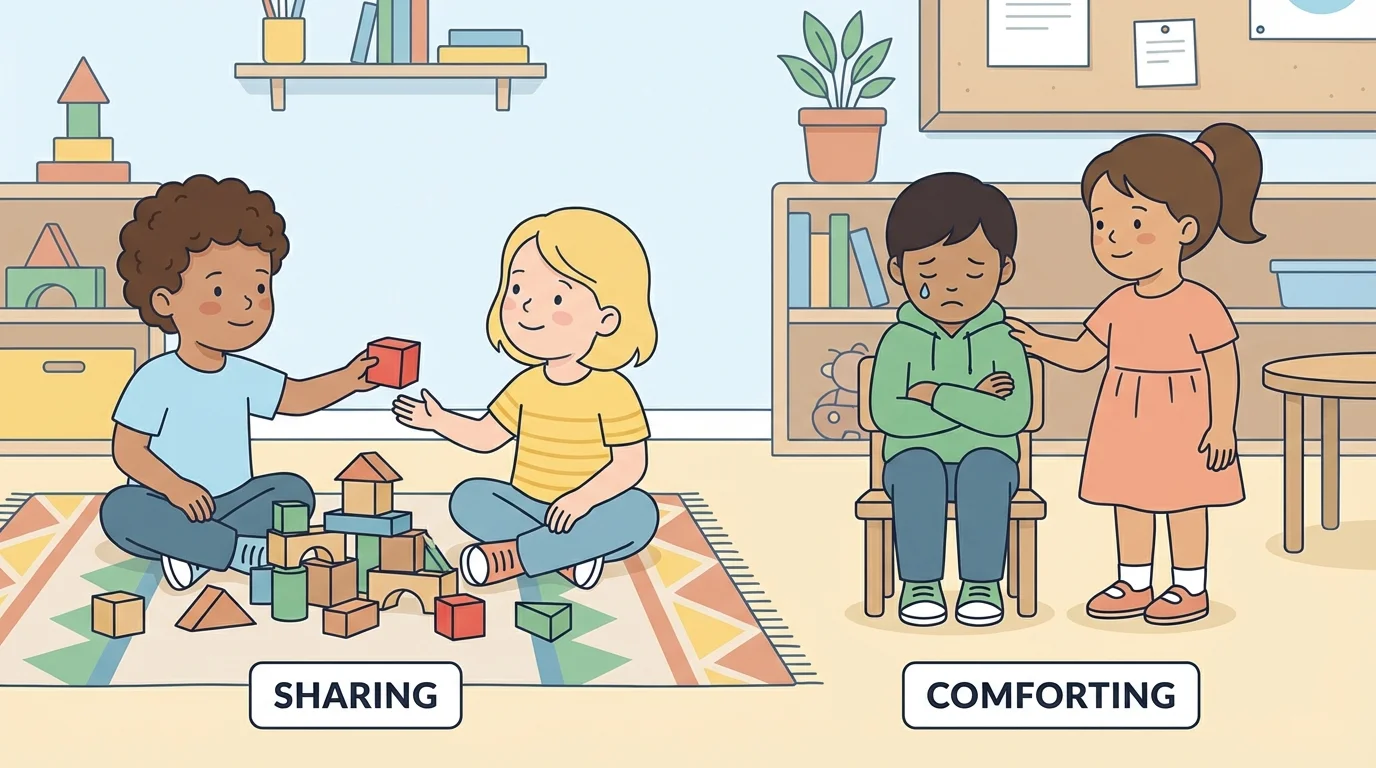
Helping during play does not mean you must give away everything or let others be unkind. Helping also means using fair rules. You can say, "We take turns," or "Hands are for gentle play."
Young children learn helping habits by seeing them again and again. When you practice sharing, waiting, and caring, those actions become easier every day.
Later, when you remember the scenes in [Figure 2], you can see that helping is not only about objects. It is also about feelings. Comforting, inviting, and being gentle are helpful actions too.
You can be a good helper when you learn to notice clues. A person may need help if they look sad, confused, frustrated, or hurt. They may cry, frown, stay very still, or say, "I can't do it."
[Figure 3] Sometimes the clue is in what happens. Toys may fall. A game may be too hard. A child may be left out. Someone may not know what to do next. When you notice these clues, you can stop and think, "Can I help in a safe way?"
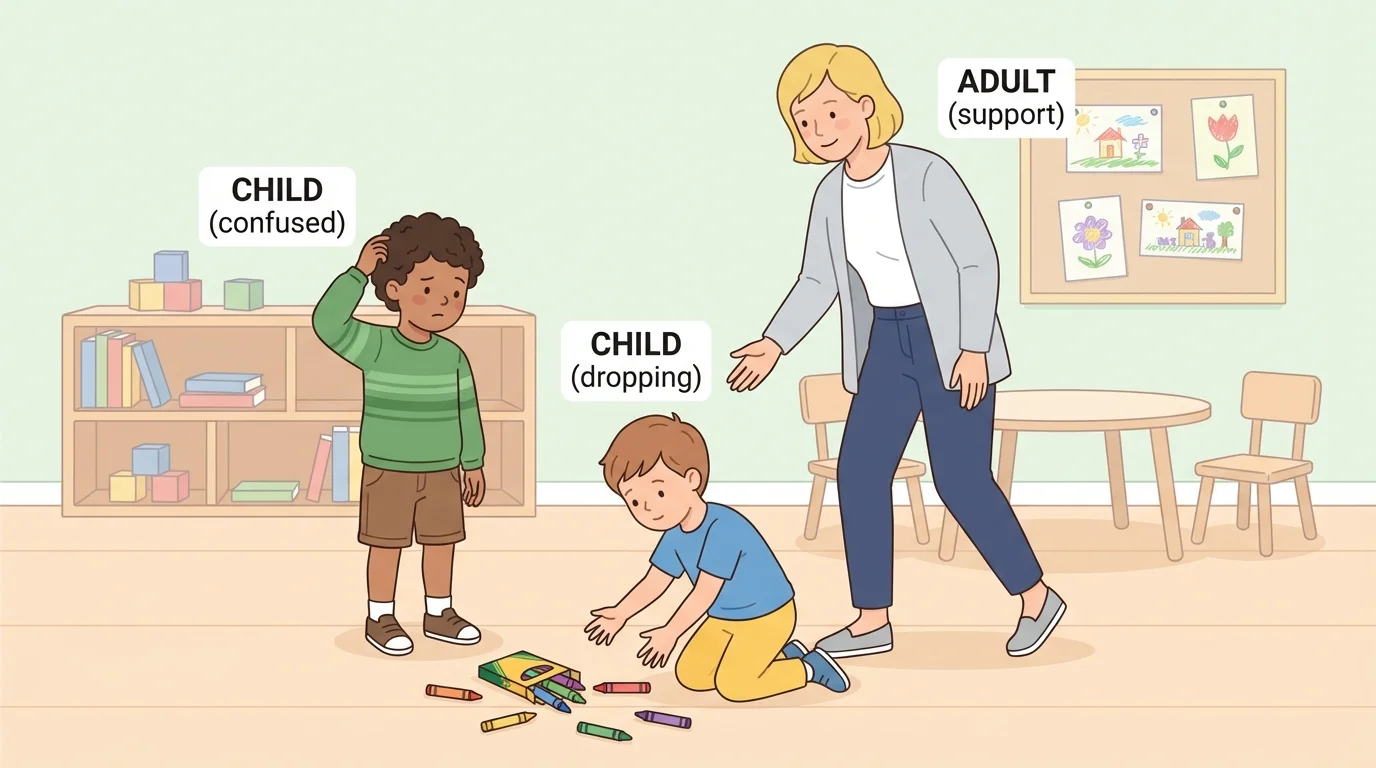
You can ask simple questions like, "Do you want help?" or "Are you okay?" If the answer is no, that is okay. Good helpers listen to what the other person wants.
Notice, think, help
First, notice a clue. Next, think about what safe kind action fits the moment. Then help in a small way, or get a trusted grown-up. This simple pattern helps you act with care.
As you can tell from [Figure 3], helpers use their eyes, ears, and hearts. They watch, they listen, and they care about how other people feel.
Safe helping is very important. Some problems are too big for a small child to fix alone. If someone is hurt, very upset, lost, or in danger, get a trusted grown-up right away. That is one of the best ways to help.
A trusted adult might be a parent, caregiver, teacher on the screen, coach, or another safe grown-up. Asking for help is not giving up. It is a smart and safe choice.
You can remember: help with small things, and get a grown-up for big things. Picking up toys is a small thing. Someone falling hard and crying is a big thing. A child may need a grown-up's help with a login problem during online class too.
"Kind hands, kind words, and safe choices make a strong helper."
Being safe is part of caring for your community. Good helpers do not push, grab, or shout. They stay gentle and calm as much as they can.
Sometimes words are the help someone needs most. You can say, "I can help." "You can have a turn." "Let's do it together." "Are you okay?" "Let's ask a grown-up." These short sentences are easy to use and very powerful.
Kind words help people feel seen and included. They can make online learning smoother and play more peaceful. Even saying "thank you" is part of a caring group.
When people help each other, everyone feels safer, welcome, and ready to learn or play. Helping builds trust. It teaches fairness and care. It shows that each person matters.
When people do not help, others may feel lonely, upset, or left out. Toys may stay messy. Games may become unfair. Online learning may feel noisy and confusing. Helpful actions make daily life work better.
Every time you share, wait, comfort, clean up, or ask a grown-up for support, you practice being a caring member of your community. That is how strong communities grow—one small helpful action at a time.
