Who helps you learn how to zip a coat, wash hands, say kind words, or try something new? You are learning all day long. You learn when you play, talk, listen, move, and rest. Many people and places help you grow strong in your body, your mind, and your feelings.
A trusted adult is a grown-up who cares for you, helps you, and works to keep you safe. Some trusted adults are at home. Some are in your community. Some help you online, like an online teacher on a video call. Different helpers do different jobs, as shown in [Figure 1], and each one can help you learn and grow in a special way.
Your family may help you every day. A parent, grandparent, aunt, uncle, foster parent, or caregiver might read with you, help you get dressed, show you how to clean up toys, or comfort you when you feel sad. These adults help you learn daily routines and responsibility, like putting shoes away and washing hands before eating.
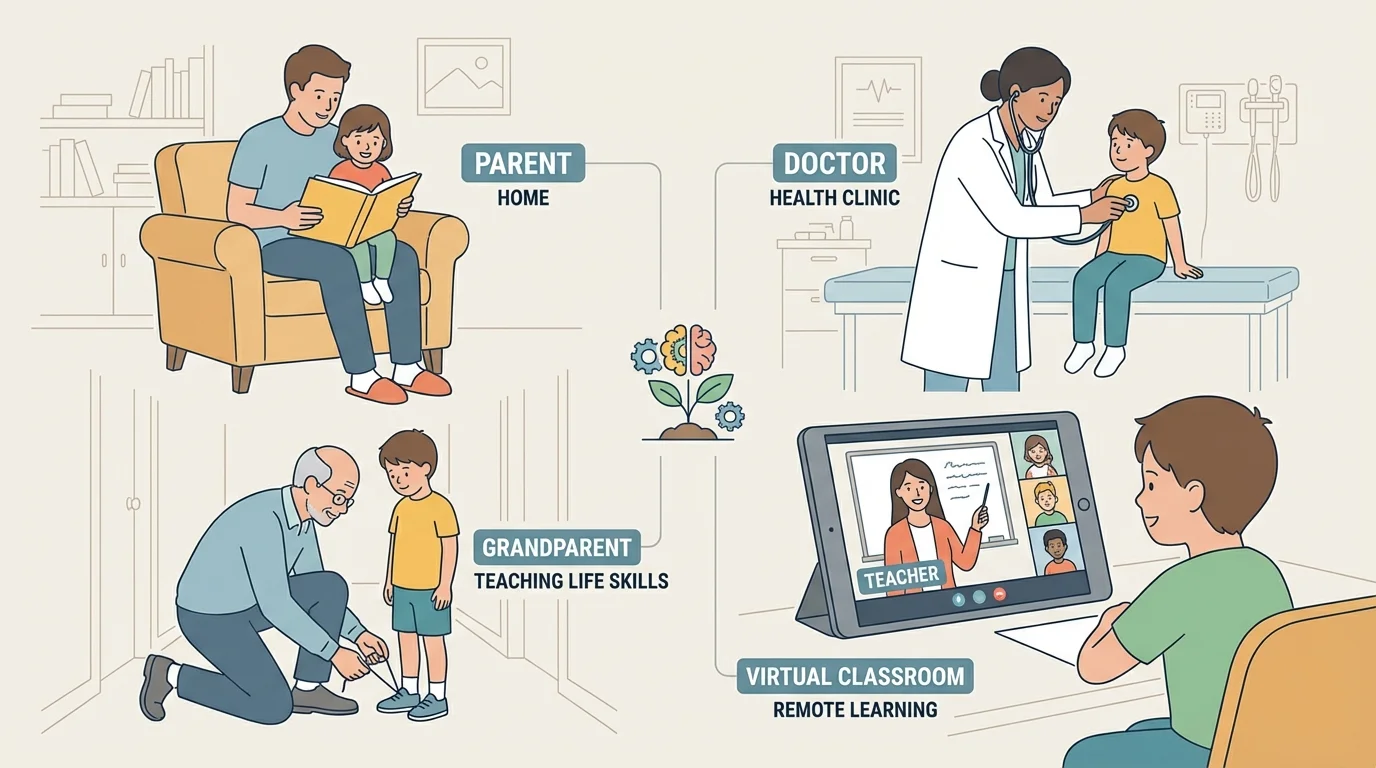
Other adults help too. A doctor helps keep your body healthy. A coach helps you move and practice. A librarian helps you find books and stories. A neighbor or community helper may show kindness and teach safe habits. An online teacher can sing songs, read stories, and help you listen, speak, and follow directions.
Learn means to find out or practice something new. Grow means your body, mind, and feelings become stronger over time. A community is the people and places around you that help you live, play, and learn.
Although these adults have different roles, they have something important in common: they care. Later, when you need help calming down, trying a new food, or learning a new rule, think about the caring adults we saw in [Figure 1].
You do not learn in only one place. Learning happens in many safe places, and [Figure 2] shows some of them. Your home is a big learning place. At home, you can learn to brush teeth, use words, help set the table, put dirty clothes in a basket, and rest when your body is tired.
The library is another helpful place. You can listen to stories, look at pictures, and explore books. A park or playground helps you learn to climb, balance, wait for a turn, and play safely. A community center, place of worship, club, or class can help you make art, sing, dance, or join a group with caring adults nearby.
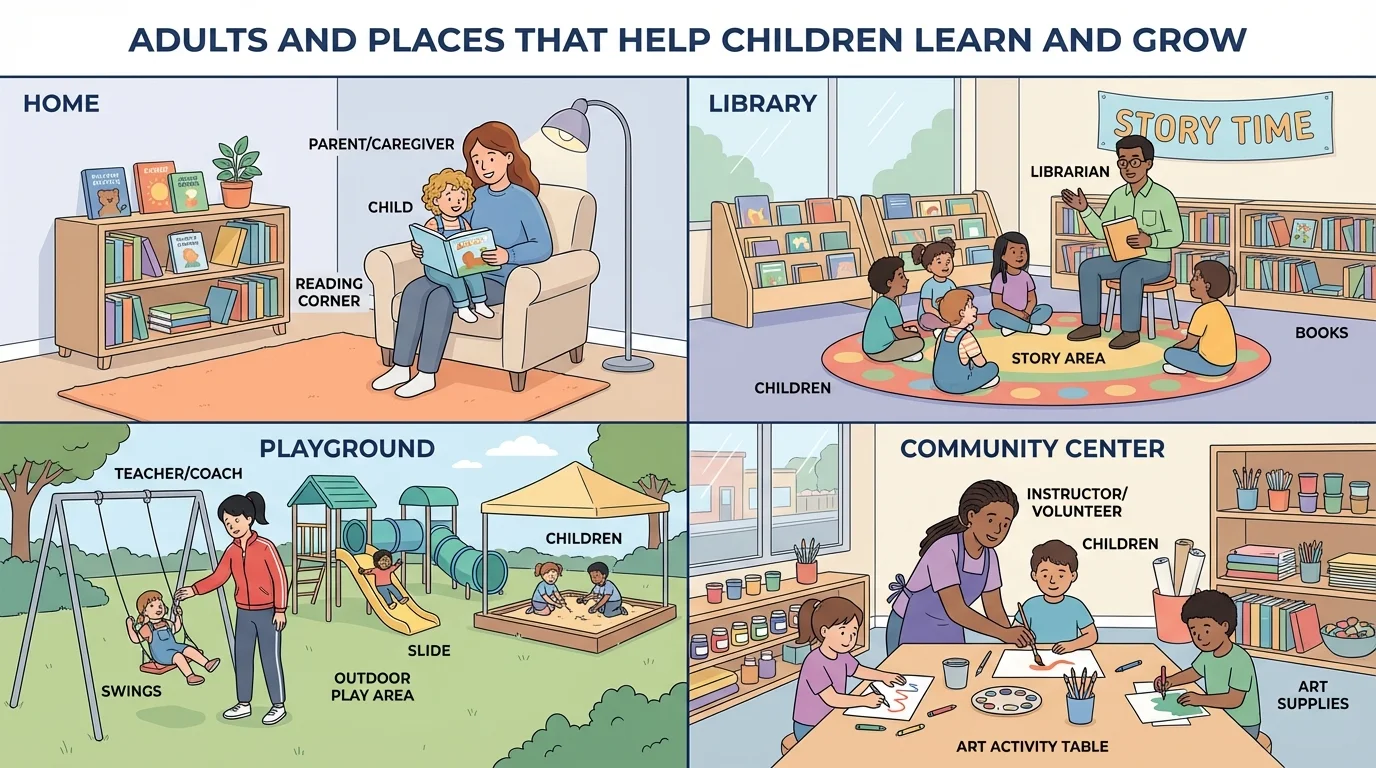
Some places help your health. A doctor's office helps you learn how to keep your body healthy. A kitchen helps you learn simple food routines, like washing fruit with an adult. Even a quiet reading corner helps you grow because calm spaces help your brain and body rest.
Safe online places can help too. A child-friendly video lesson, a story time on a screen with a caregiver nearby, or a music class online can be learning places. You still need a trusted adult close by to help you stay safe and know what is okay to watch and hear.
Your brain grows when you repeat helpful routines. Small things like hearing stories, singing songs, and putting toys away help build learning every day.
When you think about your own day, you may notice many places helping you at once. The home corner in [Figure 2], the library, and the play space each teach different things, but they all help you practice being curious, safe, and kind.
Sometimes you need help, and that is okay. Asking for help is a smart choice. It can be easy to remember simple steps, and [Figure 3] lays them out in order. First, notice what you need. Maybe you feel scared, hurt, confused, or frustrated. Next, find a trusted adult. Then, use simple words.
Simple help words
Step 1: Look for a helper.
Find a parent, caregiver, teacher on your screen, coach, or another caring adult you know.
Step 2: Say what is wrong.
You can say, Help me, please. or I feel sad. or I can't do this yet.
Step 3: Stay close and listen.
The adult can help you solve the problem, get safe, or feel calm.
You can ask for help with many things: opening a snack, tying shoes, cleaning a spill, feeling nervous on a video call, or getting ready for bed. When you ask, a helper can understand what you need faster.
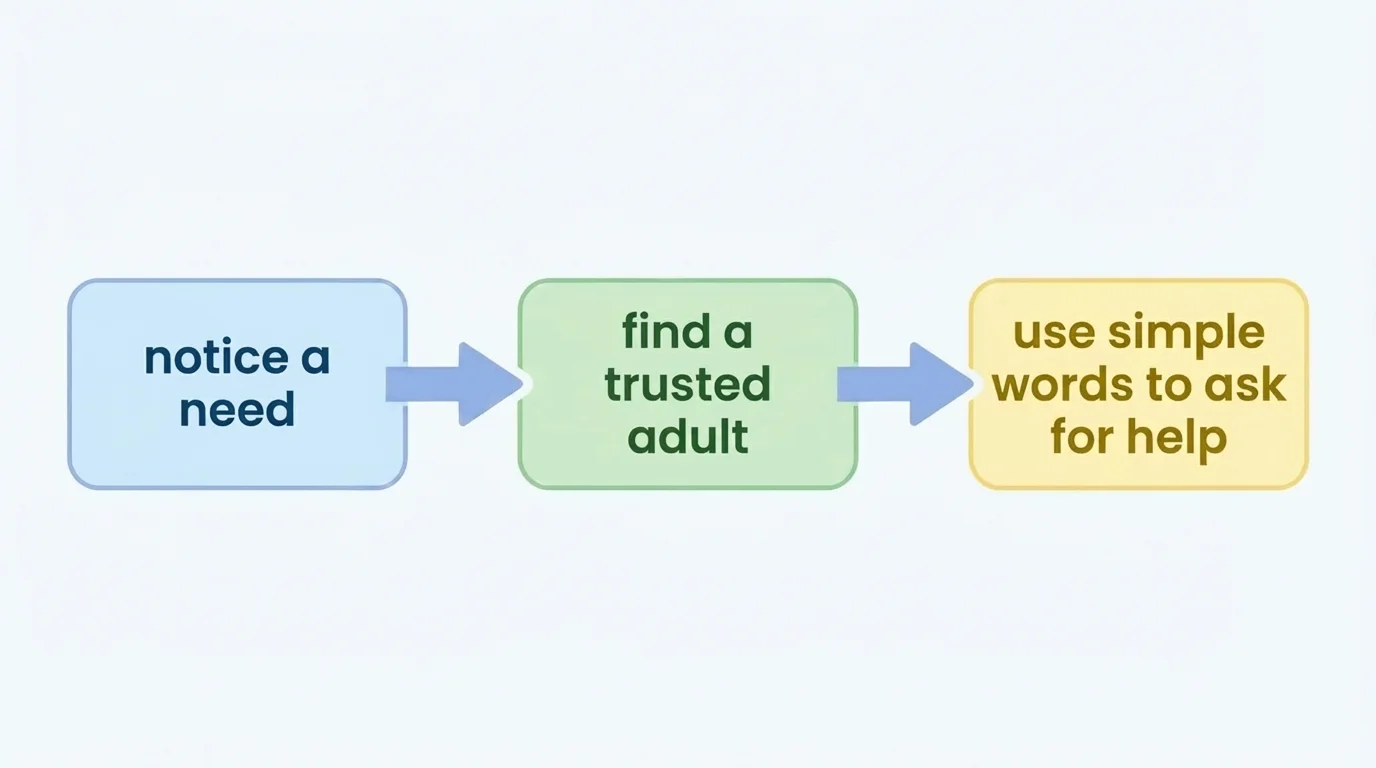
If you get lost, feel unsafe, or your body hurts, tell a trusted adult right away. If one adult does not hear you, tell another trusted adult. Keep telling until someone helps. The steps in [Figure 3] are useful for small problems and big problems too.
A safe helper listens to you. A safe helper tries to protect you. A safe helper speaks in a calm or caring way. A safe helper helps you when you are hurt, worried, or confused.
Some adults are nice, but not every adult is your helper. That is why it is important to know your own trusted adults. Your family can tell you who those people are. You can learn their names and remember them.
What makes a helper trustworthy
Trustworthy helpers pay attention, respect your feelings, and act to keep you safe. They help with real needs like food, rest, health, comfort, learning, and protection. They do not tell you to keep unsafe secrets.
If something feels wrong, you can move toward a trusted adult and use your words. You can say, No. You can say, I need my grown-up. You can say, Please help me. Learning these words helps you protect yourself.
You grow when you practice little things again and again. Putting toys away, washing hands, using kind words, trying a new food, waiting for a turn, and resting when tired are all ways you learn. Adults and places help you do these things every day.
When helpers and places work together, you feel more ready to try new things. A caregiver may read a story at home. A librarian may share more books. A coach may help you move your body. A doctor may help keep you healthy. An online teacher may help you sing, count, listen, and talk. All of these supports help build your confidence.
"Asking for help is a strong thing to do."
You are surrounded by people and places that can help you learn and grow. The more you notice them, the more you can use them. When you need support, look for a trusted adult, go to a safe place, and use your words.
