Have you ever tried to do something and thought, "That is hard"? That happens to everyone. When you learn something new, your hands, body, and brain need time to practice. The important part is this: even tiny steps count. When you notice those tiny steps, you can feel brave and keep going.
Sometimes you try to put on your shoes, zip your coat, draw a circle, or speak to someone on a video call. At first, it may feel slow or unsteady. You may need help. That is okay. Hard does not mean "I cannot." It often means "I am still learning."
When you keep trying, you build progress. Progress means getting a little better, little by little. You do not have to do something perfectly. You just have to keep growing.
Progress means moving forward or getting better a little at a time. Challenge means something feels hard and needs effort. Goal means something you want to do or learn.
Noticing progress helps you feel strong inside. It also helps you set small goals for what to do next. If you say, "I can put in one arm by myself," that is a real step toward "I can put on my coat."
Progress can look different for different children. As [Figure 1] shows, a child may begin with just a small try and later do more on the same task. Maybe today you stack two blocks, and later you stack five. Maybe you used to need a grown-up to hold your paper, and now you can draw by yourself.
Progress can look like trying again after a mistake. It can look like needing less help. It can look like staying calm a little longer. It can look like remembering one step all by yourself.
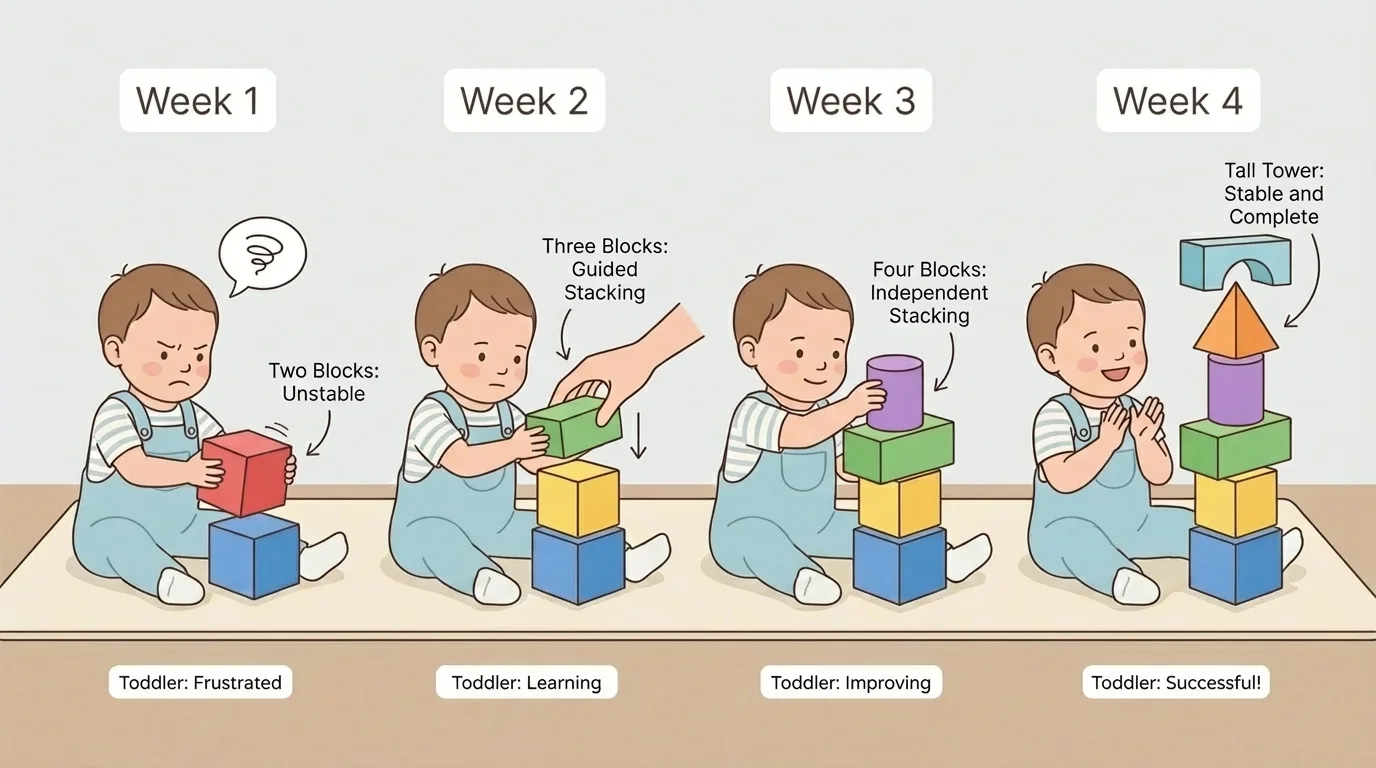
You may also notice progress in your feelings. At first, you might say, "I can't." Later, you might say, "Help me try." That is progress too. Learning is not only about what your hands do. It is also about how you keep going.
Your brain grows when you practice. Each time you try again, you help your brain learn what to do next.
Sometimes progress is very small. Maybe you hold the spoon more steadily. Maybe you remember where toys go when it is cleanup time. Small steps matter because many small steps become big growth.
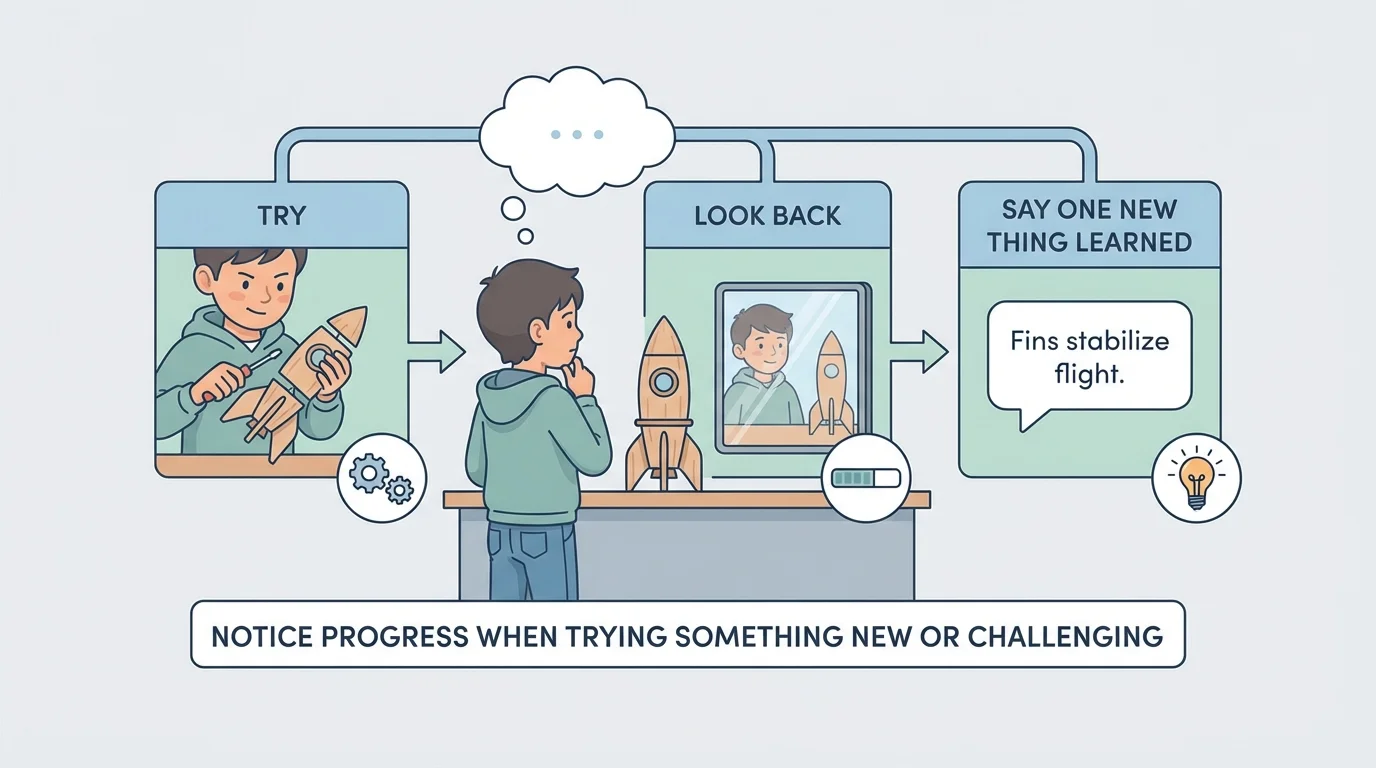
There is a simple goal-setting habit you can use every day. As [Figure 2] shows, you can stop, look back, and say one new thing you did. This helps you see your own growth instead of only looking at what is still hard.
Step 1: Stop when you finish or when you need a break.
Step 2: Look back and think, "What did I do?"
Step 3: Say one progress sentence: "I tried." "I did one part." "I needed less help." "I did it longer."
You can also ask a grown-up, "What did you notice?" A parent, caregiver, or teacher on a video call may say, "You held the crayon better," or "You remembered to greet me." Their words can help you notice what you did well.
Another good idea is to compare you to you, not you to someone else. Your progress is about what you can do now that felt harder before. That is what makes it special.
A simple progress check
Step 1: Try one hard thing
You try buttoning your shirt.
Step 2: Notice one change
Today you push one button through by yourself.
Step 3: Say it out loud
You say, "I did one button!"
That small win helps you want to practice again.
When you notice little wins, you are more ready to keep working tomorrow. That is how little goals lead to bigger goals later.
Many home activities are full of chances to notice progress. You might learn to wash your hands, pour water carefully, put toys in a basket, or join an online music class and wave hello. Each one can start hard and become easier with practice.
As [Figure 3] illustrates, suppose you are learning to put on shoes. First, you find the shoes. Next, you put one foot in. Later, you can pull the shoe on by yourself. That is progress. Or maybe you are learning to speak during a video call. First, you sit and watch. Next, you wave. Later, you say, "Hi." Those are all important steps.
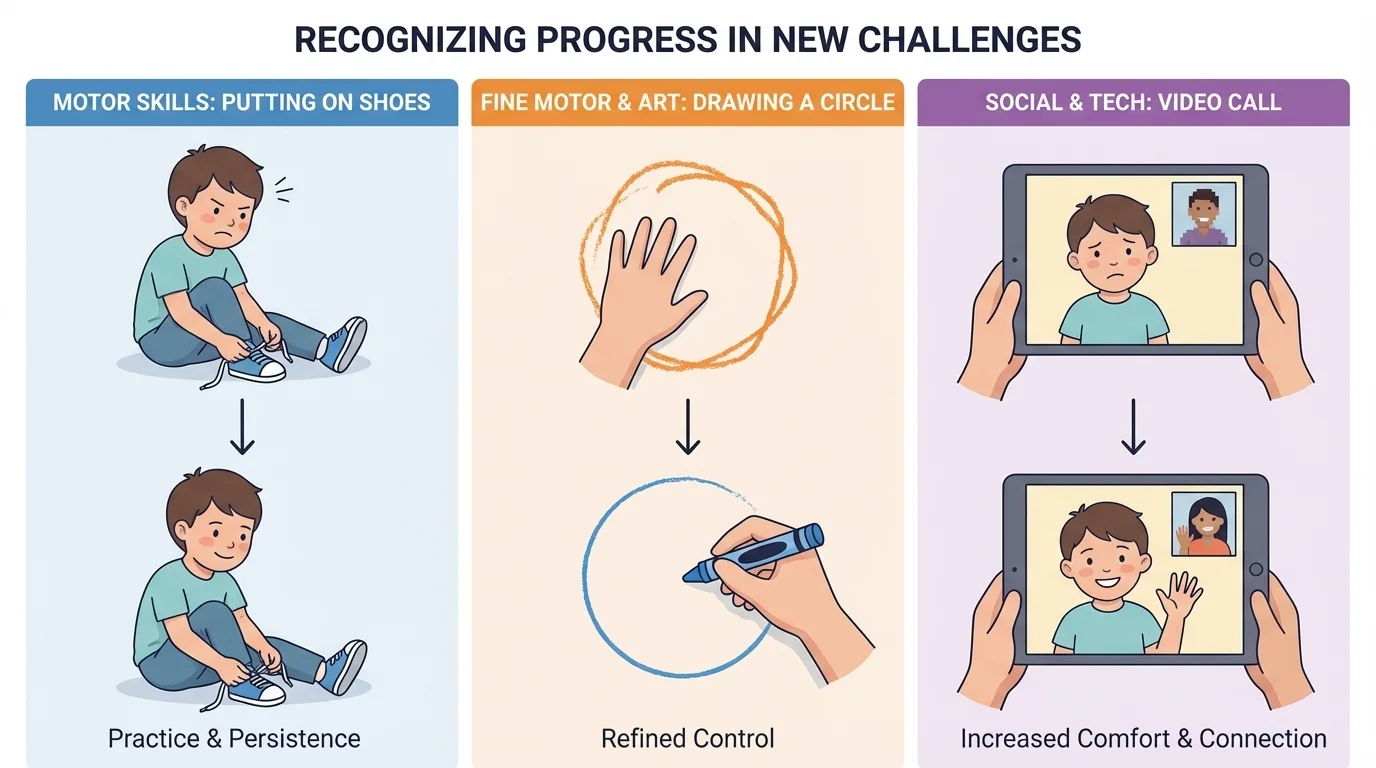
Drawing is another good example. First, your lines may go all over the page. Later, you can make a line, then a circle, then a face. If we look back at the growth in [Figure 1], we can see the same idea: practice changes what you can do.
Cleanup time also shows progress. Maybe at first you need reminders for every toy. Later, you remember where blocks go. Then you clean up before someone asks. That helps your home and shows responsibility. Responsibility means taking care of your things and actions.
When something is hard, your words matter. You can say, "I am learning." You can say, "I can try again." You can say, "Can you help me with the first part?" Kind words help your body stay calmer and your mind stay open.
If you make a mistake, that does not erase your progress. Mistakes are part of learning. A spilled drink, a crooked line, or a missed wave on a call does not mean you failed. It means you are practicing.
"I am still learning."
You can use a calm plan: take a breath, ask for help, then try one more time. The self-check steps from [Figure 2] help here too. Stop, look back, and notice even one thing that went better.
Noticing progress helps you now, and it helps you later too. When you learn to see your small steps, you become more ready for bigger things. A child who notices, "I can clean up two toys," can later notice, "I can clean up the whole play area."
This also helps you be part of your community. At home, your community may be your family. In clubs, playgroups, sports, faith groups, or online activities, your community is the group you belong to. When you keep trying, listen, and do your part, you help the group.
You do not need giant steps. You just need the next step. Today it might be trying. Tomorrow it might be doing one part alone. Soon, you will be able to look back and say, "I could not do that before, but now I can do more."
