Look around a classroom and you will notice something amazing: no two children are exactly the same. One child may have brown eyes, another may have blue eyes, and another may have dark brown eyes that almost look black. One child may be great at drawing, while another is great at running fast, telling stories, or helping friends. These special things help make each person one of a kind.
Every person has traits that make them special, as [Figure 1] shows. Traits are things about us, such as eye color, hair color, height, the things we enjoy, and some of the things we are able to do. You may like to sing. Someone else may like to build with blocks. Another child may enjoy reading books about animals. These are all part of who we are.
A person's individuality means the special mix of qualities that makes that person different from everyone else. Individuality can include the way a person laughs, the food they enjoy, the language they speak at home, or how they solve problems. Even twins can have their own individuality.
Some things we notice right away are outside traits. We can often see eye color, hair style, or whether someone wears glasses. Other traits are inside traits. These include being patient, curious, brave, gentle, or creative. Both outside traits and inside traits matter.
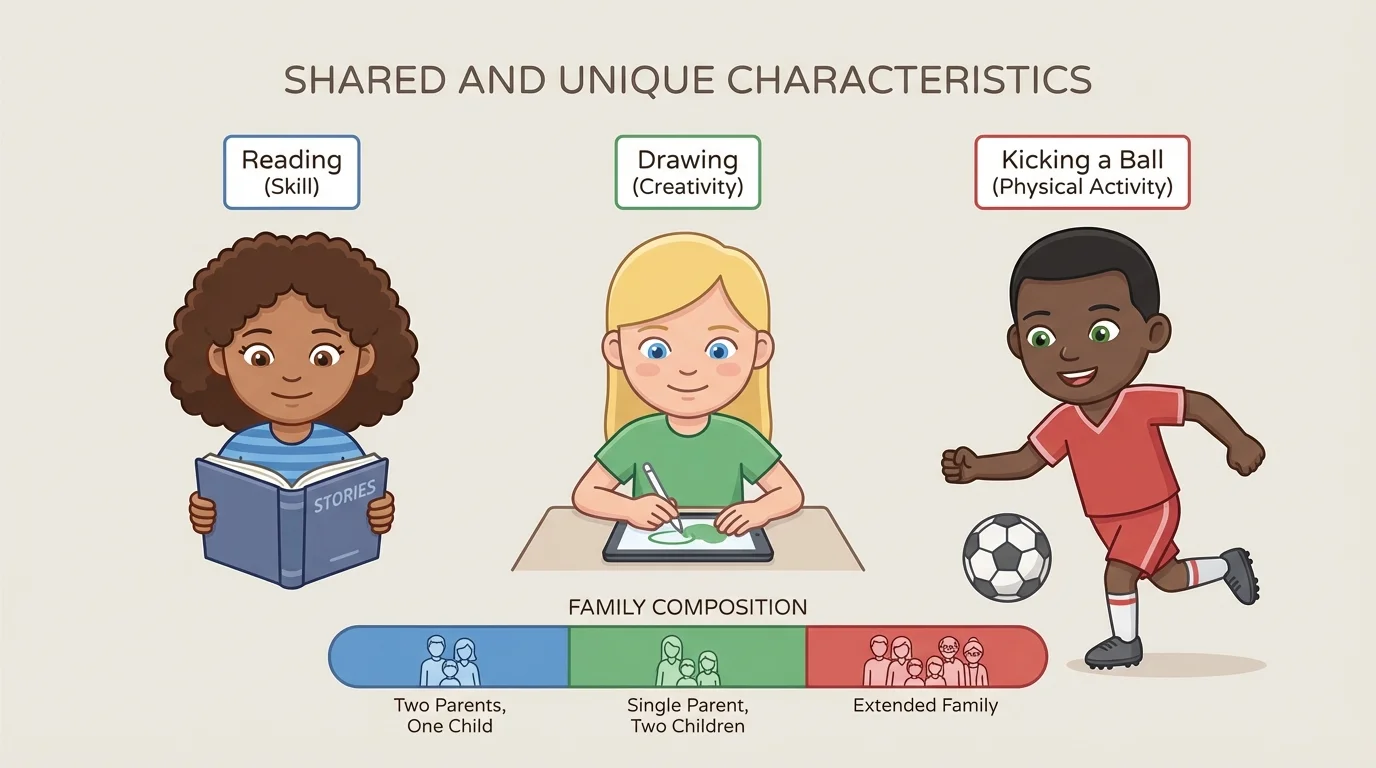
Traits are features or qualities of a person.
Ability is something a person can do.
Individuality is what makes one person different and special.
Abilities can be different from person to person. One child may be able to jump high. Another may be able to count quickly. Someone may be a strong listener. Another may need extra help with some tasks but may be very good at others. Everyone has strengths, and everyone is still learning.
Even though each person is unique, people are also alike in many ways. We are all people. We all have feelings. We all need food, water, and care. We all need kindness. Many children go to school, play games, and learn new things every day.
Children may share the same eye color, the same favorite color, or the same birthday month. Two classmates might both love dogs. Three students might all enjoy painting. Some children in a class may speak the same language at home. Similarities help people connect and become friends.
We can also feel the same emotions. We may all feel happy at a birthday party, nervous on the first day of school, or proud when we finish a hard job. Knowing that others have feelings like ours helps us care about them.
People can look different on the outside and still have many things in common. Two children may have different hair, different families, and different favorite foods, but both may love to laugh and learn.
When we notice ways people are alike, we can remember that everyone belongs. No one should be left out because of how they look, what they can do, or where their family comes from.
People can differ from one another in many ways, and [Figure 2] shows one important example: family composition. Family composition means who is in a family. Some children live with a mother and father. Some live with one parent. Some live with grandparents, foster parents, stepparents, older brothers or sisters, aunts, uncles, or adoptive families. All of these can be loving families.
People may also differ in the languages they speak, the foods they eat, the music they enjoy, and the holidays they celebrate. One family may eat rice often. Another may eat tortillas, soup, noodles, or bread. One family may celebrate Lunar New Year. Another may celebrate Diwali, Christmas, Eid, Hanukkah, birthdays, or special family reunions.
Differences can also include abilities. A child may use a wheelchair. A child may wear hearing aids. A child may need more time to read. Another child may be able to explain ideas very clearly. These differences are part of life, and they do not make one person better than another person.
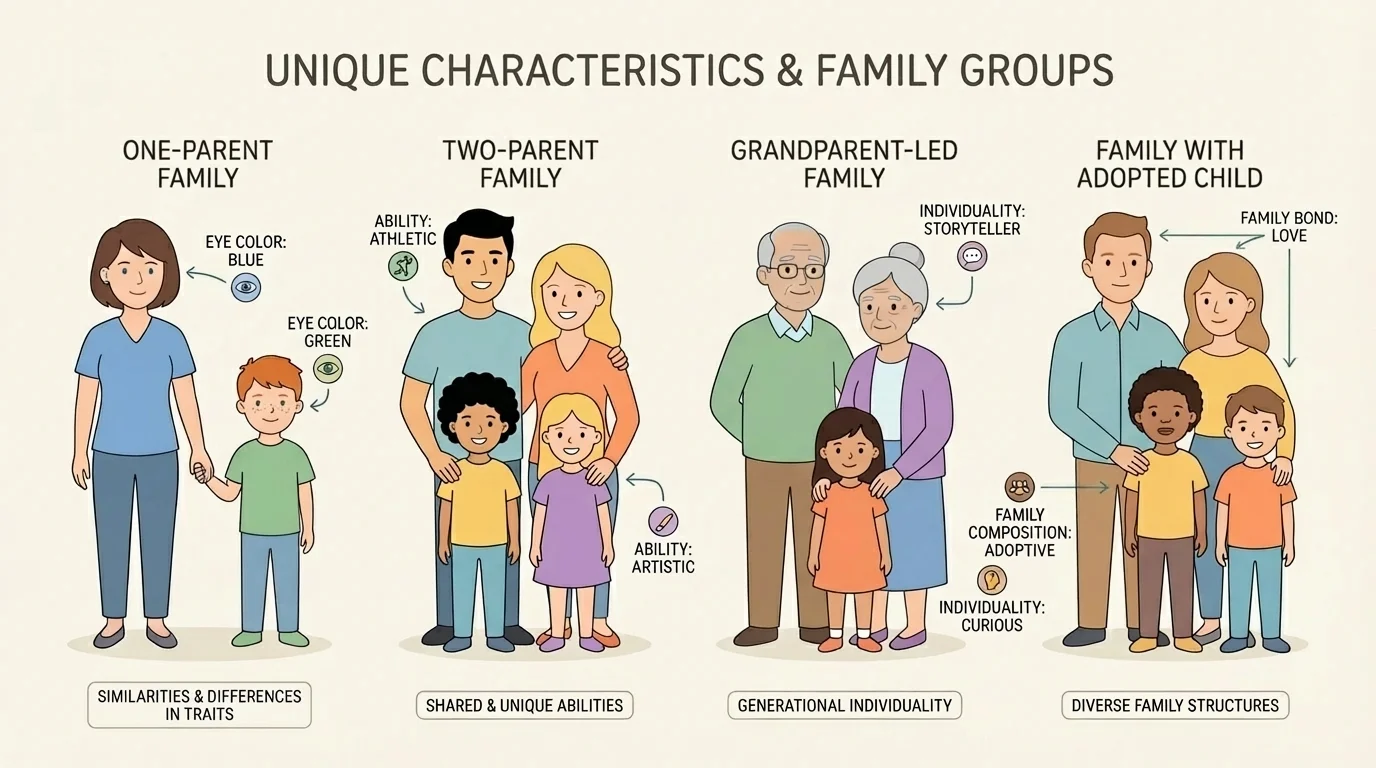
Some differences are easy to see, and some are not. You can often see someone's hair color, but you cannot always see if a person is shy, worried, or very thoughtful. That is why it is important to listen and learn about people instead of making guesses.
Different does not mean wrong. People can have different homes, traditions, clothes, foods, abilities, and ideas. These differences help make communities interesting and strong. We learn new things when we listen to people whose lives are not exactly like our own.
We saw in [Figure 1] that children can look and act differently. Those differences are normal and important. We also saw in [Figure 2] that families can be organized in different ways, and each family can give love, care, and support.
The United States is made of many families from many places, and [Figure 3] shows this idea in a community setting. Some families have lived in this land for a very long time, including Native American families and nations with rich traditions and histories. Other families came from places around the world, bringing languages, stories, songs, foods, beliefs, and celebrations.
Because of this, life in the United States includes many traditions. People may hear different music styles, taste foods from many cultures, and learn customs from neighbors and friends. Families have helped shape neighborhoods, schools, towns, and the whole country.
History is full of families sharing what matters to them. Immigrant families brought recipes, crafts, and holidays. African American families passed down stories, music, faith, and strength through hard times and joyful times. Latino families, Asian American families, European American families, Native American families, and many others have all added to the country's life in important ways.
When families keep traditions, they help children know who they are. Traditions can be big, like a holiday celebration, or small, like a special meal on Sunday, a song at bedtime, or visiting relatives every year. These family traditions connect the past to the present.
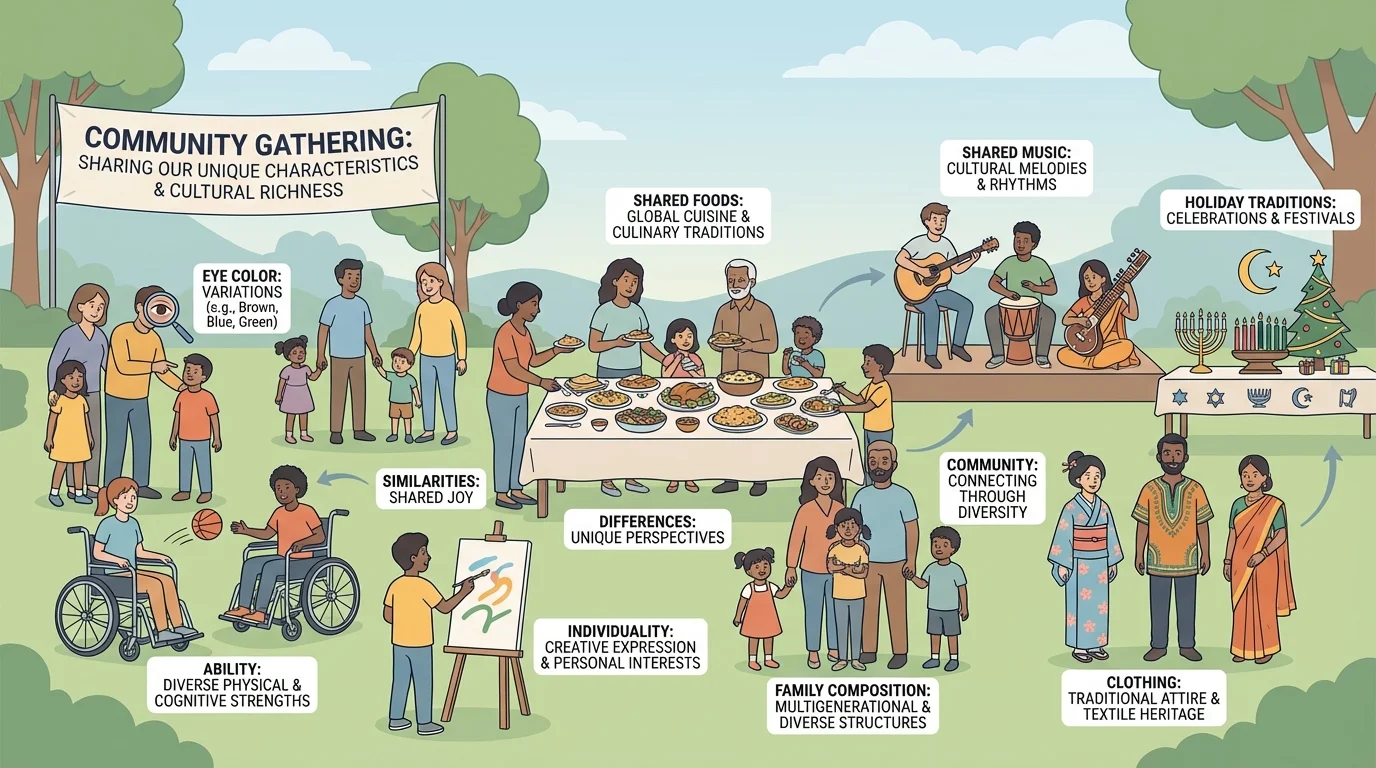
Example: How families shape a community
Step 1: A family brings a favorite food recipe from their culture.
Step 2: They share it at a school event or neighborhood gathering.
Step 3: Other families taste it, ask questions, and learn something new.
Step 4: The community becomes richer because people share traditions with one another.
This is one way families from many cultures have helped shape the United States.
A community grows stronger when many families share their traditions. Learning about family history helps children understand both themselves and others.
Knowing that people are alike and different helps us practice respect. Respect means treating people with care and kindness. It means using kind words, listening when others speak, and not making fun of someone because they are different.
Respect also means being proud of who you are. You can like your own hair, your own family, your own traditions, and your own abilities. At the same time, you can appreciate that other people may have different ways of living and celebrating.
If someone has a different family composition, that is okay. If someone speaks another language at home, that is okay. If someone learns in a different way, that is okay too. Being respectful helps everyone feel safe and welcome.
"We may be different, but we all belong."
When children ask kind questions and listen carefully, they learn more about the world. Respect helps friendships grow. It also helps classrooms and communities become fair places where everyone matters.
You are an important part of your family, your class, and your community. You have your own traits, your own abilities, and your own story. You may share some things with others, but there is no one exactly like you.
At the same time, you are connected to other people. You may share games, meals, songs, traditions, or feelings with them. This means you are both unique and part of a group. That is a wonderful thing.
When we learn about ourselves, we can also learn about others. When we notice similarities, we can make connections. When we notice differences, we can show respect. Together, families with many backgrounds and traditions help make the United States what it is today.
| About Me | Could Be Similar | Could Be Different |
|---|---|---|
| Eye color | Another person may have the same eye color | Another person may have a different eye color |
| Ability | Someone may also like to draw | Someone else may be better at singing or running |
| Family | Another child may live with parents too | Another child may live with grandparents or one parent |
| Traditions | Two families may celebrate birthdays | Families may celebrate different holidays and customs |
Table 1. Examples of how a child can be similar to others and different from others at the same time.
