Have you ever worn boots on one day and sandals on another? That happens because the world around us can change quickly. The sky, the air, the land, and the water help shape how people live. They help decide what we wear, what we eat, how we travel, and even some family traditions. Learning about these ideas helps us understand why families and communities are alike in some ways and different in others.
Weather is what the air and sky are like right now or today. It may be sunny, rainy, cloudy, windy, hot, or snowy. Weather can change from day to day, as [Figure 1] shows with different kinds of days in one place. A child might play outside on a sunny afternoon, but stay inside during a thunderstorm.
Weather affects individuals every day. On a rainy day, a person may carry an umbrella. On a cold day, a person may wear a coat, hat, and gloves. On a windy day, people may hold onto their hats or fly kites. Weather can change school, work, and play.
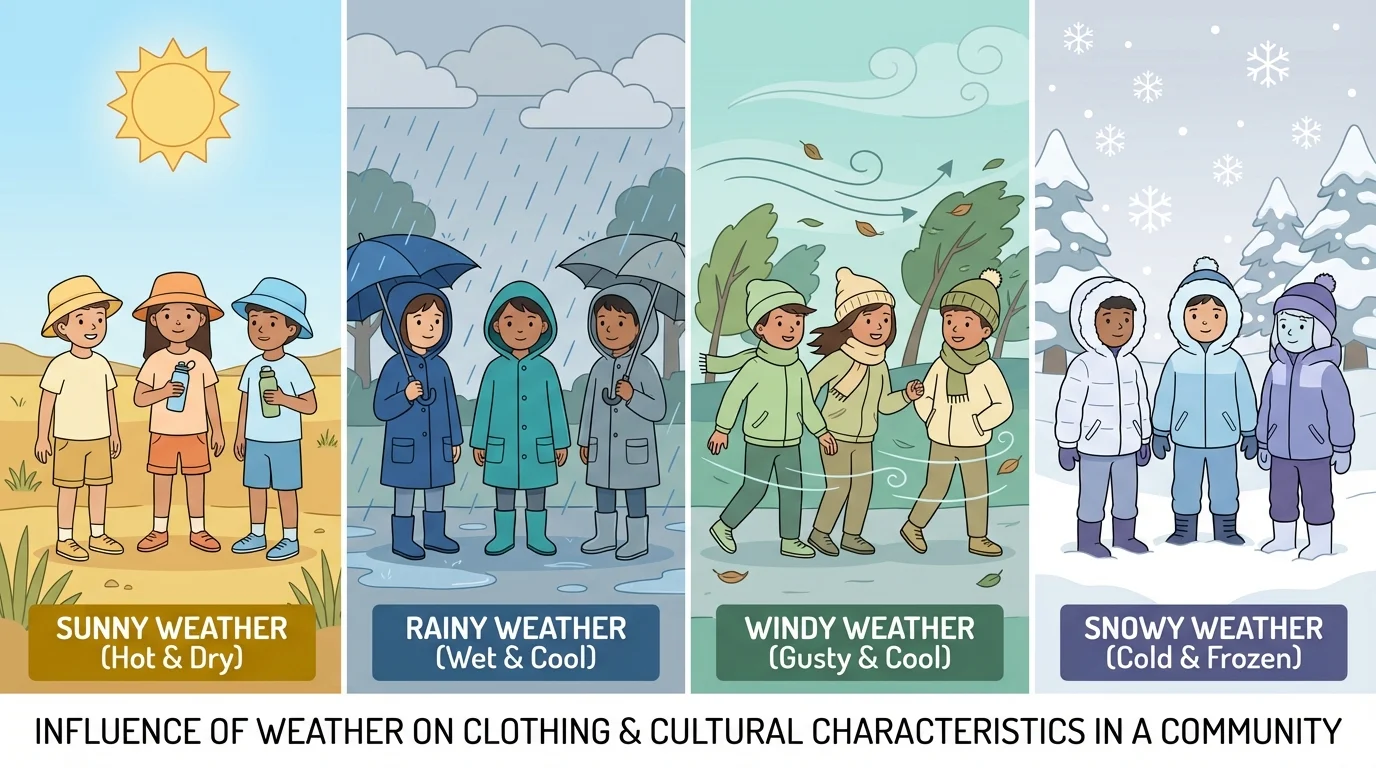
Families pay attention to weather to stay safe. If there is lightning, families go indoors. If snow covers the roads, people may drive slowly or stay home. If it is very hot, people drink water and rest in the shade. Weather helps people make smart choices.
Weather is what the sky and air are like at a certain time.
Climate is the kind of weather a place usually has over a long time.
Environment is the land, water, plants, animals, and natural features around a place.
Even when families live in the same town, one day of weather can change what everyone does. A soccer game may move indoors if rain falls. A picnic may happen on a cool, sunny day. These small choices show how weather touches everyday life.
Climate is different from weather. Weather is about today. Climate is about what usually happens in a place over many years. Some places usually stay warm. Some places are often cold. Some places get lots of rain, and some are very dry.
Climate helps families plan for life over time. In a cold climate, families may keep heavy blankets, warm coats, and heaters. In a hot climate, families may use fans, drink cool water, and look for shade. In a wet climate, people may build with roofs that help rain run off. In a dry climate, people may save water carefully.
Some places on Earth are snowy for much of the year, while others almost never see snow. Families in each place learn special ways to live well there.
As [Figure 2] shows, climate also affects what can grow. In rainy places, many green plants may grow well. In dry places, people may grow plants that need less water. This means food choices in families can be different from place to place.
The environment is everything around a place in nature. It includes hills, mountains, rivers, beaches, forests, fields, and deserts. It also includes plants and animals. The environment shapes a community and affects the different kinds of places where people live.
A family living near water may fish, boat, or visit the beach. A family living near rich soil may farm. A family in a forest area may see many trees and animals. A family in the mountains may travel on steep roads and wear warm clothes more often.
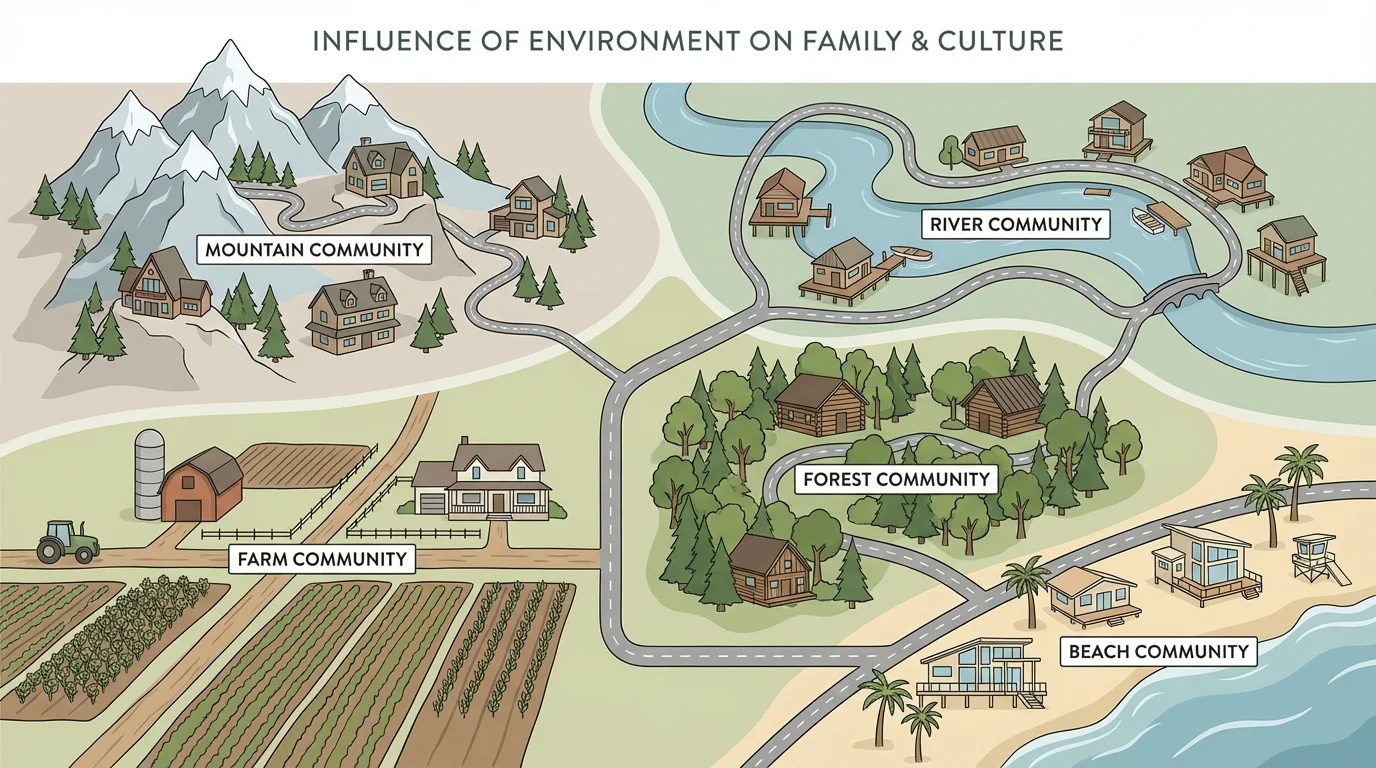
The environment can also affect buildings and travel. Near a river, people may build bridges. In snowy places, roads may need plows. In sandy places, people may use materials that keep homes cool. Communities use the resources that the land and water provide.
Place shapes life
People do not live the same way everywhere because places are not the same. Land, water, plants, animals, and weather patterns help decide what jobs people do, what homes look like, and what daily routines work best.
When we look at communities, we can ask simple geography questions: Is the land flat or hilly? Is there water nearby? Is it often hot or cold? The answers help us understand why families make certain choices.
People change their actions to fit the world around them. In cold weather, children may wear boots and build snow forts. In warm weather, they may wear shorts and play under shady trees. In rainy weather, people may jump in puddles with rain boots or stay inside and read.
Adults also change what they do. Farmers watch the rain and sun. Fishers watch waves and wind. Builders may stop work during storms. Drivers slow down on icy roads. We saw in [Figure 1] that the same community can look very different on different kinds of days.
Weather and environment can change transportation too. Some families walk on sidewalks in a city. Some use boats in places with abundant water. Some use trucks on farm roads. In snowy places, people may use sleds for fun or snow tools to move around safely.
Real-life example: A rainy day and a sunny day
Step 1: On a rainy day, a child wears a raincoat and boots.
Step 2: The family may bring an umbrella and drive slowly.
Step 3: On a sunny day, the same child may wear lighter clothes and play outside longer.
The weather changes, so people change their choices.
These choices are not random. They are ways people stay comfortable and safe in their community.
As [Figure 3] illustrates, families also have culture. Culture includes the ways families live, celebrate, cook, dress, and share traditions. Weather, climate, and environment can influence these family customs.
In a cold place, a family may cook warm soups, drink hot cocoa, and gather inside during winter. In a hot place, a family may eat cool fruits, sit in breezy places, and spend time outdoors in the morning or evening. Near the ocean, families may eat fish and celebrate with water activities. On farms, families may celebrate harvest time when crops are ready.
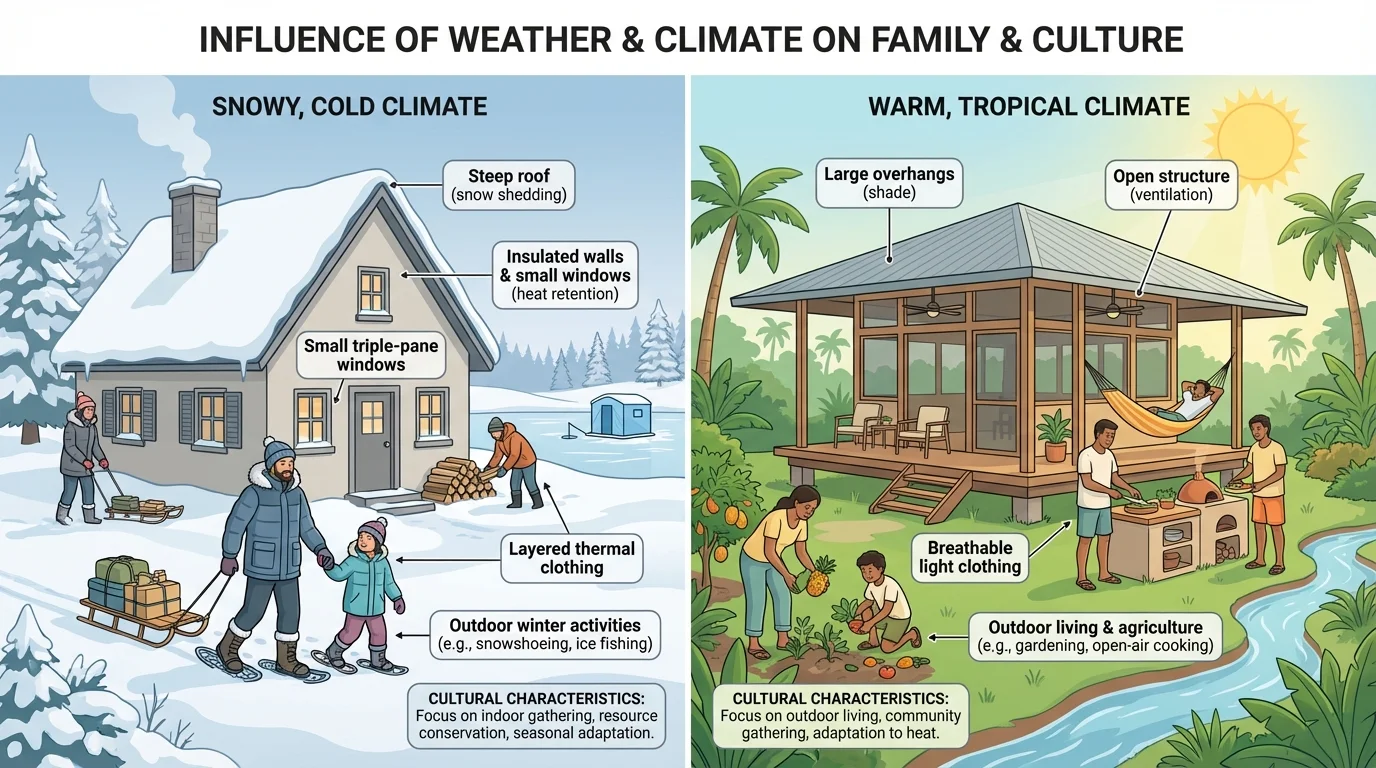
Homes can look different too. In rainy places, roofs may be steep so water runs down. In hot sunny places, homes may have porches or shade. In cold places, homes may be built to keep warmth inside. The environment helps families decide what kind of home works best.
Clothing can also be part of family culture. Some families wear special clothes for festivals or holidays, but those clothes may still fit the climate. A warm scarf, a sun hat, or strong boots can become part of daily family life because of where a family lives.
Many foods that families enjoy come from plants and animals that grow best in their local climate. That is one reason meals can be different in different places.
Traditions often grow from the land and seasons. A family may have a summer beach picnic every year. Another family may have a winter sledding day. Another may celebrate the first rain after a dry season. These are examples of how environment and climate can shape family culture.
Communities around the world are connected to their surroundings. A snowy northern community may have thick coats, snowplows, and winter festivals. A desert community may have sun hats, water-saving habits, and homes that stay cool. A coastal community may have boats, seafood meals, and storm watches.
As we noticed in [Figure 2], different environments give communities different resources and challenges. Water may be easy to find in one place and harder to find in another. Flat land may be good for farming, while steep land may change how roads are built.
| Type of place | Common weather or climate | How families may adapt |
|---|---|---|
| Snowy place | Cold and snowy | Wear coats, heat homes, play winter games |
| Hot dry place | Warm or hot, little rain | Save water, wear light clothes, rest in shade |
| Coastal place | Often wet or windy near water | Use boats, watch storms, eat seafood |
| Farm area | Depends on season, often open land | Grow crops, use barns, celebrate harvests |
Table 1. Examples of how different kinds of places influence family life.
No community is exactly the same as another. But every community shows a connection between people and place.
Families and communities learn to care for one another when weather is strong or dangerous. They listen for storm warnings, bring in outdoor items, and help neighbors. They may store food and water, wear safe clothing, or stay indoors during rough weather.
People also care for the environment. They can plant trees, keep water clean, and avoid wasting resources. In dry places, saving water is important. In coastal places, keeping beaches clean is important. In forest areas, preventing fires is important. Good choices help communities stay healthy.
When we remember [Figure 3], we can see that families do not all live in the same way because their places are different. Weather, climate, and environment help shape daily life, family traditions, homes, food, and activities. These differences make communities interesting and important to learn about.
