Have you ever noticed that a game, a cleanup job, or a class line works better when someone helps everyone know what to do? That person is often a leader. A good leader does not boss people around. A good leader helps the group stay kind, safe, and ready to work together.
A group is two or more people working or playing together. Your class can be a group. A soccer team can be a group. A family can be a group too. In a group, people often have jobs to do. When each person helps, the group can do its best.
Some groups have a leader. A leader is a person who helps guide others. The leader helps the group stay on task, include everyone, and make good choices. Leaders are important, but they are not the only important people. Every person in the group matters.
Leader means a person who helps guide a group. Communication means speaking, listening, and sharing ideas with others. Team member means a person who works with others in a group.
When groups work well, people often feel happy, calm, and ready to help. When groups do not work well, people may feel left out, confused, or upset. That is why responsible leaders and responsible team members are both important.
A responsible leader takes care of the group and tries to do what is right. A responsible leader thinks about everyone, not just about themselves. The leader helps the group finish a job, follow rules, and treat people kindly.
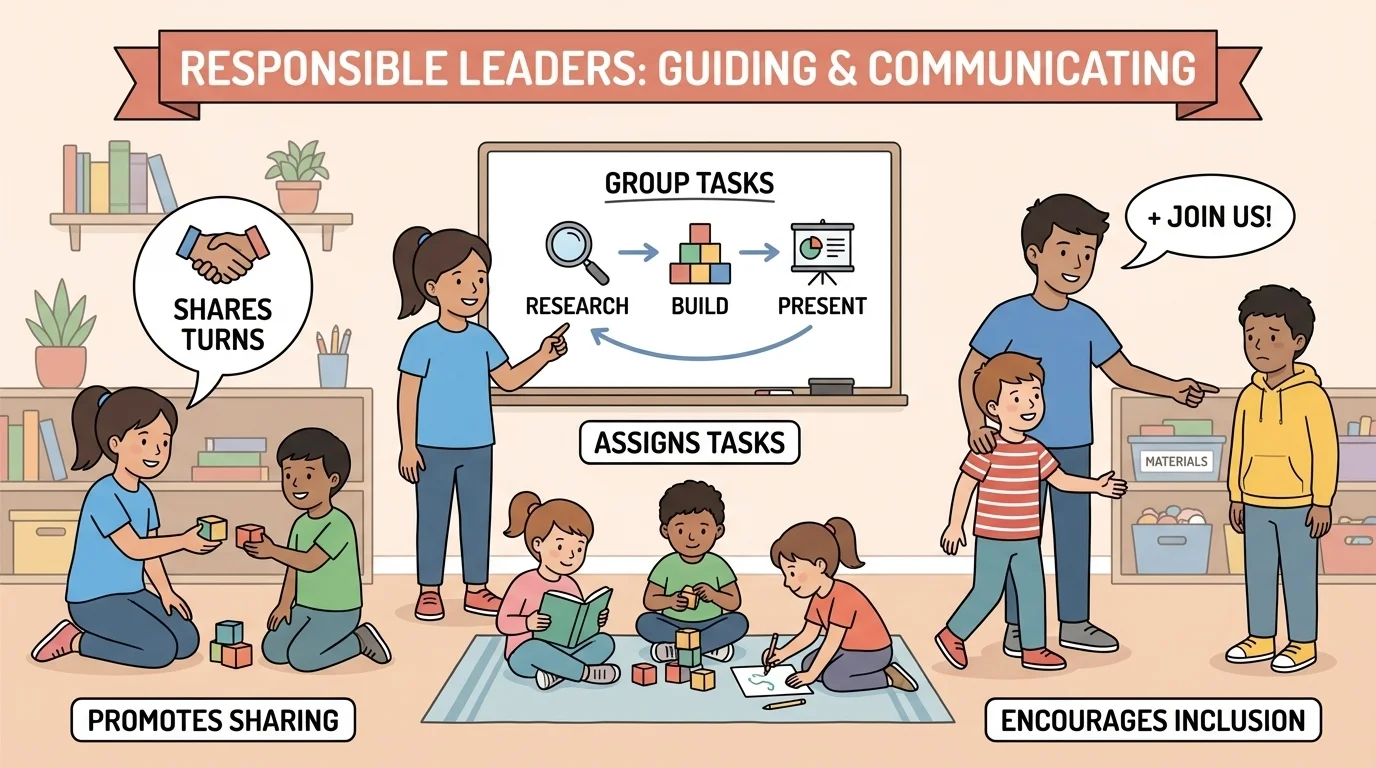
Responsible leaders are fair. As [Figure 1] shows, being fair means giving people a chance and not always choosing the same person. For example, if a class is taking turns passing out papers, a fair leader helps different children have a turn.
Responsible leaders are also kind. They use nice words. They do not yell, tease, or make fun of others. If someone is unsure what to do, a kind leader helps instead of laughing.
Another trait of a strong leader is honesty. Honest leaders tell the truth. If they make a mistake, they admit it. For example, a leader might say, "I forgot to give Mia a turn. I will fix that now."
Responsible leaders also make safe choices. They remind others to walk indoors, use tools carefully, and keep hands to themselves. A leader helps people stay safe during play, work, and class activities.
A good leader helps others. The leader notices if someone needs help carrying books, finding a spot in line, or understanding the directions. As we see again in [Figure 1], a leader does not try to do everything alone. A leader helps others join in and succeed.
Many great leaders are quiet helpers. They do not need to be the loudest person in the room. They lead by being calm, fair, and helpful.
Responsible leaders are also good at making choices. They think first. They ask, "What is best for everyone?" That is an important part of being a good citizen in class, at home, and in the community.
Communication is one of the most important jobs of a leader. Leaders communicate when they speak clearly, listen carefully, and share ideas in a calm way. Good communication helps everyone understand the plan.
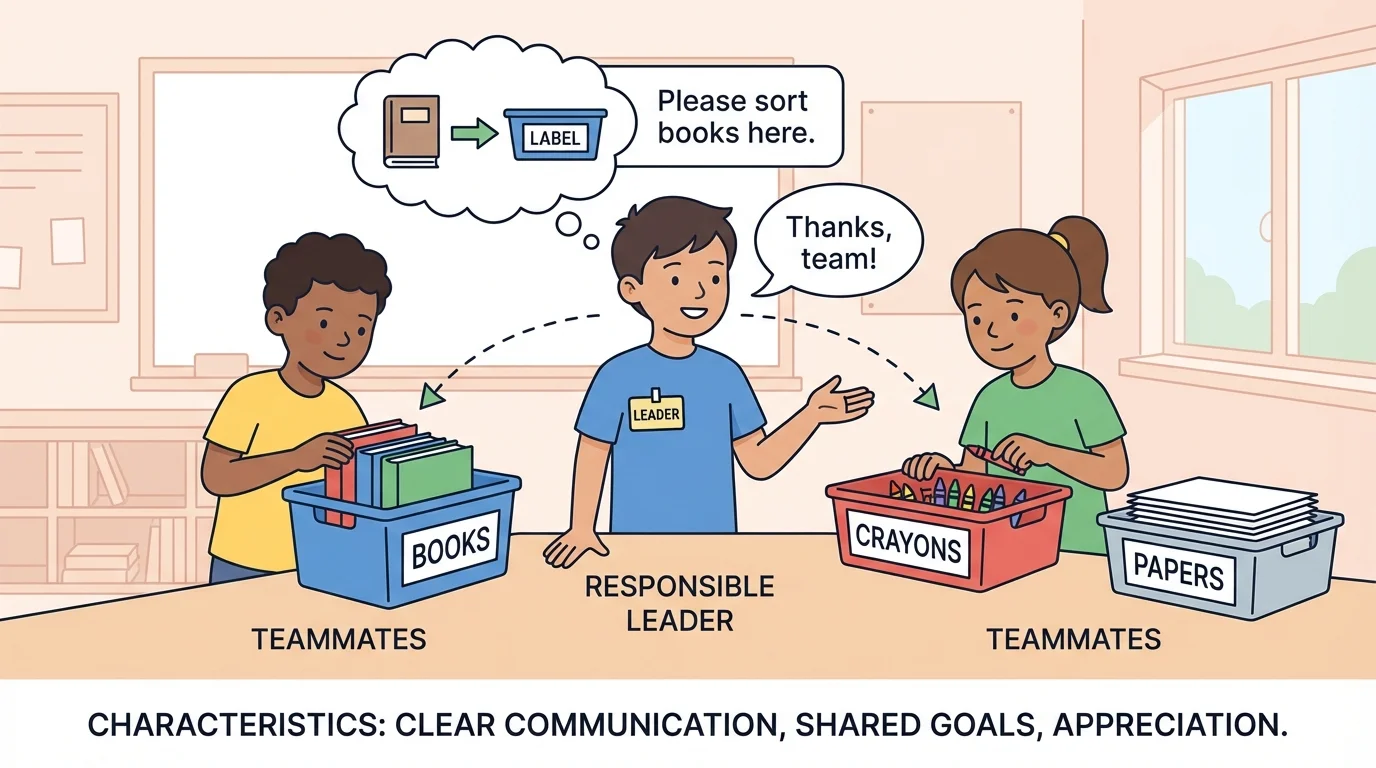
A responsible leader uses clear words. As [Figure 2] illustrates, instead of saying, "Do that thing over there," the leader might say, "Please put the crayons in the blue box." Clear directions help people know exactly what to do.
A responsible leader also listens. Listening means being quiet while another person talks, looking at the speaker, and thinking about what was said. Leaders do not have all the ideas. Sometimes a team member has a smart idea that helps the whole group.
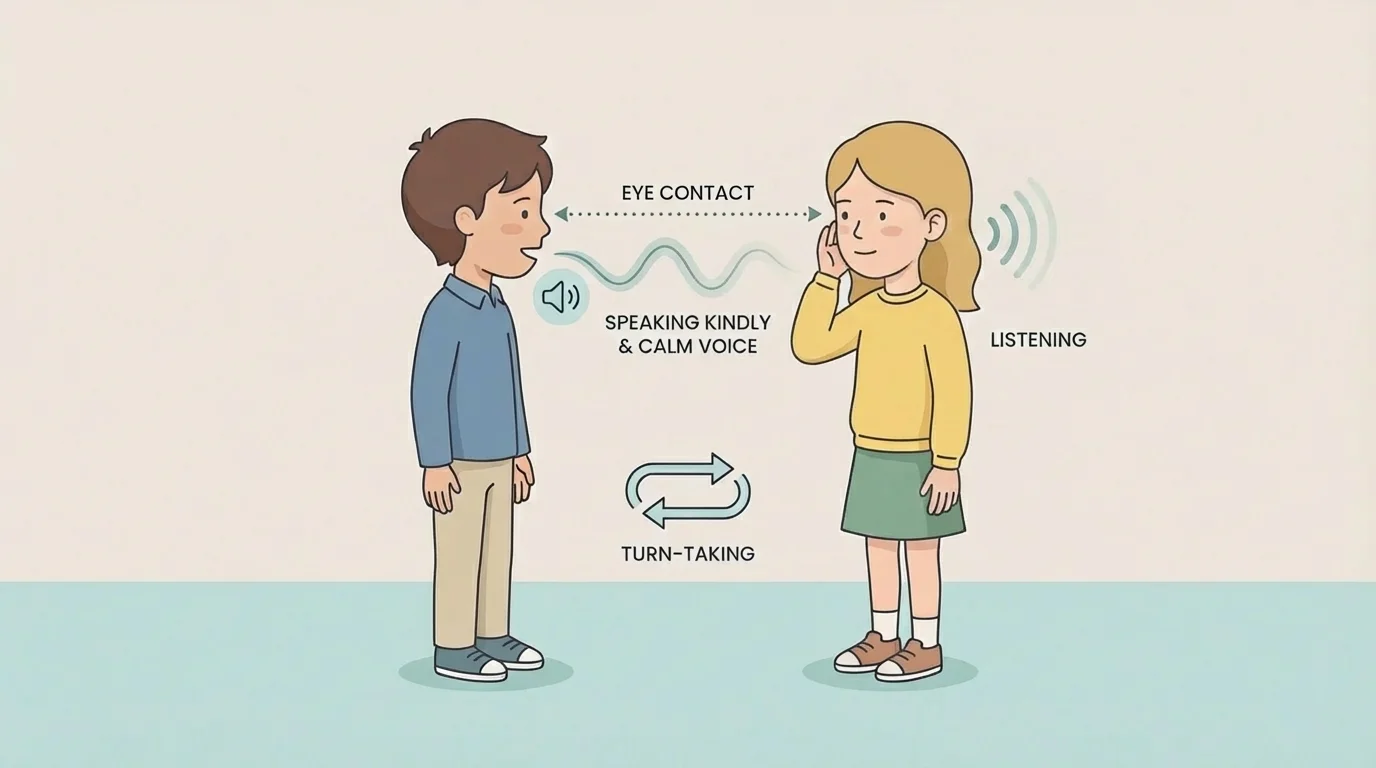
Good leaders speak in a calm voice. Even when a problem happens, they try not to shout. If two children want the same marker, a calm leader might say, "Let's take turns. You can use it first, then your partner can use it next."
Responsible leaders use respectful words like "please," "thank you," "let's try," and "good idea." These words help others feel valued. They also help the group stay peaceful.
Leaders ask questions too. A leader may say, "Do you understand?" or "Would you like help?" Questions show care. Later, when solving a small disagreement, the same listening and calm talking from [Figure 2] help the group find a fair answer.
How communication helps a group
When leaders communicate well, people know the rules, understand their jobs, and feel heard. This makes the group stronger. Speaking kindly and listening carefully are both part of good communication.
Sometimes communication also means including people who are left out. A leader may notice someone standing alone and say, "Come join us." That simple sentence can help another child feel welcome and important.
Good groups do not depend on one person only. They need strong team members too. Team members listen, help, share, and try their best. They follow directions and speak kindly, just like good leaders do.
A responsible team member does their job. If the class is cleaning up, one child may stack books, another may pick up paper, and another may put away pencils. When everyone does a part, the work gets done faster and better.
Team members can also show leadership in small ways. They can remind others to take turns, help a friend, or suggest a good idea. Sometimes different people lead at different times.
| Good Leader | Good Team Member |
|---|---|
| Gives clear directions | Listens to directions |
| Includes others | Welcomes others |
| Stays calm | Uses kind words |
| Helps solve problems | Helps fix problems |
| Acts fairly | Takes turns fairly |
Table 1. This table compares ways responsible leaders and responsible team members help a group.
In many groups, people take turns being leaders. One day a child may lead the line. Another day a different child may lead a game. This helps everyone learn responsibility.
A cleanup group works best when everyone knows what to do. Suppose four children are cleaning the art area. A responsible leader might say, "Ava, please stack the paper. Luis, put the brushes in the cup. Zara, pick up crayons. I will wipe the table." The leader gives simple jobs and works too.
Now think about a playground game. As [Figure 3] shows, a fair leader explains the rules, lets others have turns, and makes sure no one is left out. If a child is new to the game, the leader can say, "I will show you how to play." That is kind and helpful leadership.
In the classroom, a line leader can be responsible by walking safely, facing forward, and helping the class remember the rules. The leader should not run or act silly, because others may copy that behavior.
Real-life example: choosing a fair turn
Two children both want to be first in line.
Step 1: The leader listens to both children.
The leader lets each child speak without interrupting.
Step 2: The leader thinks about what is fair.
The leader remembers that everyone should get a turn.
Step 3: The leader gives a calm answer.
The leader says, "Sam can be first today, and Jo can be first tomorrow."
This answer is calm, fair, and clear.
These examples show that leaders help groups in everyday life. They help in class, on the playground, at home, and in clubs. The teamwork shown in [Figure 3] is not about being the boss. It is about helping everyone work together.
Even good groups sometimes have problems. People may disagree, forget rules, or feel upset. Responsible leaders do not ignore problems. They try to solve them in a kind and fair way.
If someone is talking while another person is speaking, the leader might say, "Let's take turns talking." If someone feels left out, the leader can invite that person to join. If the leader makes a mistake, the leader should apologize. Saying "I'm sorry" is a strong and responsible choice.
Sometimes a leader needs help from an adult. If a problem is too big, or if someone is unsafe, a responsible leader tells a teacher or another trusted adult. Asking for help is smart.
"A good leader helps everyone shine."
When leaders communicate well, problems can become smaller. Clear words, listening ears, and kind choices help groups feel safe and ready to work together again.
You do not have to be big or loud to be a leader. You can be a leader when you share, include others, listen, tell the truth, and help your group. These are responsible actions.
Every child can practice leadership. You can raise your hand and speak kindly. You can help a partner clean up. You can remind others about turns. You can welcome a new classmate. Small actions make a big difference.
Strong groups have responsible leaders and responsible team members. When people work together with fairness, kindness, and good communication, the whole group becomes stronger.
