Have you ever walked down a street and noticed a park, a store, a school, or a place where people celebrate together? Those places tell a story. A neighborhood is not just made of buildings and roads. It is made of people, memories, traditions, and events. When we study communities from long ago and today, we can see how people worked, celebrated, and helped one another.
A neighborhood is the area where people live near one another. A community is a group of people who live, work, and share places and activities together. A community can be a town, part of a city, or even a group of people who gather for the same purpose.
Communities have many parts. They may have homes, schools, parks, stores, libraries, roads, farms, churches, temples, or community centers. What makes each community special is the people in it. Families, workers, teachers, artists, farmers, business owners, and children all help shape the place where they live.
Neighborhood means the place where people live close to one another.
Community means people who share a place and work, learn, and celebrate together.
Culture means the ways people live, including food, music, stories, language, clothing, and traditions.
Some communities are big and busy. Others are small and quiet. Some are in cities, some are in towns, and some are in farming areas. Even when communities are different in size, they all have people who care for places and traditions.
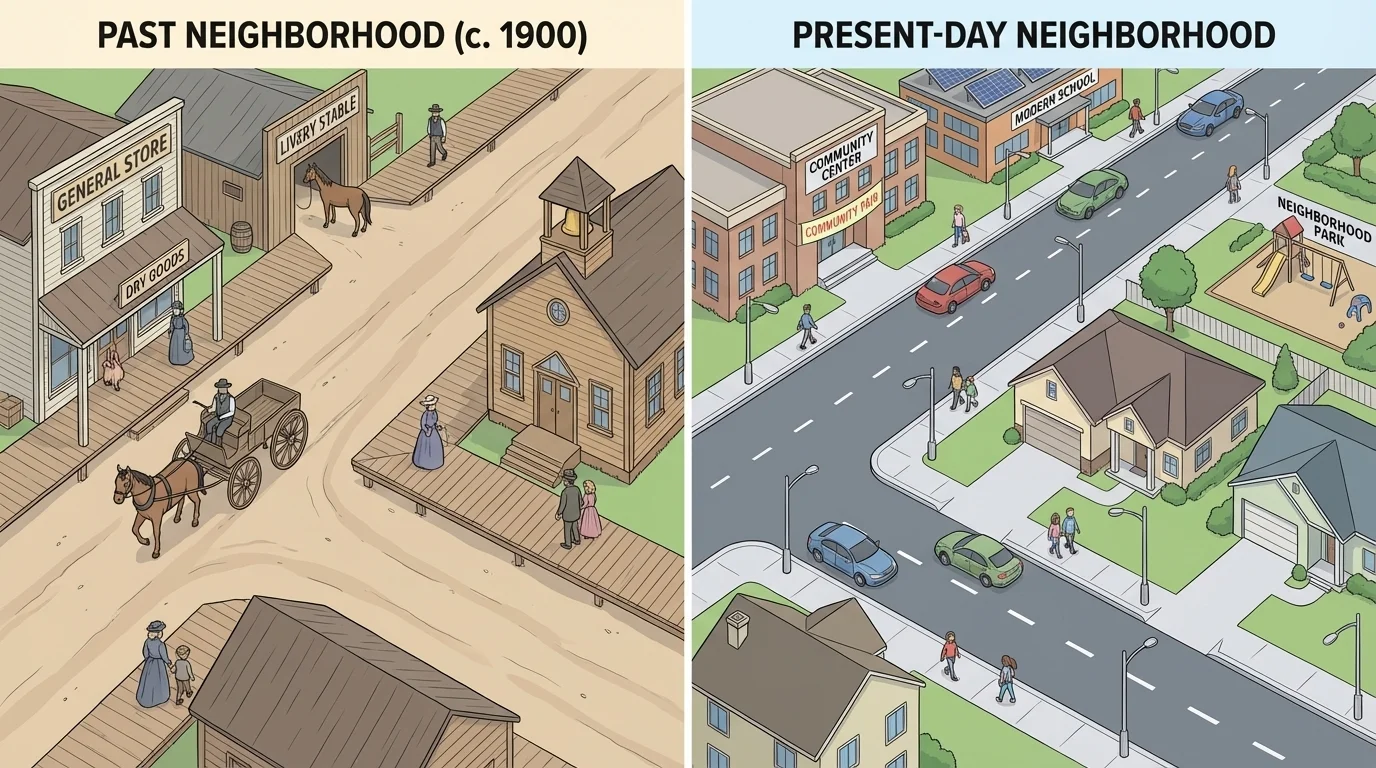
We can compare communities from long ago and today by looking at homes, roads, jobs, and gathering places, as shown in [Figure 1]. In the past, some neighborhoods had dirt roads, fewer cars, and more horses or wagons. People often lived closer to where they worked because travel was slower.
Today, many communities have paved roads, buses, cars, bicycles, and sidewalks. There may be larger schools, playgrounds, apartment buildings, and grocery stores. Technology also changes communities. People may use phones and computers to talk, work, and learn.
Some jobs have changed too. Long ago, more people in some communities worked on farms, with animals, or in small local shops. Today, people may still farm and raise animals, but many also work in hospitals, offices, restaurants, stores, or schools.
Even with these changes, some things stay the same. People in the past and people today both need food, shelter, safety, and friendship. Families still gather, children still learn, and neighbors still help one another. When we look again at [Figure 1], we can see that both older and newer neighborhoods have places where people live and meet.
Communities change over time because people bring their own traditions, skills, and ideas. When families move to a new town or neighborhood, they bring important parts of their culture with them.
For example, one family may open a restaurant that serves special foods from their culture. Another family may teach traditional dances or songs at a festival. Some people help build places of worship. Others plant gardens, start businesses, or share stories and crafts. Over time, these actions become part of the community itself, as [Figure 2] illustrates.
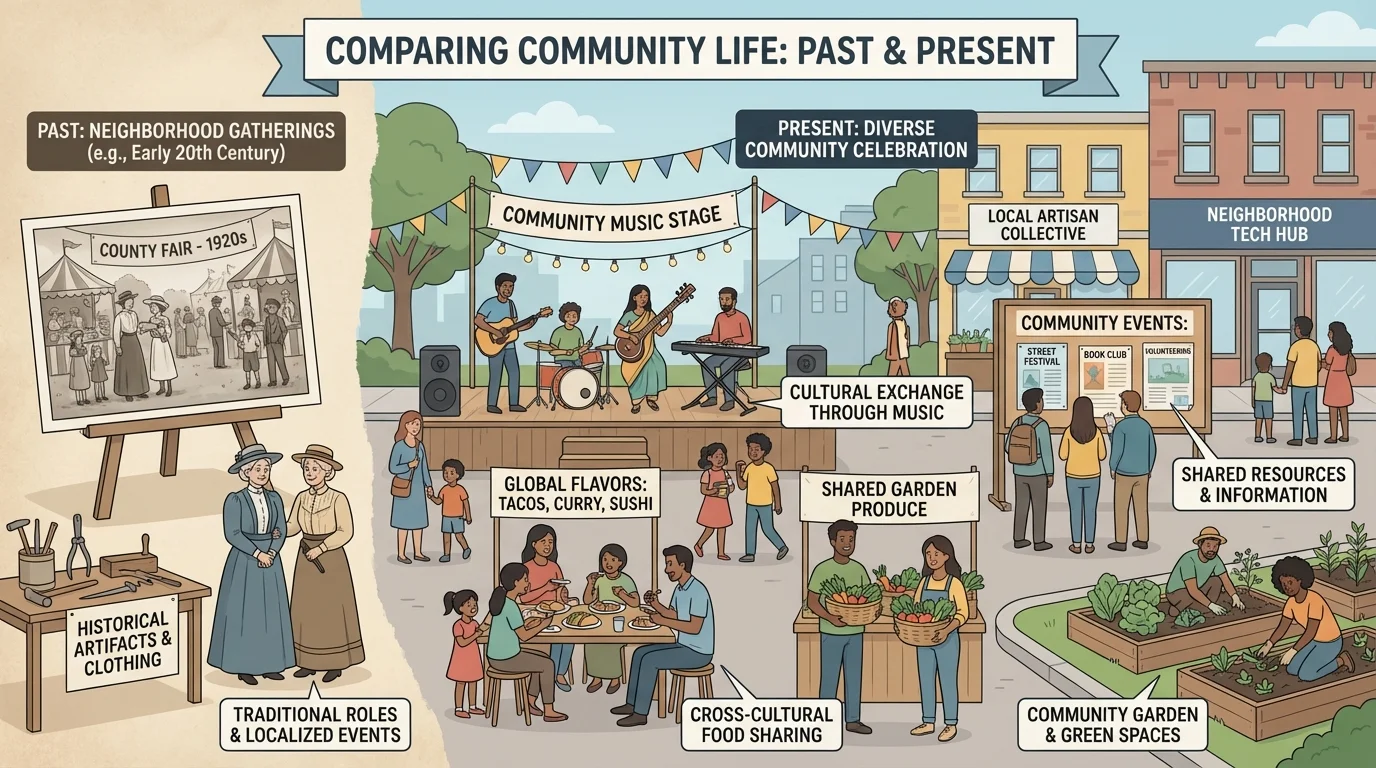
In Colorado and many other places, Native peoples, settlers, ranchers, farmers, immigrants, and many other groups have all influenced communities. Street names, buildings, foods, holidays, and local events can show these influences. A town may have a farmers market, a powwow nearby, a Mexican food festival, or music from many traditions.
Culture is not only about the past. It continues today. Children learn family traditions, then share them with friends and neighbors. That is one way communities grow richer and more interesting. We can notice in [Figure 2] that a community becomes stronger when many people share what matters to them.
Some community traditions began many years ago and are still celebrated today. When a tradition continues, it connects children and adults to people who lived before them.
People from different cultures do not make communities identical. Instead, they help create places with many voices, tastes, stories, and talents. That variety helps neighborhoods feel alive and welcoming.
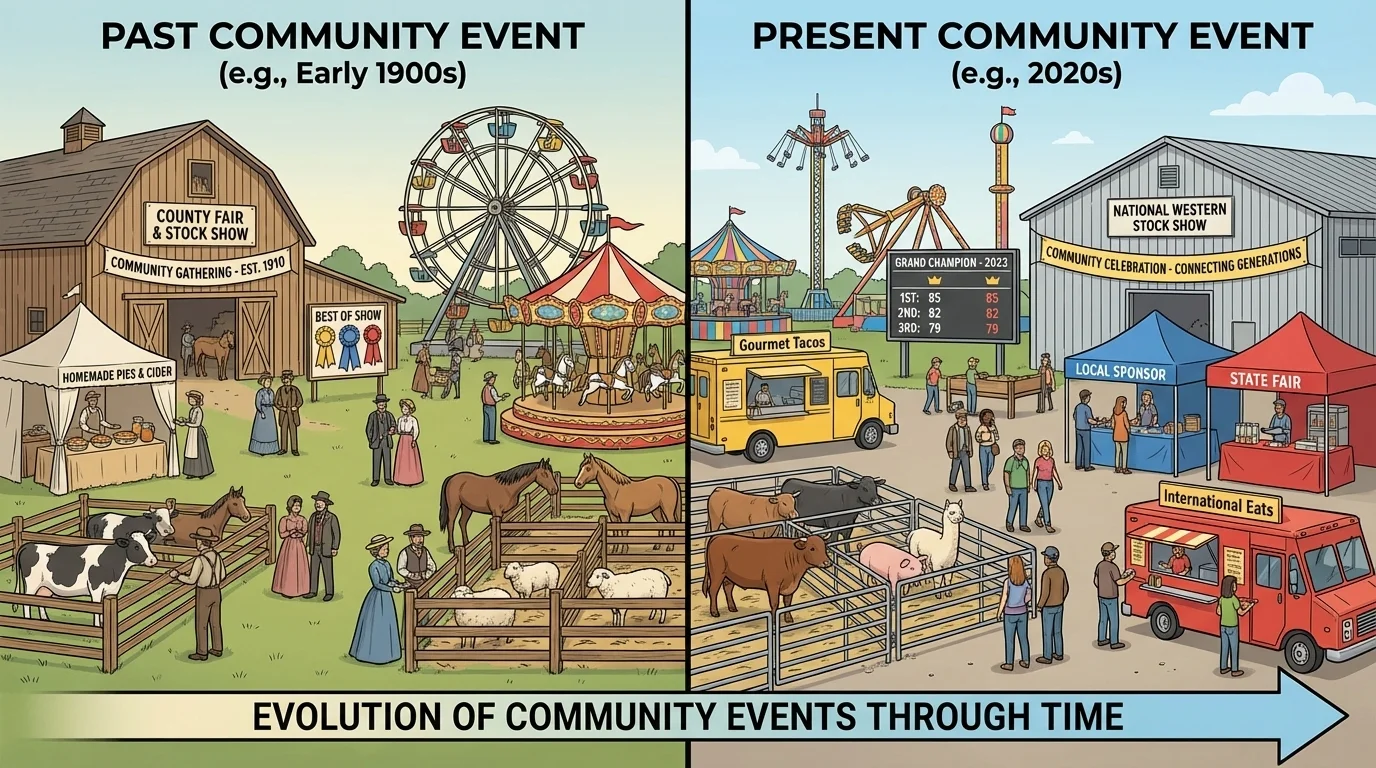
One of the best ways to learn about a community is to study its events. Community events bring people together to celebrate work, share traditions, and have fun. They also show what a place cares about, as shown in [Figure 3]. Some events happen every year, so they become traditions that many families remember.
The National Western Stock Show is one example. It is a famous event in Colorado. People gather to see livestock such as cattle, horses, and sheep. There are also shows, contests, and activities. This event teaches people about ranching, farming, and animal care. It also helps people remember how important these jobs have been in the history of the state.
State fairs and county fairs are also important. At a fair, people might show animals, enter artwork, bake food, grow giant vegetables, ride carnival rides, or watch performances. Fairs are not only for fun. They also let people share their hard work, talents, and traditions with others.
Other community events may include parades, school concerts, holiday festivals, neighborhood clean-up days, farmers markets, and cultural celebrations. A parade may honor heroes or celebrate a holiday. A local festival may include special dances, foods, and music from different cultures. These events help people feel that they belong.
Events can also change over time. Long ago, some fairs focused mostly on farming and animals. Today, fairs may still include those parts, but they can also include music shows, art displays, and new foods. This is another way communities show both change and continuity. When we think back to [Figure 3], we can see both old traditions, like livestock shows, and newer forms of entertainment in one shared space.
Community event case study
A county fair can teach us about both the past and the present.
Step 1: Look for older traditions.
Livestock judging, farming contests, and handmade quilts connect the fair to the past.
Step 2: Look for newer features.
Modern rides, sound systems, food trucks, and online tickets connect the fair to the present.
Step 3: Think about the people.
Families, farmers, artists, musicians, and visitors all help make the event special.
This shows how one event can hold history and modern life at the same time.
Community events are like living history. They help people remember where they came from and celebrate who they are now.
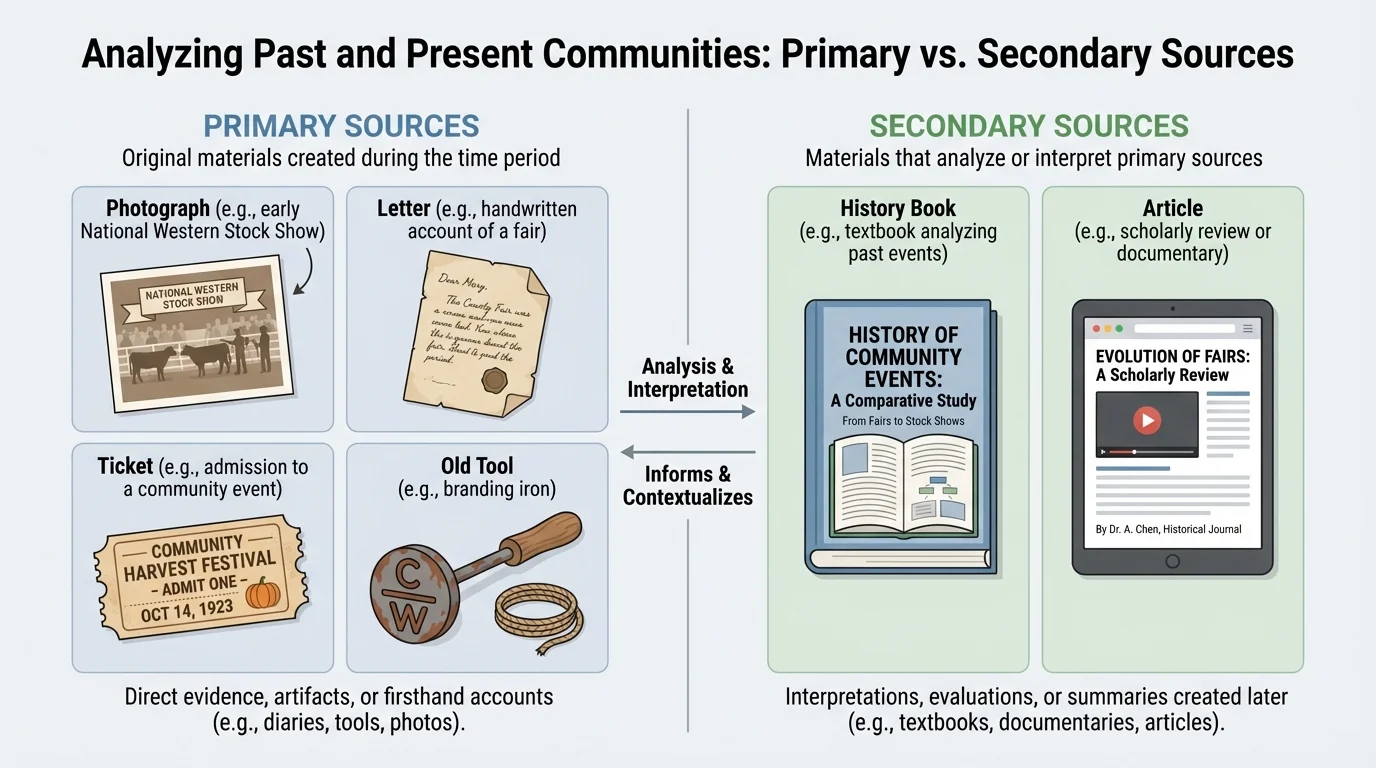
To study communities from the past, historians use clues called primary sources and secondary sources. A primary source is something from the time being studied, such as a photograph, letter, ticket, map, or old tool. A secondary source is something made later, such as a history book or article that tells about the past.
If we wanted to learn about a fair from long ago, we might look at an old poster, a black-and-white photograph, or a ribbon someone won. If we wanted to learn about an older neighborhood, we could study maps, family stories, and newspaper pages, as shown in [Figure 4].
People are also important sources. Grandparents, neighbors, and community leaders may remember how a place looked years ago. Oral history means stories told by people who remember the past. These stories can tell us what games children played, what buildings stood on a street, or what an annual event felt like.
When we compare many sources, we can build a fuller picture of community life. A photograph may show clothes and buildings. A letter may share feelings. A book may explain why changes happened. As we saw in [Figure 4], different sources help us answer different questions.
Studying people and events means asking simple history questions: Who was there? What happened? When did it happen? Where did it happen? Why was it important? These questions help us compare the past with the present.
Historians do not just memorize names and dates. They use clues to understand how ordinary people lived. That includes children, workers, families, and neighbors, not only famous leaders.
When we study communities, we look for change and continuity. Change means something becomes different over time. Continuity means something stays the same. A town may get new roads and buildings, but it may still hold the same yearly fair. A neighborhood may welcome new families, but people may still gather in the same park.
This is why comparing past and present is so interesting. We can ask: What is new? What stayed the same? What did people add? What did people keep? These questions help us understand that communities are always growing, but they are also connected to their history.
| Part of Community Life | Past | Present | What Stayed the Same? |
|---|---|---|---|
| Transportation | Horses, wagons, fewer cars | Cars, buses, bikes, trains | People still travel to work, school, and events |
| Homes | Smaller houses, farm homes, simple buildings | Houses, apartments, townhomes | People still need safe places to live |
| Community Events | Farm shows, local gatherings, parades | Fairs, festivals, concerts, stock shows | People still gather to celebrate together |
| Cultural Influence | Traditions shared by groups already living there | Old traditions plus new traditions from many cultures | People still share stories, food, music, and customs |
Table 1. Comparison of how community life can change and stay the same over time.
Understanding both change and continuity helps us respect the people who came before us and the people who live around us now.
A timeline helps us put events in order. For a community, we might begin with the first people living in an area. Then we might add new homes, schools, businesses, and yearly events. Over time, the timeline grows as more people and traditions become part of the story.
Here is a simple way to think about a community timeline: long ago, people live or gather in an area; later, roads, schools, and shops are built; after that, fairs and annual events become traditions; today, the community still grows as new families arrive and new ideas are shared.
History is about people, places, and events over time. When we compare the past and the present, we look carefully at what changed and what stayed the same.
Every neighborhood and community has its own story. That story is made by people of many cultures, by work and celebration, and by events that bring everyone together. When we learn these stories, we understand our world better.
