Why do some people wear heavy coats while others wear light clothes almost all year? Why are some homes built on stilts, while others have thick walls to keep warmth inside? The answer is a big geography idea: the place where people live helps shape their daily lives. Land, water, weather, plants, and animals all affect what people eat, wear, build, and do.
The environment is everything around us in a place. It includes the land, water, air, weather, plants, and animals. Some places are hot and dry. Some are cold and snowy. Some are near oceans or rivers. Some have forests, mountains, or flat plains.
These parts of a place are called environmental characteristics. Environmental characteristics are features of a place, such as having lots of rain, sandy soil, deep forests, or freezing winters. These features help shape how a community lives.
Culture is the way people live together, including their traditions, foods, clothing, celebrations, and ways of doing things.
Lifestyle means the everyday way people live, such as the kinds of homes they have, the work they do, and how they travel.
Culture and lifestyle are not exactly the same. Culture includes special traditions and customs. Lifestyle focuses more on daily living. But both can be affected by the environment.
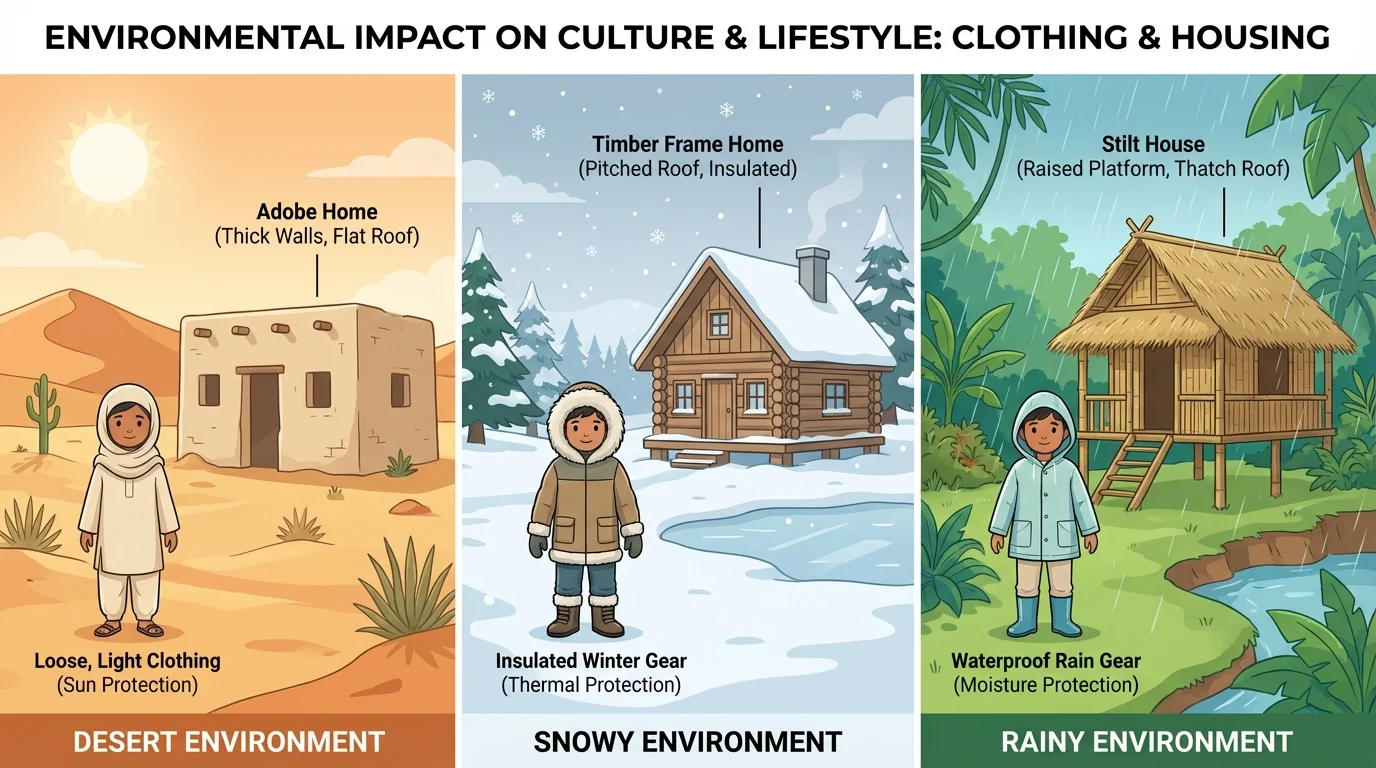
People depend on the environment for many basic needs. As [Figure 1] shows, weather and land can change the kinds of homes people build and the clothes they wear. People need water to drink, land to build on, and natural resources for food and shelter.
In farming communities, people may depend on rich soil and rain to grow crops. Near rivers, lakes, or oceans, people may catch fish for food. In forest areas, wood from trees may help people build houses or make tools. In grassy areas, people may raise animals such as sheep or cattle.
The weather matters too. In very cold places, people wear warm coats, hats, and boots. Their homes may have thick walls and strong roofs to hold snow. In hot, sunny places, people may wear light clothing and build homes that stay cool. In rainy places, roofs may be slanted so water can run off easily.
Transportation can also depend on the environment. In snowy places, people may use snowmobiles or sleds. In places with many rivers, boats can be important. In large flat areas, roads may be easier to build. In steep mountains, travel can be slower and harder.
Some people who live near the Arctic wear clothing designed to keep in heat and block icy wind. In warm tropical places, clothing is often lighter to help people stay cool.
Even food can connect to the environment. People living near the sea often eat more fish and shellfish. People in farming areas may eat foods made from crops grown nearby. This does not mean everyone in one place eats the same things, but the environment often helps decide which foods are easier to find.
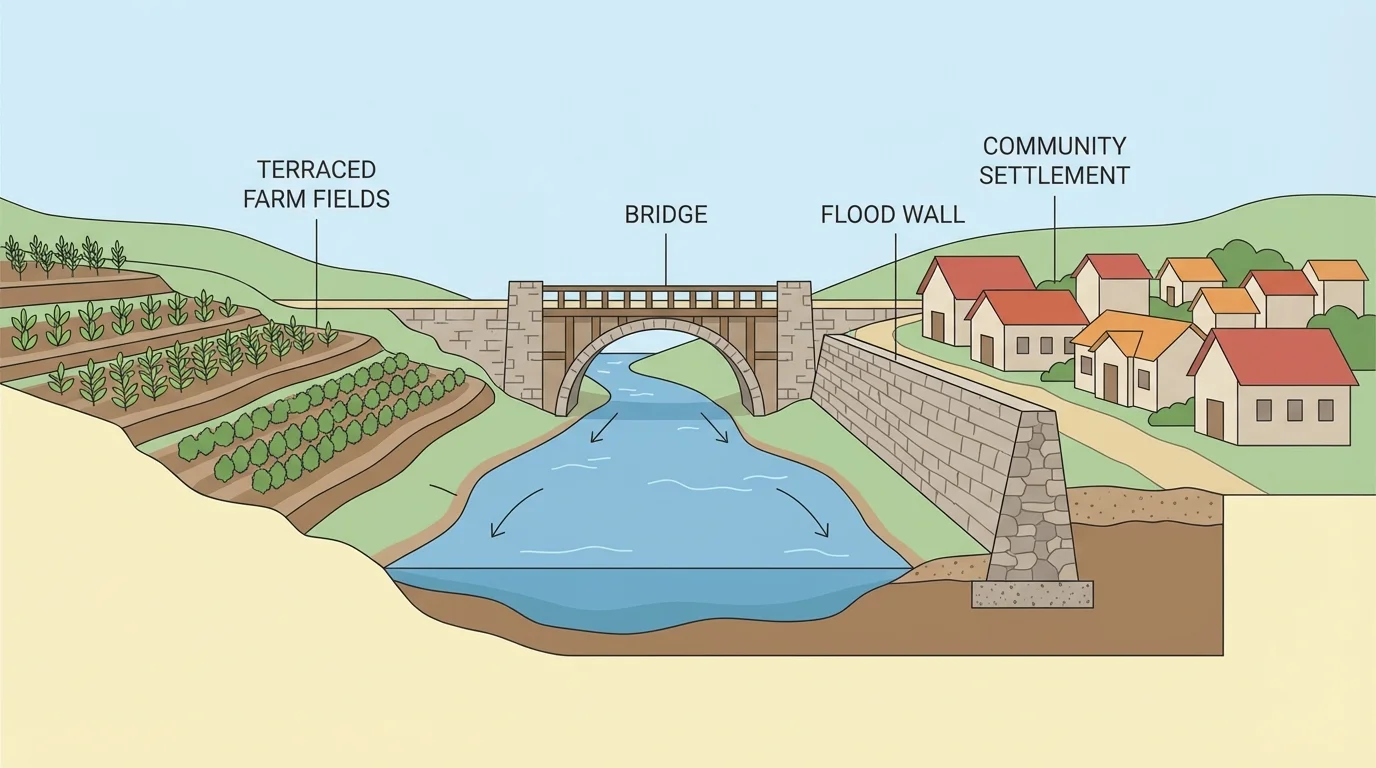
People do not only depend on the environment. They also modify it. To modify means to change something. Communities change the land and water around them to make life safer or easier. As [Figure 2] illustrates, people can plant fields, build bridges, and create barriers to protect homes.
Farmers clear land and plant crops. Builders make roads through forests and across flat lands. Communities build bridges to cross rivers. In wet places, people may dig ditches to move extra water away. Near coasts or rivers, they may build walls or barriers to help prevent flooding.
People also modify the environment when they build homes, schools, parks, and stores. In a crowded city, tall buildings help many people live and work in one small area. In places that flood, some homes are built on stilts so water can pass underneath.
Modification can be helpful, but it can also cause problems if people are not careful. Cutting too many trees can harm animals and soil. Building too close to water can increase flood danger. That is why communities must think carefully about how they change the environment.
Communities also manage their environment. Managing means making choices and rules about how to use land, water, and resources. People manage the environment so they can meet their needs and protect the place where they live.
For example, a town may make rules about where homes can be built. A farming community may save water during dry times. A coastal community may watch the weather and prepare for storms. A forest community may plant new trees after cutting older ones.
Depending, modifying, and managing work together. People depend on the environment for what they need. They modify it to make life work better. They manage it so resources do not run out and people stay safe.
Good management helps communities now and in the future. If a river is kept clean, people and animals can use it. If land is cared for, crops can keep growing. If people prepare for storms, floods, or fires, communities can be safer.
Different environments often lead to different ways of living. [Figure 3] shows several world environments and the lifestyles connected to them. People in each place solve similar problems, such as finding food and shelter, but they do it in different ways.
In a desert, there is very little rain. Water is very important, so communities may live near wells, rivers, or oases. Homes may be built to stay cool, and people may wear loose clothing that protects them from strong sun and blowing sand.
In a cold region, snow and ice affect daily life. People need warm clothes, heated homes, and safe ways to travel in winter. Some communities fish in icy waters or herd animals that can live in the cold.
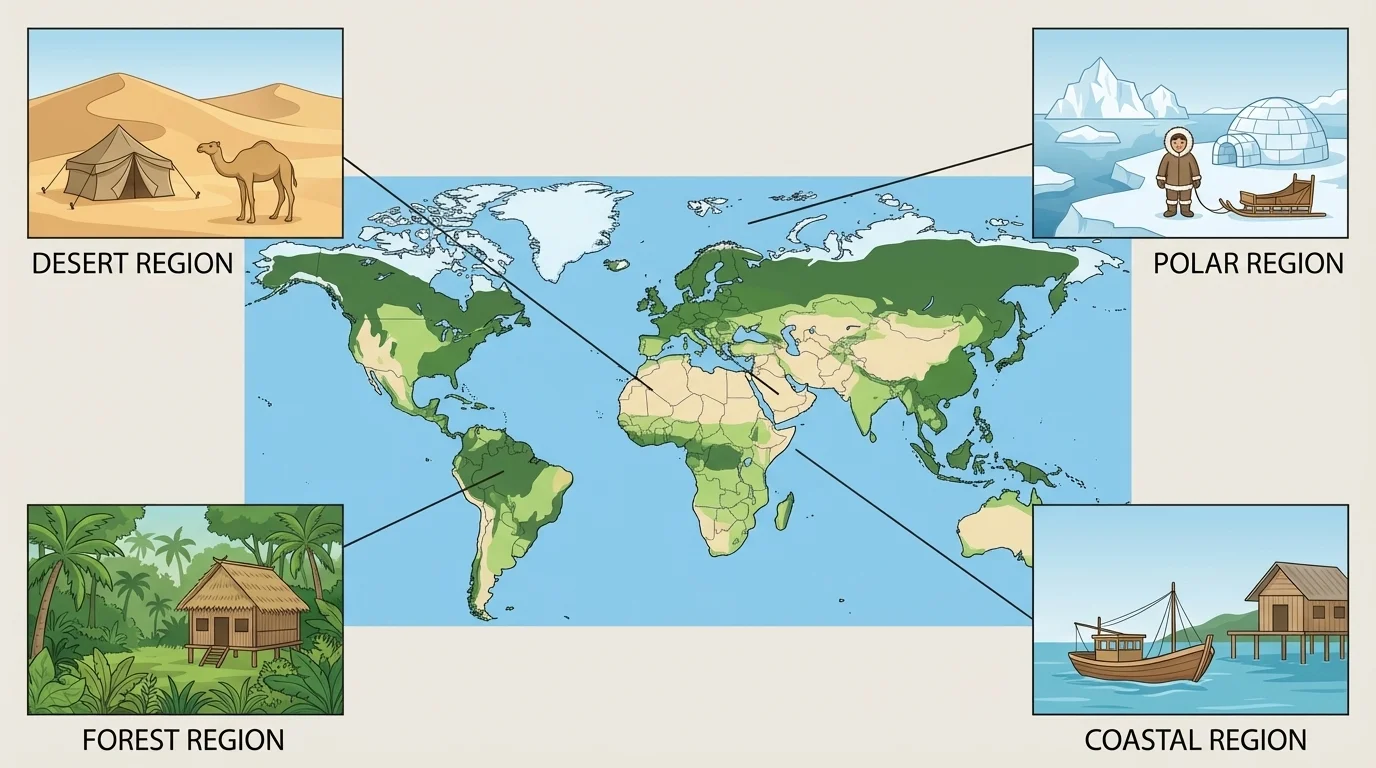
In a forest area, trees may provide wood for homes and tools. People may hunt, gather, or farm depending on the land. Forests can also affect culture by shaping stories, celebrations, and jobs connected to the woods.
In a coastal area, the sea often plays a big role. Boats, fishing, harbors, and beaches can be part of daily life. People may eat seafood often, and jobs may include fishing, shipping, or tourism. Storms from the ocean can also affect how homes are built.
In a mountain region, steep land can make travel and farming harder. Roads may curve around hills. Homes may be built on strong ground. People may grow crops on terraces or raise animals that can live on rocky land.
These examples show that the environment can affect community culture and lifestyle. The map in [Figure 3] makes it easier to see that the same world has many kinds of places, and people adapt to each one.
| Environment | Possible Lifestyle Examples | Possible Culture Examples |
|---|---|---|
| Desert | Saving water, wearing light protective clothing | Traditions connected to dry land and travel |
| Cold region | Using warm clothing, heating homes | Winter activities and foods for cold weather |
| Forest | Using wood, living near trees | Stories and jobs connected to forests |
| Coastal area | Fishing, boating, building for storms | Seafood meals and ocean celebrations |
| Mountain region | Traveling on steep roads, terrace farming | Traditions shaped by mountain life |
Table 1. Examples of how different environments can shape lifestyle and culture.
All people need food, water, clothing, shelter, and ways to move from place to place. But the environment can change how these needs are met. One community may build wooden homes because trees are nearby. Another may build with mud bricks because wood is harder to find. One group may travel by boat, while another travels by truck or on foot.
This is an important idea in geography: environments are different, so people often create different solutions. These choices can become part of a group's culture over time. A certain type of home, clothing, or food may begin because of the environment and later become a tradition too.
Real-world comparison
Two children live in very different places, but both are meeting the same needs.
Step 1: One child lives near the ocean.
The family may eat fish, use boats, and watch for storms.
Step 2: Another child lives in the mountains.
The family may travel on winding roads, wear warm layers, and build on strong hillsides.
Step 3: Compare them.
Both families need food, shelter, and transportation, but the environment affects how they get these things.
When we learn about communities, we should remember that people are creative. They observe their surroundings and make smart choices. That is one reason human life looks different from place to place.
Because people depend on the environment, it is important to care for it. Clean water, healthy soil, forests, and animals all matter. If an area becomes polluted or damaged, it can hurt the people who live there as well as the plants and animals.
Communities may recycle, save water, plant trees, or protect beaches and rivers. They may also create parks or laws to keep land and water safe. These choices show that people and the environment are connected.
People are part of the environment too. When they make good choices, communities can stay healthy and strong. When they make harmful choices, the environment and the community can both be affected.
The clothing people wear, the food they eat, the homes they build, and the traditions they practice can all connect to the environment. Looking at these clues helps us understand why communities around the world may live in different ways.
