Have you ever wanted two treats, three toys, and lots of time to play all in one day? Most people want many things, but they cannot have everything at once. That happens because the world has limits. There may be only a few apples, only one swing, or only so much money to spend. When there is not enough of something for everyone to have all they want, we have to make choices.
People have needs, such as food, water, clothing, and shelter. People also have wants, such as extra toys, a bigger dessert, or a new game. A resource is something people use to make or get what they need and want. Resources can be money, time, workers, tools, land, and materials. When there is not enough of a resource, we have a problem to solve.
[Figure 1] Another important word is scarcity. Scarcity means there is not enough of something to give everyone all they want. If a class has only one box of markers and many students need to color, that is scarcity. If a store has only a few rain boots left before a storm, that is also scarcity. Scarcity does not mean there is nothing at all. It means there is less than people want or need.
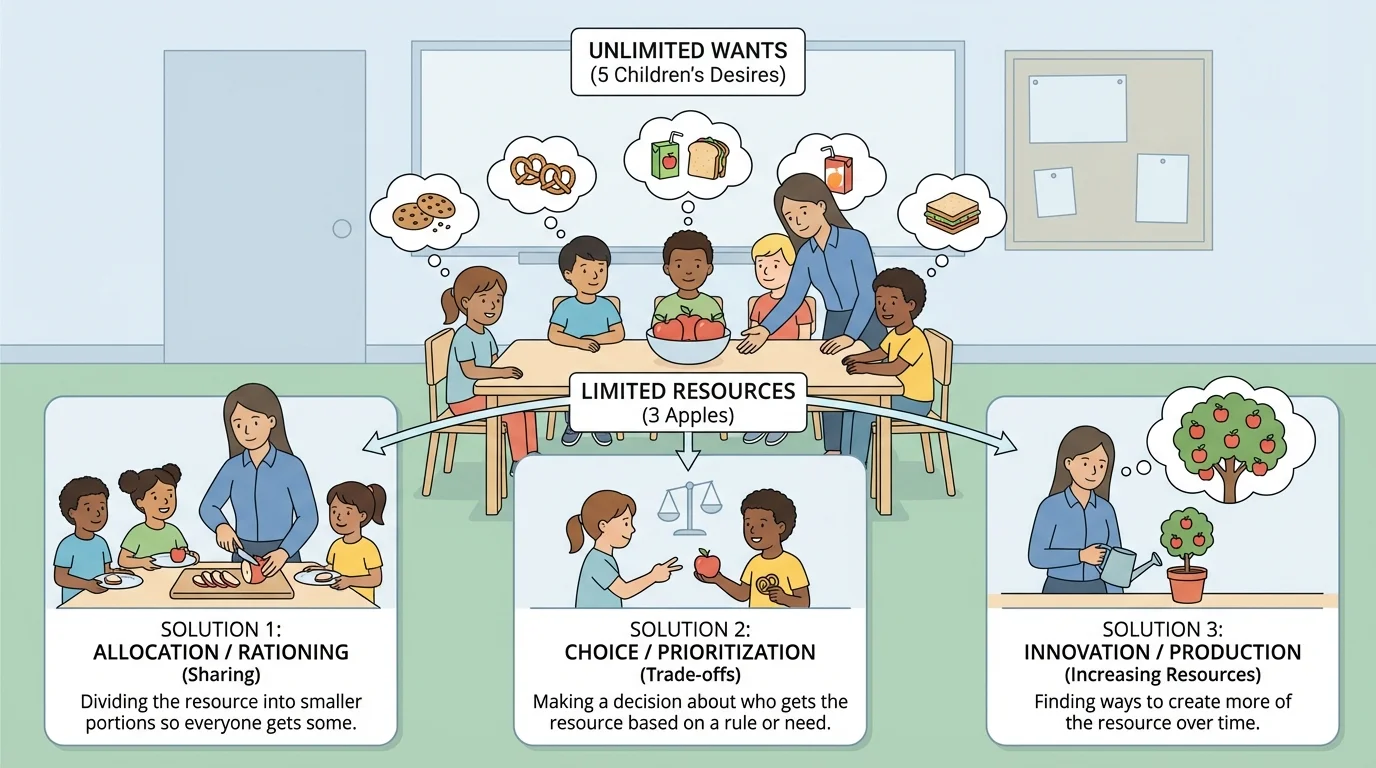
Scarcity is a big idea in economics. Economics is the study of how people use limited things to meet needs and wants. Children use economics when they choose how to spend allowance money, how to use their time, or how to share supplies. Grown-ups use economics when they decide how to spend money on food, homes, schools, and hospitals.
Needs are things people must have to live safely and stay healthy. Wants are things people would like to have but can live without. Scarcity means there is not enough of a resource to give everyone everything they want.
Because wants can seem endless, people must choose. A child may want a ball, a kite, a scooter, and a puzzle, all at the same time. A family may want a bigger house, a new car, and a vacation. A town may want a new park, smoother roads, and a larger library. But money, time, space, and workers are limited.
Resources are limited in many ways. There may be only so many minutes in a day. There may be only so much money in a budget. A budget is a plan for how to use money. There may be only a few workers to do many jobs. There may be only a small amount of wood, paper, food, or water.
Think about a school art class. The teacher has one class period, one room, and a certain number of crayons and sheets of paper. Students may want to paint, use glitter, build with clay, and make posters. The class cannot do every activity at the same moment. The teacher and students have to choose what to do first and how to use supplies wisely.
This means every choice matters. If you use your time to play outside, you have less time for drawing. If a family spends money on new shoes, it may have less money to eat at a restaurant. If a town fixes the bridge first, it may wait to build a new playground. Choosing one thing often means waiting for or giving up another thing.
Choice and giving something up
When people choose one thing, they often cannot choose another thing at the same time. The thing they do not get is sometimes called an opportunity cost. For young learners, this means, "What did I give up when I made my choice?" If you buy a book with your allowance, you may give up buying stickers that day.
Even though scarcity can feel frustrating, it also helps people think carefully. People learn to plan, compare, save, and work together. They ask, "What is most important right now?" That question helps them solve scarcity problems in smart ways.
[Figure 2] People use many solutions when wants are bigger than resources. One solution is to make a choice. A choice means picking one thing from two or more possibilities. If there is enough money for only one game, you choose the game you want most.
Another solution is to share. If there are only a few crayons, students can share them. Sharing lets more people use a limited resource. It does not create more crayons, but it helps people use what is there.
People can also take turns. If there is only one computer or one swing, everyone can use it at different times. Taking turns is helpful when a resource cannot be split easily. It is a fair way to use something that is limited.
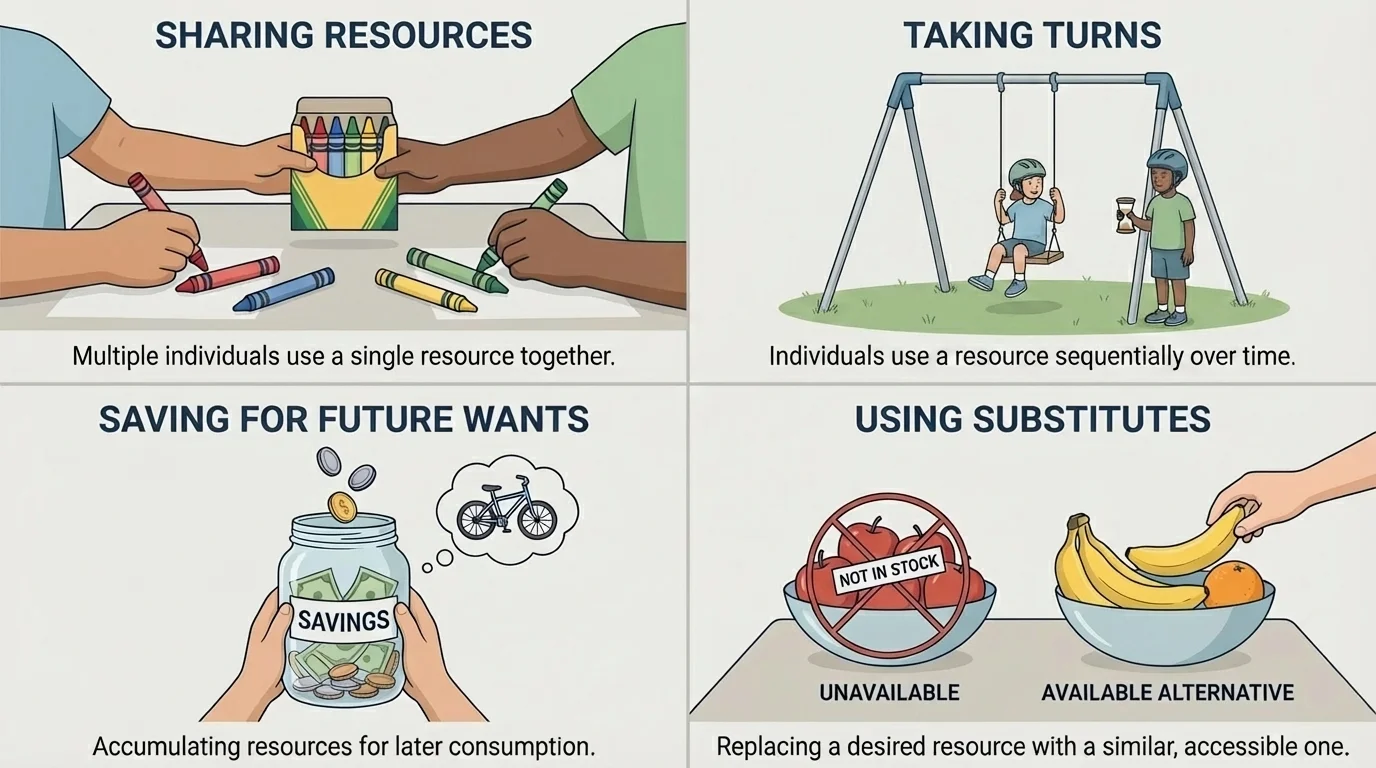
Another solution is to save. If you want a toy that costs more than the money you have now, you can save your money over time. Saving means keeping some money now so you can use it later. Families save for important things too, like school supplies, emergencies, or a trip.
People may also use a substitute. A substitute is something used in place of something else. If the store has no apples, a family might buy bananas or pears. If there are no red markers left, a student might use orange or purple. A substitute may not be exactly the same, but it can still help.
Sometimes people solve scarcity by making more. A baker can bake more bread. A factory can make more backpacks. A gardener can grow more tomatoes. But making more still uses resources such as time, work, land, and tools. That is why people must plan carefully.
Real-life example: One class set of scissors
A class has fewer scissors than students. What are some possible solutions?
Step 1: Name the scarcity problem.
There are not enough scissors for every student to have one at the same time.
Step 2: Think of possible solutions.
Students can share, take turns, or work in pairs.
Step 3: Pick a fair plan.
The teacher may have half the class cut first while the other half colors, and then they switch.
This plan helps everyone use the limited resource.
People can also borrow or help one another. A neighbor may lend a ladder. A friend may share a book. A school may let classes use the gym on different days. These ideas do not remove scarcity, but they help people use limited resources better.
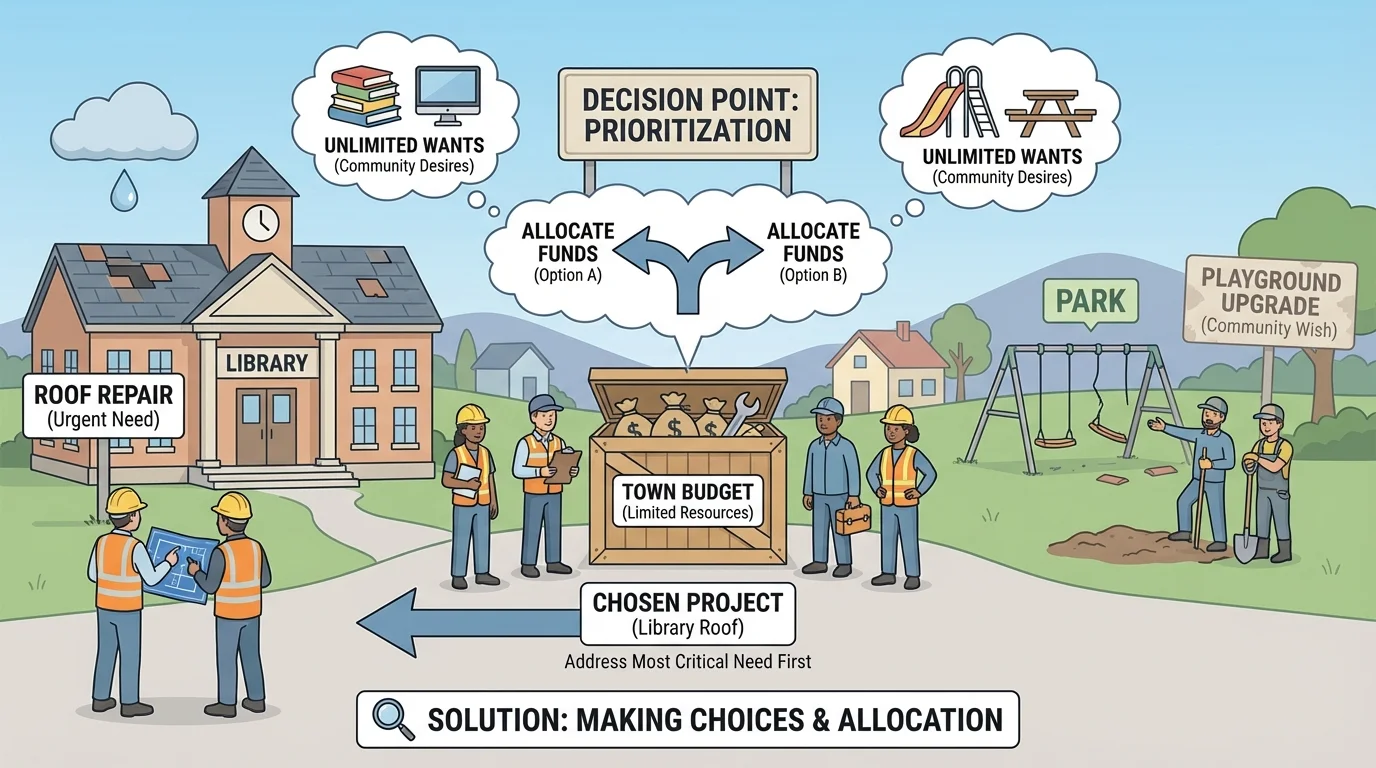
[Figure 3] Scarcity happens almost everywhere. In a family, there may be many things to buy but not enough money for all of them. Parents may choose groceries and medicine before buying a new television. In a school, there may be many clubs and activities but only so much time in the week. In a town, leaders may need to decide whether to repair roads, improve parks, or buy books for the library first.
At home, a child might have enough money for one item at a store. The child has to compare choices. Which item is needed more? Which item will last longer? Which item gives the most joy or help? These questions guide smart decisions.
At school, teachers and principals also make choices. They may want new books, sports equipment, computers, and musical instruments. If the school cannot buy everything at once, it may buy the most needed things first. It may also save money and buy other things later.
In a community, workers, time, and money are limited. If a storm damages several places, crews may fix the most dangerous roads first. Then they repair other places later. This is a way of setting priorities, or deciding what is most important now.
One reason communities make budgets is that even helpful projects cannot all happen at once. Towns and cities often have long lists of things they want to improve, but they must choose the most important jobs first.
When we look back at [Figure 1], we can see that fairness matters too. If there are fewer snacks than children, adults may divide them, ask children to choose, or offer something different. Good solutions try to be fair and helpful.
Good choices often begin with thinking about needs before wants. Food, water, and safety are usually more important than extra treats or toys. That does not mean wants are bad. Wants can bring fun, comfort, and happiness. But when resources are scarce, needs often come first.
Another smart idea is to compare choices. If you can buy one thing, ask simple questions: Which choice helps me most? Which choice will I use often? Which choice can wait? These questions help people avoid rushed decisions.
People also think about fairness. If one ball must be shared by many children, a fair plan might be a schedule. If there are not enough cupcakes, a fair plan might be smaller pieces for everyone or a different snack for some children. Fairness helps people feel respected when resources are limited.
Real-life example: Choosing with a small amount of money
Mia has enough money to buy one item: a notebook or a pack of stickers.
Step 1: Think about needs and wants.
Mia needs the notebook for school. She wants the stickers for fun.
Step 2: Decide what matters most now.
The notebook is more important because it helps with schoolwork.
Step 3: Make the choice.
Mia buys the notebook and waits to buy stickers later.
Mia solved the scarcity problem by choosing the most important item first.
We can also connect this to [Figure 2]. Saving, sharing, and using substitutes are all ways to make wise choices. No single solution works every time, so people often choose the one that best fits the problem.
Sometimes simple rules help people manage limited resources. A library has checkout rules so many readers can enjoy books. A lunch line helps students get food in order. A classroom schedule helps everyone use centers, tablets, or art tools fairly. Rules do not create more resources, but they help people use them in a smooth and fair way.
Families, schools, and governments also make budgets. A budget helps decide how much money can be spent on different things. If a family has a food budget, it may spend carefully at the store. If a school has a supply budget, it may buy pencils first and decorations later.
Helpers in a community also matter. Volunteers, teachers, firefighters, nurses, and other workers help meet needs. Even then, there may not be enough time or supplies for every job right away. That is why communities set priorities and work step by step.
People make choices every day. You already know how to wait your turn, share materials, and decide what matters most. Those same skills are part of economics when resources are limited.
When a town decides what to fix first, as seen in [Figure 3], leaders are making choices about scarce resources. They may ask which problem is biggest, which need is most urgent, and how to help the most people. These are important economics decisions that affect everyday life.
Scarcity means not enough resources to give everyone all they want. Resources are useful things like time, money, workers, and materials. Choices are decisions people make because they cannot have everything at once. Substitutes are different things used in place of what is not available.
When resources are limited and wants are unlimited, people look for solutions. They choose, share, take turns, save, borrow, use substitutes, make more, and set priorities. These ideas help people at home, in school, and in the community.
