Have you ever seen a piece of trash on the playground, a lonely classmate at lunch, or a flower bed that needed water? Those little moments matter. A school or community becomes better when people notice what is needed and choose to help. Even at 7 years old, you can be part of making places cleaner, safer, friendlier, and happier.
Your school and your neighborhood are made of people who share spaces. You share classrooms, playgrounds, sidewalks, parks, and libraries with others. When people care for shared places, everyone benefits. That is one way to be a good citizen.
Community is a group of people who live, learn, or work together in the same place.
Citizen is a person who belongs to a community and helps follow rules and care for others.
Responsibility means doing what you should do and helping take care of people and places.
Taking an active part means doing more than just watching. It means noticing a problem, thinking of a helpful idea, and doing something kind or useful. Sometimes the action is small, like putting books back on a shelf. Sometimes it is bigger, like helping start a class project to keep the playground clean.
When you take an active part, you join in. You do not wait for someone else every time. You use your eyes, ears, hands, and heart to help. You may ask, "What can I do?" or "How can I help?" Those are powerful questions.
Improving a place means making it better. A better school might be cleaner, calmer, safer, or more welcoming. A better community might have cared-for parks, kind neighbors, and people who help one another. Improvement does not always happen all at once. It often happens through many small helpful actions.
A single kind act can spread. When one student helps pick up supplies or invites someone to play, other students often want to help too.
[Figure 1] Some actions improve places. Some actions improve how people feel. Both are important. Sweeping a classroom helps the room. Including a new student helps the person. A strong community needs both care for places and care for people.
School is full of places where students can help through everyday actions in classrooms, hallways, the playground, and the library. You can take care of supplies, return materials, push in your chair, and throw away trash. These actions may seem small, but they help keep the school neat and safe for everyone.
Students can also help people at school. You might help a classmate zip a backpack, share crayons, or explain directions kindly. If someone is alone, you can invite that person to join a game. If someone drops papers, you can help pick them up. These choices build a caring community.
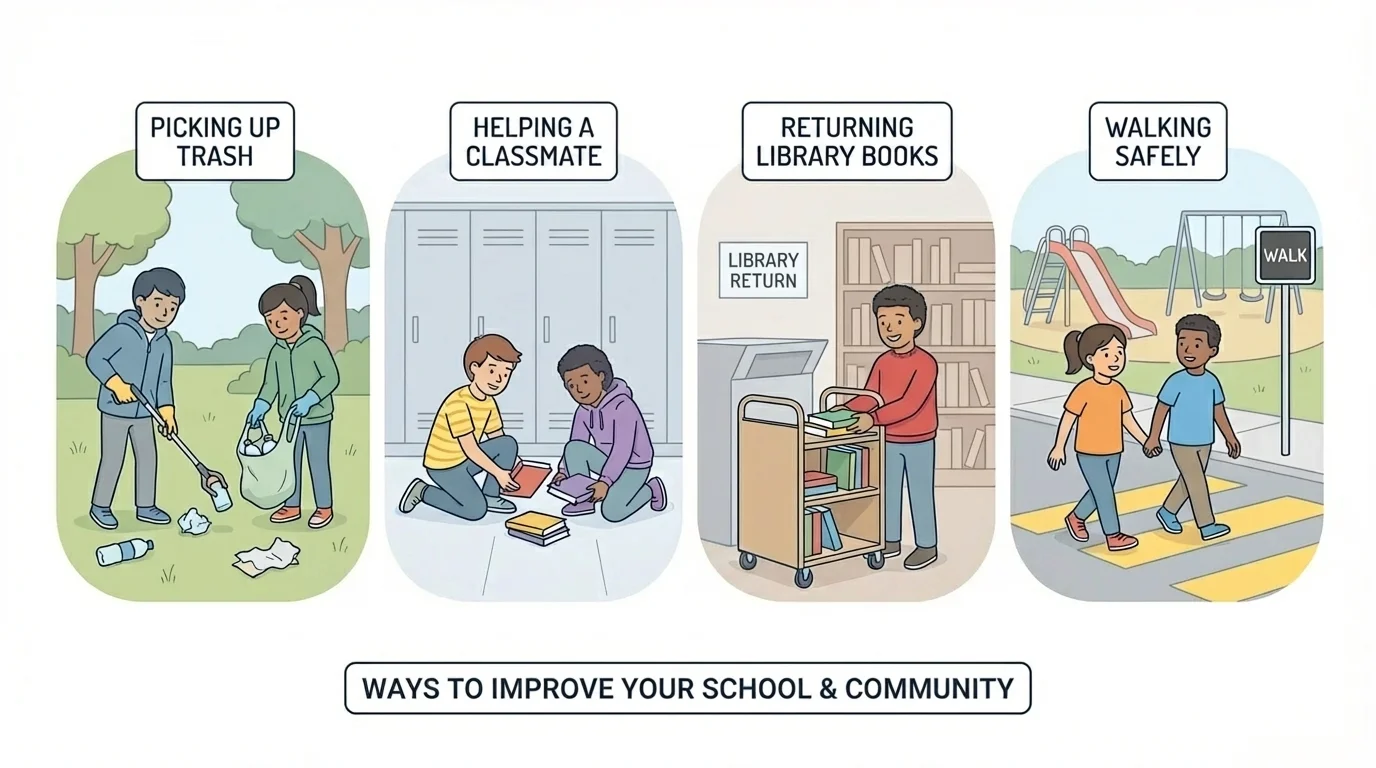
Another way to improve your school is by following rules. Walking instead of running in the hallway helps keep people safe. Waiting your turn shows respect. Using quiet voices in the library helps others read and learn. Rules are not just commands. They are tools that help people share spaces fairly.
You can also care for school spaces. In the cafeteria, you can clean your spot and sort trash the right way. On the playground, you can use equipment safely and put away balls or jump ropes. In the classroom, you can keep desks organized and take care of books. As we saw in [Figure 1], school improvement often comes from ordinary moments that students handle responsibly.
Example: Helping your classroom
A class notices that the reading corner gets messy by the end of the day.
Step 1: Notice the problem.
Books are left on the floor and pillows are out of place.
Step 2: Think of a simple idea.
Two students can straighten the area before dismissal.
Step 3: Work together.
One student stacks books while another puts pillows neatly back.
Step 4: Check the result.
The reading corner is clean and ready for the next day.
This kind of action improves the room for everyone.
[Figure 2] Being helpful at school also means speaking kindly. Words matter. Saying "please," "thank you," and "Are you okay?" can make school feel welcoming. A school improves when students and adults treat one another with care.
Your neighborhood and town have shared places too, and children and adults can care for parks, gardens, and libraries together. You may help keep a park clean, return library books on time, or remind others to respect public spaces. These actions show that the community belongs to everyone.
You can help neighbors in simple ways. You might carry in light groceries with an adult, make a cheerful card for a neighbor, or help water plants in a shared garden. You can smile, greet people politely, and show respect in public places. Communities grow stronger when people feel seen and cared for.
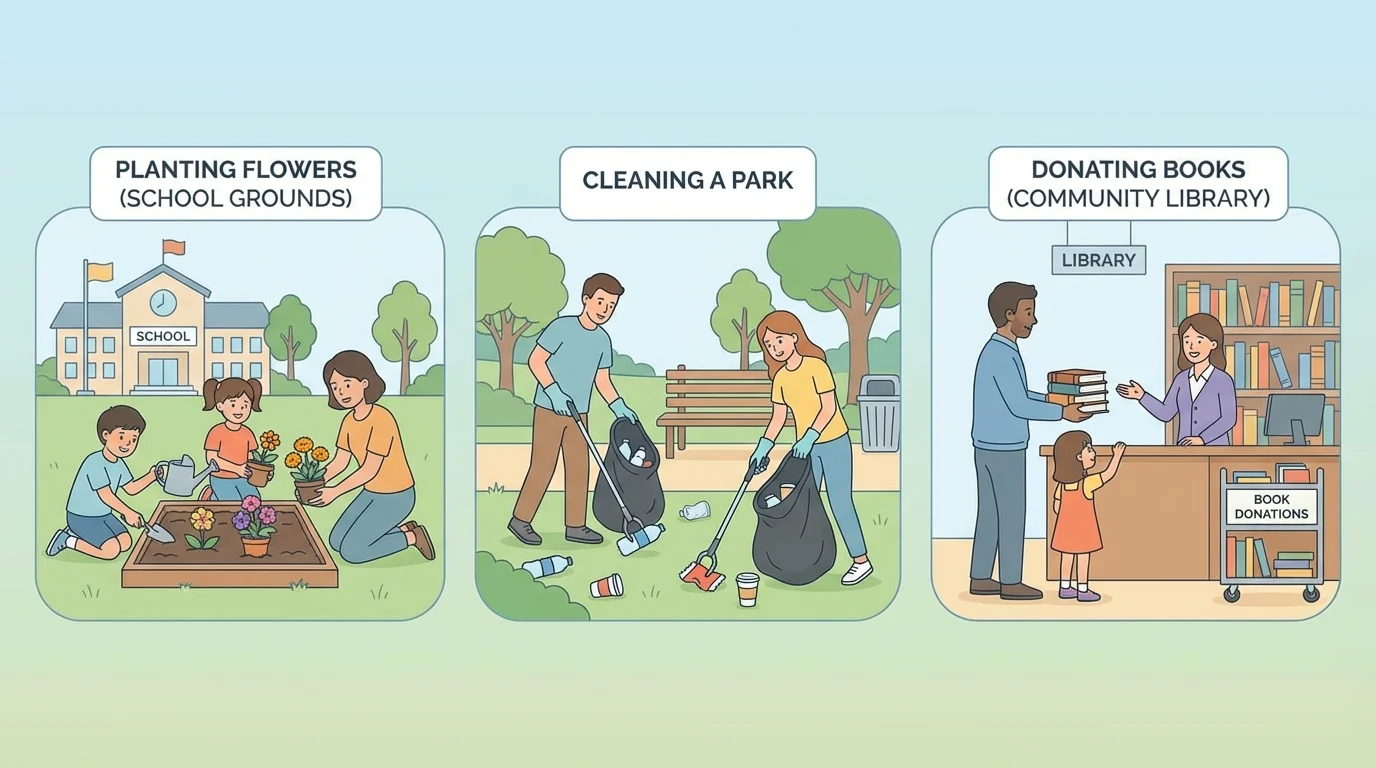
Sometimes communities need help after a busy event or season. Leaves may cover a sidewalk. Trash may collect near a bench. A garden may need weeding. Children can help with these jobs when an adult says it is safe. Helping does not mean doing dangerous tasks. It means doing safe, useful tasks with care.
You can also improve the community by taking care of nature. Planting flowers, watering trees, and protecting animals' homes make places more beautiful and healthy. The busy teamwork in [Figure 2] reminds us that caring for the environment is one way to care for the whole community.
Shared places need shared care
A school hallway, a park path, and a library shelf are all shared spaces. Because many people use them, many people must help care for them. When everyone does a little, the whole place becomes better.
Helping in the community can also mean joining drives or collections with your family or school. For example, students might bring canned food for a food drive or gently used books for a book collection. Children are not expected to solve every problem, but they can be part of helpful efforts.
Improving a place often follows clear steps, and [Figure 3] presents this process from noticing a problem to checking whether the idea helped. First, you notice something that needs attention. Next, you think of a safe and helpful idea. Then, you share the idea with a teacher, family member, or another trusted adult.
After that, people can make a plan. A plan answers questions such as: What needs to be done? Who can help? When will we do it? What supplies do we need? A simple plan helps people stay organized and work together.
Then comes the action. People do the job kindly and safely. Last, they look at the result. Is the area cleaner? Is someone included now? Did the project help? If needed, they can make the plan better and try again.
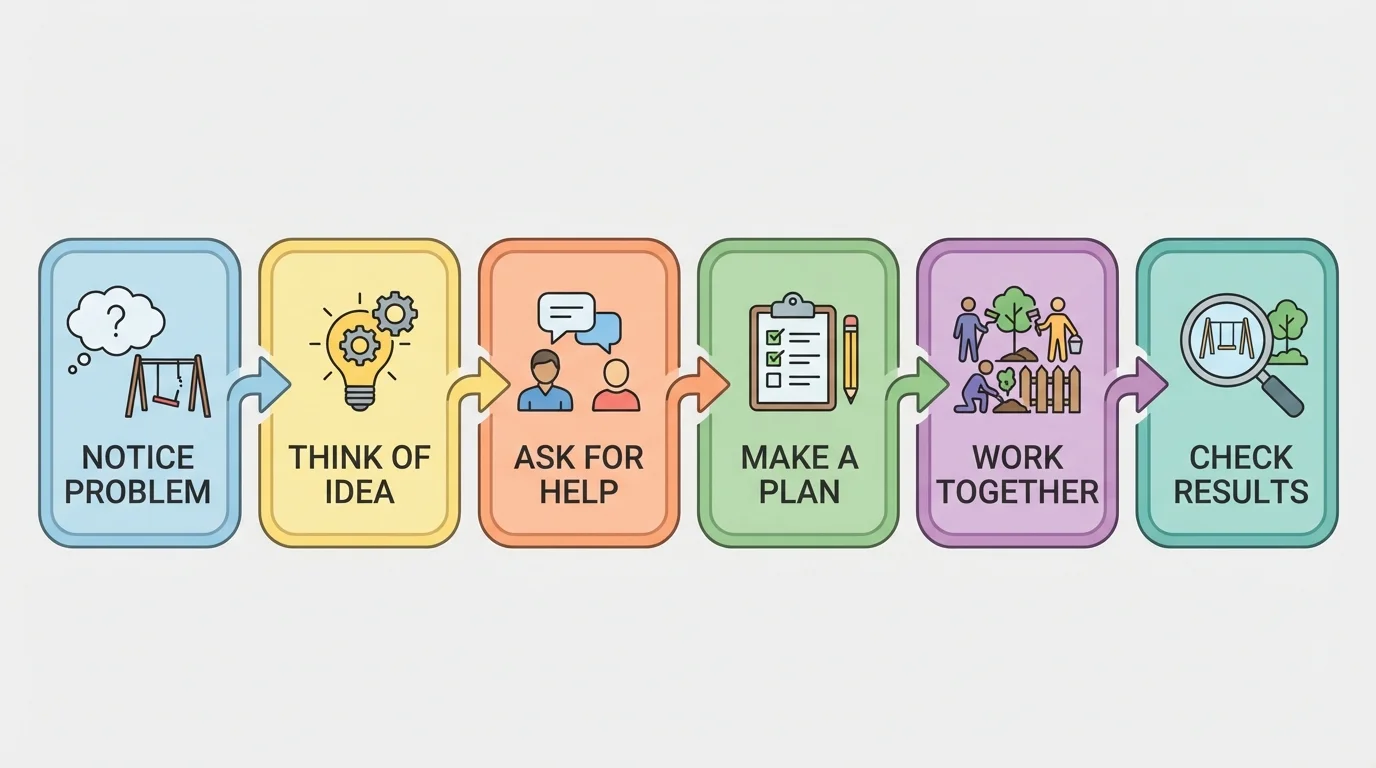
This process can be used for many situations. Maybe the lost-and-found area is messy. Maybe the class wants labels for supply bins. Maybe a park cleanup is needed. As shown in [Figure 3], helpful change often begins with careful noticing and grows through planning and teamwork.
Example: From idea to action
A student sees that the playground often has paper scraps after recess.
Step 1: Notice the problem.
The playground looks messy after many students use it.
Step 2: Share the idea.
The student tells the teacher that the class could do a quick cleanup walk.
Step 3: Make a plan.
The teacher chooses a safe time and reminds everyone to wear gloves or use grabbers if needed.
Step 4: Work together.
The class picks up litter and throws it away properly.
Step 5: Check the result.
The playground is cleaner and nicer for the next class.
This is how an idea turns into action.
Sometimes your first idea is not the best one. That is okay. You can listen to others, change your plan, and try a new idea. Good problem-solvers keep learning.
Many school and community improvements happen through teamwork. Teamwork means people help one another to reach a shared goal. One person may hold the trash bag. Another may gather books. Another may remind everyone of the steps. Different helpers can do different jobs.
Good teamwork also means listening. If another student has an idea, pay attention. If an adult gives directions, follow them. Taking turns speaking, sharing materials, and being patient make teamwork stronger. Respect helps groups succeed.
You already know that rules help people stay safe and treat others fairly. The same idea is important here. When students follow rules while helping, they protect themselves and others.
Fairness matters too. Everyone should have a chance to help. No one should be left out because of how they look, what they can do, or what language they speak. Communities are stronger when everyone is welcomed and valued.
Sometimes taking an active part means using your voice. If you notice a problem, you can tell a trusted adult. If a swing is broken, if water is spilled, or if someone is being unkind, speaking up can protect people. Reporting a problem is a helpful action.
You can also make polite suggestions. You might say, "Could we put labels on the bins?" or "Can we make a kindness poster?" Helpful speaking is respectful, clear, and calm. It focuses on making things better, not blaming others.
"Many hands make light work."
— Old saying
Listening is part of speaking up too. If adults or classmates answer your idea with another plan, listen carefully. Improvement often happens when people share ideas and build on them together.
Sometimes children think only big actions count. That is not true. Small actions can add up. One student picks up one wrapper. Another returns one lost book. Another includes one lonely child in a game. Soon the school feels cleaner, calmer, and kinder.
Think about a garden. One drop of water is small, but many drops help flowers grow. Helping works the same way. Many little acts of care can improve a school or community over time.
Example: Kindness changes a day
A new student feels shy at recess.
Step 1: Notice.
You see the student standing alone.
Step 2: Act kindly.
You invite the student to join your game.
Step 3: Keep helping.
You explain the rules and make sure the student gets a turn.
This action improves the school community because it helps someone feel welcome.
Even if you are not in charge, you can still help. Leaders are important, but helpers are important too. In fact, a caring community needs many people who are willing to help every day.
A good citizen does not wait only for special events. A good citizen helps in daily life. That means being honest, respectful, kind, and careful with shared spaces. It means following rules, helping others, and doing your part.
You can improve your school or community by cleaning up, including others, sharing ideas, protecting shared places, and working with others. You do not have to do everything alone. You just need to notice what is needed and choose a helpful action.
When children learn to help their school and community, they practice caring for the world around them. That is how strong communities grow: one thoughtful action at a time.
