Have you ever noticed that when a team, class, or family works well together, someone is often helping people stay calm, take turns, and do their best? That person is showing leadership. Leaders are not just people in big offices. Leaders can be students, teachers, parents, principals, coaches, and community helpers. A good leader helps people work together to make things better.
A leader is a person who guides, helps, or directs others. A leader does not just tell people what to do. A positive leader listens, cares, and helps a group reach a goal. A group is two or more people working or spending time together. A community is a larger group of people who live, work, learn, or help in the same place.
Positive leadership means guiding others in a kind, fair, honest, and helpful way. Positive leaders try to help everyone, not just themselves.
Leaders can be found in many places. In a classroom, a leader may help pass out papers or make sure everyone gets a turn. In a school, the principal leads teachers and students. In a town or city, elected leaders make decisions that affect many people. Some leaders are chosen by voting, and some leaders earn trust because they are responsible and helpful.
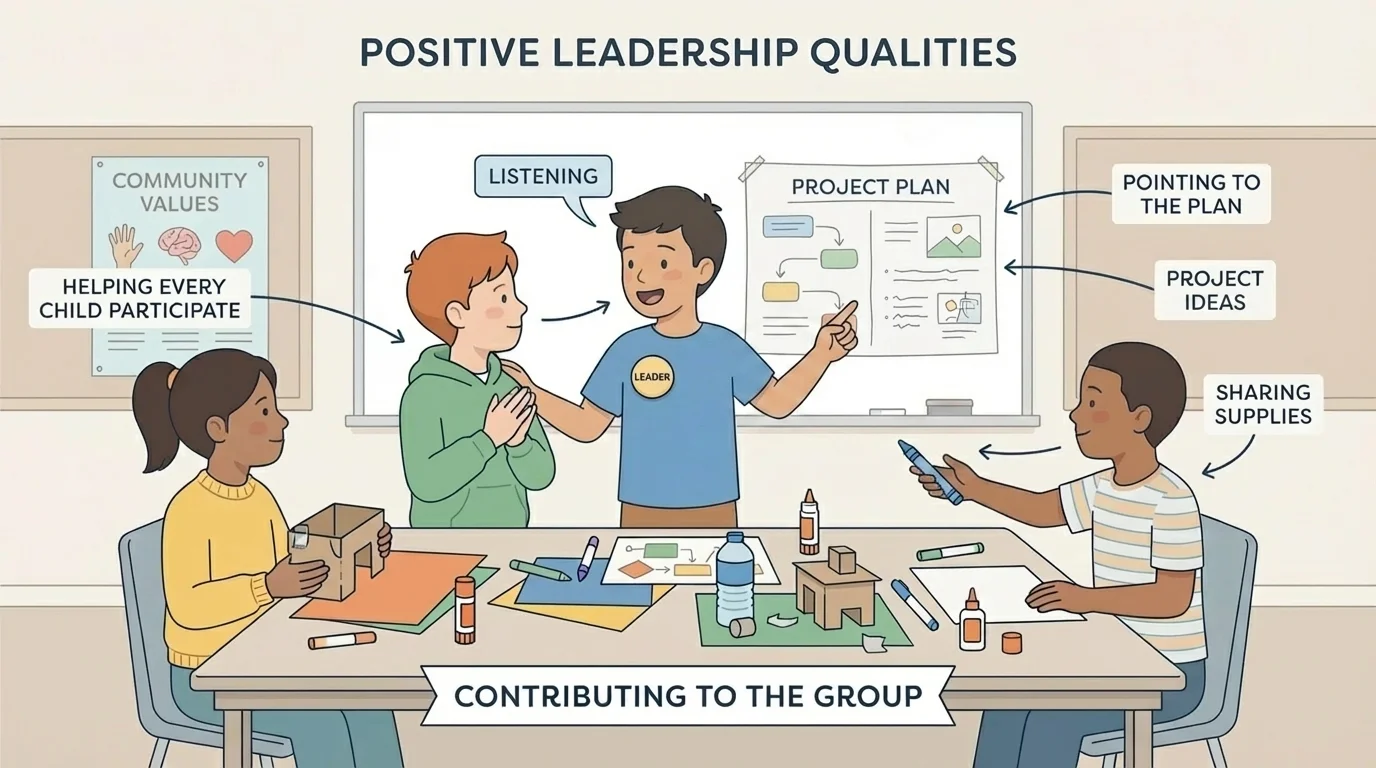
Positive leadership includes important qualities, as [Figure 1] shows through students working together kindly. One important quality is fairness. A fair leader treats people with respect and does not play favorites. Another quality is responsibility. A responsible leader does jobs carefully and can be counted on.
A positive leader also listens well. Listening matters because groups are made of different people with different ideas. When a leader listens, people feel important. Good leaders are also kind. They use polite words, notice when someone needs help, and try to include everyone. They tell the truth, too. Honesty helps people trust a leader.
Courage is another helpful quality. Courage does not mean being loud or bossy. It means doing what is right, even when it is hard. A leader may speak up if someone is being left out or if a rule is not being followed. Patience is important, too. Sometimes groups need extra time to solve a problem or learn something new.
A leader should also be a good example. If a leader wants others to clean up, wait their turn, and use respectful words, the leader should do those things too. People notice actions. When leaders make good choices, others are more likely to make good choices as well.
Some of the best leaders are quiet leaders. They may not speak the most, but they help, listen, and make people feel safe and included.
Being in charge is not the same as being a positive leader. A bossy person may try to control others, but a positive leader works with others. That is why kindness and fairness matter so much.
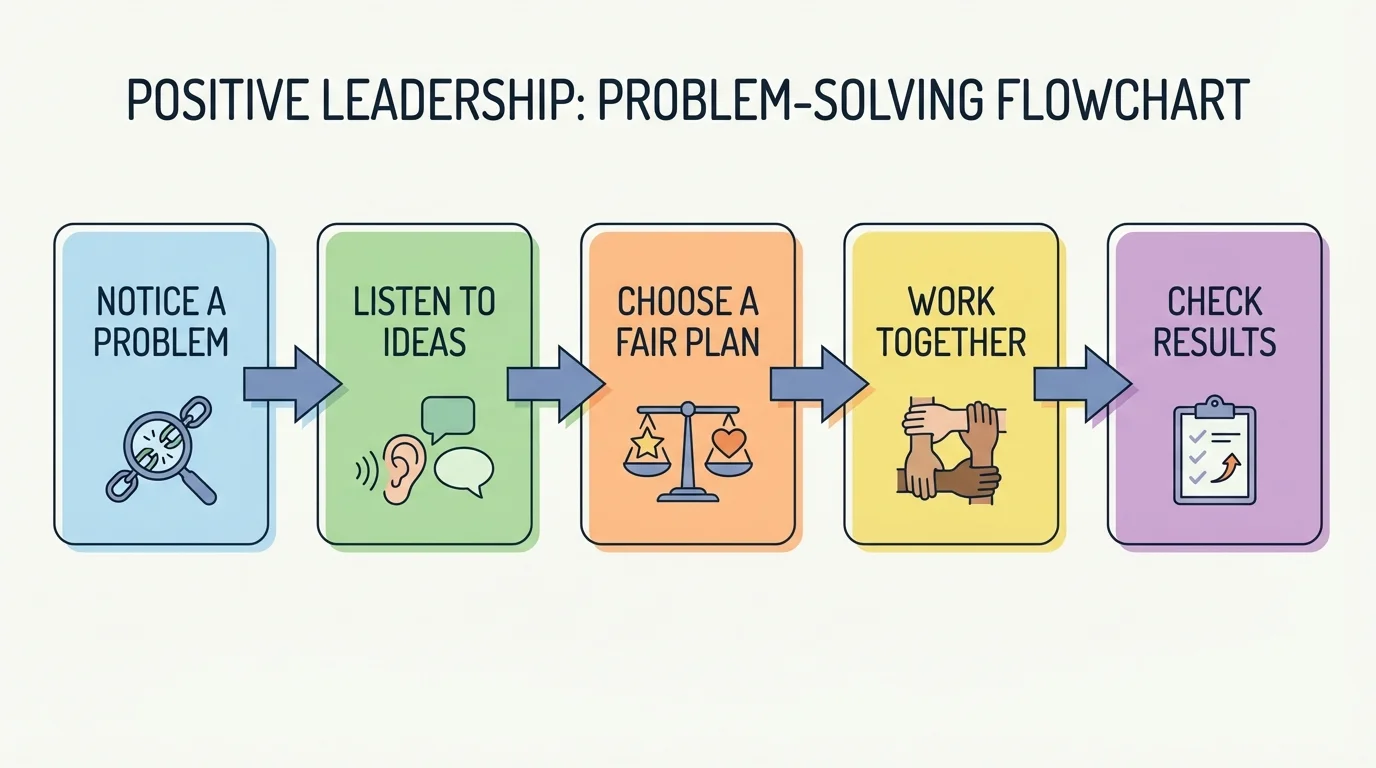
Leaders help groups move from a problem to a solution, and [Figure 2] lays out this process in clear steps. First, leaders help the group understand the goal. A goal might be cleaning the classroom, finishing a science project, or planning a school event. When everyone knows the goal, it is easier to work together.
Leaders also help people make plans. A plan tells what to do, who will help, and what order the steps should go in. If a group gets stuck, a leader helps solve the problem. The leader can ask questions, listen to ideas, and choose a fair next step. Good leaders do not have to know everything. They ask for help when needed.
Another job of a leader is helping people cooperate. To cooperate means to work together. Groups often do better when people share jobs. One person may carry supplies, another may write, and another may check the work. Leaders help organize these jobs so no one feels confused.
Leaders can also help keep people safe. At school, leaders remind others about rules like walking in the hall or using materials carefully. In communities, leaders such as crossing guards, firefighters, police officers, and mayors help protect people and improve places where they live.
Leadership is service
Positive leadership is not mainly about power. It is about service. Service means helping others. A positive leader asks, "What does this group need?" and then works to help the group succeed.
When people disagree, leaders help them solve conflicts peacefully. They may remind everyone to use calm voices, listen one at a time, and think of a fair answer. This helps the group stay focused and friendly.
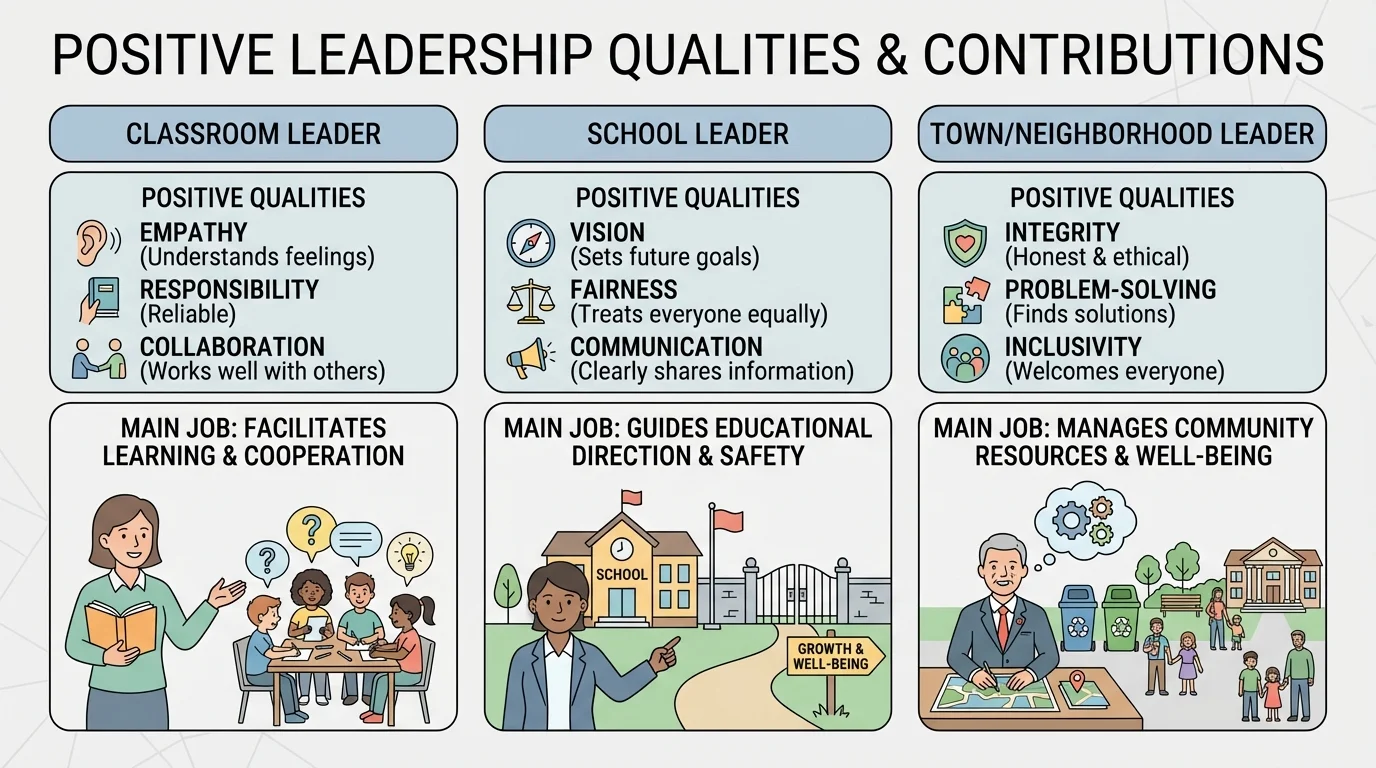
Leadership looks different in different places, as [Figure 3] makes clear by comparing leaders in school and the larger community. In a classroom, a student leader might lead the line, collect papers, or help classmates understand directions. In a school, a principal helps make sure the school runs well. The principal works with teachers, students, and families.
In a town or city, leaders may include a mayor or city council members. These leaders help decide things such as park rules, roads, and community services. They should listen to the people they serve and make choices for the good of the whole community. Community leaders can also include librarians, coaches, religious leaders, and leaders of local groups.
Not every leader is a government leader. Some leaders guide by helping others every day. A crossing guard helps children cross safely. A coach teaches teamwork. A library worker helps people find books and learn new things. These leaders contribute by making the community stronger, safer, and more caring.
When we think about leaders, it helps to ask two questions: Who are they helping? and How are they helping? A positive leader helps people solve problems, feel included, and work toward something good. As we saw earlier in [Figure 1], even a child helping classmates share and listen can be a real leader.
| Leader | Where they lead | How they help |
|---|---|---|
| Student helper | Classroom | Helps classmates, shares jobs, sets a good example |
| Principal | School | Keeps the school organized and safe |
| Mayor | Town or city | Helps make decisions for the community |
| Coach | Team | Teaches teamwork and encouragement |
| Crossing guard | Neighborhood | Helps people stay safe |
Table 1. Examples of leaders in different places and the ways they help others.
Students often see leadership at school every day. A teacher leads learning in the classroom. A lunch helper may lead by showing where to line up. A student can lead by inviting a classmate to join a game, helping clean up, or reminding others of the rules in a respectful way. These actions may seem small, but they make a big difference.
At home, adults often lead by making plans, caring for family members, and solving problems. Older brothers or sisters may also show leadership by helping younger children, sharing, and setting a good example. Leadership at home works best when it is loving, patient, and responsible.
Example: Leadership during a class project
A class is making a poster, but two students both want to use the same markers.
Step 1: A positive leader notices the problem.
The leader sees that the group may stop working if no one helps.
Step 2: The leader listens to both students.
The leader lets each person explain what they need.
Step 3: The leader suggests a fair plan.
One student uses the markers first while the other cuts pictures, and then they switch.
Step 4: The leader encourages the group.
The leader says kind words so everyone can keep working together.
This is positive leadership because the leader is fair, calm, and helpful.
The same caring choices can help in sports, clubs, and games. A team captain who encourages players and shares credit is leading positively. A captain who blames others or refuses to listen is not helping the team grow.
It is important to know the difference between positive leadership and negative leadership. Positive leaders include others, tell the truth, and use respectful words. Negative leaders may be selfish, mean, unfair, or dishonest. They might try to get attention in ways that hurt others.
Sometimes a person looks like a leader because others follow them. But if that person encourages rule-breaking, teasing, or leaving people out, that is not positive leadership. A true leader helps the group do what is right. The problem-solving path in [Figure 2] reminds us that good leadership includes listening and choosing fair actions, not rushing into hurtful choices.
"A good leader helps people do their best and care for one another."
When choosing someone to trust, think about that person's actions. Does the person listen? Does the person share? Does the person stay calm when things are hard? Does the person help the whole group? These questions can help you notice positive leadership.
You do not have to be the oldest, the loudest, or the most powerful person to be a leader. Leadership can happen in small, everyday ways. You can lead by being honest, by helping someone who feels left out, by following rules, and by speaking kindly. You can also lead by admitting a mistake and fixing it.
Children can contribute to their classroom and community in many ways. They can pick up trash, share materials, welcome new students, and thank helpers in the neighborhood. These are acts of leadership because they improve the group and show care for others.
Remember that communities include places like classrooms, schools, neighborhoods, and towns. In every community, people have roles that help everyone live and work together.
Positive leadership helps people feel safe, respected, and ready to work together. Whether the leader is a student, teacher, principal, parent, or mayor, the most important job is helping others and making the group stronger.
