Have you ever seen a police car, a fire truck, or a snowplow and wondered who makes sure those helpers are there when people need them? Communities do not function all by themselves. Government helps organize important jobs so people can live, work, learn, and travel safely.
When we say local government, we mean the government of a town, city, or county. When we say state government, we mean the government that helps the whole state. Both kinds of government serve people, but they do different jobs.
Government service is a job that government does to help people in a community. These services include keeping people safe, caring for roads, and helping public places work well.
Local government serves a town, city, or county. State government serves the whole state.
People often notice government services every day, even if they do not think about them. A crossing guard helping children near school, workers fixing a road, or firefighters coming quickly to an emergency are all signs that government is helping the community.
A community is a place where people live together. Communities need rules, safety, and shared services. If no one took care of roads, answered emergency calls, or made sure public places stayed clean and safe, daily life would be much harder.
Government leaders and workers help meet these needs. Some people in government make decisions, and many others do the work. Police officers, firefighters, road crews, and snowplow drivers are examples of people who help provide services for everyone.
Many government services are used by everyone in a community, even people who never meet the workers in person. A clean street, a safe road, and a quick emergency response all help many families at once.
Because communities have different sizes, the exact jobs may vary. A big city may have many police officers and buses. A small town may have fewer workers. But all communities need basic services that help people live safely and comfortably.
[Figure 1] Your town or city often provides many nearby services. One very important service is police protection. Police officers help keep people safe, protect property, direct traffic, and respond when someone needs help. Local government also provides fire protection. Firefighters put out fires, help in accidents, and rescue people when there is danger.
Local government also takes care of many streets in neighborhoods. This is called road maintenance. Workers may fill holes, paint lines, repair signs, and make streets safer for drivers, bike riders, and walkers. In places with cold winters, local workers may do snow removal on neighborhood streets so school buses, cars, and emergency vehicles can travel.
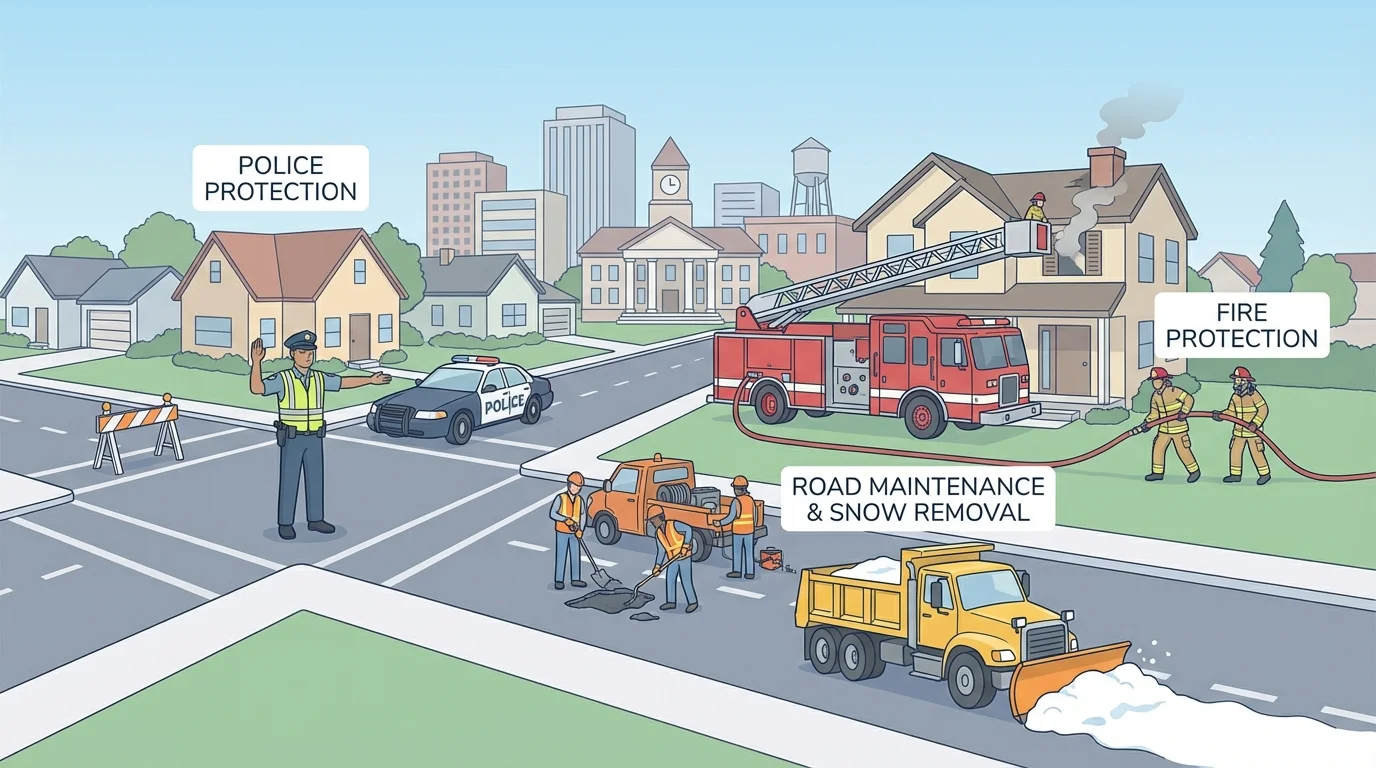
Local government may also collect trash, care for parks, and operate libraries. These services help a town stay clean, healthy, and pleasant. A park gives children a place to play. A library gives families books and learning programs. Trash collection helps keep neighborhoods neat.
Many public schools are connected to local communities too. School buildings, playgrounds, and buses are important parts of community life. Local government or local school districts often help make sure children have places to learn.
Water and sewer systems are other local services in many places. Families need clean water for drinking, cooking, and washing. Pipes and drains must be cared for so homes and schools can work properly. People may not see these systems often, but they are very important.
Examples of local government services
Step 1: A traffic light stops working near a school.
Local workers come to fix it so cars and children can move safely.
Step 2: A small fire starts in a kitchen.
Firefighters from the community rush to help.
Step 3: Snow covers neighborhood streets.
Local snowplows clear the roads so people can get to school, work, and home.
These local services are close to where people live. That is why local government is often the part of government families notice most often. When you see a police car in your town or a crew repairing a street, you are seeing local government at work.
[Figure 2] State government helps people across the whole state, not just in one town. It takes care of bigger jobs that connect many communities. For example, the state often cares for large highways. These roads help people travel from one city to another.
The state may also provide state police, who help on major roads and in places beyond one town's local police area. State workers help keep highways safe by checking signs, fixing damage, and making travel safer and more efficient across long distances.
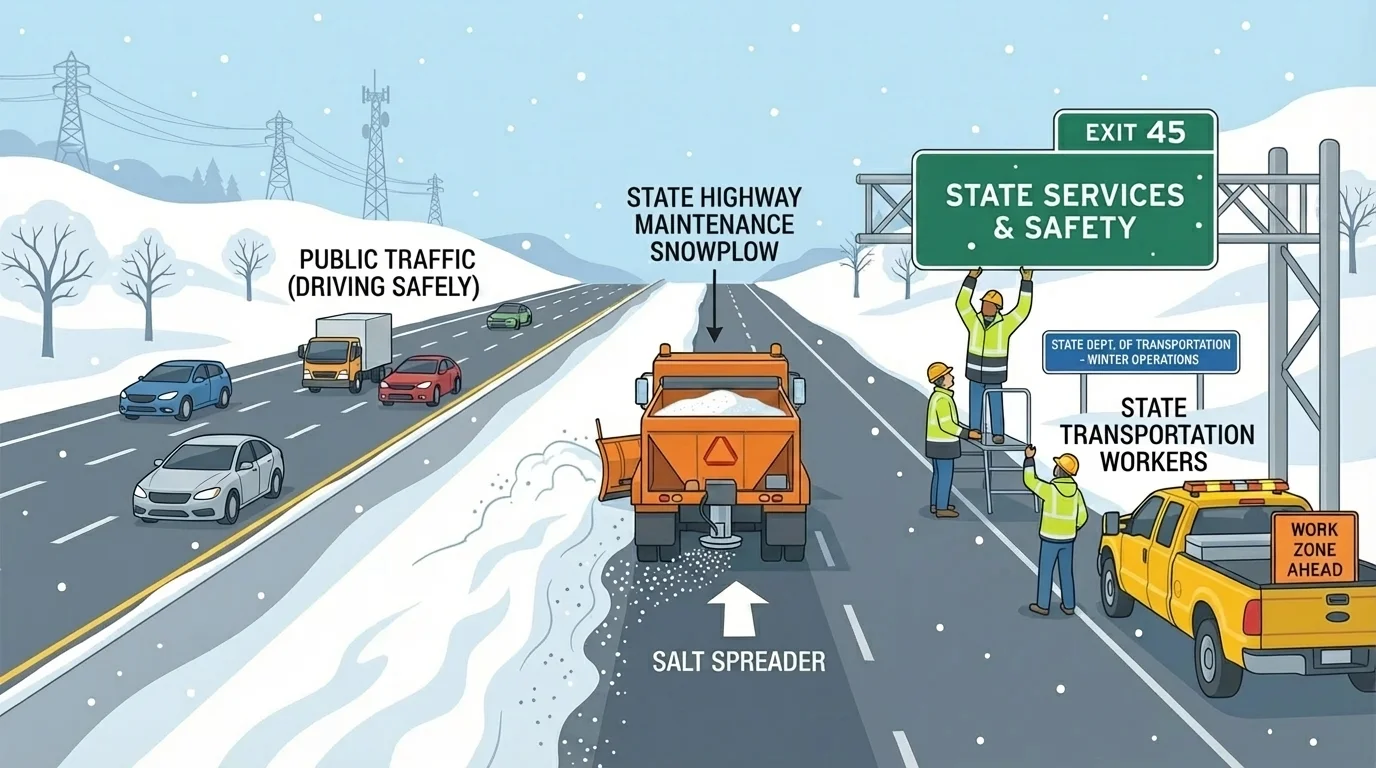
In winter, state government may remove snow from highways and other major roads. This is different from clearing a small neighborhood street. Large roads are important because they carry many cars, trucks, and buses between communities. If snow stays on those roads, travel can become dangerous.
State government may also help public schools by setting rules and giving support. It can run state parks, help protect natural places, and support health and safety programs. Some services are easy to see, like a snowplow on a highway. Others happen behind the scenes, such as planning road repairs or helping schools get what they need.
Why some jobs belong to the state
Some services are too large for one town to handle alone. Highways cross many communities, and state parks belong to everyone in the state. The state government helps organize these larger jobs so people in different towns can all benefit.
Even though students may not visit the state capitol often, state government still affects daily life. When families drive on a major road, visit a state park, or see snow cleared from a highway, they are using state services.
[Figure 3] Not every service belongs only to one level of government. Some services are shared. A small local street and a large state highway may both need care, but different workers may be responsible for each one. Local government helps nearby neighborhoods, and state government helps larger areas across the state.
Think about an emergency during a snowstorm. Local police may help in town. Local firefighters may answer rescue calls. At the same time, state workers may clear big roads so supplies and emergency vehicles can move safely from place to place.
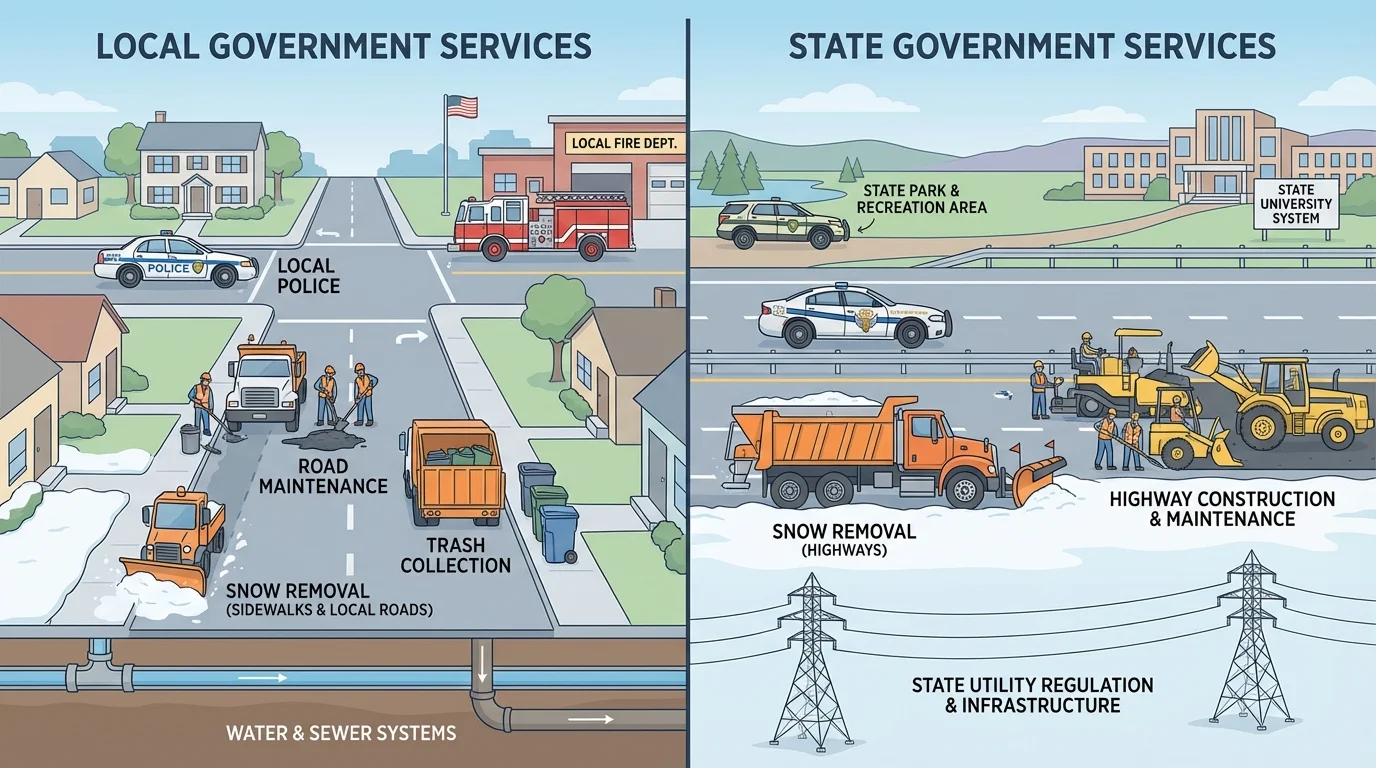
This teamwork is important because communities are connected. A family might drive on a local street to get to a state highway. A fire truck might use both kinds of roads during an emergency. The services fit together to help people in many ways.
We can compare some common services in a simple way.
| Service | Often Local Government | Often State Government |
|---|---|---|
| Police help | Town or city police | State police on major roads |
| Fire help | Community firefighters | Usually not the main state job |
| Road care | Neighborhood streets | Highways and major roads |
| Snow removal | Local streets | Large state roads |
| Parks | Town parks | State parks |
Table 1. A comparison of common services often provided by local and state government.
This chart shows that both levels of government are important. One is not better than the other. They simply have different jobs to do.
Government services help people stay safe, healthy, and ready to learn. Police officers protect neighborhoods. Firefighters respond quickly in emergencies. Road crews make travel safer. Snow removal helps buses and cars move when winter weather is rough.
These services also help families save time and avoid danger. If roads are broken, people may have accidents. If firefighters do not respond quickly, homes can be damaged. If snow blocks roads, ambulances and school buses may not get through. That is why these services matter so much.
Earlier, [Figure 1] shows emergency helpers working close to home. Those local workers are part of everyday community life. In a similar way, [Figure 2] shows how state workers help many towns at once by keeping large roads open and safe.
People also help government services work well by being responsible citizens. Families can follow laws, report dangers, and respect workers doing important jobs. For example, drivers should move aside for fire trucks and police cars. People should be careful around road repair areas and snowplows.
Communities have leaders and workers with different roles. Some make rules and plans, while others carry out services. All of these jobs help a community function.
When you look around your community, you can notice signs of government everywhere: a safe crossing near school, a repaired road, a clean park, or a fire station ready to help. These are not random things. They are services planned and provided so communities can work well every day.
As we saw with the shared jobs in [Figure 3], local and state government both matter. Together, they provide important services that make life safer and better for everyone.
