A long time ago, many places looked very different from the way they look today. Some towns had no paved roads. Some communities had no nearby school or hospital. Some regions were hard to travel across. Then people made choices, big events happened, and new ideas were created. Those changes shaped the places where people lived. History helps us understand how the past still matters now.
In history, change means that something becomes different over time. A community is a group of people living in the same place or sharing common interests. A region is a larger area that may include many communities. A region can be a part of a state, a whole state, or even an area that shares similar land, weather, or ways of life.
Communities and regions change for many reasons. Sometimes a person leads others and solves a problem. Sometimes an important event, such as a storm, a war, or a protest, changes life quickly. Sometimes a new development, such as a railroad, a bridge, or electricity, changes life little by little. History is not only about dates. It is also about understanding why places changed and who helped make those changes happen.
Historical change is the way people, places, and daily life become different over time. Change may happen because of people, events, or developments.
Influence means the power to affect what happens to others or to a place.
When we study change, we ask questions such as: Who helped cause it? What happened before and after? Did the change help everyone in the same way? These questions help us look carefully at the past.
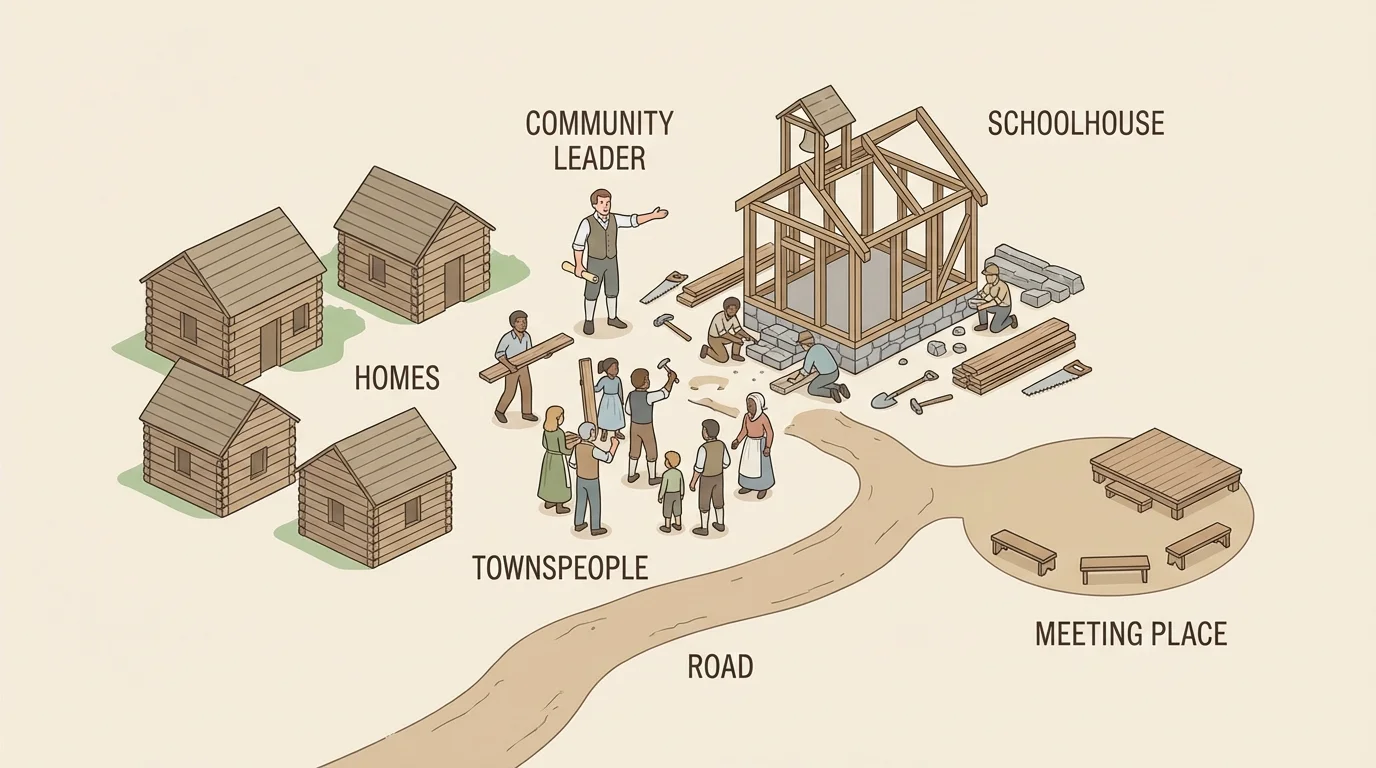
Sometimes one leader, or a group of people working together, can strongly affect a place, as [Figure 1] shows. A person might help start a school, build a church, open a store, improve farming, or speak up for fairness. Even children and families can bring change when they work with others in their community.
For example, a town founder might choose a place near water so people can farm and travel more easily. A teacher might help children learn to read and write, which can help a whole community grow stronger. A doctor might help people stay healthier. An inventor might create a machine that helps farmers plant or harvest crops faster.
Some famous people changed large regions, not just one town. Harriet Tubman helped many enslaved people escape to freedom and became a symbol of courage. Her actions influenced people far beyond one community. César Chávez worked to improve conditions for farm workers. His efforts helped workers in many communities. Sacagawea helped guide explorers and made travel and learning across a region easier. These people remind us that history is shaped by brave choices.
Not all important people are famous. A local mayor who helped bring clean water to a town, a tribal leader who protected land and traditions, or neighbors who started a library all changed their communities. History includes both well-known figures and ordinary people who did extraordinary things.
Case study: A school changes a community
Step 1: Families in a small town want children to learn closer to home.
Step 2: Community members give land, gather wood, and help build a school.
Step 3: A teacher arrives, and children begin regular lessons.
Step 4: Over time, more families move nearby because education is available.
One change, the opening of a school, can help the whole community grow.
As we saw earlier in [Figure 1], people often create change by working together. A single idea becomes much more powerful when many hands help turn it into action.
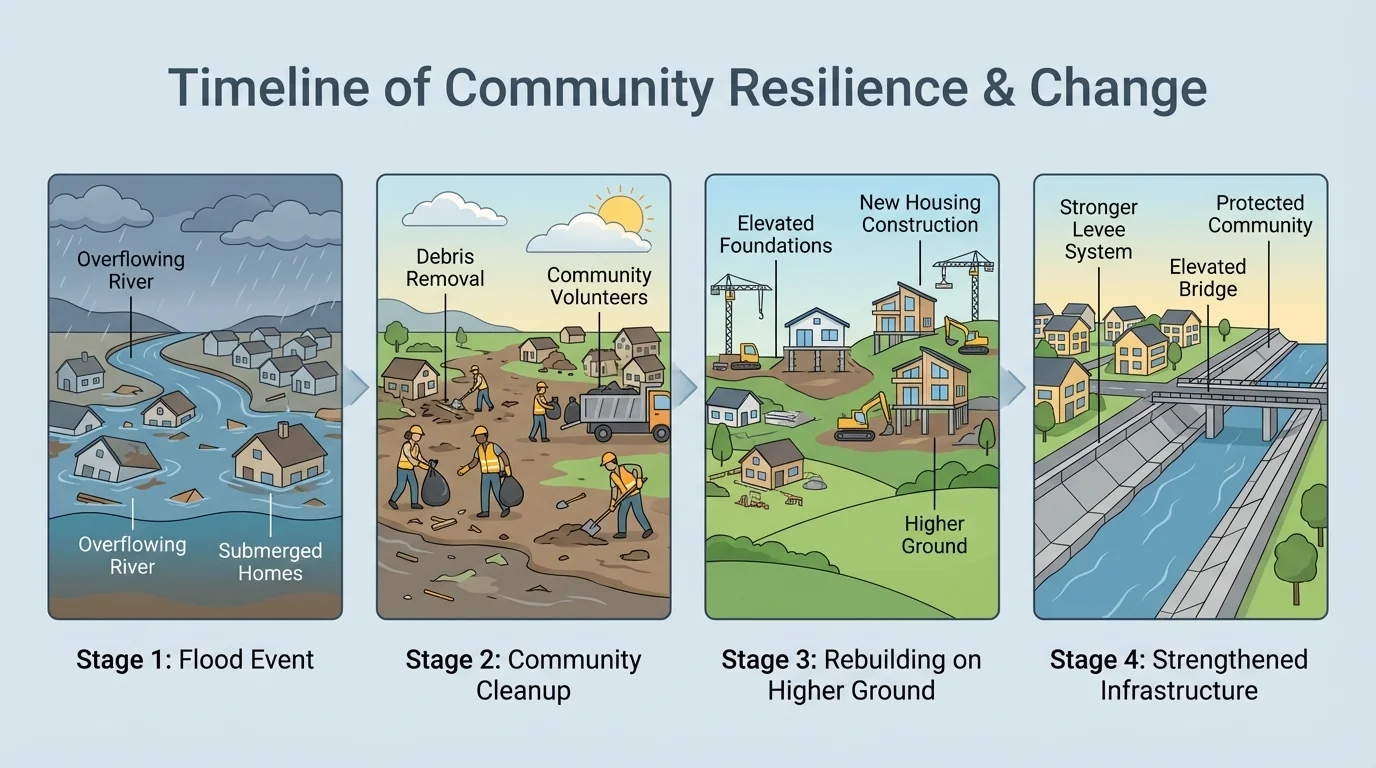
An event is something that happens at a certain time. Some events are turning points, as [Figure 2] illustrates. A turning point is a moment after which life is not quite the same. Communities may rebuild, move, grow, or make new rules after an important event.
Natural disasters are one example. A flood may destroy homes near a river. After the flood, people may build stronger bridges, move houses to higher ground, or create better warning systems. A fire may lead a town to create new safety rules. A drought may push families to move to places with more water.
Other events include protests and movements for rights. When people march, speak, and demand fairness, laws and community rules can change. The Civil Rights Movement helped end many unfair laws in the United States. That changed schools, neighborhoods, transportation, and voting in many communities and regions.
Migrations also change places. Migration means people moving from one place to another. Families may move for work, safety, land, or opportunity. When new people arrive, they bring languages, foods, music, beliefs, and skills. This can change a community's culture and economy.
Conflicts and wars can also change a region. After a war, borders may change, new leaders may take power, and communities may need to rebuild. These changes can affect farms, businesses, homes, and schools.
Some towns were rebuilt in new places after floods or fires. An event can change not only buildings, but even where a community decides to live.
Later changes often grow out of earlier events. The rebuilding shown in [Figure 2] reminds us that one difficult moment can lead people to make safer and stronger communities.
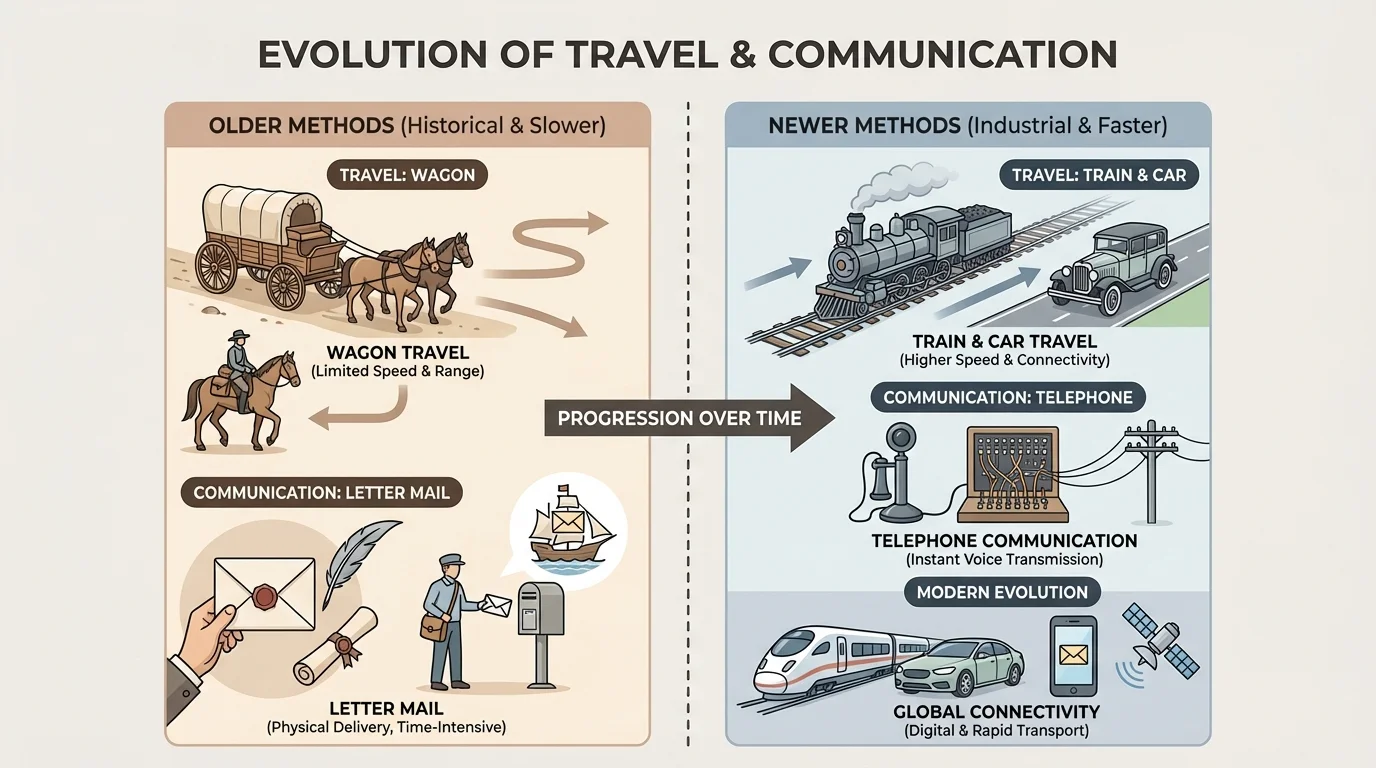
A development is a new idea, tool, system, or improvement that changes life over time. Some developments happen fast, but many take years to spread from one place to another. Developments can affect transportation, communication, farming, health, and education, as [Figure 3] shows.
Transportation developments changed communities in major ways. When roads improved, people could travel more easily. When railroads were built, towns could send goods farther and faster. Farmers could sell crops in places far away. New businesses opened along travel routes. Some towns grew because they were near a railroad stop, while others shrank if major routes passed them by.
Communication developments mattered too. Long ago, people waited days or weeks for messages. Then the telegraph, telephone, radio, and later computers made communication much faster. Quick communication helped communities share news, ask for help, and do business across long distances.
Other developments improved daily life in homes and neighborhoods. Electricity brought light after dark. Clean water systems helped people stay healthier. Hospitals and vaccines improved health. Better farming tools helped grow more food. Public schools gave more children the chance to learn.
Developments do not always affect every place at the same time. A large city may get electricity before a small rural town. A town near a railroad may grow quickly, while a more isolated community changes slowly. The comparison in [Figure 3] helps us see how daily life can become easier, faster, and more connected over time.
How developments spread
A new development often begins in one place and then spreads. If it is useful, more people want it. Over time, communities connect to nearby regions through trade, travel, and communication, and the development reaches more people.
That is one reason historians study both communities and regions. A change in one town may spread outward and influence a much larger area.
You do not have to look only at national history to find important change. Local history matters too. A bridge built across a river may allow families to reach school more easily. A new market may help farmers sell goods. A park may give neighbors a safe place to gather. A hospital may save lives and attract more families to the area.
Think about how a library changes a town. It gives children and adults access to books and information. It can become a meeting place for learning. Over time, it helps people gain knowledge and share ideas. One building can change how a community learns and grows.
Communities can also change when people work to protect what matters. Residents might save an old building, honor a tribal tradition, or clean up a polluted stream. These actions connect the past to the present and shape the future.
Remember that historians look for cause and effect. A cause is why something happens. An effect is what happens as a result. People, events, and developments can all be causes of change.
When you study your own area, you may find that one local decision had effects on many nearby places. That is how a community can influence a whole region.
To learn about change, historians use primary sources and secondary sources. A primary source comes from the time being studied. Examples include letters, photographs, diaries, maps, newspapers, and objects. A secondary source is made later by someone who studies the past, such as a textbook or a history article.
A photograph of workers building a railroad is a primary source. A book explaining how the railroad changed the region is a secondary source. Both kinds of sources are useful. They help us answer questions about who caused change, what happened, and why it mattered.
| Type of source | Example | How it helps |
|---|---|---|
| Primary source | Old letter | Shows what people thought at the time |
| Primary source | Historic photograph | Shows what a place looked like |
| Secondary source | History book | Explains information collected from many sources |
| Secondary source | Documentary | Combines facts and interpretation |
Table 1. Examples of primary and secondary sources and how they help historians study change.
Sources do not just tell us that a change happened. They also help us understand different viewpoints. One person may see a development as helpful, while another person may see it as harmful.
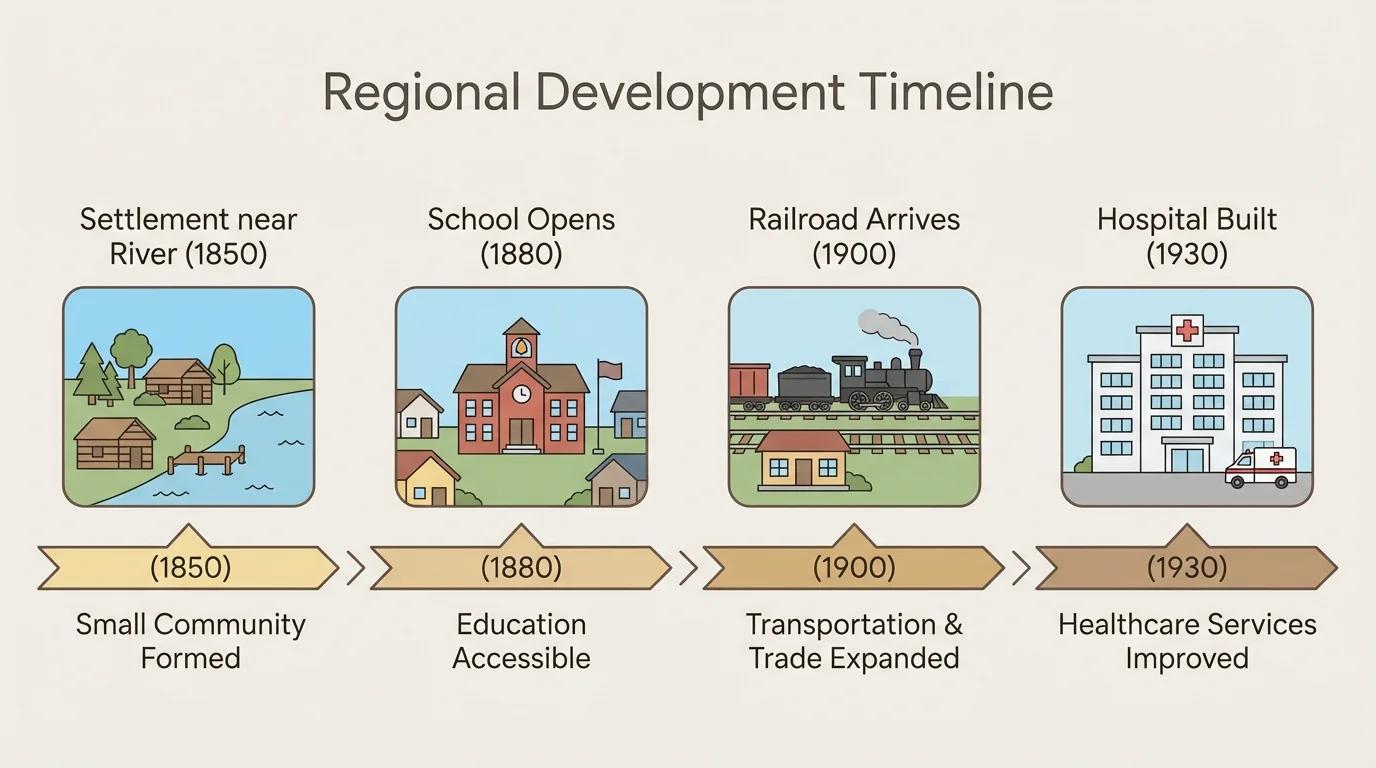
Historians often use a timeline to place changes in order, as [Figure 4] shows. A timeline helps us see that communities and regions are shaped by many moments across many years.
Here is a simple example of how one region might change over time: first a settlement is built near a river, then a school opens, later a railroad arrives, and after that a hospital is built. Each step adds something new. The region becomes more connected, educated, and prepared to care for its people.
| Approximate time | Change | Effect on the community or region |
|---|---|---|
| Earlier years | Settlement begins | Families create homes and farms |
| Later | School opens | Children learn close to home |
| Later | Railroad arrives | Travel and trade become faster |
| Later | Hospital opens | Health care improves |
Table 2. A simple timeline example showing several changes in one region.
The order of events matters. If the railroad had come first, the settlement might have grown faster. If the school had not opened, fewer families might have moved there. The sequence in [Figure 4] helps us think about how one change often leads to another.
It is important to remember that not every change feels the same to everyone. A new road may help stores and travelers, but it may also cut through farmland or sacred land. A factory may bring jobs, but it may also cause pollution. A railroad may help one town grow while another nearby town loses business.
Some changes are clearly helpful, like cleaner water or better medical care. Other changes have both good and bad effects. Historians try to understand these effects from more than one point of view.
"History is not only about what changed. It is also about who was affected and how."
This is why looking at different sources matters. A government report, a family letter, and an old photograph may each tell a different part of the same story.
Many things around us today exist because of people, events, and developments from the past. The roads we travel, the schools we attend, the parks we enjoy, and the rules that protect rights all have histories. When we learn about these changes, we understand our communities better.
If you walk through a neighborhood, you may see clues from the past: an old train station, a historic church, a memorial, or a street named after an important person. These clues remind us that history is all around us. Past choices continue to shape present life.
By studying people who acted bravely, events that changed lives, and developments that improved or challenged communities, we learn that history is full of cause and effect. Communities and regions are never frozen in time. They keep changing, and the past helps explain why they are the way they are today.
