Who helps make sure your street is safe, your library is open, and the park has clean swings? It is often local government. Local government is the part of government that works closest to the people. It handles many things families use every day, even if people do not always notice it.
People live in neighborhoods, towns, cities, and counties. These places have needs. Roads must be repaired. Trash must be collected. Fires must be put out quickly. Parks and playgrounds need care. Because these jobs are different from place to place, communities need leaders and workers who know the local area well.
Local government matters because it is close to home. If a stop sign is missing near a school, that is usually a local issue. If the library wants to build a new reading room, that is usually a local issue too. Local government helps solve these nearby problems.
Local government is the government of a county, city, town, village, or other nearby community. It makes decisions and provides services for people living there.
Community means a group of people living in the same place and sharing spaces, services, and rules.
When people work together to improve the place where they live, they are part of community life. Local government is one important way a community organizes that work.
Long ago, people lived in small settlements. They still needed rules and helpers. Even before there were large states and countries, people gathered to decide how to share land, protect one another, and settle disagreements. In very early communities, leaders might have been chosen by the group, or elders might have helped make decisions.
As towns grew, people needed more organized ways to solve problems. They created meetings, chose local leaders, and made local rules. In some places, people met in town meetings. In other places, they selected councils or boards to speak for the community. This was the beginning of the local governments we know today.
In the United States, local government developed as colonies and later states grew. New towns needed roads, safety, and records of land and property. States allowed local communities to create their own governments to handle these jobs. That means local governments are real governments, but they are usually created under state law.
How local government begins
Local government grows out of a simple idea: people living near one another share common needs. Because neighbors use the same roads, parks, and water systems, they need a way to make decisions together. Over time, this leads to leaders, rules, offices, and public services.
So, the origin of local government is not one single event. It comes from people living together and needing ways to organize community life fairly and safely.
[Figure 1] shows how local government fits into the larger system of government in the United States. There is a national government for the whole country and a state government for each state. Then there is local government for smaller areas, such as counties, cities, towns, or villages.
A local government serves people in one smaller area. A county may include several towns or cities. A city government serves the people who live inside city boundaries. A town or village government serves people in that town or village.
Because places are different, local governments are not all exactly the same. A big city may have many offices and workers. A small town may have only a few leaders and fewer departments.
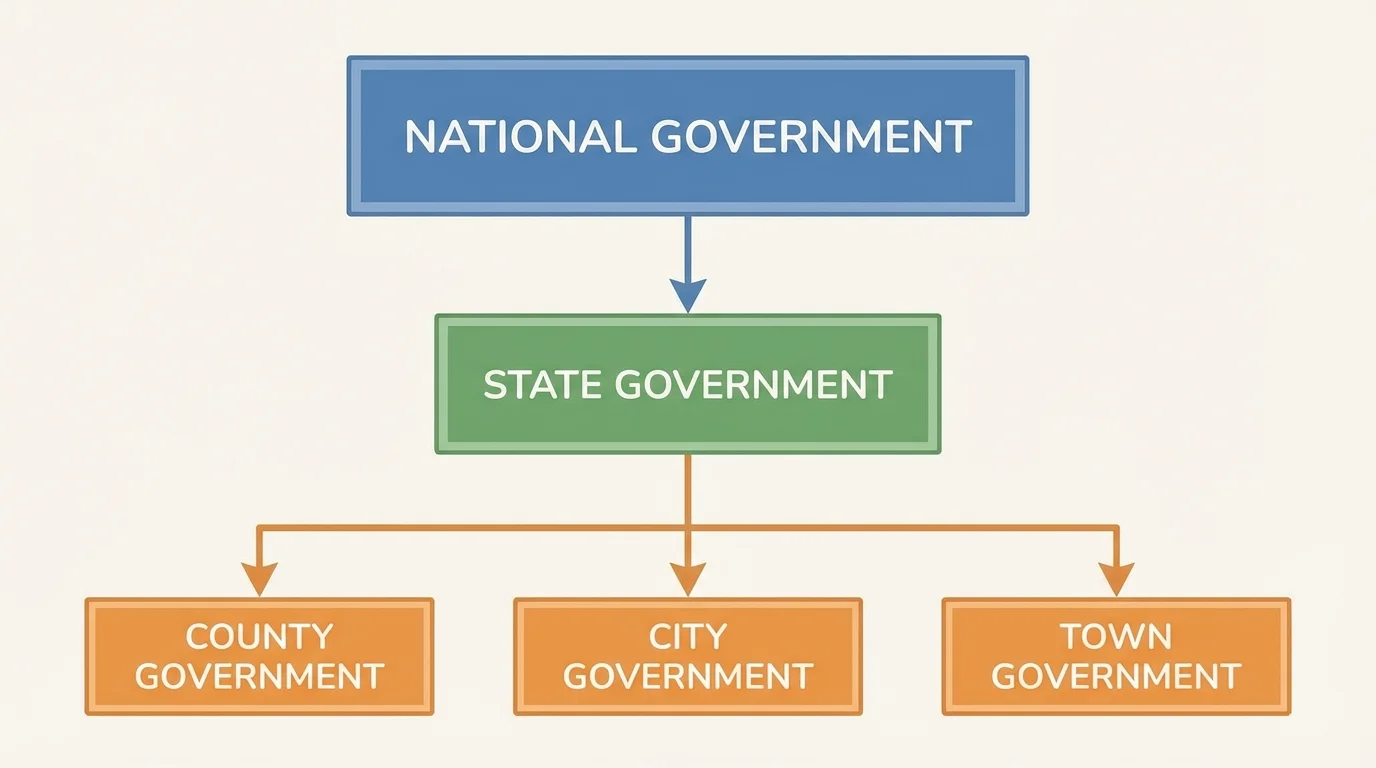
Even though their sizes differ, local governments all focus on nearby needs. They solve problems that affect people in that specific place.
There are several common kinds of local government. One kind is a county government. A county is a large local area inside a state. Counties may help run courts, keep records, maintain some roads, and provide services for people living outside city limits.
Another kind is a city or town government. City and town governments often take care of local streets, police protection, fire services, parks, and libraries. If you live in a city, many of the services you see most often may come from the city government.
Some places also have villages. A village is another kind of small local community with its own government structure. The names can vary by state, so one state may use towns more often while another may use villages or boroughs.
A special kind of local government is a special district. A special district is created for one main job, such as water service, fire protection, or public transportation. It does not do everything a city does. Instead, it focuses on one service.
| Type | Area Served | Common Jobs |
|---|---|---|
| County | Larger area in a state | Records, courts, roads, some safety services |
| City or Town | People inside city or town boundaries | Police, fire, parks, roads, libraries |
| Village | Small community area | Local rules and services |
| Special District | Area set for one service | Water, fire protection, buses, or sanitation |
Table 1. Common types of local government and the jobs they often do.
This is why two families living in different places may not have the same kind of local government. One family may be in a county and city. Another may be in a town and a special water district.
[Figure 2] illustrates a common pattern of local government structure, or the way its parts are arranged and work together. Many communities have elected leaders at the top and departments that carry out daily work.
In many cities, the leader is a mayor. The mayor may help lead the city, suggest plans, and make sure city departments do their jobs. In some places, the mayor is very powerful. In other places, the mayor mainly leads meetings and represents the city.
Many local governments also have a council. A council is a group of elected people who discuss community needs, vote on local rules, and help decide how money is spent. Some counties have commissioners or supervisors who do similar work.
Below these leaders are departments and workers. A fire department responds to emergencies. A parks department takes care of playgrounds. A public works department may repair streets or manage water systems. A library department helps people borrow books and use community resources.
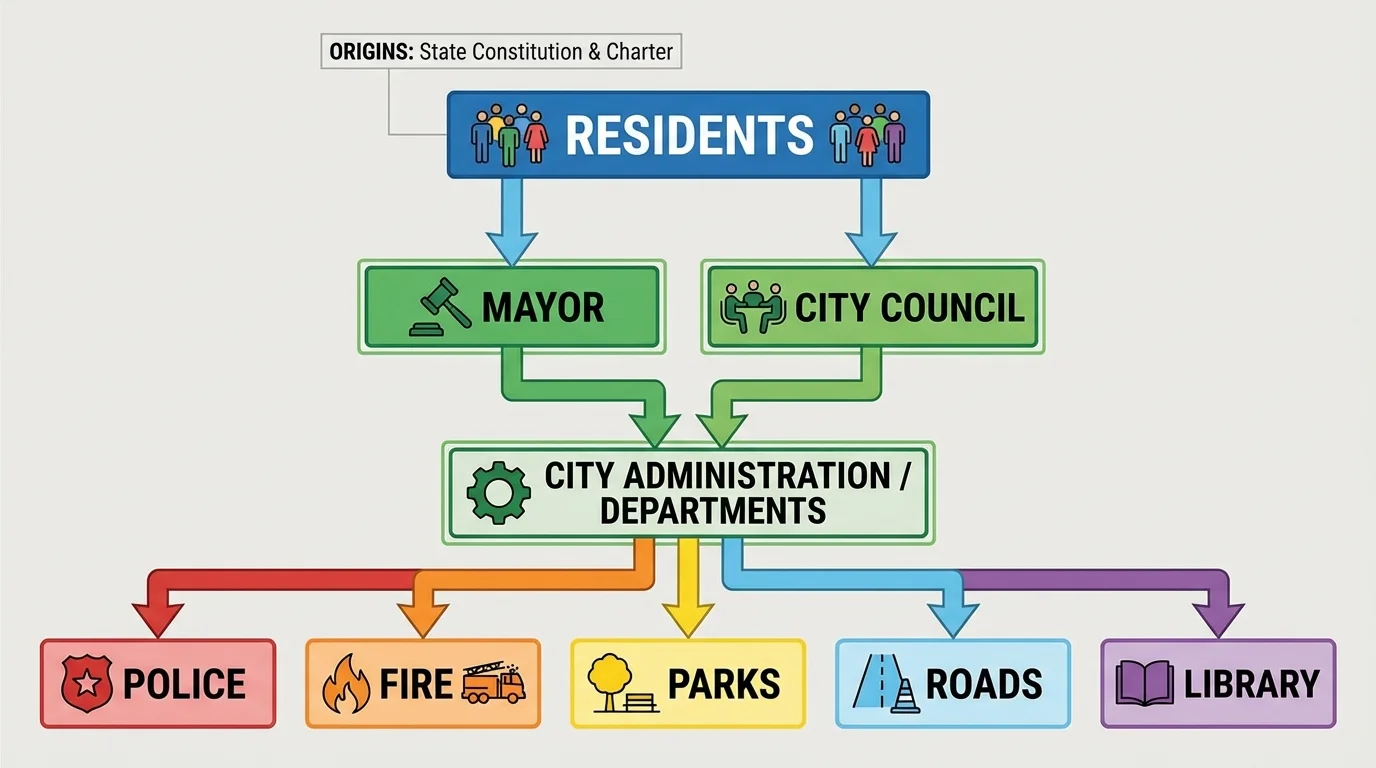
Residents are important too. Local government is not only leaders in offices. It includes the people being served. Community members vote, attend meetings, ask questions, and share ideas.
Example: How a city structure works
A town wants to fix a broken playground.
Step 1: Families tell local leaders that the playground is unsafe.
Step 2: The council discusses the problem and decides whether to spend money on repairs.
Step 3: The mayor and city workers help carry out the plan.
Step 4: The parks department fixes the playground.
This example shows that different parts of local government have different jobs, but they work together.
As seen earlier in [Figure 2], local government often works like a team. Leaders make decisions, and departments turn those decisions into action.
[Figure 3] shows the basic path from a local problem to a local solution. Communities need fair ways to choose leaders and make rules. In many places, voters elect mayors, council members, county commissioners, school board members, or other officials.
After leaders are chosen, they hold meetings to discuss community issues. They listen to information, ask questions, and vote. A vote is a way to make a group decision. If most members agree, the plan may move forward.
People in the community can often attend public meetings. Adults may speak, ask questions, or share concerns. This helps local government hear different points of view before making decisions.
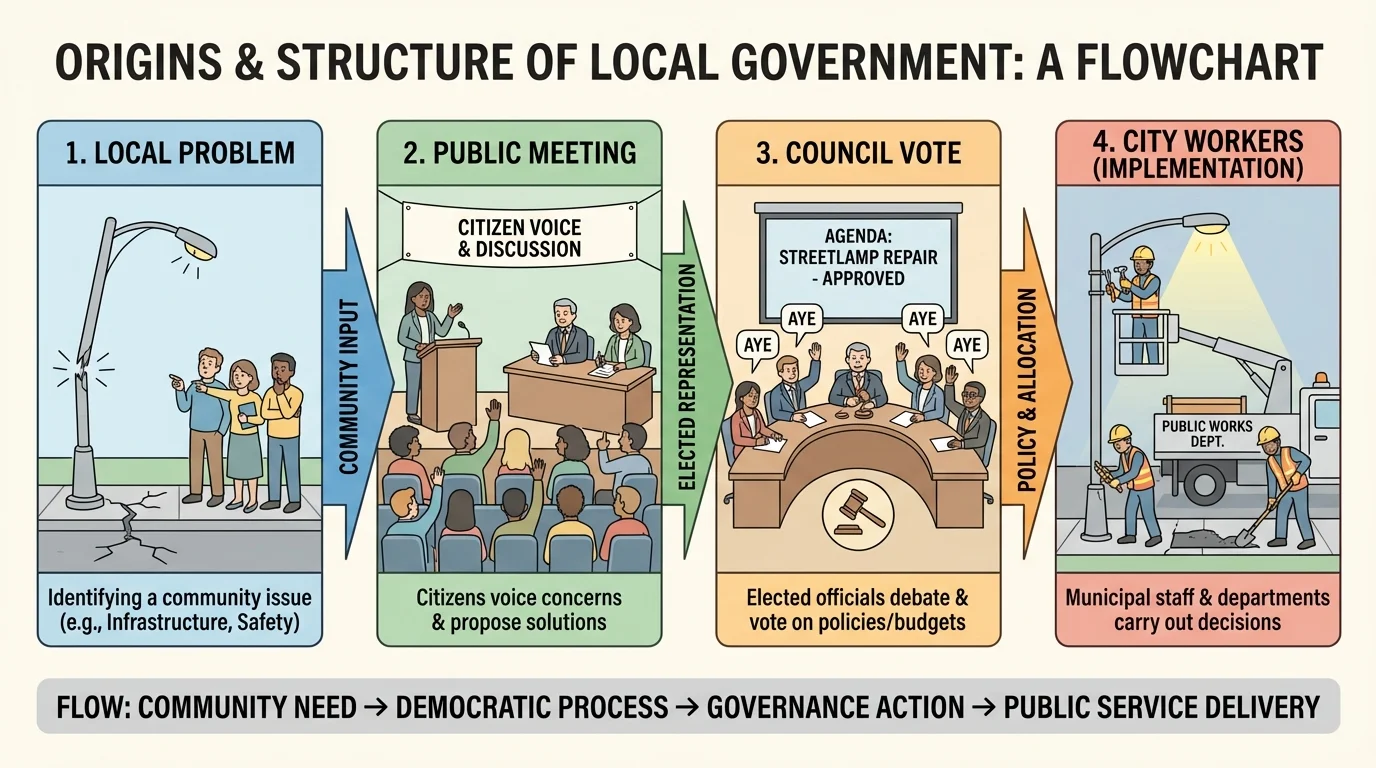
For example, if a neighborhood needs a new crosswalk near a school, the issue may be brought to a meeting. Leaders can study traffic, hear from families, vote on a plan, and then have workers paint the crosswalk and place signs.
Later, when you think about how an idea becomes action, [Figure 3] helps you trace the steps: a problem is noticed, leaders discuss it, a decision is made, and workers carry it out.
Some local governments still use town meetings where community members gather and talk about local issues together. This is one of the oldest forms of local decision-making in the United States.
Local government decisions may seem small compared with national events, but they can make a big difference in daily life because they affect nearby places people use all the time.
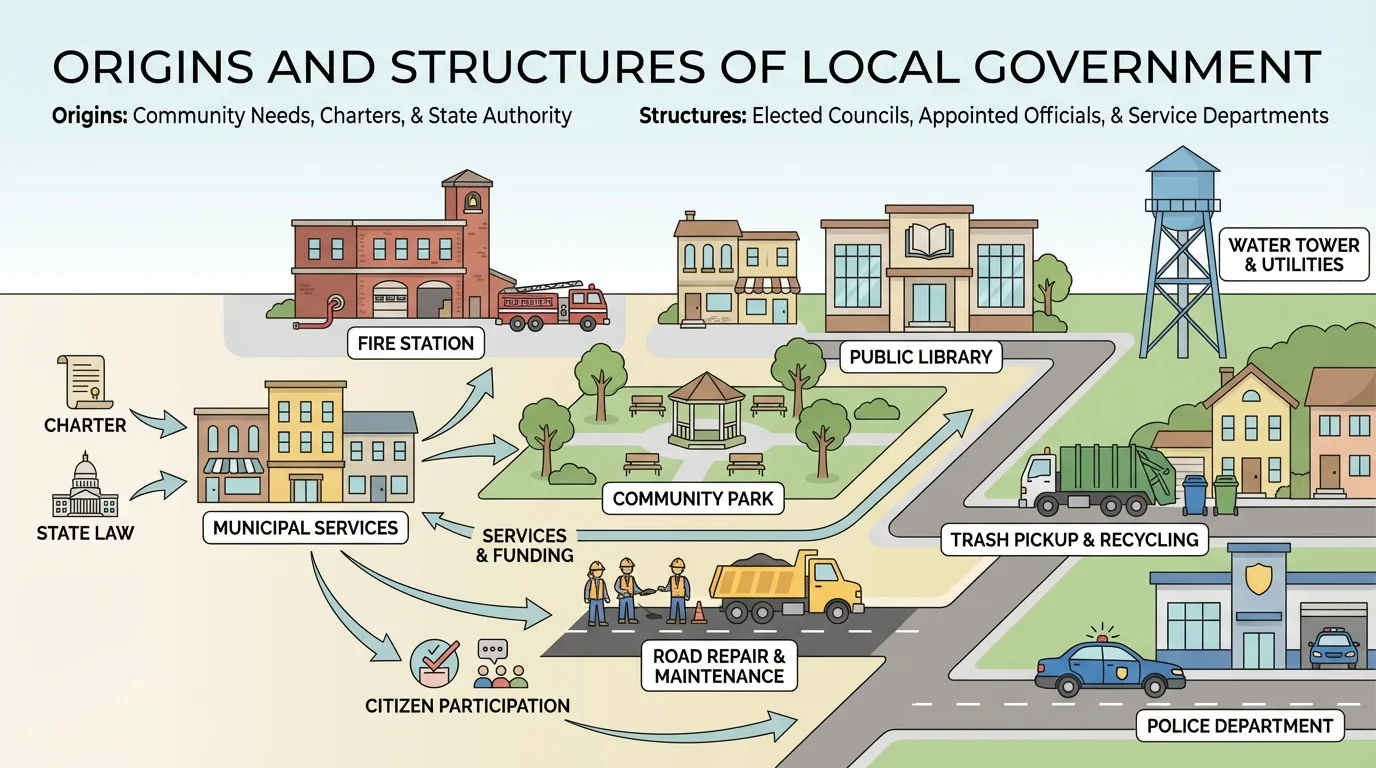
[Figure 4] illustrates many daily services that come from local government through a single community scene. Local governments help protect people, maintain public spaces, and keep a community running smoothly.
One major job is public safety. This can include police officers, firefighters, and emergency workers. Another job is transportation. Local governments may repair streets, care for traffic lights, and add sidewalks or signs.
Local governments also support learning and recreation. They may run libraries, parks, sports fields, and community centers. In some states, local school boards are part of local government, helping guide public schools.
Other services include water systems, sewer systems, trash collection, and snow removal in colder places. These services are easy to overlook, but communities depend on them every day.
Think about one ordinary Saturday. A family borrows books from the library, plays at the park, drives on local roads, and puts trash out for pickup. Several of those services are connected to local government.
When a community wants cleaner parks or safer roads, local leaders and workers often help make those improvements. The range of services in [Figure 4] shows why local government affects everyday life so directly.
Services cost money. Fire trucks, library books, road repairs, and park equipment are not free. Local governments usually pay for these things through taxes and fees.
Taxes are money collected by government to pay for public services. Families and businesses may pay local taxes. Some services may also use fees, which are charges for certain uses, such as permits or special programs.
Local leaders make a budget. A budget is a plan for how money will be collected and spent. If a town has limited money, leaders must decide which needs are most important first.
Why budgets matter
A budget helps a community make careful choices. If leaders spend too much in one area, there may not be enough for another important service. Good budgeting helps communities balance needs such as safety, roads, parks, and libraries.
For example, a town may choose between buying new playground equipment now or repairing an old bridge first. Both matter, but leaders must decide which need is more urgent.
Local government is easiest to understand when we look at real examples. Suppose a street near a school is dangerous during morning drop-off time. Parents and teachers notice the problem. They contact local officials. The issue is discussed at a meeting. Then the city may add crossing guards, signs, or a crosswalk.
Or think about a park with broken benches and litter. Residents ask for help. The parks department cleans the space. The council may vote to spend money on repairs. Soon the park becomes safer and more welcoming.
Case study: Adding a new library room
A growing town wants more space for children to read and study.
Step 1: Library workers and families explain that the building is crowded.
Step 2: Local leaders study the cost and available space.
Step 3: The council votes on the project as part of the budget.
Step 4: Builders and local workers create the new room.
This shows how local government responds when a community changes and grows.
These examples show that local government is not far away. It responds to real problems in real neighborhoods.
Not every local government looks the same. A huge city may have many departments, a mayor, a large council, and thousands of workers. A small town may have a tiny office, a few elected leaders, and only a small number of employees.
States also make different rules about local government. One state may give cities certain powers. Another state may give counties more responsibility. That is why the structure of local government can vary from place to place.
Some places use a mayor-council system. Others may use a council-manager system, where a professional manager helps run daily operations. At this grade level, the important idea is that local governments may be organized in different ways, but they all exist to serve local needs.
| Community | Possible Structure | Why It Fits |
|---|---|---|
| Small Town | Few leaders, small staff | Fewer people and fewer services needed |
| Medium City | Mayor, council, several departments | More people and more services |
| Large City | Many departments and offices | Complex needs and larger population |
Table 2. Examples of how local government structure can vary by community size.
Even when the structure changes, the purpose stays similar: to help the community function well.
Children are not too young to learn how local government works. Students can notice community needs, learn about public places, and talk with trusted adults about local issues. They can also help by following rules in parks, libraries, and neighborhoods.
Families can vote, attend meetings, volunteer, and speak respectfully about local concerns. When people take part, local government can better understand what the community needs.
Rules, leaders, and services are parts of government at every level. What makes local government different is that it focuses on the place where people live day by day.
When people know how local government works, they can better understand who makes decisions close to home. That helps communities stay safe, organized, and fair.
