Have you ever spilled a drink, lost a game, or heard that the plan for your day changed? Hard moments happen to everyone. The good news is this: you can learn to bounce back. Bouncing back means recovering in your thoughts and feelings, even when something feels hard.
Sometimes you make a mistake. Sometimes something does not go the way you wanted. Sometimes life changes, and you have to do something new. These moments can bring big feelings like sadness, anger, worry, or frustration.
Those feelings are real, and they matter. But hard feelings do not mean you are stuck forever. You can learn resilience, which means getting stronger when hard things happen and finding a way forward.
Mistake means doing something wrong by accident or not the way you hoped. Disappointment means feeling sad because something you wanted did not happen. Change means something is different than before.
When you know what kind of hard moment you are having, it gets easier to choose what to do next.
When your feelings get big, your body may feel tight, hot, wiggly, or teary. Before you fix the problem, you need to help your body feel calmer. A simple calm-down routine helps your brain get ready to think again.
[Figure 1] You can stop your body, put your hands on your belly, and take slow breaths. You can count quietly: breathe in for \(3\), then breathe out for \(3\). You do not need perfect breathing. You just need slow, gentle breaths.
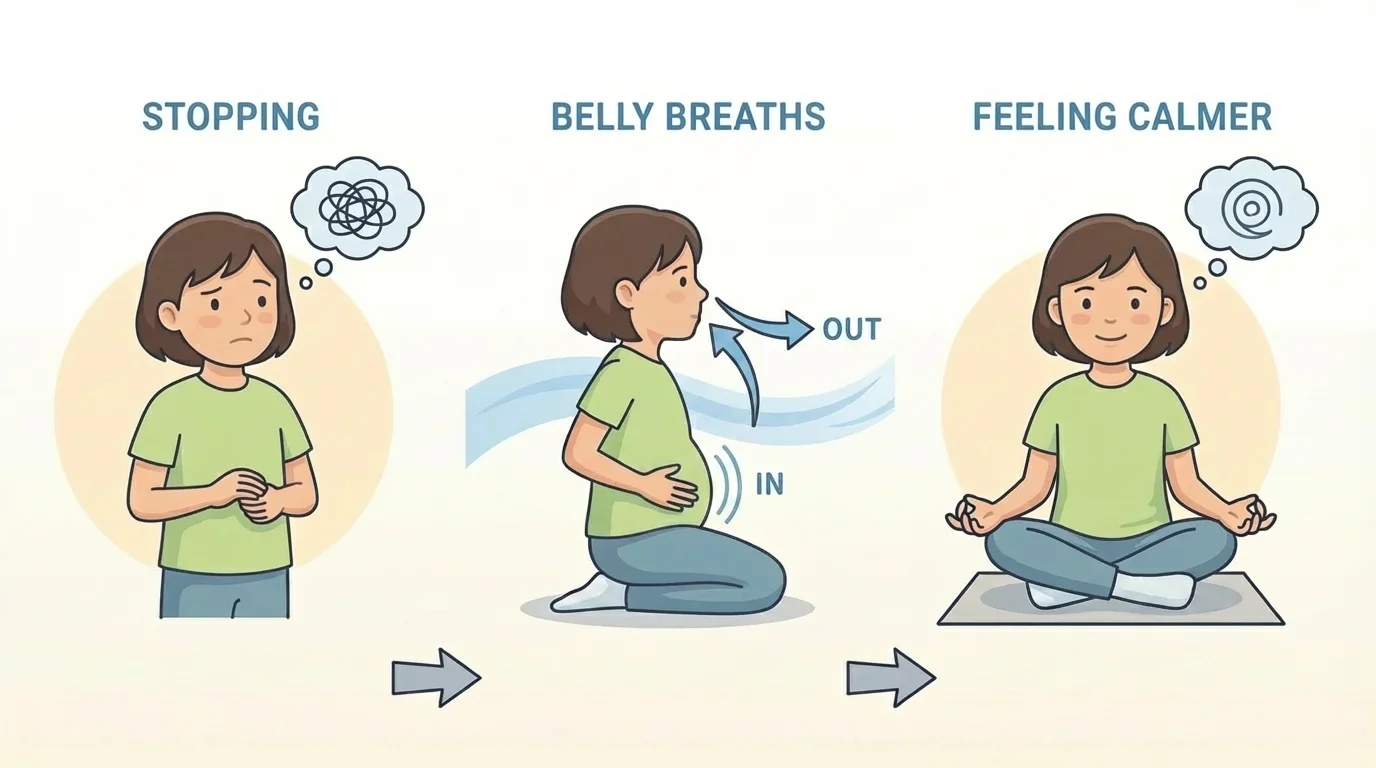
Next, name the feeling. You might say, "I feel mad," "I feel sad," or "I feel worried." Giving the feeling a name can make it feel less giant.
If you need more help, try a calm choice: hug a pillow, get a drink of water, sit in a cozy spot, draw for a minute, or ask an adult to sit with you. These are healthy ways to calm down.
Calm body, calm thinking
When your body calms down, it is easier to listen, solve problems, and make kind choices. If you try to fix everything while you are still very upset, it is harder to do your best.
That is why taking a pause is not quitting. It is a smart first step.
You can use one easy plan again and again. It works like a path to follow when you are not sure what to do next.
[Figure 2] Step 1: Stop. Freeze your hands and feet for a moment.
Step 2: Breathe. Take a few slow breaths.
Step 3: Say it. Name the feeling and the problem.
Step 4: Get help if you need it. Ask a trusted adult.
Step 5: Try again or make a new plan.
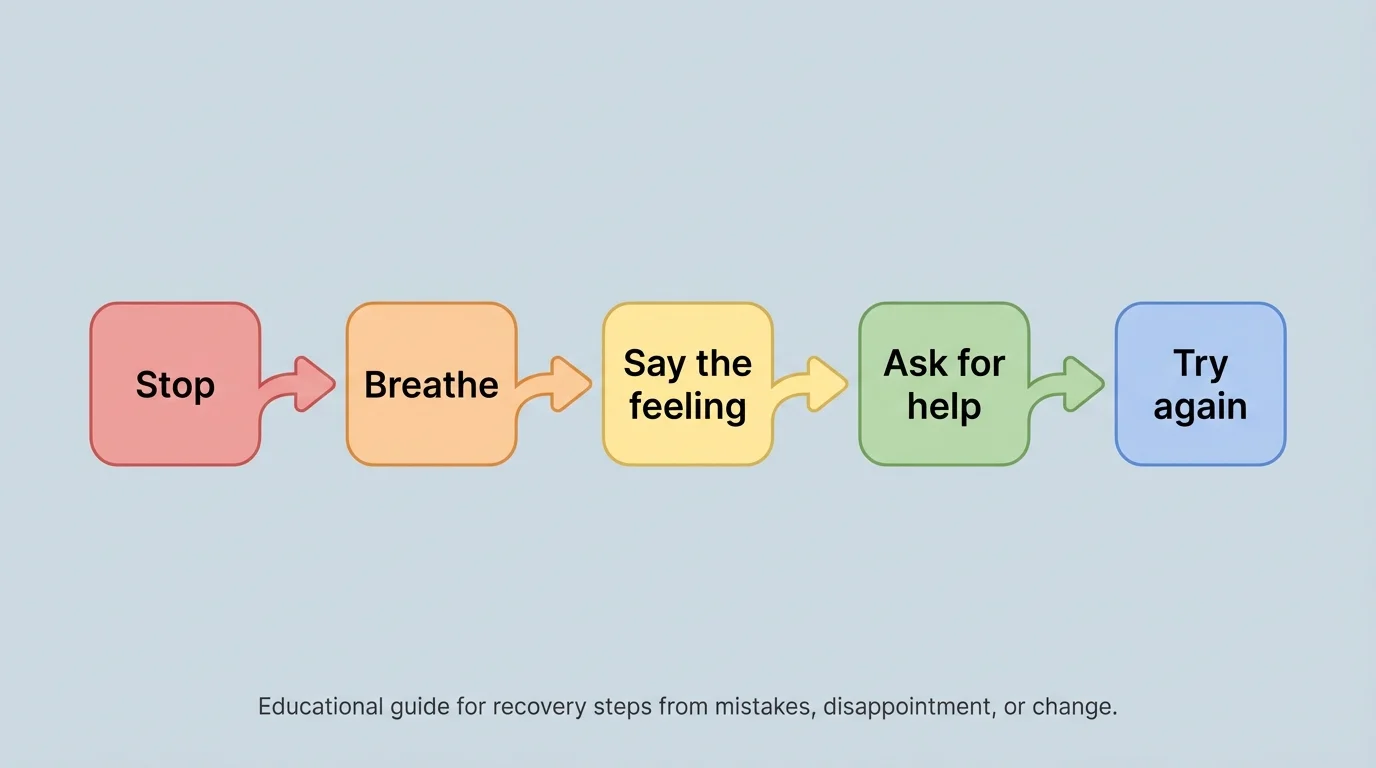
This plan helps because it gives you something to do right away. When you have steps, you do not feel as lost.
Example: Your block tower falls down
Step 1: Stop and breathe.
You keep your hands still and take slow breaths.
Step 2: Say the feeling.
You say, "I feel frustrated. My tower fell."
Step 3: Choose what to do next.
You ask for help, rebuild it, or make a smaller tower first.
You do not have to like what happened. You just choose a helpful next step.
Try This: Put the five steps on a small card or ask an adult to help you remember them.
Everyone makes mistakes. You might click the wrong button on a device, knock over crayons, or say something unkind when upset. A mistake does not mean you are bad. It means you are learning.
After a mistake, do three important things: tell the truth, fix what you can, and learn for next time. This is called taking responsibility.
You can say, "I made a mistake." Then you can say, "I am sorry," if someone got hurt. After that, try to help fix it. If you spilled water, get a towel. If you broke a rule online, tell an adult and ask what to do.
"Mistakes help us learn when we fix them and try again."
What happens if you hide mistakes? Problems can get bigger. What happens if you are honest? Adults can help, and you can learn faster.
Remember the path from [Figure 2]: stop, breathe, say it, get help, and try again. That same path works after mistakes.
Disappointment happens when you hoped for one thing, but a different thing happened. Maybe your game ended early, your art project did not turn out the way you wanted, or a friend could not join a video call.
It is okay to feel sad about that. You do not have to pretend you are happy right away. First, let yourself feel it. Then think, "What can I do now?"
You might choose one of these helpful actions:
Your brain gets stronger when you practice handling small hard moments kindly and calmly. Every time you recover, you build a little more inner strength.
Try This: If you feel disappointed, say, "This is not what I wanted, but I can still choose my next step."
Sometimes the hard part is not a mistake at all. Sometimes the plan changes. Looking for what changed and what stayed the same can help change feel less scary.
[Figure 3] Maybe you were going to play outside, but now it is raining. Maybe your usual schedule changes, or you need to meet a new coach, babysitter, or group leader. Changes can feel strange, even when they are safe.
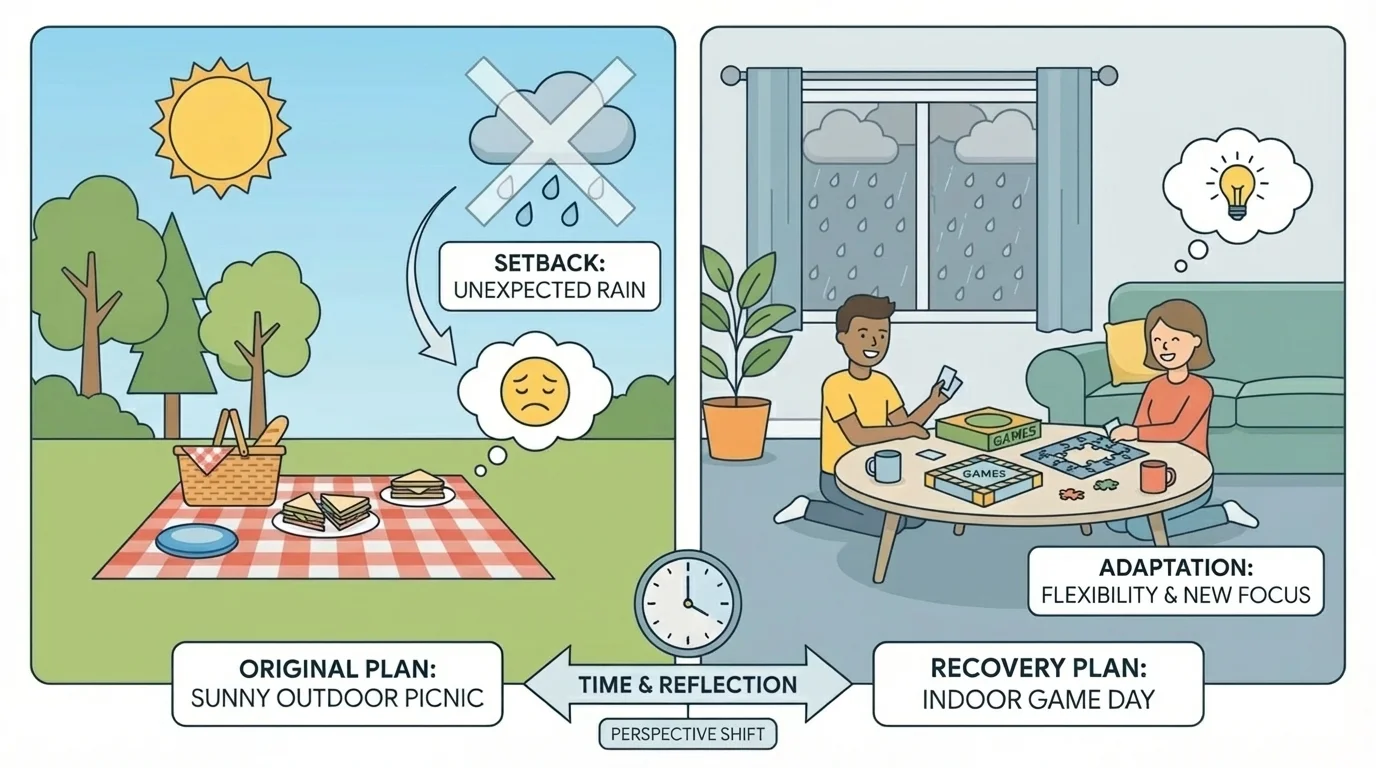
Ask two questions: What is different? and What is still the same? For example, the place changed, but you still get to have fun. The time changed, but you still have a caring adult with you.
When you notice what stays the same, your heart can feel steadier. That helps you make a new plan instead of only thinking about the old one.
Example: A plan changes
Step 1: Name the change.
"We are not going to the park now."
Step 2: Name the feeling.
"I feel disappointed."
Step 3: Find what stays the same.
"I still get special time with my family."
Step 4: Make a new plan.
"We can play a game inside."
Later, when another plan changes, you can remember [Figure 3] and look for the "same" parts, not only the "different" parts.
You do not have to handle every hard moment alone. A trusted adult can help you feel safe, solve a problem, or think of a new plan.
A trusted adult might be a parent, grandparent, caregiver, coach, club leader, or another grown-up who takes care of you. If something happens online, like a mean message or a problem in a game, tell an adult right away.
How to ask for help
You can use simple words: "I need help." "I made a mistake." "I feel upset." "The plan changed and I do not know what to do." Clear words help adults understand you faster.
Asking for help is not babyish. It is brave. Strong people know when they need support.
You can build resilience a little every day. Small habits help hard moments feel easier over time.
Here are some helpful habits:
When you do these things, you learn that hard moments do not last forever. You can feel, calm, think, and move forward. That is real strength.
