Have you ever loved a loud birthday song while someone else wanted to cover their ears? That happens because people do not all feel the same way about the same thing. You and another person can be in one moment together, but your hearts and minds may have different feelings inside.
Feelings are the emotions inside us, like happy, sad, excited, worried, calm, or frustrated. Feelings matter because they help us understand what we need. If you feel tired, you may need rest. If you feel lonely, you may need a kind talk or a hug from a trusted person.
Your experience is what happens to you and how it feels to you. Two people can do the same thing, such as join a video call, but one person may feel brave and the other may feel shy. Both feelings are real.
Different feelings means people do not always react the same way. Different experiences means the same event can feel easy for one person and hard for another person.
When you understand this, you become more kind. You stop thinking, "Everyone should feel like me," and start thinking, "I wonder how this feels for them." That is an important life skill.
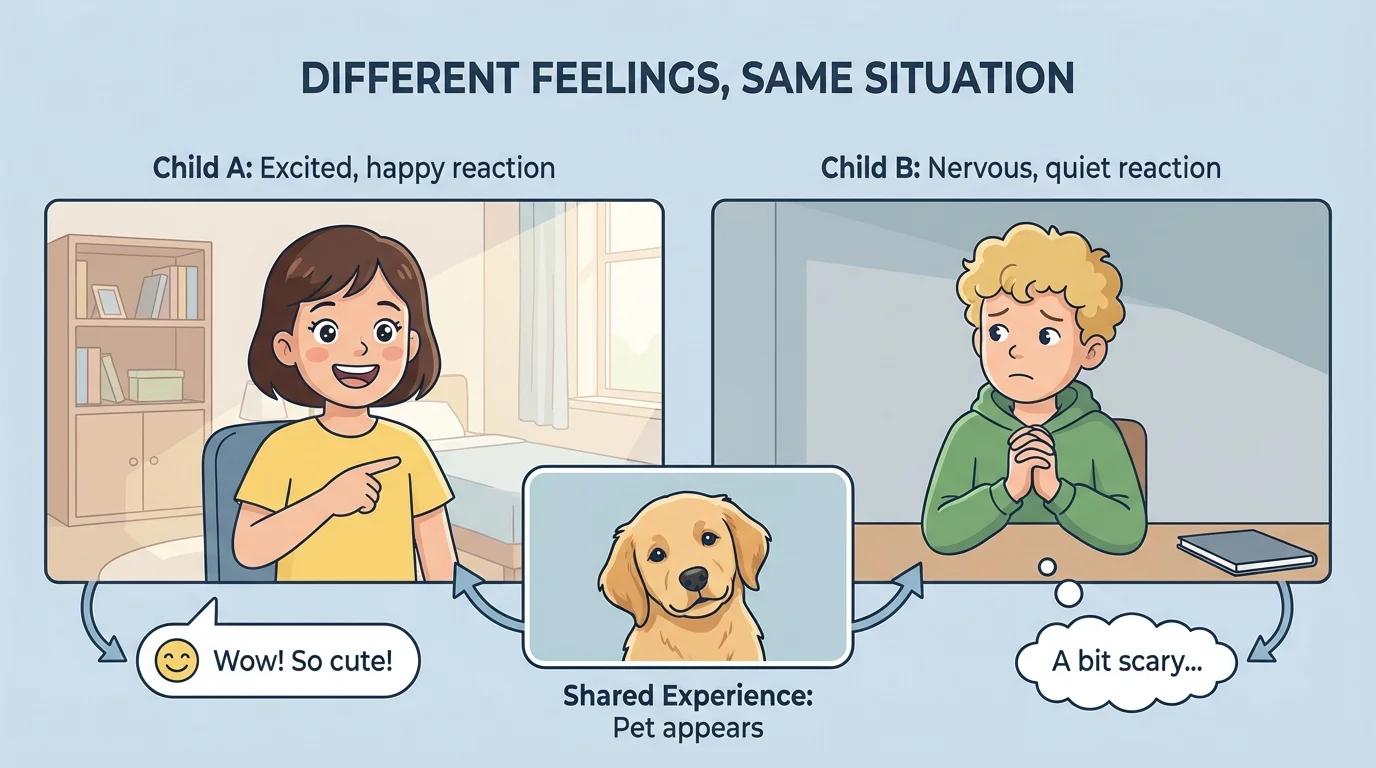
People can feel differently for many reasons. One reason is that everyone has different past experiences. A barking dog may feel fun to one child and scary to another, as [Figure 1] shows with one shared moment and two different reactions. If someone had a pet dog before, they may smile. If someone was frightened by a loud dog once, they may feel nervous.
People also have different likes, dislikes, energy levels, and needs. A child who is hungry may get upset faster. A child who is well rested may feel calm. Some people like surprises. Some people do not. Some like trying new games online. Others need more time before they feel ready.
Another reason is that people notice different parts of the same situation. During a family game, you may notice that it is fun. Your brother may notice that losing feels hard. During an online club meeting, you may notice a new friend. Another child may notice that many faces on the screen feel overwhelming.
Your brain and body work together during feelings. That is why a person who feels scared might get a fast heartbeat, and a person who feels excited might wiggle or jump.
Knowing this helps you be patient. What feels small to you may feel big to someone else. Later, when you think about the different reactions in [Figure 1], you can remember that being different does not mean being wrong.
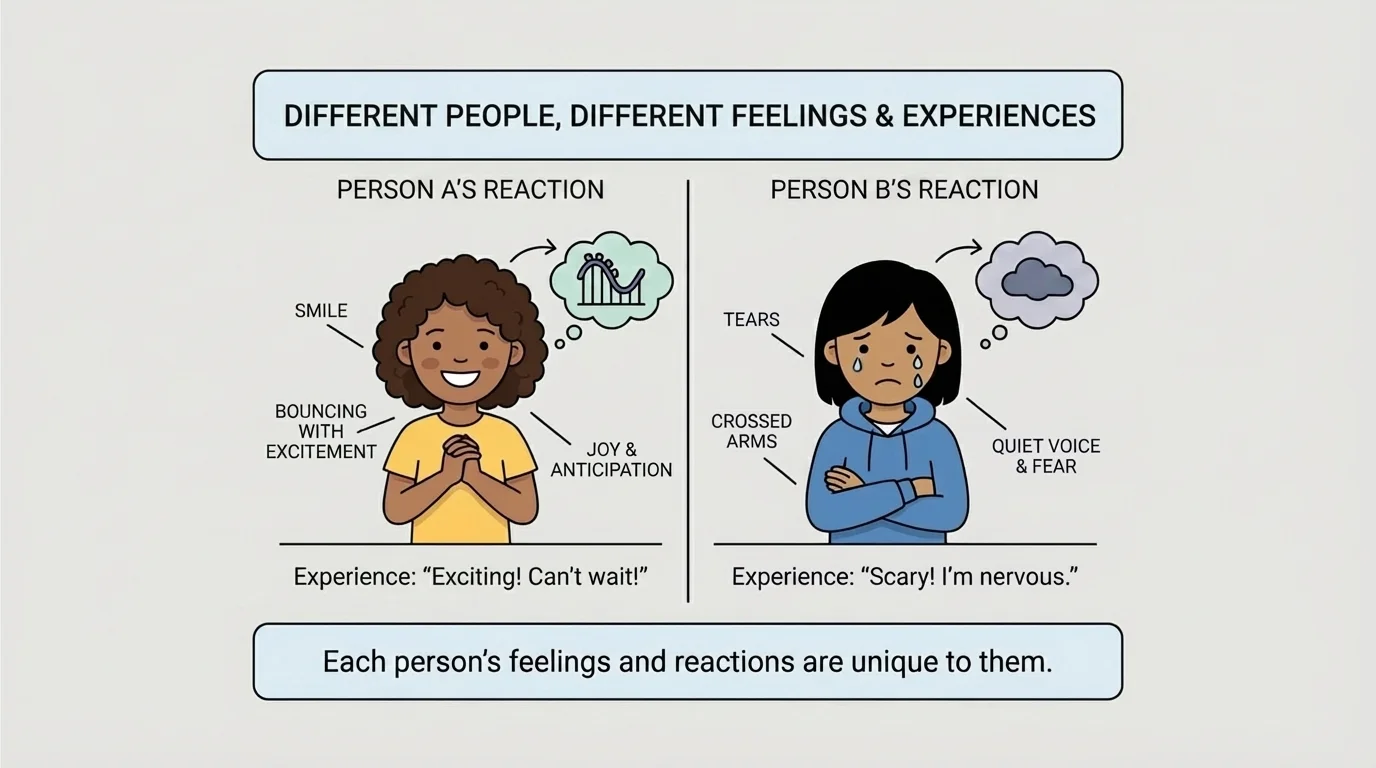
Feelings give us clues through faces, voices, words, and bodies, and [Figure 2] highlights some of the clues you can notice. A smile may mean joy. Tears may mean sadness. A very quiet voice may mean worry or tiredness. Fast talking and bouncing may mean excitement.
You can also notice actions. Someone who turns off their camera during a video call may need a break. Someone who stops talking during a game may feel disappointed. Someone who keeps asking, "What happens next?" may feel unsure.
Listening is just as important as looking. If a person says, "I do not like this," believe their words. Do not tell them what they should feel. Instead, notice and listen carefully.
Clues help, but asking is best. Faces and voices can give you ideas, but you do not always know exactly how someone feels just by looking. A kind question like "Are you okay?" or "Do you want help?" helps you understand better.
Sometimes clues can be tricky. A person may laugh when they are nervous. A person may be quiet because they are thinking, not because they are upset. That is why kind words matter. When you ask instead of guess, you show respect.
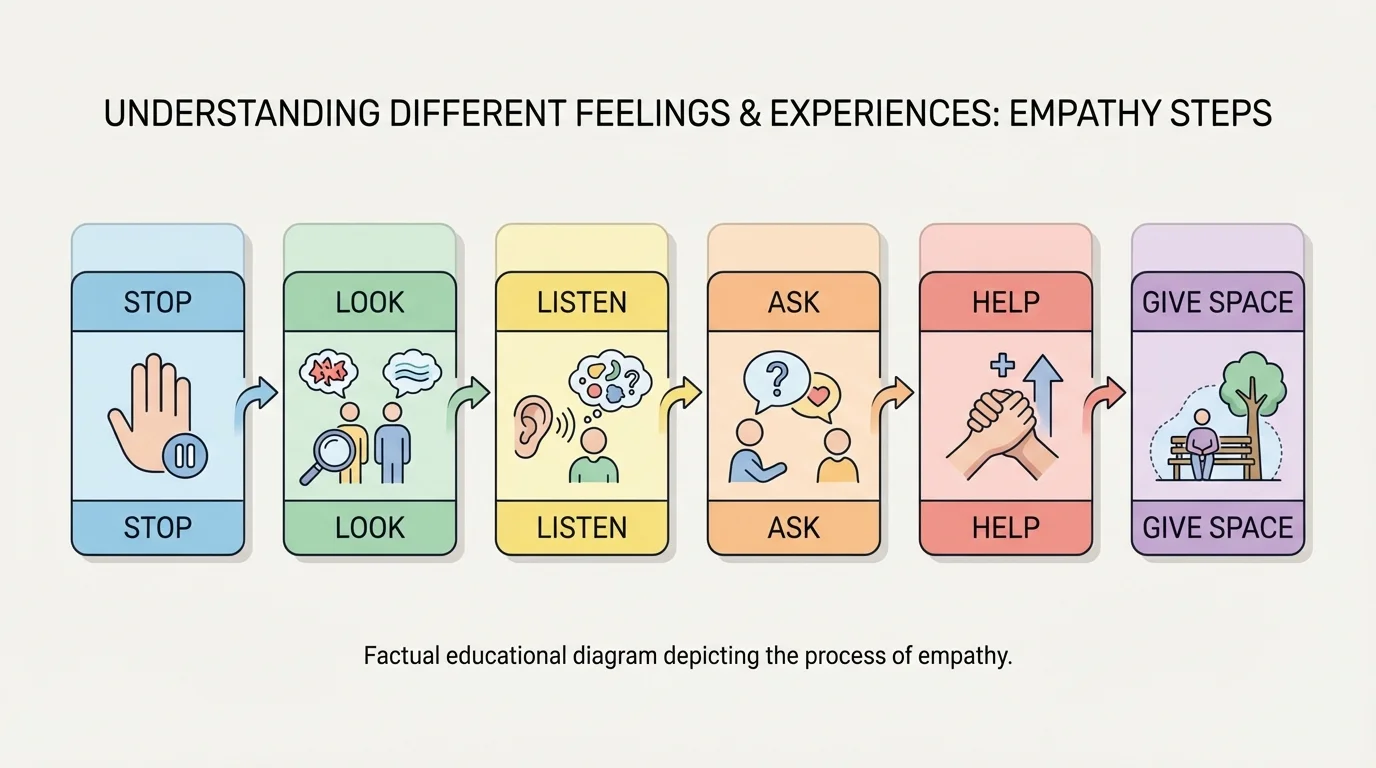
When someone feels differently from you, it helps to follow simple steps. The order in [Figure 3] gives you a calm way to respond so you can be helpful instead of making the moment harder.
Step 1: Stop. Take a breath and slow your body.
Step 2: Look and listen. Notice the person's face, voice, words, and actions.
Step 3: Ask kindly. You can say, "How do you feel?" "Do you want help?" or "Do you need a break?"
Step 4: Help if you can. You might lower your voice, wait your turn, share, or give space.
Step 5: Be respectful. Even if you feel different, their feeling is still important.
Example: Your cousin gets upset during an online game
Step 1: You notice your cousin stops talking and looks down.
Step 2: You do not say, "It is just a game."
Step 3: You ask, "Do you want a break?"
Step 4: If they say yes, you pause the game or let them rest.
This is a caring response because you notice their feelings and respond with kindness.
If you do not use these steps, problems can grow. If you laugh when someone feels embarrassed, they may feel worse. If you listen and help, they may feel safe and understood. The caring choices shown again by the order in [Figure 3] can help many everyday moments go better.
Here are some real times when feelings may be different. On a video call, you may love speaking first, but another child may need more time. At home, you may think a joke is funny, but your sister may think it is mean. At a library event or sports practice, one child may feel excited to join in, while another feels shy.
When this happens, try using kind words. You can say, "You can go first if you want." "We can do it together." "It is okay to feel nervous." "Do you want quiet time?" These small words can make a big difference.
| Situation | One person may feel | Another person may feel | Kind response |
|---|---|---|---|
| Joining a video call | Excited | Shy | "You can wave first if you want." |
| Playing a game | Silly | Frustrated | "Want help or a break?" |
| Meeting new people | Curious | Nervous | "I can stay with you." |
| Hearing loud sounds | Fine | Startled | "Let's move to a quieter place." |
Table 1. Examples of how the same situation can lead to different feelings and caring responses.
"Kindness means remembering that other people have feelings too."
Try This: Today, notice one time when a person feels differently than you do. Pause and say one kind sentence before you act.
Sometimes feelings are very strong. A person may cry, yell, hide, or get very quiet. If this happens, stay calm. Use a soft voice. Give space if needed. Get help from a trusted adult if the person is not safe or needs extra support.
Your feelings matter too. If you are the one with a big feeling, you can say, "I need help," "I need a break," or "I feel upset." Telling the truth about your feeling helps others understand your experience.
Being kind does not mean you must fix every problem. Sometimes the best help is listening, waiting, or getting a trusted adult.
Try This: Practice one helpful sentence you can use this week: "Are you okay?" "Do you want help?" or "I need a break." Short, kind words are powerful.
