Have you ever had a day that felt much better just because one person was kind to you? A small caring action can make a big difference. When you help others feel calm, noticed, and welcome, you help your class become a happier place to learn. Even in online school, your words, your face, your voice, and your choices matter.
When people feel safe, they can learn. When people feel seen, they feel important. When people feel included, they know they belong. These are big ideas, but you can help with very small actions: saying hello, waiting your turn, using a kind voice, and inviting someone to join.
If caring actions are missing, people may feel lonely, worried, or left out. A class chat can feel unkind. A video call can feel scary. But when caring actions are used well, people are more likely to speak, share ideas, and enjoy being together.
Safe means a person feels protected from mean words, teasing, and hurtful behavior.
Seen means a person feels noticed and important.
Included means a person feels welcomed and invited to join.
You do not need to do something huge to help. A kind community starts with everyday choices. One friendly message or one patient moment can help another person feel better.
These three ideas work together, as [Figure 1] shows. A classmate may feel safe when nobody laughs at mistakes, seen when someone says their name and listens, and included when others ask them to join a game or group talk.
A caring action is an action that helps another person feel good in one of these ways. You can think, "Will my choice help this person feel calm, noticed, and welcome?" If the answer is yes, it is probably a caring choice.
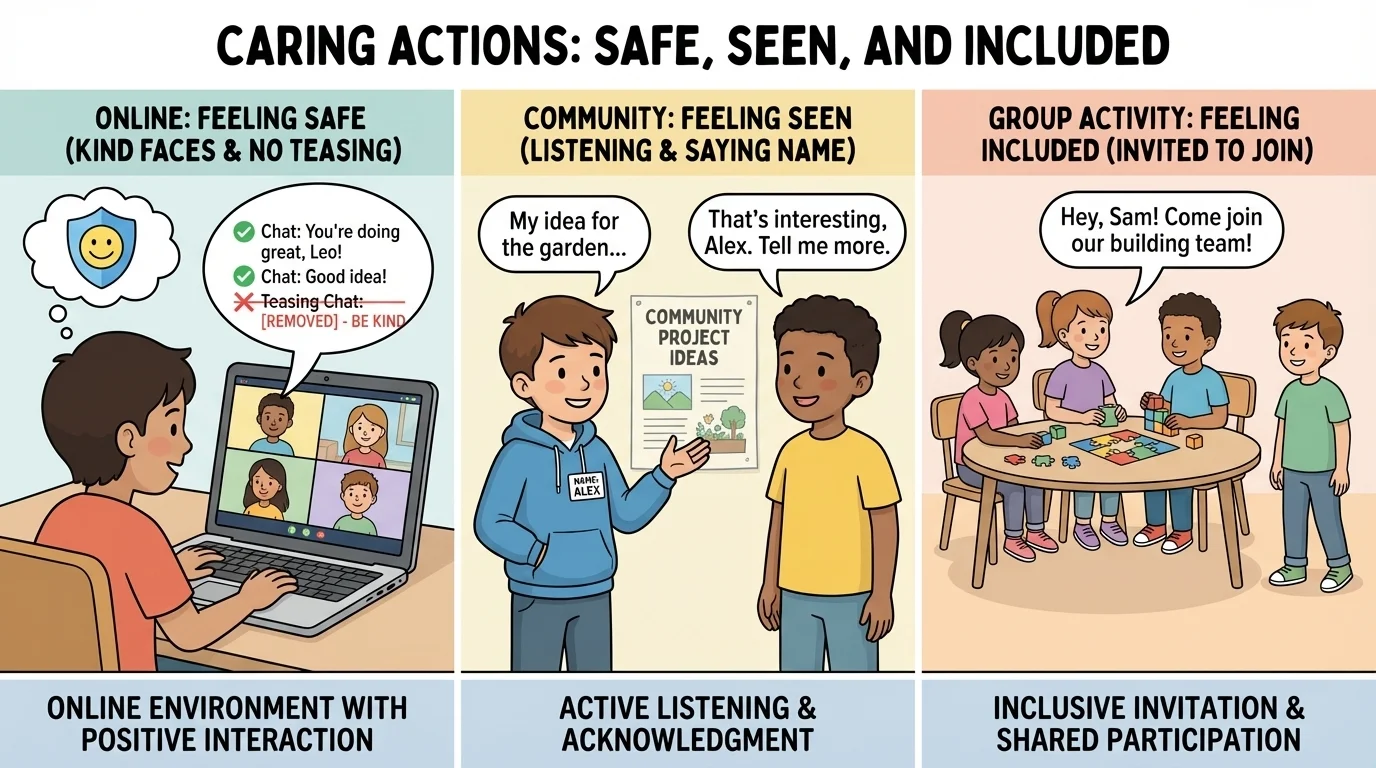
Sometimes a person can look quiet, turn off their camera, stop typing, or leave a game because they do not feel comfortable. You may not know exactly why, but you can still respond with kindness.
Even simple words like "Hi, want to join?" can help someone feel like they belong. Small actions often have big feelings attached to them.
When you remember these three ideas later, think back to [Figure 1]. Safe is about protection, seen is about noticing, and included is about welcome.
You can show care with your face, words, and actions. A smile, a wave on camera, or saying "Good job" can help. So can waiting without interrupting and letting others finish.
Here are some caring actions you can use often:
Empathy means trying to understand how someone else may feel. If your classmate is nervous about speaking, empathy helps you choose patient and kind words.
Kindness is something you do
Kind thoughts matter, but actions matter too. If you think, "I hope they feel okay," that is a good start. If you then say, "You can share when you're ready," you turn that kind thought into a caring action.
You can also help by being fair. Fair does not always mean everyone gets the exact same thing. Sometimes fair means giving extra time, extra patience, or extra help to someone who needs it.
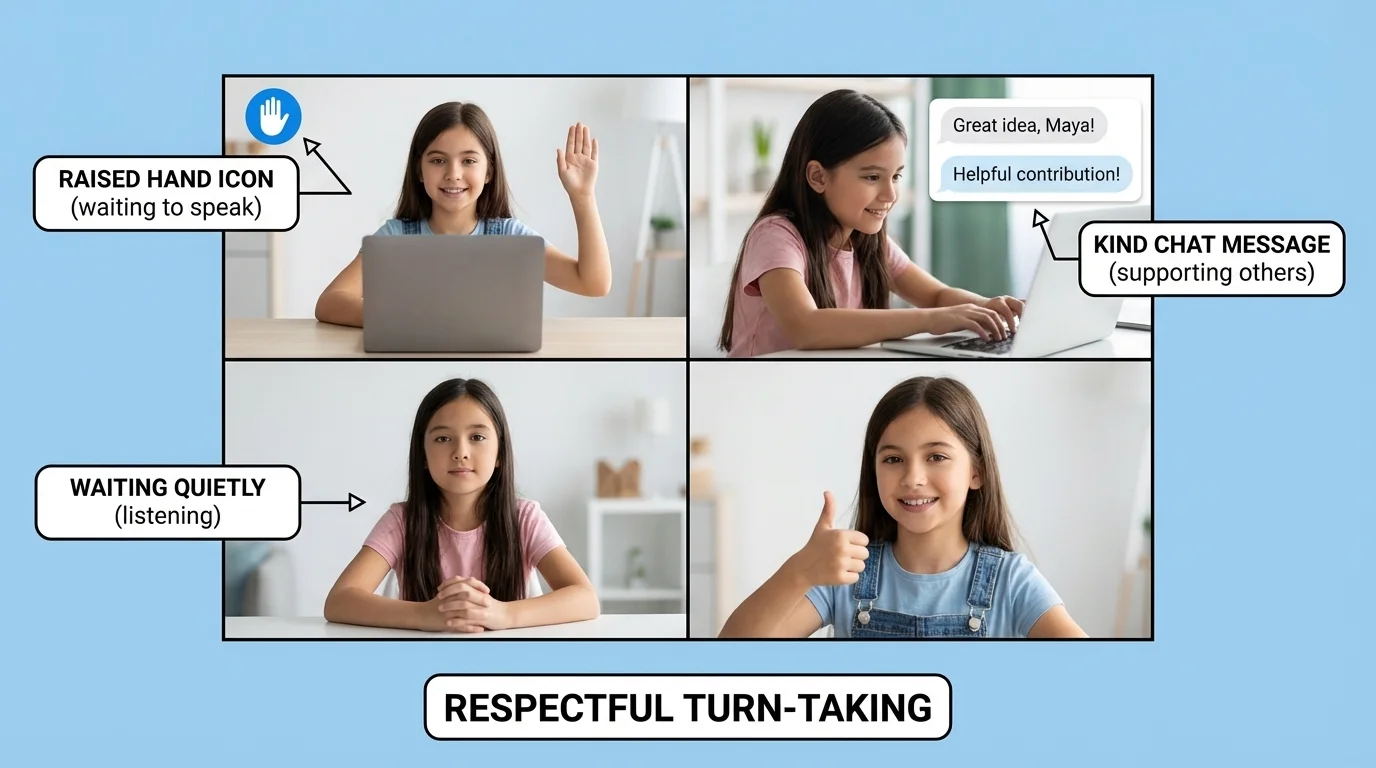
Online spaces need caring actions too, and [Figure 2] illustrates some of the best ones. In a video class, you can look at the screen, wait your turn, and use respectful words in the chat.
If you want to speak, raise your hand if your class uses that tool, or wait for the teacher to call on you. If someone else is speaking, do not type silly comments about them. That helps people feel safe.
If a classmate shares an idea, you can type, "Nice idea," or "I agree." That helps them feel seen. If someone is new or quiet, you can say, "Do you want to join us?" That helps them feel included.
These same ideas work in other digital spaces, like kid-safe group chats, club calls, or game groups. Do not spam messages. Do not leave someone out on purpose. Do not post mean jokes. Your digital actions are real actions.
A good community is a group where people help each other belong. As you saw in [Figure 2], respectful online habits help build that kind of community.
Example: A kind choice in a group chat
You and two classmates are chatting about a drawing project. One classmate writes slowly and has not answered yet.
Step 1: Notice what is happening.
Someone is taking longer, and they may still want a turn.
Step 2: Choose a caring action.
You write, "Let's wait for Maya's idea too."
Step 3: Check the result.
Maya gets a turn to share and feels included.
That is a simple way to turn waiting into kindness.
[Figure 3] Sometimes you may notice signs that a classmate is not feeling okay. They may get very quiet, stop participating, look sad, or leave a game suddenly. You do not have to guess everything. You just need to respond gently.
You might say, "Do you want to play with us?" "Are you okay?" or "You can sit with us on the call." You can also tell a trusted adult if someone seems really upset or if someone is being unkind.
Remember that caring does not mean solving every problem by yourself. If something feels unsafe, confusing, or too big, the right step is to get help from a trusted adult.
There are some times when you should get an adult right away: if someone is being bullied, threatened, repeatedly teased, or told they cannot join; if someone says something scary about hurting themselves or another person; or if a message feels unsafe. Helping keeps people protected.
When you speak kindly to a hurting person, you are showing respect. Respect means treating others in a thoughtful and careful way.
When a social problem pops up, use this plan.
Step 1: Stop. Do not say the first mean or silly thing that comes to mind.
Step 2: Notice. Ask yourself, "How might this person feel?"
Step 3: Choose a kind action. You can invite, wait, listen, or use gentle words.
Step 4: Get help if needed. If the problem is too big or unsafe, tell a trusted adult.
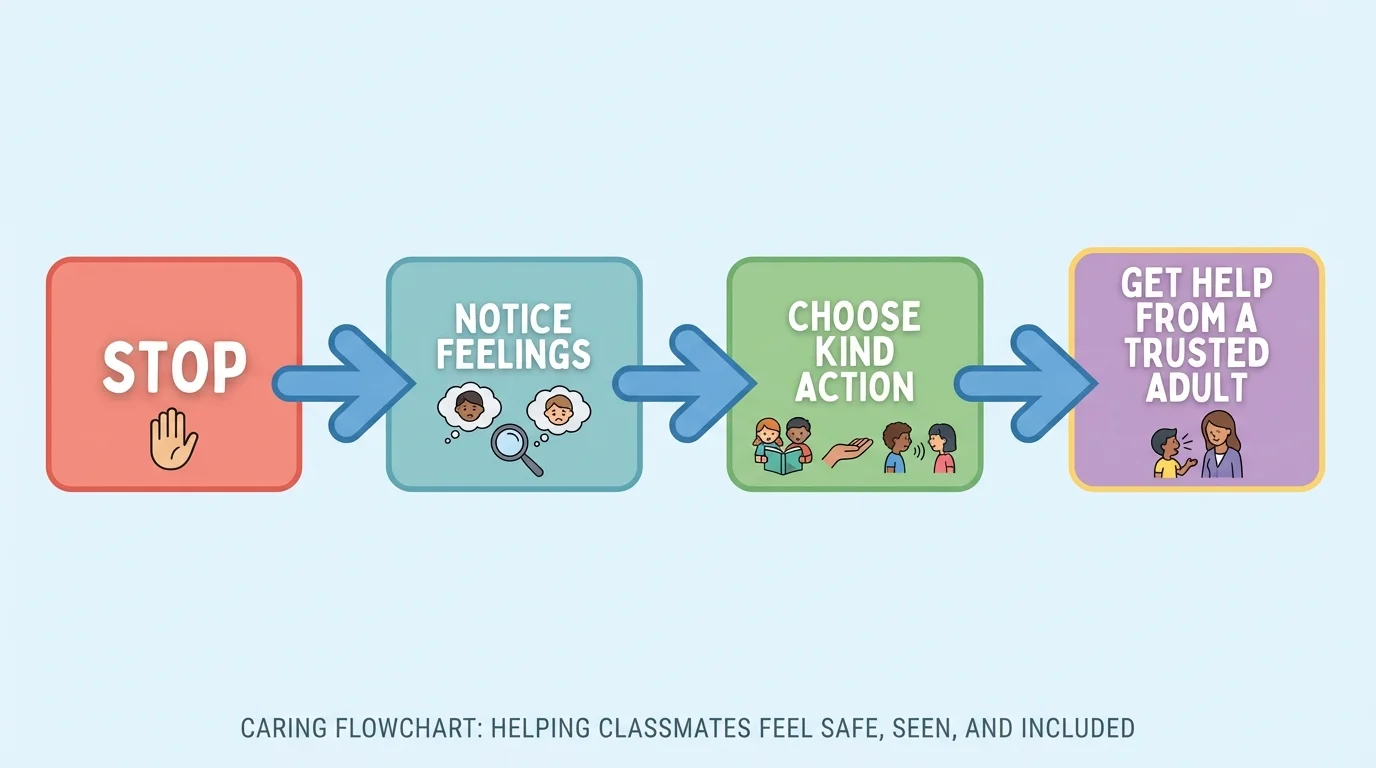
This plan works in many places: during online class, in a neighborhood game, at a club, or while messaging friends. The more you practice, the easier it gets.
"Kind words can be short and easy to speak, but their echoes are truly endless."
— Mother Teresa
Later, if you forget what to do, think again about [Figure 3]. First pause, then notice, then choose, then ask for help when needed.
You can practice caring actions right away. Try one today and one tomorrow.
These actions may seem small, but they build trust. They help others feel brave enough to speak, share, and learn. And they help you become the kind of person who makes every group better.
