Have you ever looked for a pencil, a paper, or your headphones and felt upset because you could not find them? That can happen fast. When your things are messy, school jobs feel harder. But when your things are in the right place, your brain can stay calm and ready to learn. Being organized is a small skill that makes a big difference every day.
Organization means keeping your things and your work in order. It means you know where your materials are, what homework you need to do, and what task comes next. Organization helps you save time. It also helps you feel less rushed and less frustrated.
Organized means neat and ready to use. Materials are the things you use for learning, like pencils, paper, books, headphones, or a tablet. Homework is work you do after class or by yourself. Tasks are the jobs you need to do, one step at a time.
When you are organized, you can start your work faster. You can listen better, finish more easily, and turn in work on time. When you are not organized, you may spend extra minutes searching, forget directions, or leave work unfinished. Those little problems can pile up.
Your learning tools need a home. A routine for putting things away helps you know exactly where to look, as shown in [Figure 1]. Maybe your pencil goes in a cup, your notebook goes in one basket, and your headphones hang on a hook. When each item has one place, your space is easier to use.
At home, your school area does not need to be fancy. It just needs to be clear and ready. Keep only the things you need nearby. Put toys, extra papers, and other distracting things somewhere else. A clean space helps your mind focus on the job you are doing.
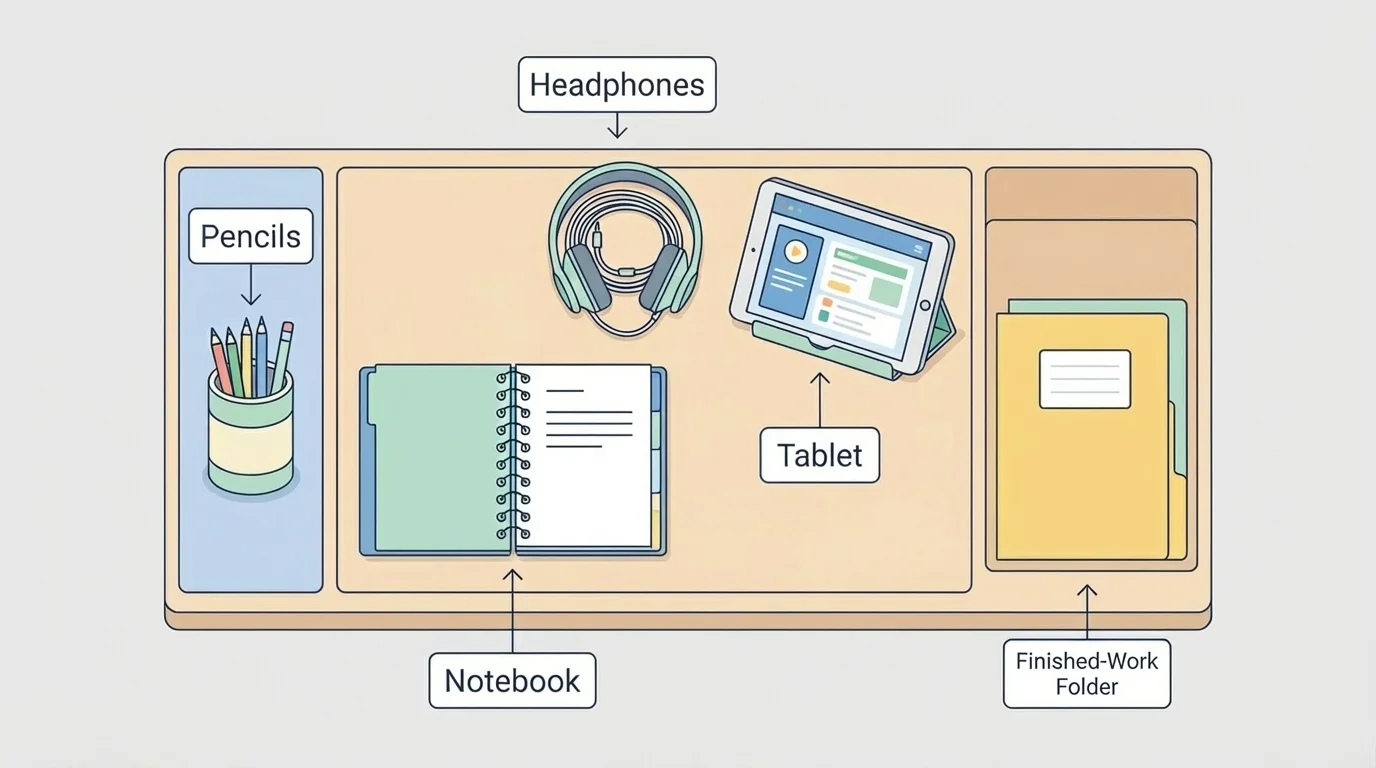
A good rule is: use it, put it back. After you finish with crayons, place them back in the box. After class, put your worksheet in the correct folder. After using headphones, return them to their spot. This tiny habit keeps a mess from growing.
You can also sort materials by job. Keep writing tools together. Keep papers together. Keep technology items together. Later, when you need something quickly, your hands know where to go. That is one way organization helps you with materials every day.
A simple material routine
Step 1: Before class, place your pencil, paper, and device on your desk.
Step 2: During class, use only what you need.
Step 3: After class, put each item back in its home.
This routine is short, but it helps your desk stay ready for the next lesson.
When you do this again and again, it becomes easier. Just like washing hands or brushing teeth, organization works best when it becomes part of your day.
Homework is easier when you have a plan. A simple checklist, like the one shown in [Figure 2], helps you remember what to do first, next, and last. First, listen or read directions carefully. Next, do the work. Then, put the finished work in the right place so it is ready to turn in.
If your teacher posts homework online, check the class page at the same time each day. If you use paper, keep one folder for unfinished work and one folder for finished work. This helps you know what still needs attention and what is ready to submit.
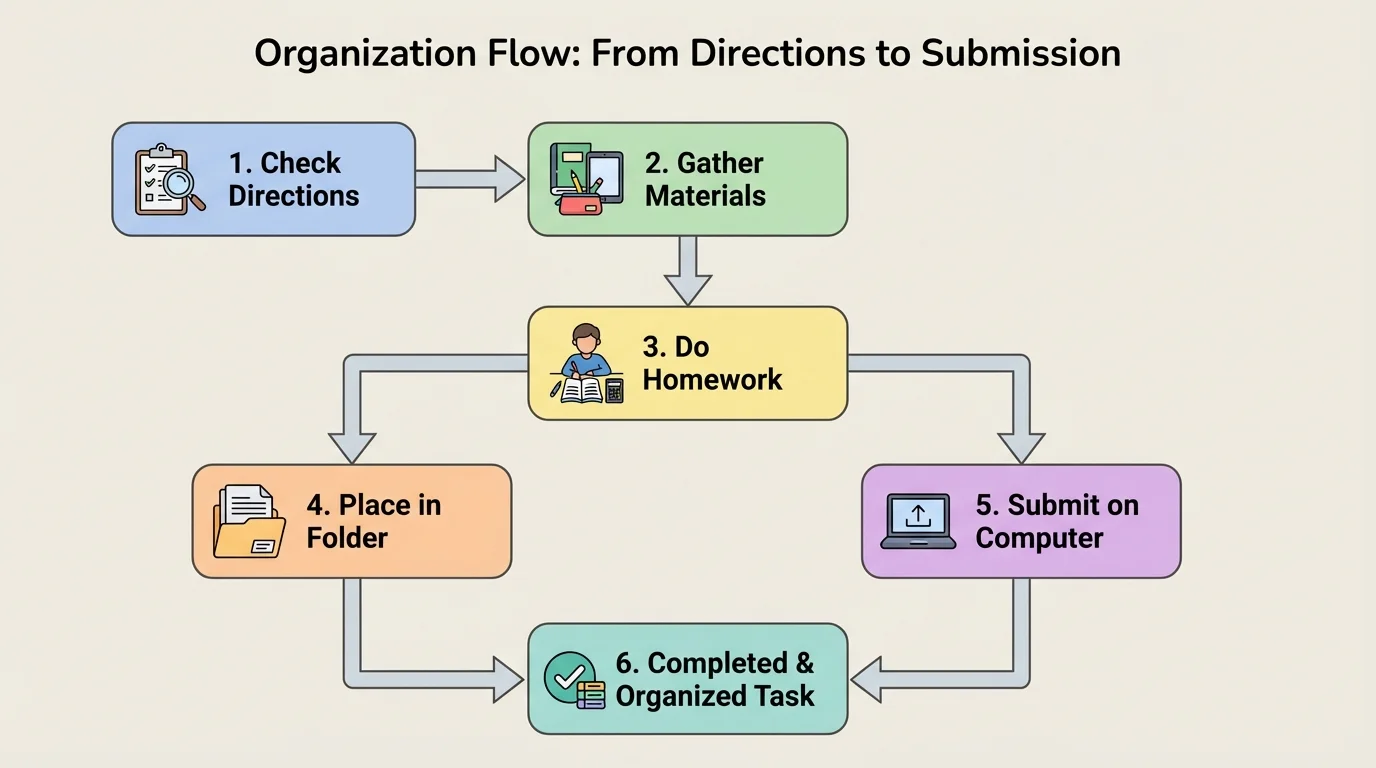
Organization helps with homework because it stops mix-ups. You are less likely to lose a page. You are less likely to forget a direction. You are more likely to finish on time. That feels good and helps you show what you know.
Here is an example. Sam finishes a reading page and leaves it on the couch. Later, he cannot find it. He feels upset. Maya finishes her reading page and places it right into her finished-work folder. The next day, she is ready. The work was the same, but organization made one job much easier.
Why a homework routine works
Your brain does not have to remember every little thing when you follow the same steps each day. The routine does some of the remembering for you. That gives you more energy for learning, reading, writing, and thinking.
Later, if you feel confused about homework, look back at your steps. Just like the steps shown in [Figure 2], schoolwork becomes easier when you follow the same order each time.
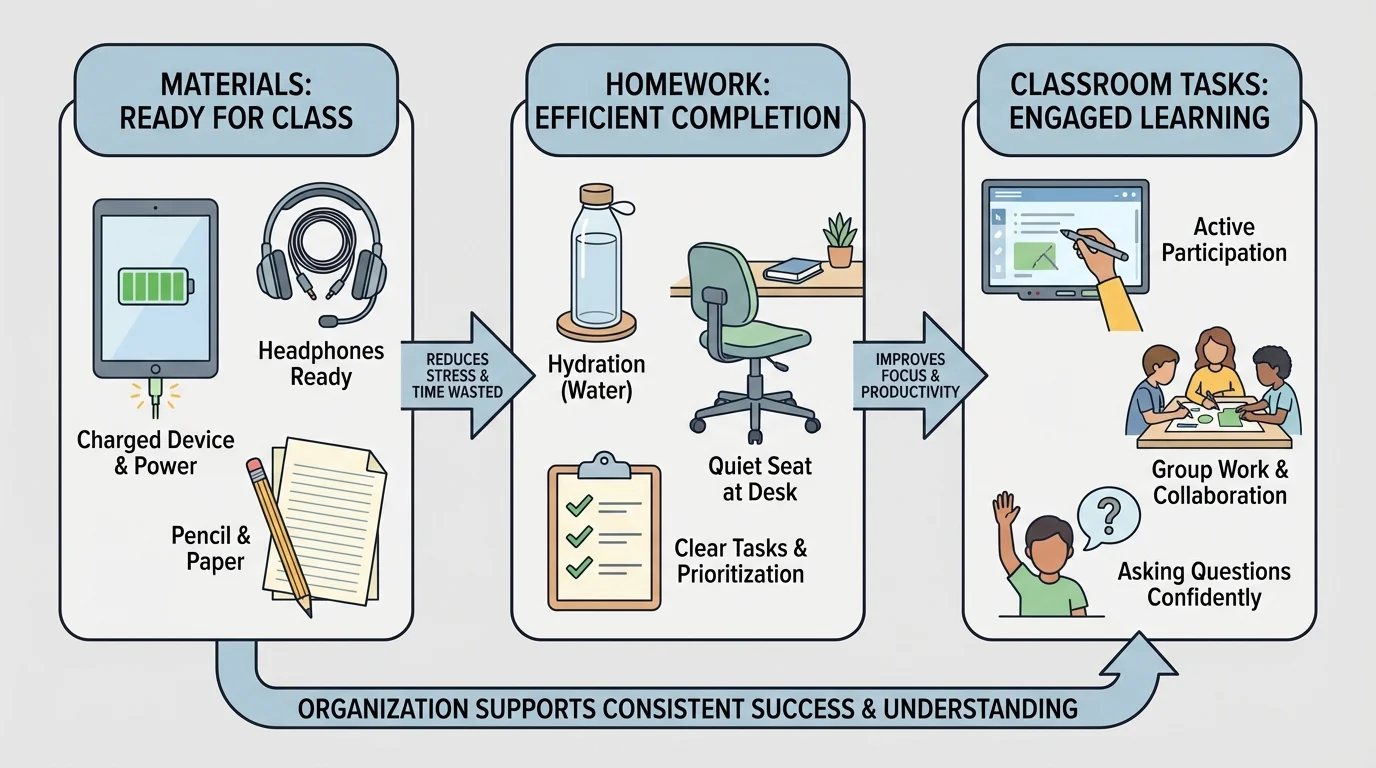
Classroom tasks are the jobs you do during your school day. In online school, that might mean joining a video lesson, opening the right page, writing answers, or listening to directions. Organization helps you get started quickly, as [Figure 3] shows with a simple ready-for-class checklist.
Before class starts, check a few important things. Is your device charged? Are your headphones nearby? Do you have paper and a pencil? Are you sitting in a quiet spot? When you get ready ahead of time, you can begin calmly instead of rushing around at the last minute.
Organization also helps when one task ends and another begins. Maybe you finish drawing and now it is time to write. Put the drawing tool away. Take out your writing tool. Open the right page. This smooth switch saves time and helps your brain stay on the new task.
Sometimes a job feels big. Then organization can help by breaking it into small parts. First open the lesson. Next read the directions. Then answer one question. Then check your work. One small step at a time is easier than thinking about everything at once.
Many children do better with school tasks when their learning space stays the same each day. A familiar place helps the brain know, "Now it is time to learn."
When you forget to prepare, the morning can feel bumpy. You may miss directions while searching for paper. You may feel worried if your tablet is not charged. But when you use the ready steps from [Figure 3], you can begin with confidence.
Small habits are powerful. Put your school items back after each class. Check your homework spot every afternoon. Look at tomorrow's plan before the day ends. These tiny actions take only a little time, but they make the next day easier.
You do not need to be perfect. Sometimes things get messy. Sometimes you forget. That is okay. Organization is a skill, and skills grow with practice. The important part is to stop, fix the problem, and try again.
"A place for everything, and everything in its place."
This saying means each item belongs somewhere. It also reminds you that putting things away is part of finishing a job. A task is not really done until your work is saved, your paper is in the right folder, and your materials are put back.
Choose one small space to organize today. It might be your pencil cup, your paper folder, or the spot where you keep your headphones. Keep it simple. When one space gets organized, it becomes easier to organize the next one.
Try one homework habit too. After you finish, say to yourself: done, check, put away. That means you finished the work, checked it, and placed it where it belongs. You can use the same words every day until the habit feels easy.
If you need help, ask a grown-up to help you make simple labels or choose homes for your school items. Once the places are set, you can practice using them on your own. Over time, organization helps you feel more ready, more responsible, and more proud of your work.
