Have you ever noticed that people feel calm around someone who tells the truth and does what they say they will do? That calm feeling is very important. It helps families, friends, teammates, and neighbors feel safe together. When people trust you, they know your words and actions match.
Trust means other people feel they can believe you and count on you. If you say, "I will put the crayons away," and then you really do it, trust grows. If you tell the truth about what happened, trust grows too.
[Figure 1] Trust is built little by little. It can grow when you make kind choices again and again. Your parent may trust you to carry a snack to the table. A friend may trust you to take turns in a game. A coach or group leader may trust you to listen carefully during an activity online or in the community.
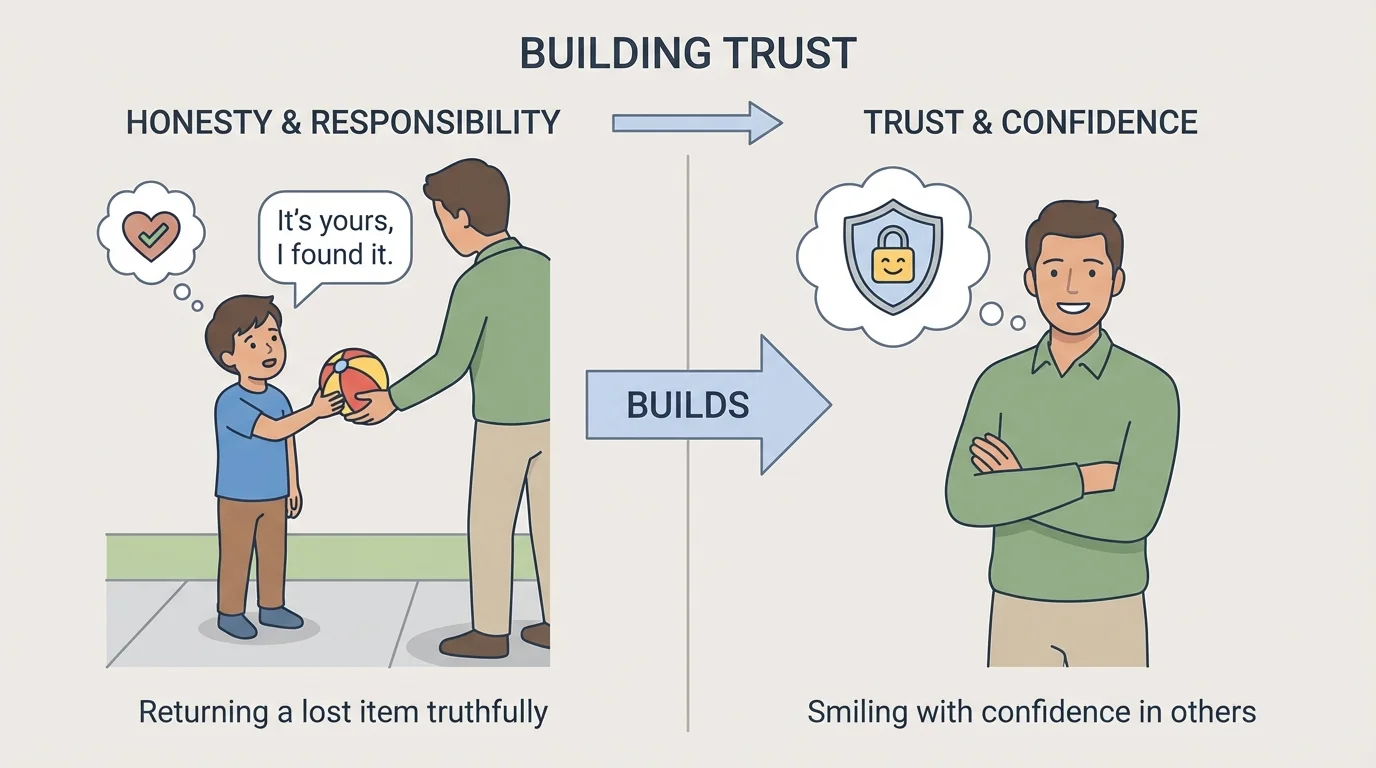
Honesty means telling the truth and not trying to trick people.
Responsibility means doing what you are supposed to do and taking care of your actions.
When honesty and responsibility are both strong, trust becomes stronger. People do not have to guess what you will do. They feel more sure about you.
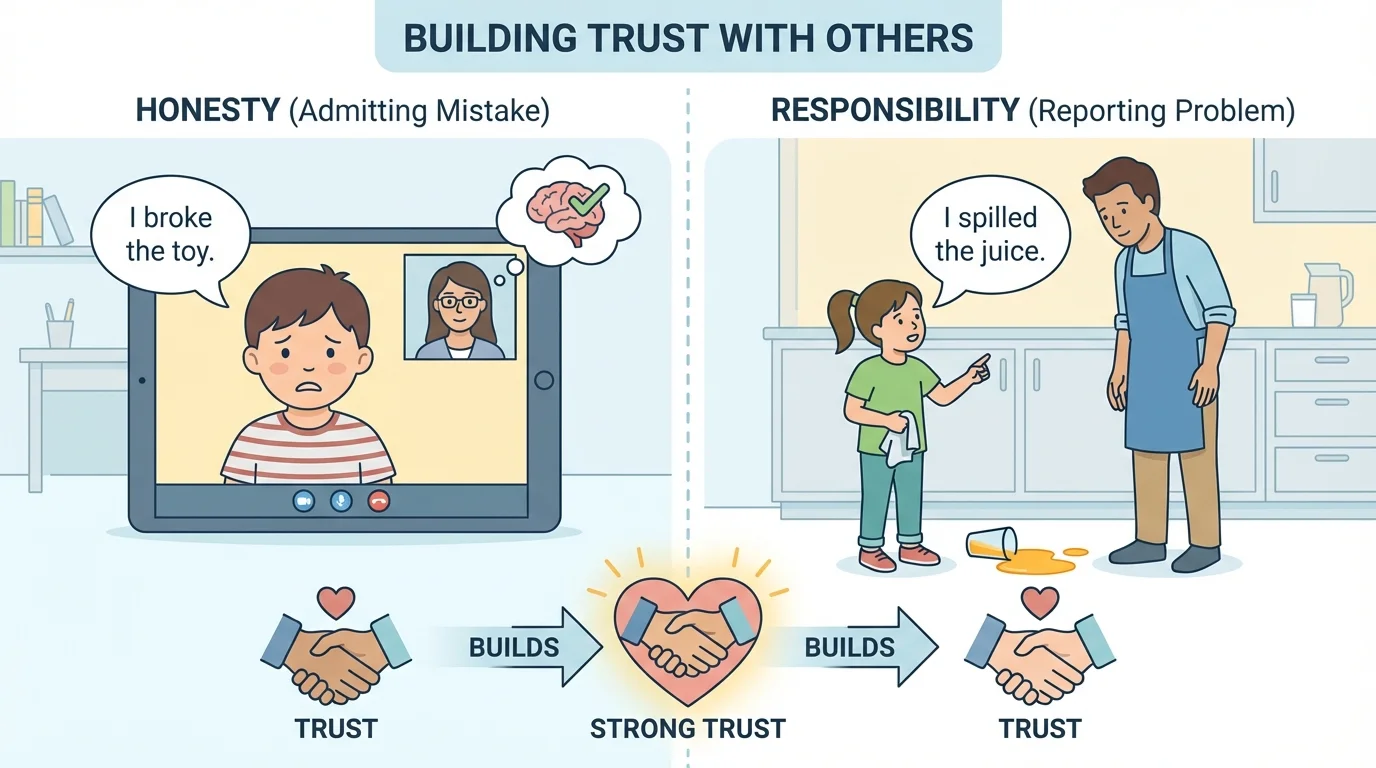
Honesty is more than saying true words. It means being truthful about what happened. If you spill water, honesty sounds like, "I spilled it. I need help cleaning up." If you break a rule on a game app, honesty means telling an adult instead of hiding it.
[Figure 2] Sometimes honesty feels hard. You may worry that someone will feel upset. But telling the truth helps fix problems faster. If you hide the truth, the problem often gets bigger. For example, if you say you brushed your teeth when you did not, an adult may think everything is fine. Later, they may find out you were not truthful, and then trust gets weaker.
Honesty also matters online. If you send a message by mistake, you can say, "That was an accident." If someone asks, "Did you finish your reading?" you can answer truthfully. On video calls, honesty means not pretending you did something you did not do.
Why truth helps people feel safe
When you tell the truth, other people know they do not have to guess. They can understand what happened and decide what to do next. Truth helps solve problems. Hiding, blaming, or pretending makes trust smaller because people become unsure whether your words match real life.
Being honest does not mean being unkind. You can tell the truth in a gentle way. You can use calm words, a quiet voice, and respectful manners.
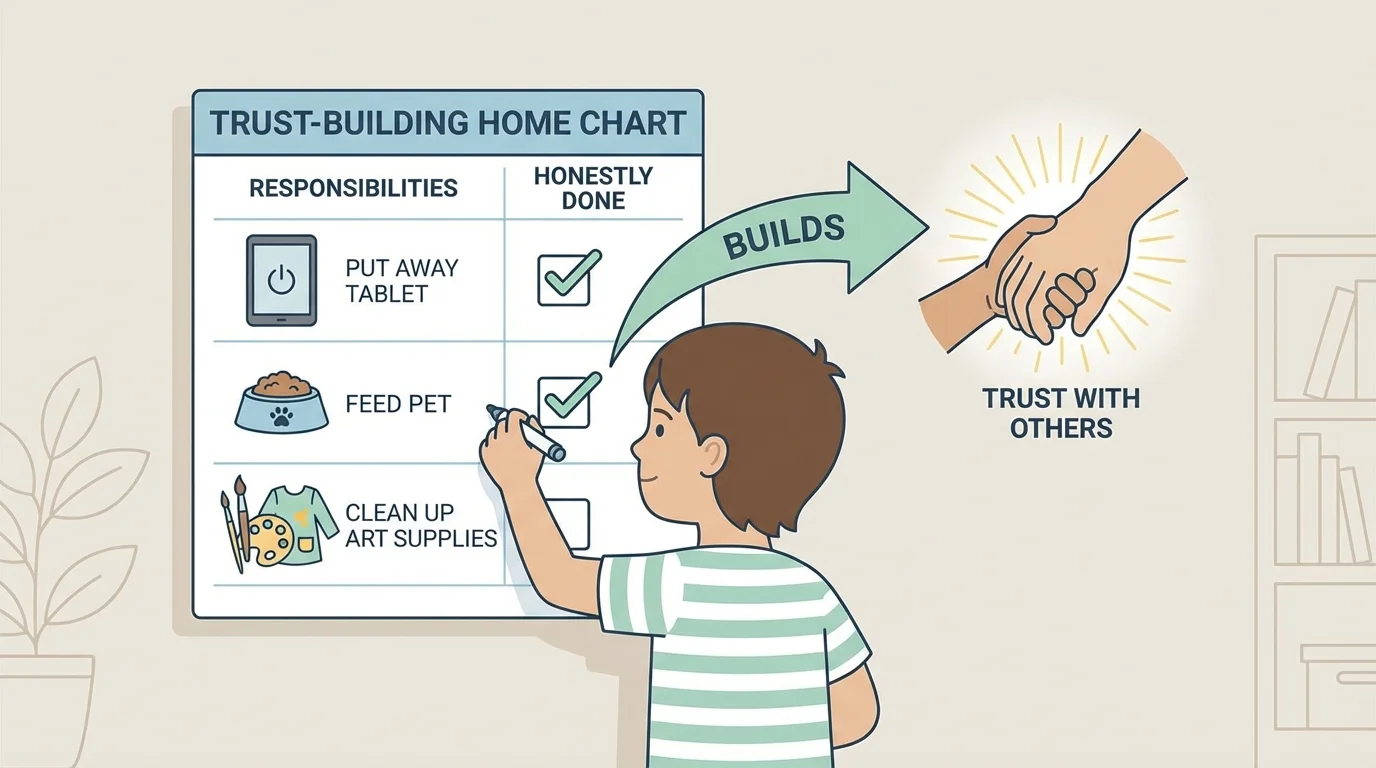
Responsibility means you take care of your jobs, your things, and your choices. If you borrow a book, you return it. If you use art supplies, you clean them up. If you promise to feed a pet with help, you remember to do it.
[Figure 3] Responsibility can be small, but it still matters. Putting dirty clothes in the basket, charging your learning tablet and putting it back in its place, and helping set out napkins are all responsible actions. These actions tell other people, "You can count on me."
Doing your part is important in a family and in a community. When everyone helps, life works better. If one person forgets every job, other people have to do more work. That can feel frustrating. Responsible choices make life smoother for everyone.
Responsibility also means fixing what you can after a mistake. If you knock over blocks, you help pick them up. If you forget to put away markers, you put them back when you remember.
Everyday example: Growing trust at home
Step 1: You say, "I will put my shoes by the door."
Step 2: You remember and do it without being reminded.
Step 3: The next day, your family feels more sure that you will do it again.
This is how trust grows: true words plus responsible actions.
Just like we saw in [Figure 1], people trust you more when your actions match your words. Saying something is only the first part. Doing it is the next part.
Honesty and responsibility are a team. Honesty says, "I will tell the truth." Responsibility says, "I will do my part." When both are together, people feel safer with you.
Think about this: if someone tells the truth but never finishes their jobs, trust can still feel shaky. If someone finishes jobs but lies sometimes, trust also feels shaky. Strong trust needs both. You tell the truth, and you act in a dependable way.
For example, if you forget a library book, honesty is saying, "I forgot it in my room." Responsibility is going to get it and putting it in your bag for next time. If you accidentally erase a sibling's drawing on a device, honesty is admitting it. Responsibility is helping make it right.
| Choice | What it looks like | What happens |
|---|---|---|
| Honest and responsible | Tells the truth and helps fix the problem | Trust grows |
| Honest but not responsible | Admits the problem but does not help | Trust grows slowly |
| Responsible but not honest | Does the job but hides the truth sometimes | Trust feels unsure |
| Not honest and not responsible | Lies and avoids the job | Trust gets weak |
Table 1. This table compares how honesty and responsibility affect trust.
Trust often grows from very small actions. Returning a borrowed pencil, telling the truth about a mess, or arriving when you said you would can all help people feel safe with you.
When you are honest and responsible many times, people begin to believe that this is the kind of person you are. That is called dependable behavior. A dependable person can be counted on again and again.
[Figure 4] Sometimes everyone makes mistakes. You might forget, hide the truth, or ignore a job. Then trust can feel hurt. But trust can be repaired step by step. Repairing trust takes time, truth, and better choices.
If you break trust, first tell the truth. Next, say you are sorry. Then fix what you can. After that, make a better choice next time. If you keep making better choices, trust can slowly grow again.
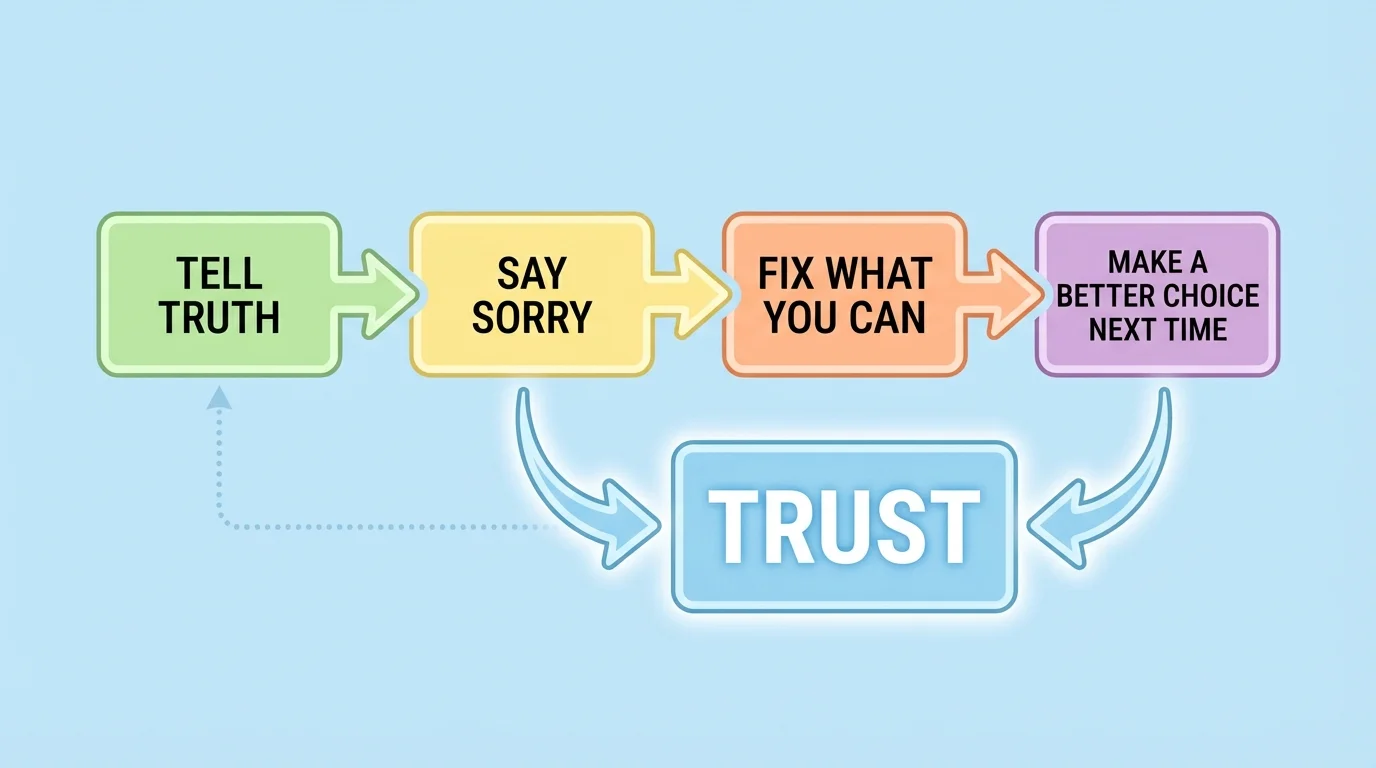
Everyday example: Fixing broken trust
Step 1: You said you cleaned up your toys, but some were still on the floor.
Step 2: You tell the truth: "I did not finish cleaning up."
Step 3: You say sorry and pick up the rest.
Step 4: The next day, you clean up completely.
One apology helps, but repeated good choices help even more.
As we saw in [Figure 2], honesty means admitting what really happened. As [Figure 3] reminds us, responsibility means following through with action. Both are needed to rebuild trust.
"Tell the truth, do your part, and trust will grow."
You do not need to be perfect. You do need to keep trying. People learn to trust you when they see your honest words and responsible choices over time.
Here are easy ways to practice. First, pause before you answer. Ask yourself, "Is this true?" Second, finish one small job each day without being reminded. Third, if you make a mistake, tell the truth quickly. Fourth, take care of borrowed things. Fifth, keep simple promises.
You can also use a tiny check-in with yourself: true, kind, helpful. Is what you are saying true? Are you saying it kindly? Is what you are doing helpful to others?
Promise means saying you will do something. Make promises you can keep. If you are not sure, you can say, "I will try," instead of "I promise." Keeping a small promise helps trust grow more than making a big promise and forgetting it.
Being honest and responsible helps at home, in clubs, on playdates, on video calls, and in your neighborhood. These habits help now, and they also help in the future. People trust kind, truthful, dependable people.
You already know how to make safe choices and kind choices. Honesty and responsibility help those good choices become habits that other people can trust.
When you choose truth and action together, you show others who you are. You show that your words matter. You show that you care about other people. That is how trust is built.
