Your future starts with one small thing: a question. When you ask good questions, you learn more about what you like, what you can do, and what you may want to try when you are older. Even at age six, you can begin wondering about big things in a simple way.
Asking questions is a smart life skill. It helps you learn from family members, neighbors, coaches, club leaders, and other trusted adults you talk with at home, in your community, or online. When you ask, you find out new ideas. When you do not ask, you may miss chances to learn and grow.
A question is something you ask to learn more. Questions help you understand choices. They also help you notice what makes you happy, curious, and excited.
If you ask, "What do firefighters do?" or "How do artists learn to draw so well?" you are learning about the future. If you ask no questions, you may not discover things that fit you well. Good questions open doors.
Future opportunities are chances you may have later to learn, help, work, create, or grow. These can include college, job training, a career, volunteering, clubs, and community activities.
Your future does not mean only one job. It can include many paths. You might learn to care for animals, build things, teach others, make music, grow food, or help people stay healthy.
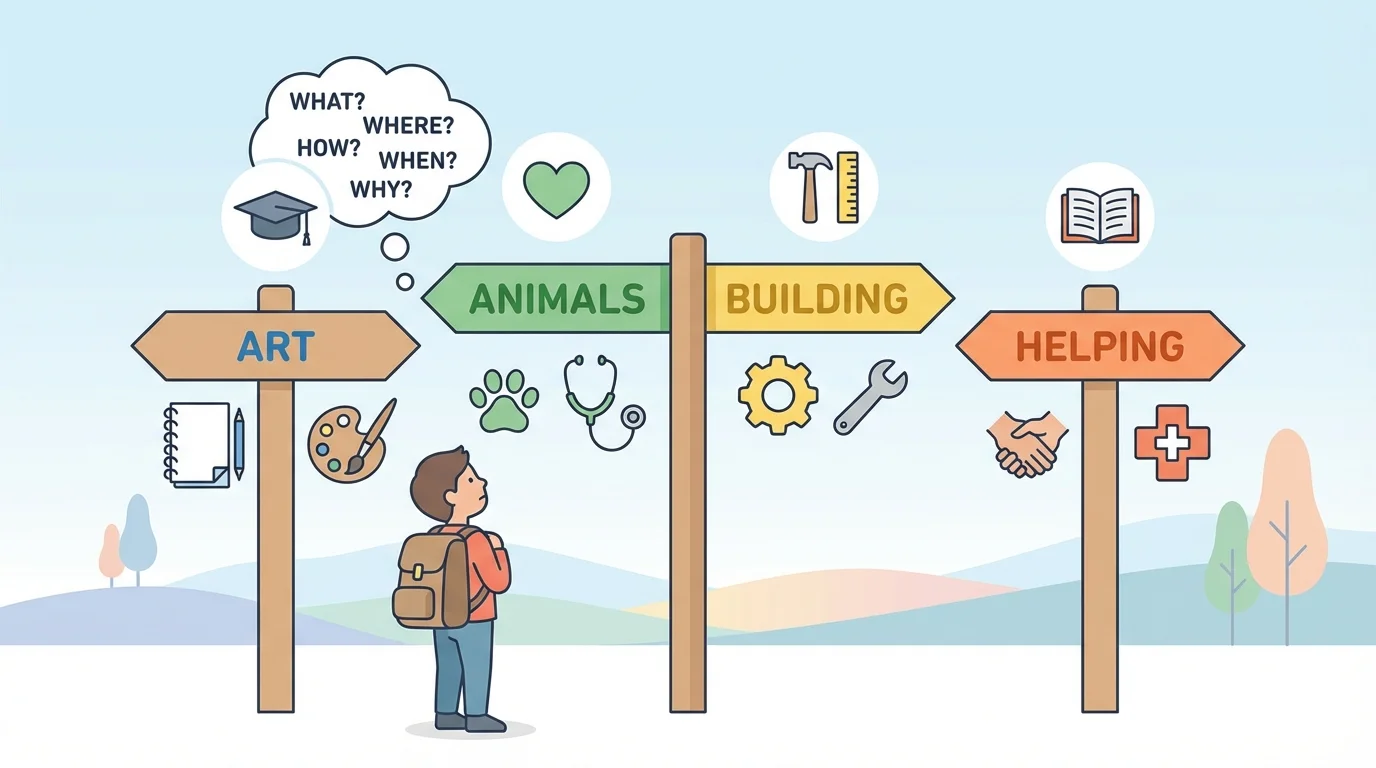
A future opportunity can be something you do when you are older, and it can start with little steps now. As [Figure 1] shows, your interests can connect to many kinds of paths. If you love drawing, you may want to learn about art. If you love helping, you may want to learn about jobs that care for people.
Some future opportunities are school paths, like college or special training after high school. Some are community paths, like volunteering at an animal shelter when you are older. Some are work paths, like becoming a chef, a mechanic, a nurse, or a game designer.
You do not need to choose your whole future now. You only need to begin noticing and asking. Small questions today can lead to big ideas tomorrow.
Many grown-ups say they found jobs they love because they first got curious, asked questions, and tried small activities when they were young.
That means your curiosity is important. When you wonder about something and speak up, you are practicing for future choices.
A helpful interest is something you enjoy and want to learn more about. One way to learn about your future is to ask questions about yourself.
You can ask: "What do I love to do?" "What games or activities do I choose again and again?" "Do I like making, helping, drawing, building, reading, moving, singing, or caring for animals?" These questions help you notice patterns.
You can also ask trusted adults questions like: "What am I good at?" "When do you see me working hard?" "What do you think I enjoy most?" Sometimes other people notice your strengths before you do.
Example: Finding an interest
Step 1: Think about your favorite part of the day.
Maybe you like building with blocks, helping cook, or reading stories online.
Step 2: Ask one question.
You might ask, "Are there jobs where people build things every day?"
Step 3: Listen to the answer.
A grown-up may tell you about builders, engineers, or designers.
Step 4: Ask one more question.
You can say, "What do they need to learn to do that job?"
When you ask questions like these, you are not trying to be perfect. You are trying to learn more about yourself.
Your goal can be very small right now. A goal is something you want to work toward. If you know what you like, you can ask what to learn next.
Helpful questions include: "What can I practice now?" "What books can help me learn?" "What skills do people need for this kind of work?" "How can I get better at listening, reading, drawing, building, or solving problems?"
These questions matter because future opportunities often grow from skills. If you want to care for animals someday, reading carefully and being gentle matter. If you want to make games someday, creativity and problem-solving matter. If you want to help people someday, kindness and clear talking matter.
Small skills grow into big opportunities. When you practice simple skills now, you are preparing for more choices later. Being on time, finishing tasks, asking for help, and staying kind are all future-ready skills.
If you do not practice useful skills, some opportunities may feel harder later. But when you keep learning step by step, more doors open.
You can learn a lot from trusted adults in your life and community. This may be a parent, grandparent, family friend, librarian, coach, neighbor, youth group leader, or someone you meet during a safe online talk or community event.
Try asking: "What do you do in your job?" "What do you like about it?" "What is hard about it?" "What did you learn to do that job?" "What should kids practice if they want to do work like yours?"
These questions help you learn real things. You may find out that a baker wakes up early, a nurse helps people feel safe, or a mechanic fixes problems carefully. Honest answers help you understand what a path is really like.
"The best way to learn about a path is to ask someone who walks on it."
When you ask respectful questions, adults often feel happy to share. They may even tell you about opportunities you never knew existed.
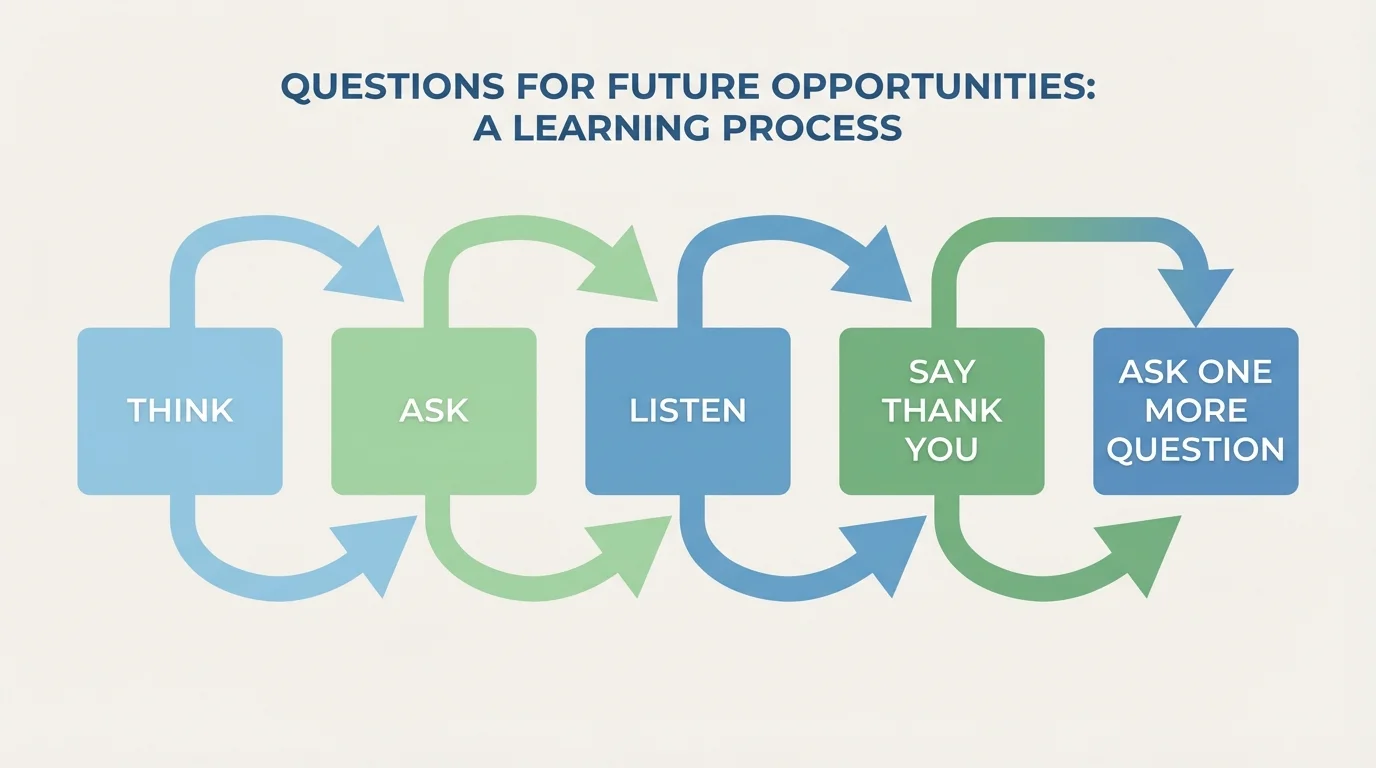
Some children hear words like college, training, career, or volunteer work and wonder what they mean. It is okay not to know yet. As [Figure 2] shows, you can ask simple questions now.
You can ask: "What is college?" "What is job training?" "What is a career?" "Can people learn in different ways?" "Are there jobs that help the community?" "What can I do when I am older if I want to help people, animals, or nature?"
As you saw earlier in [Figure 1], one interest can lead to more than one path. A child who likes helping may later explore teaching, medicine, community service, or counseling. A child who likes making things may explore art, design, carpentry, or cooking.
| What you wonder | Question you can ask |
|---|---|
| I like animals | "What jobs help animals?" |
| I like drawing | "How do artists keep learning?" |
| I like helping | "What jobs help people feel better?" |
| I like building | "Who makes houses, roads, or toys?" |
| I like cooking | "What do cooks and bakers learn?" |
Table 1. Examples of simple future-focused questions based on a child's interests.
These are strong questions because they connect what you like now to what you may want later.
Asking a good question is a skill. That means it gets better with practice. The question path starts with thinking, then asking, then listening carefully, then asking one more question.
Here is a simple way to do it. First, think about what you want to know. Next, ask in a calm and kind voice. Then listen without interrupting. After that, say "thank you." Last, ask one follow-up question if you still wonder about something.
Good question starters are: "What...?" "How...?" and "Why...?" These starters often lead to bigger answers than questions that can be answered with only "yes" or "no."
Example: Asking a community helper
Step 1: Start kindly.
"Hi. Can I ask you a question about your work?"
Step 2: Ask one clear question.
"What do you do each day?"
Step 3: Listen carefully.
Pay attention to the answer instead of thinking about something else.
Step 4: Ask a follow-up.
"What do kids need to practice if they want to do that someday?"
Step 5: End politely.
"Thank you for telling me."
If you ask in a rushed or rude way, people may not want to answer. If you ask kindly and listen well, you learn more and build trust too.
After you ask questions, you can make a tiny plan. A plan for a six-year-old can be very simple: read a book, try a hobby, help at home, visit a community place with family, or talk to another trusted adult.
For example, if you ask about cooking and learn that cooks follow directions, your next step might be helping measure ingredients at home. If you ask about animal care, your next step might be reading a book about pets or helping fill a water bowl. If you ask about teaching, your next step might be explaining a game to a younger child.
Later, when you think again about the question path in [Figure 2], you can see that answers lead to action. First you wonder, then you ask, then you learn, then you try something small.
You do not need to know your whole future right away. Learning about opportunities happens little by little, and every kind question helps you grow.
Try This: The next time you notice something you enjoy, stop and ask one future question about it. If you love music, ask, "Who works with music?" If you love fixing toys, ask, "What jobs solve problems like this?"
Try This: Ask one trusted adult, "What do you like about what you do?" Then listen for the part that sounds interesting to you.
Try This: Pick one answer you hear and turn it into one small action this week, like reading, practicing, helping, or making something.
