Getting a job often starts long before you ever speak to a manager. A hiring decision can begin with your application, your email address, your spelling, your response time, or the way you join a video interview. That means job-readiness is not just about wanting a paycheck. It is about showing that you are responsible, prepared, and ready to work with other people in a real-world setting.
At your age, you may be applying for a first job, a volunteer role, an internship, a summer opportunity, or a position in a family or community business. Even if you do not have much formal work experience yet, you can still build strong habits now. Employers know that teenagers are still learning. What they want to see is whether you can show up, follow directions, communicate clearly, and act professionally.
Job-readiness means having the skills, habits, and attitude needed to apply for work, interview well, and communicate professionally once opportunities appear. It includes practical things like meeting deadlines and writing clear messages, but it also includes personal habits like staying calm, being honest, and taking responsibility.
Professionalism is the habit of acting in a responsible, respectful, and dependable way in work-related situations. Application means the form or documents you submit to ask for a job. Interview is a structured conversation in which an employer learns whether you are a good fit for a role.
When job-readiness is strong, good things happen: your application is easier to trust, your interview answers sound more confident, and your messages make you seem mature. When job-readiness is weak, even a talented person can miss opportunities. A rushed application with typos, an interview with one-word answers, or a message that says "yo, u still hiring?" can make an employer move on quickly.
Think of the hiring process like a chain. If one link is weak, the whole chain can break. A solid resume helps you get noticed. A thoughtful interview helps the employer picture you on the team. Professional communication keeps the process moving and shows that you are reliable.
Most entry-level employers are not expecting a long list of achievements. They are usually looking for evidence that you can be trusted. That includes being on time, learning quickly, following rules, speaking respectfully, and handling simple problems without drama.
Some of the most valuable qualities are reliability, effort, honesty, and a positive attitude. If two applicants have similar experience, the one who seems more dependable often has the advantage. Employers do not want to guess whether you will respond to messages, show up for shifts, or take instructions seriously.
What makes a strong entry-level candidate
A strong candidate is not necessarily the person with the most experience. It is often the person who can prove, through examples, that they finish tasks, communicate well, and treat others respectfully. School projects, family responsibilities, sports, clubs, volunteer work, caregiving, and community activities can all show these qualities when described clearly.
You should also think about your own strengths. Maybe you are organized, good with younger kids, comfortable with technology, patient with customers, or able to stay calm under pressure. Those strengths connect to real jobs. For example, being good at explaining things can help in tutoring or customer service. Being dependable at home can support a job in retail or food service where showing up matters every time.
Before applying anywhere, ask yourself three questions: What am I good at? What kind of work environment fits me? What examples can I give that prove I am responsible? Those answers will help you write stronger applications and speak more confidently in interviews.
A resume is a short document that highlights your contact information, skills, experience, and achievements. For a first job, your resume does not need to be long. In fact, one page is usually best. The goal is to make it easy for an employer to quickly understand who you are and what you can offer.
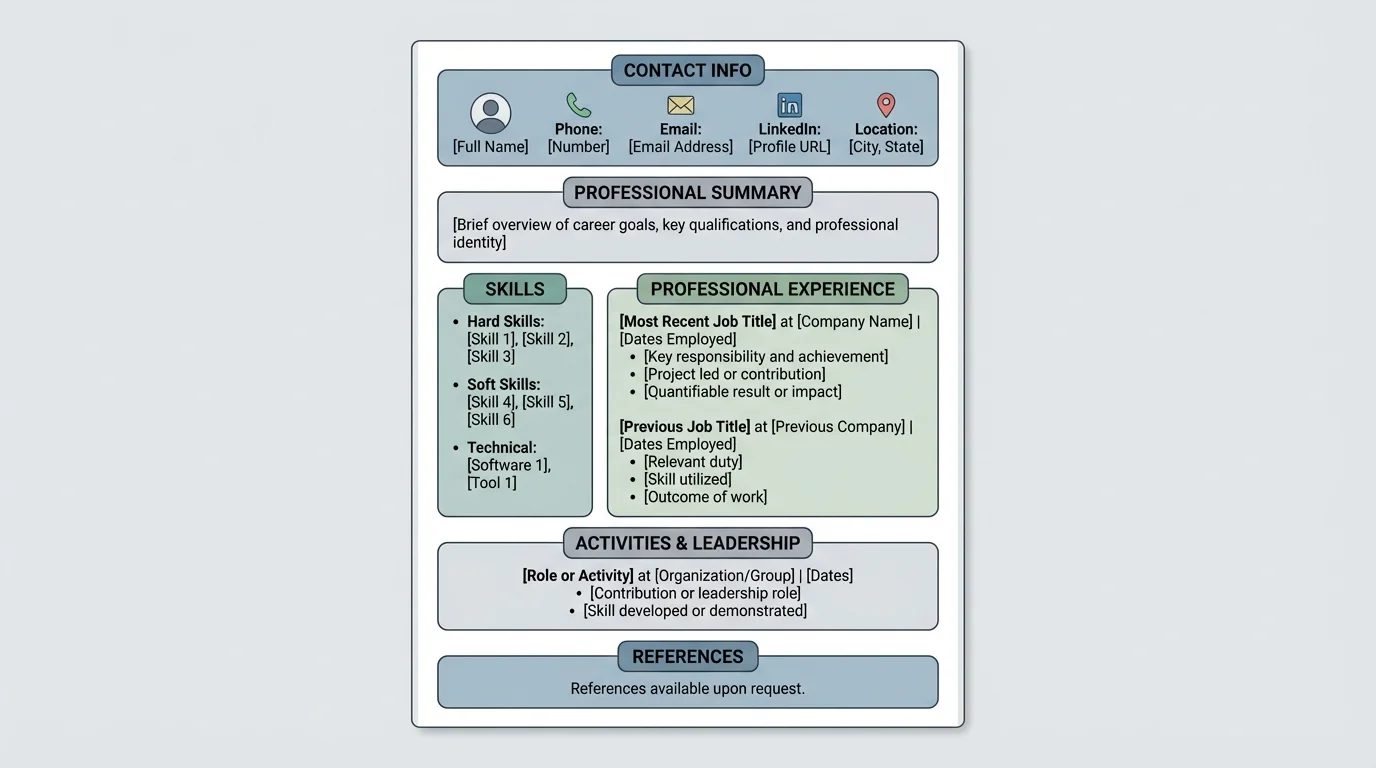
Employers often scan documents in seconds, not minutes, so clear organization matters. A simple layout, as shown in [Figure 1], helps them find your strengths fast. Use consistent headings, readable spacing, and a professional email address. If your email address sounds like a joke or includes random characters, create a new one for job searching.
Your resume can include sections such as contact information, a short skills summary, experience, activities, volunteer work, and awards. If you have not had a paid job, list experiences that show responsibility. Examples include babysitting, helping with a family business, tutoring, lawn care, pet care, running an online craft shop, leading a youth group activity, or organizing a fundraiser.
What matters is not just what you did, but how you describe it. Compare these two lines: "Helped at events" versus "Set up supplies, greeted guests, and cleaned up after community events." The second version is stronger because it gives specific actions. Use action verbs like organized, assisted, managed, prepared, supported, and communicated.
Turning everyday experience into resume language
Suppose you helped care for younger siblings after school.
Step 1: Identify the real skills involved
You may have supervised routines, prepared snacks, helped with homework, and kept track of time.
Step 2: Rewrite it in professional language
"Provided after-school care for younger children, supported homework completion, prepared simple meals, and maintained a safe routine."
Step 3: Connect it to job value
This shows responsibility, time management, communication, and trustworthiness.
Many jobs also ask for a short message or cover note. This is your chance to explain why you are interested. Keep it brief and focused. Mention the role, why it interests you, and one or two strengths that fit. For example: "I am interested in the host position because I enjoy helping people and staying organized in busy settings. My volunteer experience has helped me build strong communication and teamwork skills."
If you are tempted to copy someone else's resume or exaggerate your experience, stop. Honesty matters. Employers are usually willing to train beginners, but they are less willing to trust someone who sounds fake. A truthful application with clear examples is far stronger than an impressive-sounding one that falls apart in an interview.
Later, when you prepare for an interview, the structure from [Figure 1] still helps because each resume section gives you talking points: your skills, your experiences, and the evidence behind them.
Online applications can feel repetitive, but they are part of the test. Employers notice whether you follow directions, answer all questions, and submit accurate information. If a form asks for dates, contact information, or availability, check everything before you send it.
A common mistake is rushing. Students sometimes leave blanks, misspell names, enter the wrong phone number, or choose availability that does not match reality. If you can only work weekends or certain hours, say so clearly. It is better to be honest now than to create problems later.
When a form asks for a reference, that means a person who can speak positively about your responsibility and character. A reference is usually not a close friend. It may be a coach, volunteer supervisor, tutor, club leader, family friend who has seen your work habits, or another adult who knows you can be dependable.
Before listing someone as a reference, ask permission. Send a respectful message such as: "Hello, I am applying for a part-time job and wondered if you would be comfortable serving as a reference for me." This gives the person time to agree and prepare.
You should also keep a simple job-search record. Write down where you applied, when you applied, the contact name, and whether you followed up. This helps you avoid confusion and makes you look organized if an employer replies weeks later.
| Application habit | Strong choice | Weak choice |
|---|---|---|
| Contact info | Professional email and correct phone number | Old email, typo in number |
| Availability | Honest and specific | Overpromising to seem flexible |
| Experience | Truthful examples with detail | Exaggerated or vague claims |
| References | Adults who agreed to help | Listing names without asking |
| Final review | Proofread before submitting | Submitting in a rush |
Table 1. Comparison of strong and weak application habits.
An interview is not supposed to feel perfect. It is supposed to help the employer learn how you think, communicate, and respond. Being nervous is normal. Preparation matters more than trying to sound flawless.
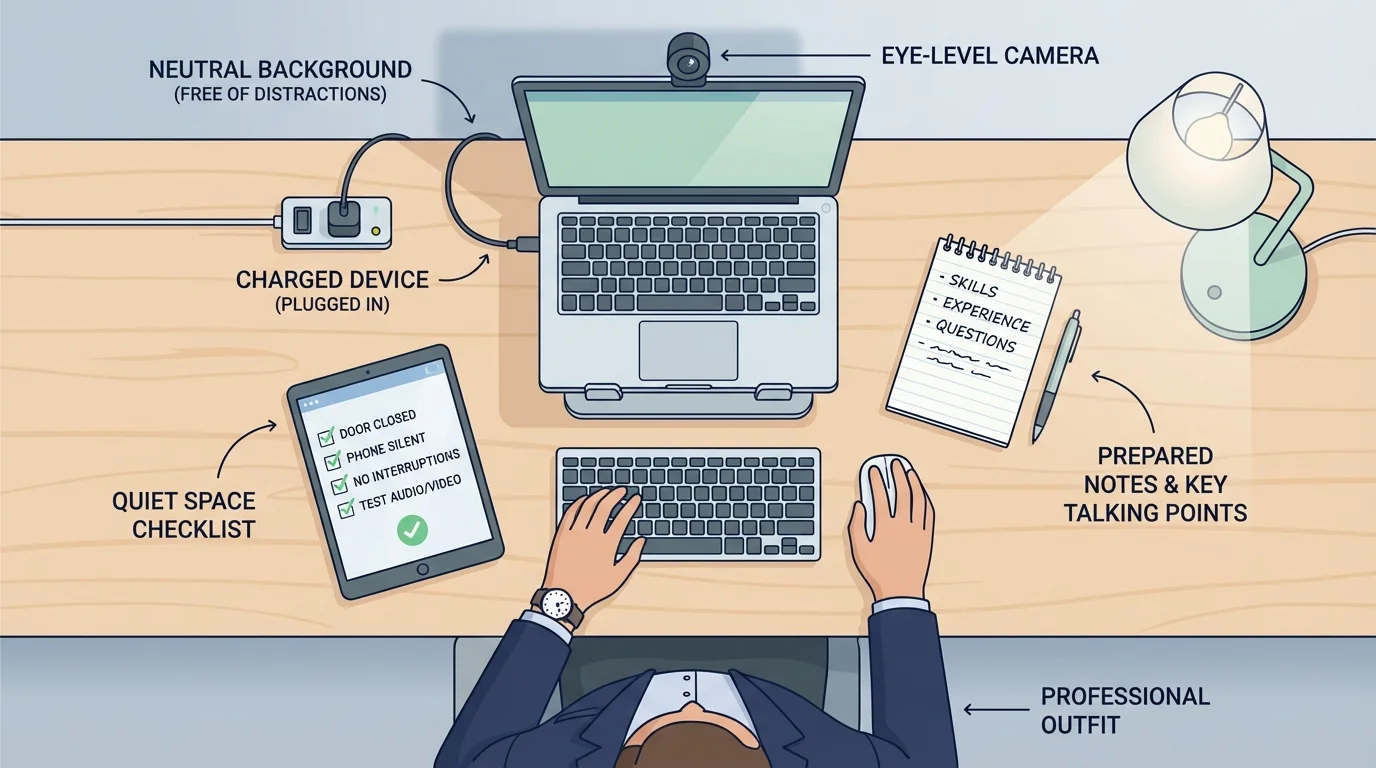
Start by researching the workplace. [Figure 2] Know what the business does, what the role involves, and what kind of customer or service environment it has. If you are interviewing with a local store, restaurant, camp, or nonprofit, spend a few minutes reading its website or social media pages. This helps you answer questions in a way that fits the role.
Your surroundings also send a message before you speak. In a virtual interview, your setup communicates professionalism immediately. A quiet space, charged device, stable internet, camera at eye level, and neutral background make you easier to take seriously.
Practice answering common questions out loud. Silent thinking is not enough. When you hear your own voice, you can notice if your answers are too short, too long, or unclear.
Common interview questions and stronger responses
Step 1: "Tell me about yourself."
Keep it short: who you are, what you are interested in, and why you fit the role. Example: "I am a student who enjoys working with people and staying organized. I have built responsibility through volunteer work and helping with family tasks, and I am excited to keep learning in a customer-facing job."
Step 2: "Why do you want to work here?"
Show that you know something about the place. Example: "I like that your business is fast-paced and team-oriented, and I think my communication skills and positive attitude would fit well here."
Step 3: "What is one of your strengths?"
Name a real strength and give evidence. Example: "One of my strengths is reliability. When I commit to something, I follow through, and I have shown that by consistently helping lead weekend community events."
Step 4: "What is a challenge you are working on?"
Choose a real but manageable area, then explain how you are improving. Example: "I used to feel nervous speaking up quickly in groups, so I have been practicing by preparing ahead and volunteering to take small leadership roles."
A helpful method for behavioral questions is the STAR method: describe the Situation, explain the Task, describe the Action you took, and share the Result. This keeps answers organized. If asked about teamwork, you might explain a group project, your role, what you did to solve a problem, and what happened in the end.
Body language still matters on camera. Sit up straight, look at the camera often, avoid chewing gum, and do not let your phone distract you. Dress slightly more polished than your everyday clothes, even if the job itself is casual. You want to show respect for the opportunity.
Near the end, you may be asked if you have questions. Always have one or two ready. Good options include: "What does training look like for new hires?" or "What qualities help someone do well in this role?" Questions like these show interest and maturity.
The setup in [Figure 2] also reminds you that preparation is not only about answers. It includes technology, environment, timing, and presentation.
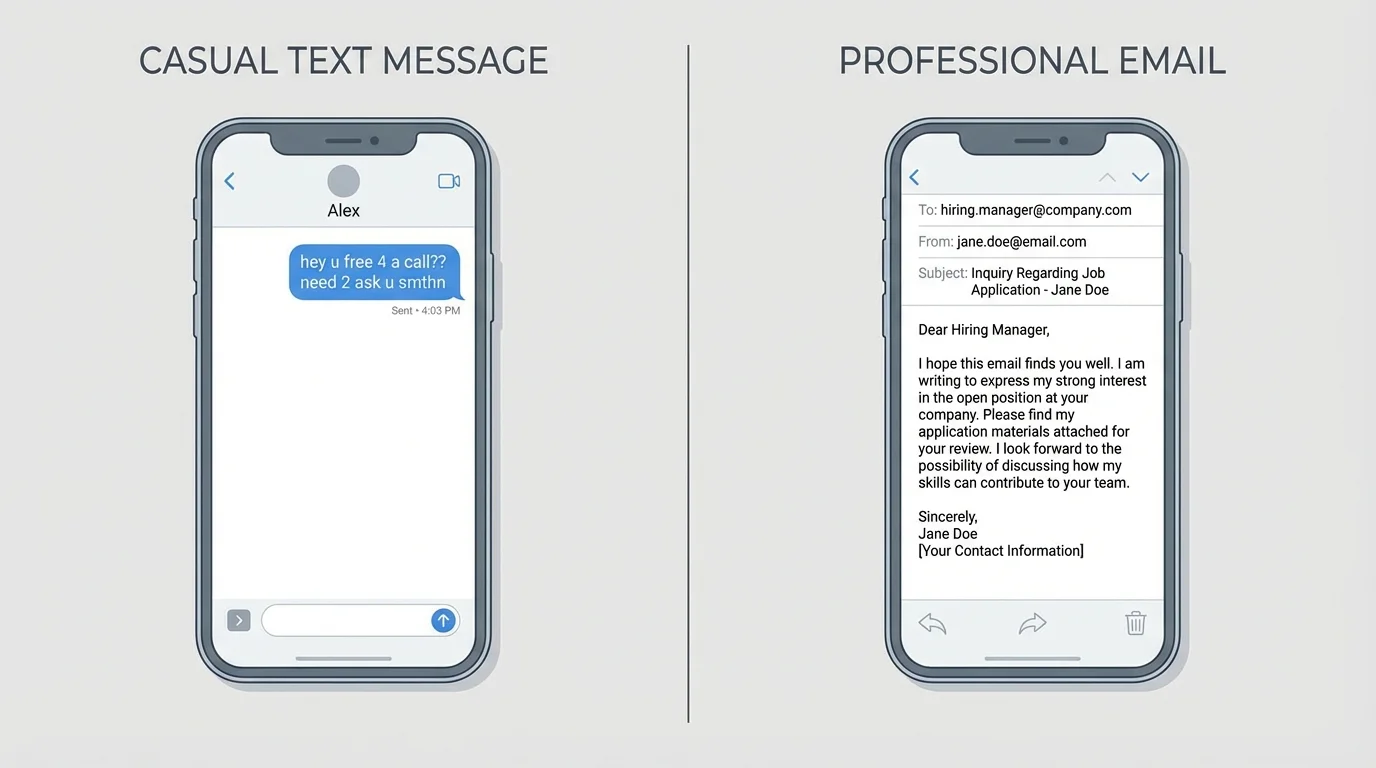
Many job opportunities are won or lost through messages. [Figure 3] A professional communication style uses words that are clear, respectful, and appropriate for a work-related situation. It is different from how you text close friends.
Small details shape how mature and trustworthy you seem. Greeting, wording, punctuation, and sign-off all affect tone. Employers should never have to guess what you mean.
For example, compare these two messages. Weak: "hey i saw u called. what's up?" Strong: "Hello, this is Jordan Lee. I saw that you called regarding my application and wanted to return your message. Please let me know a good time to speak. Thank you." The second message is respectful, clear, and easy to respond to.
Tone can change the outcome
The information in a message matters, but the tone matters too. A message can be short without sounding rude. The goal is to sound calm, polite, and organized. If you are upset, confused, or in a hurry, wait a moment before sending anything related to a job.
Email is often the safest format for formal communication. A strong email includes a subject line, greeting, short purpose, polite closing, and your name. If you are sending documents, name the files clearly, such as "Jordan_Lee_Resume." Avoid sending blank emails with attachments and no explanation.
Voicemail matters too. If you miss a call, listen carefully before responding. When leaving a voicemail, say your full name, the reason for your call, and your callback number slowly. Speak clearly and keep it short.
Professional communication also includes response time. You do not need to reply in five seconds, but you should not disappear for days if an employer is trying to schedule an interview. Checking your email and messages regularly during a job search is part of being responsible.
Your online presence can matter as well. Employers may not examine every social media account, but public posts can still affect impressions. If your profile includes offensive jokes, threats, or disrespectful comments, that can hurt trust. Think of your digital footprint as part of your reputation.
Later on, when you send a thank-you note after an interview, the message patterns from [Figure 3] still apply: greet the person respectfully, mention the interview, and close clearly with your name.
Simple thank-you message after an interview
"Hello Ms. Alvarez, thank you for taking the time to speak with me today about the team member position. I enjoyed learning more about the role and appreciate the opportunity to interview. Please let me know if you need any other information from me. Sincerely, Jordan Lee"
Not getting a job does not automatically mean you did something wrong. Sometimes another applicant had more availability, more experience, or a schedule that better fit the employer's needs. Rejection is common, even for strong candidates.
What matters is how you respond. If you are not selected, stay respectful. You can send a short message thanking the employer for their time. In some cases, you can also ask whether they have any feedback for future opportunities. Not every employer will reply, but asking politely can help you grow.
Many adults with strong careers were rejected from jobs, internships, and programs early on. What often separates successful applicants is not a perfect record, but the willingness to improve and keep applying.
If interviews make you anxious, prepare more, not less. Write down likely questions, practice with a family member or by recording yourself, and improve one thing at a time. If your applications are not getting responses, review your resume, proofread more carefully, and make sure your experience descriptions are specific.
It also helps to think in terms of progress, not instant success. Your first application teaches you how forms work. Your first interview teaches you how questions feel. Your second and third attempts are often stronger because you are learning what employers notice.
"Opportunity is usually missed because it is dressed in overalls and looks like work."
— Thomas Edison
That quote is useful here because job-readiness is built through repeated effort. You improve by practicing communication, showing responsibility in small tasks, and treating each opportunity seriously.
You do not need to wait until the perfect opportunity appears. Start building your job-readiness now. Create a professional email address, make a one-page resume, list adults who might serve as references, and practice a short introduction about yourself.
Then choose a few realistic opportunities and tailor your application to each one. A child-care role, a camp helper position, and a retail job may all want responsibility, but they do not all value the same examples. Match your strongest experiences to the role.
Try This: Write down three responsibilities you already handle well at home, in community activities, or in online projects. Then rewrite each one using action verbs so it sounds professional.
Try This: Record yourself answering "Tell me about yourself" in under one minute. Listen for clarity, confidence, and whether your answer includes real evidence.
Try This: Draft one professional email asking an adult if they would be willing to be a reference. Check the greeting, purpose, and closing before sending.
Try This: Review your public online profiles and remove anything that would make an employer question your judgment or maturity.
Job-readiness is really about trust. Every strong application, thoughtful interview answer, and professional message tells an employer the same thing: you are someone they can count on.
