A lot of people think serious health problems start with dramatic moments. More often, they start quietly: staying up too late for weeks, ignoring stress headaches, snapping at people online, taking unsafe risks to feel better for a few minutes, or pushing through exhaustion until even easy tasks feel heavy. Your well-being is not just about whether you are "fine" or "not fine." It is shaped by patterns, and those patterns matter.
If you learn how to assess stress, burnout, and risk behaviors early, you can protect more than your mood. You can protect your sleep, concentration, relationships, decision-making, safety, and future plans. This matters whether you are balancing online classes, a part-time job, sports training, family responsibilities, social media pressure, or all of those at once.
Stress is your body and mind's response to pressure, challenge, or change. Some stress is short-term and manageable, but too much can affect health.
Burnout is a state of deep exhaustion, reduced motivation, and feeling emotionally drained after ongoing stress that has not been handled well or relieved.
Well-being means your overall state of health in several areas: physical, mental, emotional, social, and personal safety.
Risk behaviors are choices that increase the chance of harm to yourself or others, even if they seem helpful, exciting, or normal in the moment.
These ideas connect closely. Stress is common and not always harmful. Burnout usually develops when stress keeps going without enough recovery. Risk behaviors often enter the picture when someone tries to escape pressure, numb emotions, fit in, or feel in control. The problem is that these behaviors usually add more problems instead of solving the original one.
Think of well-being like the condition of a phone battery, signal, storage, and screen all at once. If one part is off, the device still works for a while. But if several problems build up together, performance drops fast. Your life works in a similar way. Sleep affects mood. Mood affects choices. Choices affect relationships and safety. Everything is connected.
Stress response is the body's built-in reaction to challenge, and [Figure 1] shows how one stressful trigger can quickly affect thoughts, emotions, physical sensations, and behavior at the same time. You might notice a faster heartbeat, tense muscles, sweating, stomach pain, racing thoughts, irritability, or trouble concentrating. None of these signs automatically mean something is seriously wrong, but they do mean your system is under pressure.
Stress can come from obvious situations, like a deadline, family conflict, money worries, or a breakup. It can also come from less obvious sources: nonstop notifications, comparing yourself to others online, overcommitting, lack of sleep, or feeling like you always have to be available. Even good things, like starting a new job or joining a team, can cause stress because change takes energy.
Short-term stress can sometimes help you focus, react quickly, or prepare for a challenge. Long-term stress is different. When your body stays on alert too often, your sleep, appetite, memory, and patience can all suffer. You may stop feeling fully rested, even after sleeping. You may also start making decisions based on survival mode instead of clear thinking.
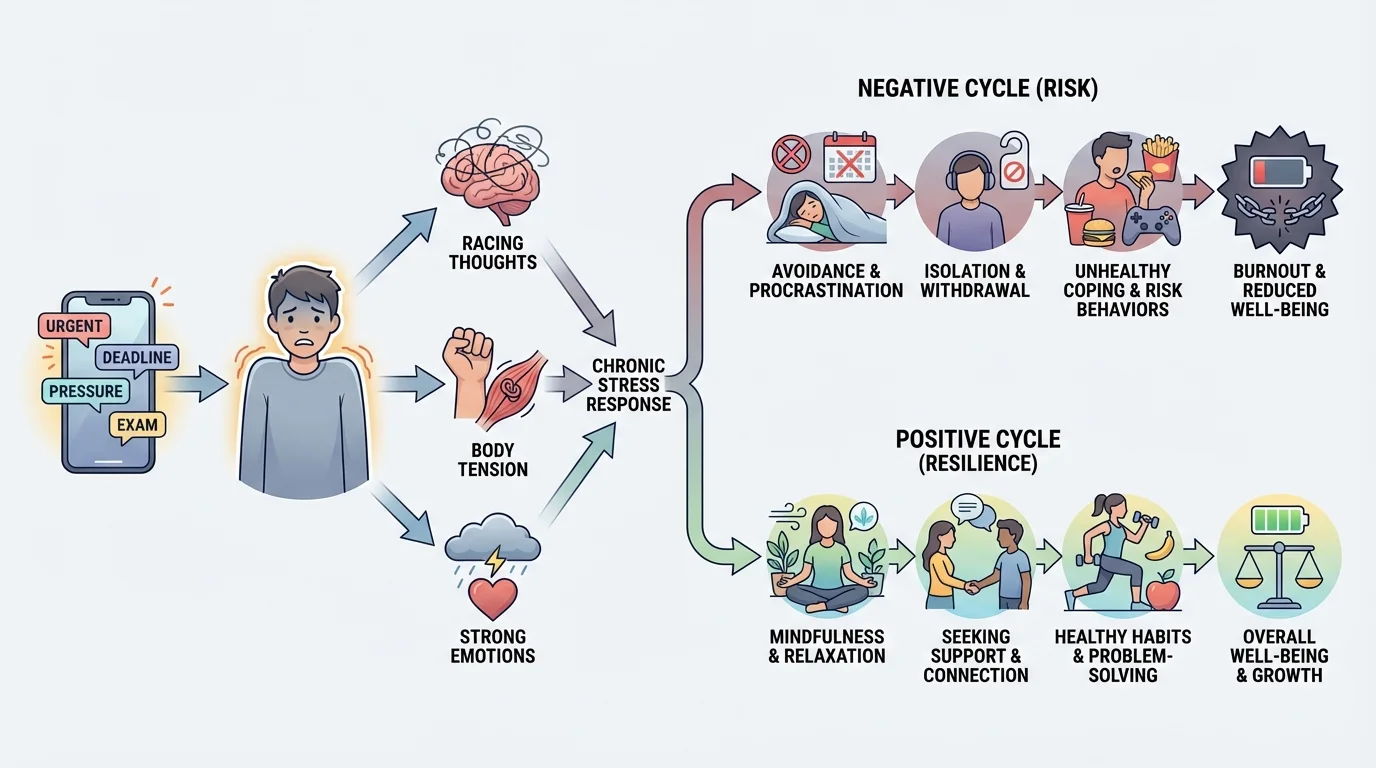
Stress signs are not the same for everyone. One person gets headaches. Another gets quiet and withdraws. Someone else becomes angry, restless, or overly perfectionistic. This is why assessing stress means looking at your own patterns, not comparing yourself to somebody else's reactions.
Pay attention to frequency and intensity. Feeling stressed before a presentation once in a while is normal. Feeling overwhelmed almost every day, having chest tightness, crying often, losing sleep, or feeling unable to shut your mind off are signs that your stress level deserves attention. As [Figure 1] illustrates, the stressful event is only one part of the picture; what follows in your body and behavior matters just as much.
Chronic stress can affect memory and attention because the brain has a harder time focusing when it is constantly preparing for possible problems. That is one reason stressed people sometimes feel "lazy" when they are actually overloaded.
Another important point: stress is not only emotional. It can show up physically. Ongoing fatigue, stomach issues, headaches, jaw clenching, skin picking, sleep problems, and getting sick more often can all be connected to too much pressure.
Burnout is more than being busy or tired. After normal effort, rest usually helps. With burnout, rest may not feel like enough because the deeper issue is ongoing depletion. You may feel emotionally flat, cynical, unmotivated, or detached from things you usually care about.
[Figure 2] Burnout often builds in stages. First, you push hard because you want to succeed or keep up. Then you start sacrificing sleep, breaks, and hobbies. Next, you feel constantly behind, even when you are working. Eventually, simple tasks feel draining, your patience gets shorter, and your usual goals stop feeling rewarding.
For a teen, burnout might look like this: you stop turning your camera on in video sessions because you feel exhausted, you avoid messages because answering them feels like too much, you miss assignment deadlines not because you do not care but because you cannot get started, and you feel guilty all the time. You may even blame yourself and say, "I just need to try harder," when what you really need is recovery and support.
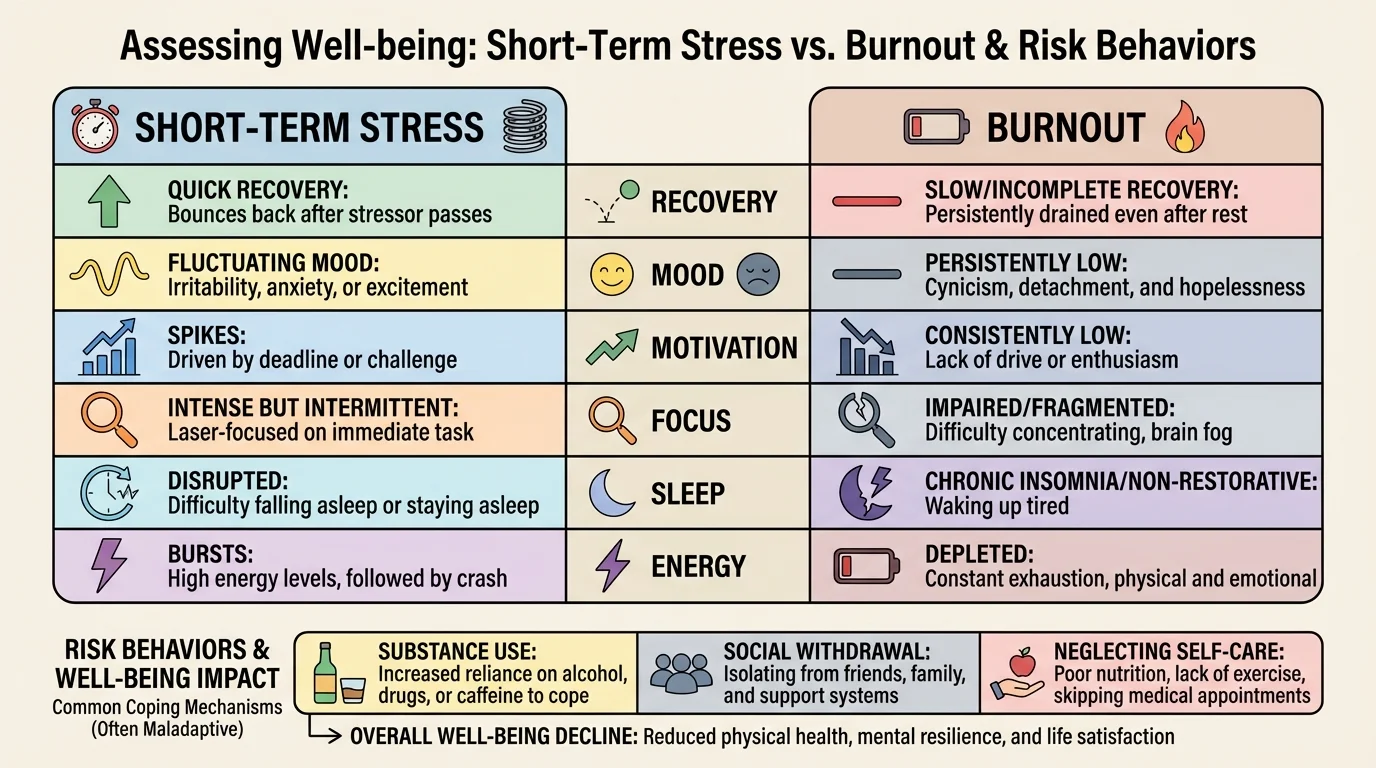
Burnout can affect self-esteem because it makes capable people feel ineffective. It can also increase conflict with family, coaches, coworkers, or friends because you have less patience and less emotional energy. Later, when you look back, the pattern often seems obvious. In the middle of it, though, burnout can feel like your personality has changed.
One major risk is that burned-out people often look for fast relief. That is where unhealthy coping can start. If you are exhausted enough, almost any escape can feel tempting, even if it is harmful later. That is why recognizing burnout early matters so much. The comparison in [Figure 2] makes an important point: stress usually says, "I need a break," while burnout often says, "I do not even care anymore."
Risk behaviors are often misunderstood. People sometimes act like risky choices happen because someone is careless, rebellious, or "bad." Real life is more complicated. Risk behaviors can come from stress, loneliness, pressure to fit in, curiosity, boredom, anger, trauma, or the need to feel something different right away.
Common risk behaviors for teens can include vaping, drinking alcohol, misusing prescription drugs, using illegal drugs, riding in a car with an unsafe driver, reckless driving when old enough to drive, self-harm, sending private images, meeting strangers from the internet without safety planning, staying awake for extremely long periods, and using food restriction or bingeing as a way to cope. Some of these are illegal. Some are not illegal but are still dangerous.
Why do these choices seem attractive? Because they may offer quick effects. A substance might numb anxiety for a short time. Sleep deprivation might create extra hours to finish work. Speeding may feel exciting. Oversharing online can feel like connection. But short-term relief is not the same as real well-being. If the cost is damage to your health, safety, trust, or future opportunities, the behavior is not helping you in the long run.
Why unhealthy coping can feel rewarding at first
Many risky behaviors create an immediate payoff: distraction, relief, approval, excitement, or escape. The brain remembers that quick payoff, even when the long-term result is worse stress, shame, danger, or addiction. That is why changing behavior takes more than "just stop." It takes noticing the trigger, replacing the habit, and making the safer option easier to choose.
A behavior does not have to look dramatic to be harmful. For example, saying yes to every responsibility, skipping meals, living on energy drinks, or sleeping only a few hours a night may seem productive. In reality, these can become risk patterns too, because they push your body and brain beyond healthy limits.
Well-being includes more than the absence of illness. It covers how you function and feel across your whole life. Stress, burnout, and risk behaviors can each damage multiple areas at once.
Physical well-being: You may get poor sleep, headaches, stomach issues, weakened immunity, appetite changes, fatigue, or injuries. Substance use adds more risks, including dependence, poor reaction time, and harm to developing brain function.
Mental and emotional well-being: Ongoing stress can increase anxiety, hopelessness, mood swings, and feeling out of control. Burnout can make you numb, cynical, or detached. Risk behaviors may briefly cover painful feelings, but often increase guilt, fear, and emotional instability later.
Social well-being: You may isolate yourself, snap at people, ignore messages, break trust, or get pulled into unhealthy relationships. Even online interactions can become stressful if you feel pressure to perform, reply instantly, or hide what is really going on.
Safety and future goals: Unsafe decisions can lead to injuries, school or work problems, damaged reputation, legal trouble, lost opportunities, and broken trust at home. One risky choice does not define your future, but patterns of risky choices can change it.
| Factor | Short-term effect | Long-term effect |
|---|---|---|
| High stress | Tension, racing thoughts, poor focus | Sleep problems, anxiety, health strain |
| Burnout | Exhaustion, low motivation, emotional numbness | Withdrawal, lower performance, hopelessness |
| Risk behaviors | Quick relief, excitement, distraction | Greater stress, safety risks, health and trust problems |
Table 1. A comparison of common short-term and long-term effects of stress, burnout, and risk behaviors.
Notice the pattern: the short-term effect often tricks people. Quick relief can hide long-term damage. That is why assessing well-being requires looking beyond "How do I feel right now?" to questions like "What is this choice doing to me over time?"
A practical self-check matters because problems usually grow gradually. You do not need to diagnose yourself. You do need to notice patterns honestly.
[Figure 3] Step 1: Check your body. Are you sleeping enough? Are you tense, sick often, getting headaches, or feeling drained most days?
Step 2: Check your mind and mood. Are you anxious, numb, angry, hopeless, or unable to focus? Are small tasks suddenly feeling huge?
Step 3: Check your behavior. Are you withdrawing, procrastinating more than usual, using substances, self-harming, hiding things, taking unsafe risks, or staying online to avoid real problems?
Step 4: Check your patterns. Has this been going on for a day, a week, or several weeks? Is it getting worse?
Step 5: Check safety. Are you or someone else in danger? If yes, do not wait. Contact a trusted adult, emergency service, crisis line, or mental health professional right away.
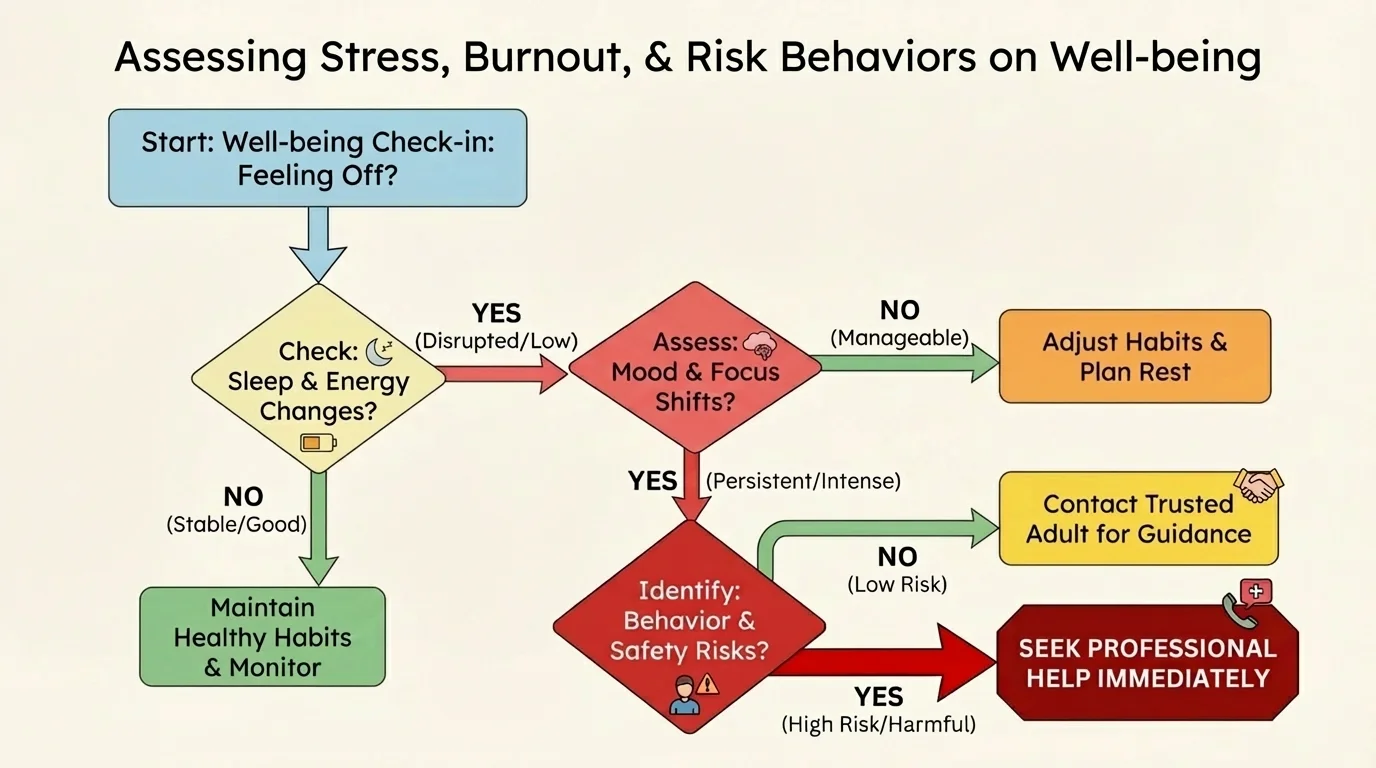
One useful way to assess yourself is to ask whether your coping is helping or harming. A healthy coping strategy usually lowers stress without creating new danger. An unhealthy coping strategy often gives short relief but adds secrecy, shame, conflict, health problems, or risk.
Personal check-in example
Step 1: Name what is happening
"I have slept badly for five nights, I am behind in two classes, and I am avoiding messages from my boss."
Step 2: Identify warning signs
"I am getting headaches, I feel angry quickly, and I keep thinking about vaping again even though I quit."
Step 3: Rate the level of concern
Ask: Is this uncomfortable, serious, or unsafe? If the answer is unsafe, get help immediately.
Step 4: Choose one protective action today
Examples: tell a parent or guardian, email a teacher, reschedule one commitment, put the phone away for the night, or ask for a counseling appointment.
The goal is not perfection. The goal is catching the pattern early enough to respond. As [Figure 3] makes clear, a simple system can help you move from confusion to action.
If stress is manageable, start with basic recovery habits. These sound simple, but they work because they support the brain and body directly: consistent sleep, regular meals, movement, hydration, breaks from screens, and honest communication about limits. When these habits are missing, everything feels harder.
Here is a practical approach you can use:
Pause and name the stressor. Be specific. "Everything is too much" is real, but it is harder to solve. "I have three deadlines, two late nights, and family conflict" is clearer.
Reduce one pressure point. You may not be able to fix everything, but you can often change one part: ask for an extension, say no to an extra shift, mute notifications for an hour, or break a task into smaller parts.
Replace risky coping. If your pattern is staying up until early morning, vaping when upset, doomscrolling, or riding with unsafe people, choose a safer substitute before the next trigger hits. Plan it in advance.
Tell someone early. Stress grows in isolation. A trusted adult, counselor, coach, mentor, healthcare provider, or family member can help you notice what you cannot see clearly on your own.
Get professional help when needed. If symptoms are intense, last for weeks, or include self-harm, substance misuse, panic, depression, or unsafe thoughts, outside support is not an overreaction. It is a smart response.
Asking for help is a health skill, not a weakness. Many serious problems become much easier to handle when addressed early.
It also helps to build a personal safety list. Write down three people you can contact, two places where you feel calmer, and one emergency support option such as a crisis hotline or urgent care plan. Make the list before you need it.
Consider two versions of the same situation. Jordan has online classes, soccer practice, and a weekend job. Jordan starts sleeping about four to five hours a night, misses meals, and drinks too much caffeine. Stress turns into constant irritation and headaches. A friend offers a vape, saying it will help Jordan relax. If Jordan says yes and starts using it whenever pressure builds, the original stress is still there, but now there is also a new health risk and the beginning of a pattern of dependence.
Now change the response. Jordan notices the pattern, tells a parent that things feel unmanageable, asks a coach for advice, reduces one shift at work, and sets a no-phone bedtime. The stress does not vanish overnight, but the direction changes. That is what assessment is for: not to judge yourself, but to catch the turning point.
Here is another example. Maya feels emotionally drained after months of trying to keep grades perfect while handling family stress. Maya stops caring about activities she used to enjoy and starts ignoring messages from friends. This could look like laziness from the outside, but it may actually be burnout. If Maya recognizes that and seeks support, recovery can begin. If she hides it, the isolation may deepen.
"Your coping strategy should not create a bigger problem than the stress you are trying to handle."
One more example involves online safety. A teen who feels lonely and misunderstood may overshare personal information with someone met through social media. The attention feels comforting at first, but it may lead to pressure, manipulation, or danger. Emotional stress can weaken judgment, which is why emotional health and personal safety are connected.
Some situations go beyond self-care. Get help immediately if you are thinking about hurting yourself, someone else is threatening you, substance use is becoming hard to stop, you are in an unsafe relationship, you cannot function in daily life, or you feel hopeless most of the time. If there is immediate danger, contact emergency services or a crisis resource right away.
You do not need proof that things are "bad enough." If your safety is at risk, that is enough reason to reach out. Trusted adults and professionals are there for exactly these moments.
Try This: For the next three days, pause once in the afternoon and once before bed. Ask yourself: What is my stress level right now? What is one sign my body is giving me? What coping choice am I making next?
Try This: Make a short "when I am overwhelmed" plan in your notes app with three safe actions, two people to contact, and one behavior you want to avoid.
Try This: If you notice burnout signs, choose one thing to stop doing temporarily. Recovery often begins not by adding more, but by removing one source of overload.
