Have you ever worked hard on something, then heard, "Try that again a different way"? That can feel a little uncomfortable. But here is an important truth: mistakes are not signs that you cannot do something. Mistakes are signs that you are learning. When you pause, listen to feedback, and try again, your brain gets stronger at the skill.
Everybody makes mistakes—kids, adults, artists, athletes, gamers, cooks, and teachers. You might spell a word wrong in an online assignment, forget a step while cleaning your room, or rush through reading during a video lesson. A mistake means something did not go the way you wanted. It does not mean you are bad at the task.
Sometimes children think, "I got it wrong, so I should stop." A better thought is, "I got it wrong, so now I know what to fix." That is a powerful habit. When you can look at a mistake calmly, you become more confident because you know what to do next.
Feedback is helpful information someone gives you to help you do better next time. Reflect means to stop and think about what happened. Improve means to get a little better after practice and help.
Feedback can come from a parent, a learning coach, a teacher in a message or video call, a music instructor, a sports coach, or even from yourself when you notice something. Good feedback is meant to help, even when it does not feel fun at first.
Feedback is not the same as being in trouble. Feedback says, "Here is a way to grow." For example, if an adult says, "Your picture has great colors. Next time, color a little more slowly so the edges stay neat," that is feedback. It tells you what went well and what you can change.
Some feedback is about the job you did. Some is about the way you did it. You might hear, "Check your answer again," or "Use a calmer voice," or "Take your time and read every word." These comments are not about who you are. They are about one action you can change.
Helpful feedback points to a next step. The most useful feedback is clear and kind. It helps you know one thing to keep and one thing to fix. When feedback is specific, it is easier to act on it. "Good job" feels nice, but "You remembered to start with a greeting in your message" tells you exactly what worked.
[Figure 1] When you hear feedback, your first feeling might be surprise, disappointment, or even frustration. That is normal. Feelings come first. What matters is what you do after the feeling. You can take a breath, listen again, and choose one small step.
After feedback, a simple routine helps. This routine works like a little loop, and it keeps you moving instead of freezing. You do not need to fix everything at once. You only need to take the next helpful step.
Step 1: Stop your body. Put your hands still, take one slow breath, and listen. Step 2: Think: "What is the person telling me to change?" Step 3: Choose one fix. Step 4: Try again with that fix in mind.
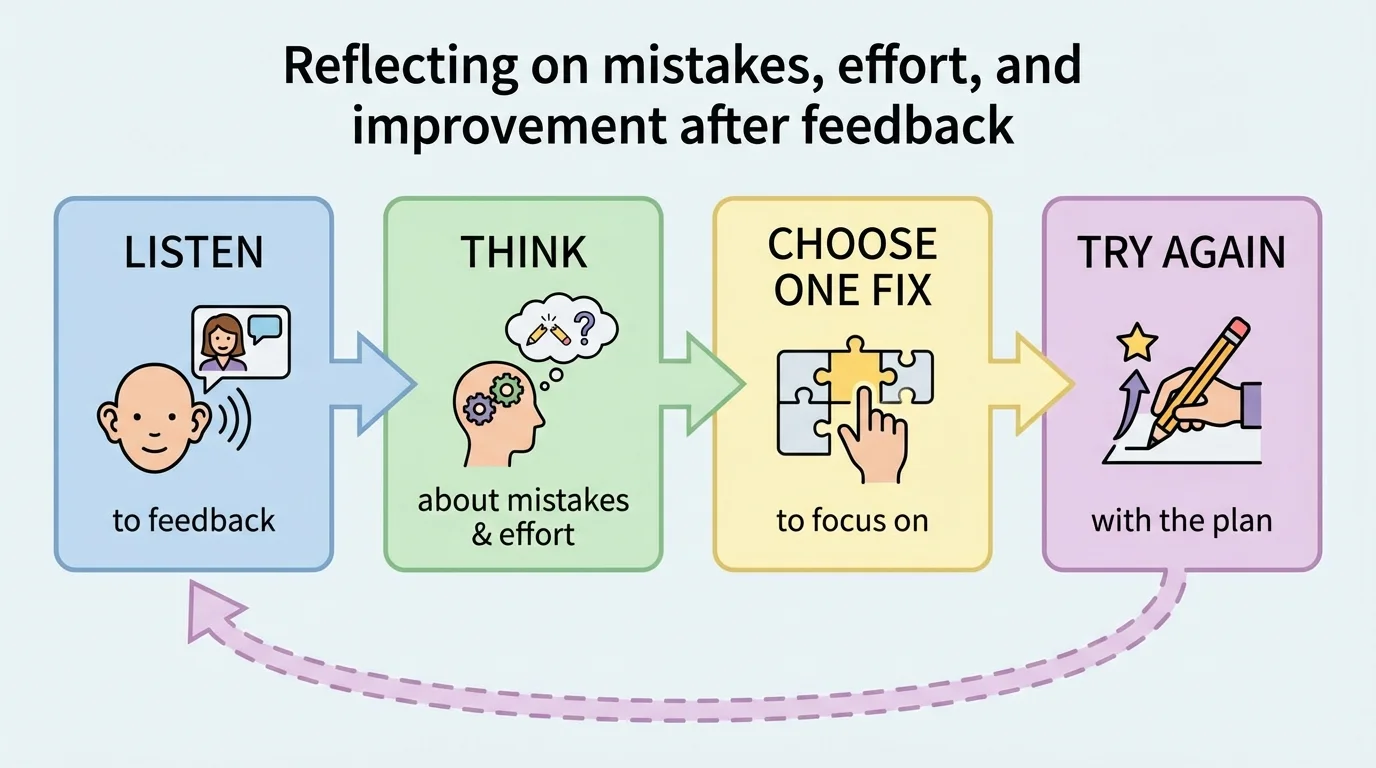
If the feedback feels big, break it into tiny pieces. If someone says, "Your room still needs cleaning," you can reflect by asking yourself, "What part did I miss?" Maybe the toys are put away, but the books are still on the floor. Now you know the next step.
You can also ask a calm question. Try saying, "Can you show me one part to fix?" or "Should I start with the top or the bottom?" Asking for help is smart. It shows that you want to improve.
[Figure 2] Mistakes, effort, and improvement are different things, even though they are closely connected. Knowing the difference helps you be fair to yourself.
A mistake is something that went wrong. Effort is how hard you tried. Improvement is the better result you get after using help or practice. You can make a mistake and still give strong effort. You can also give strong effort and still need more practice. Improvement often happens little by little, not all at once.
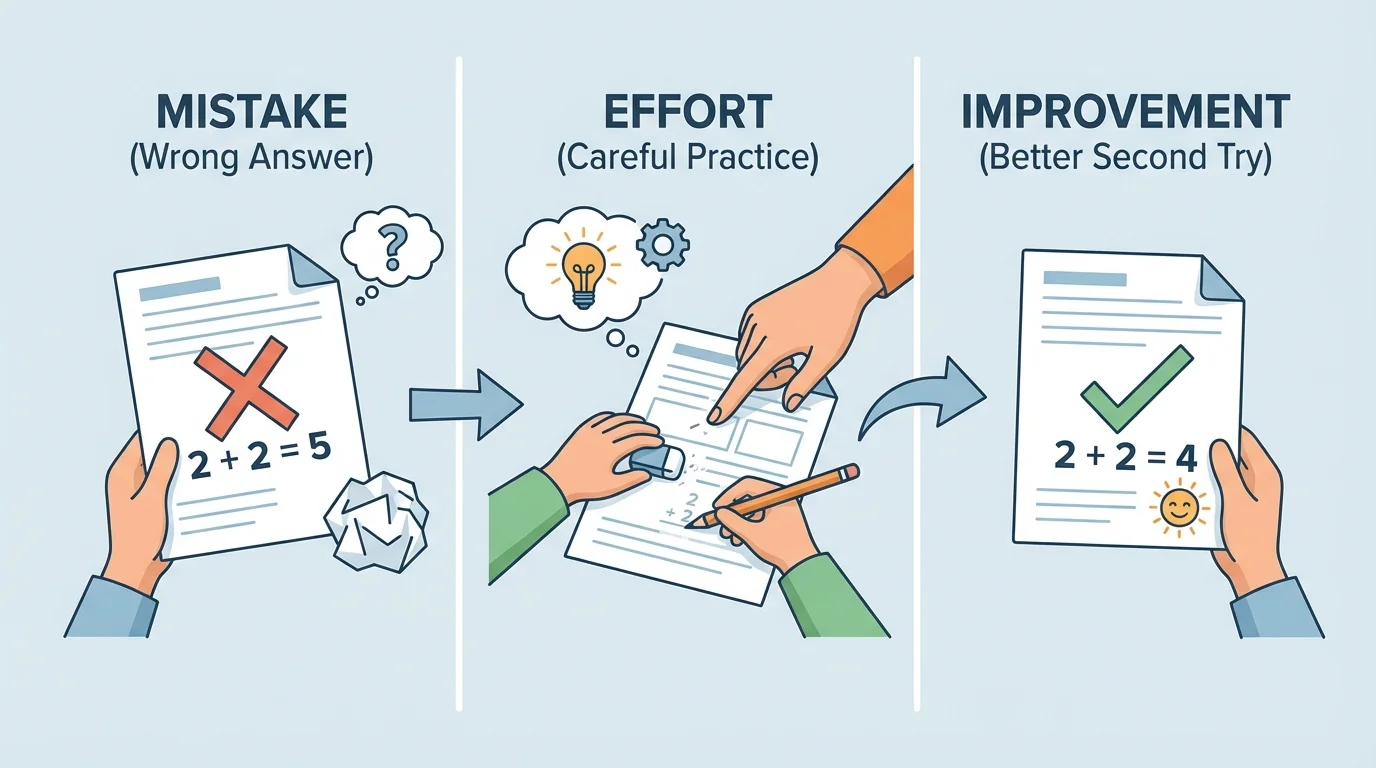
Suppose you are practicing tying your shoes. On the first try, the loops fall apart. That is the mistake. You keep trying slowly and carefully. That is effort. On the next day, the knot stays tied longer. That is improvement.
This matters because sometimes kids only notice the mistake. They forget to notice the effort and the improvement. A better reflection sounds like this: "I forgot a step today, but I listened, practiced, and did it better the second time." That kind of thinking helps you keep going.
Example: Looking at all three parts
Step 1: Name the mistake.
You sent a message without saying hello.
Step 2: Name the effort.
You wrote the message by yourself and checked the spelling.
Step 3: Name the improvement.
The next message starts with "Hi" and sounds more polite.
Now the mistake is not the whole story. Your effort and improvement matter too.
When you reflect this way, you learn to be honest and encouraging. That is an important self-awareness skill.
Your words can help your brain stay ready to learn. This is called self-talk. Self-talk is what you say to yourself in your mind or out loud. Helpful self-talk is calm, kind, and brave.
Try saying: "I can fix one part." "I am still learning." "Thanks, I will try that." "Can you tell me one thing to work on?" "My first try does not have to be perfect." These sentences help you stay open to feedback.
"Mistakes help me learn when I stop, think, and try again."
You can also use kind words with other people. If your sibling or teammate makes a mistake, you might say, "You are getting better," or "Try it one more time." When you give kindness, it becomes easier to receive kindness too.
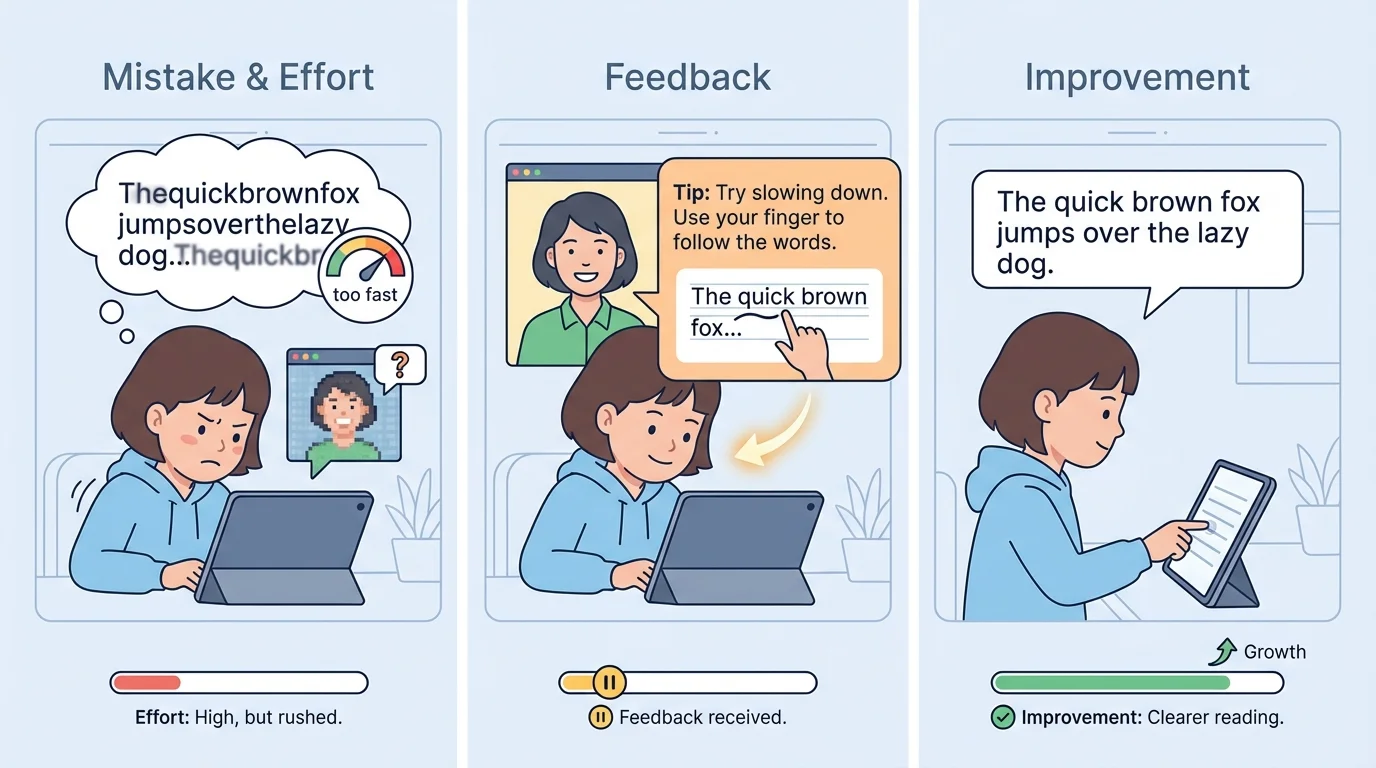
[Figure 3] Feedback changes your next try in real life every day. The goal is not to be perfect right away. The goal is to use the advice in your next action.
Online reading: During a video lesson, you read too fast. Your teacher says, "Slow down at the commas." You feel a little shy, but then you try again and pause at the right places. That is reflecting and improving.
Drawing: You color outside the lines. A parent says, "Use smaller strokes." On your second picture, your coloring is neater. The first picture was not a failure. It was part of learning.
Chores: You feed a pet but forget to refill the water. Someone reminds you, "Food and water both need checking." The next day, you remember both. That is responsibility growing through feedback.
Game play: You lose a level in a game because you rushed. You reflect and think, "I should watch for the moving obstacle." The next round goes better. Even in games, mistakes can teach you a strategy.
Sports or music: A coach says, "Keep your eyes on the ball," or an instructor says, "Play that part more slowly first." As you saw earlier in [Figure 2], effort is the practice part, and improvement shows up after you use the tip many times.
Your brain builds stronger pathways when you practice something again after a mistake. That means a careful second try can teach you more than an easy first try.
Sometimes the improvement is small. That is okay. Small improvements count. If you read one sentence more smoothly, remember one extra step, or speak a little more politely, that is real progress.
A growth habit is a pattern of actions that helps you keep learning. You build this habit every time you listen, reflect, and try again. Over time, this makes challenges feel less scary.
Here is a simple way to build that habit at home: after a task, ask yourself three questions. What went well? What needs fixing? What will I do next time? You can think the answers in your head or say them aloud.
If you want, keep a tiny "next time" note. It can be very short: "Read slower." "Check both shelves." "Use a greeting." "Take turns talking." One short reminder helps you remember the feedback later.
Try This
Step 1: The next time someone gives you feedback, pause and take one breath.
Step 2: Say, "Okay, I will try that."
Step 3: Pick one small fix, not many.
Step 4: After your second try, tell yourself one thing you improved.
This tiny routine helps feedback feel useful instead of scary.
You do not have to love mistakes. Most people do not. But you can learn how to use them well. When you reflect on your mistakes, notice your effort, and look for improvement after feedback, you become stronger, wiser, and more independent.
