Have you ever felt happy when someone really listened to you? It can feel like a warm light turning on inside you. When a person listens, you feel important. In an online classroom community, listening helps everyone feel safe, welcome, and ready to learn together.
A community is a group of people who care about one another and work together. Your online classroom is a community, even though students are learning from different homes. When you listen to your teacher and classmates, you help make that community kind and strong.
Listening is more than hearing sounds. It means paying attention to someone's words, voice, and feelings. When you listen, you show, "You matter. I want to understand you." That helps people trust you and feel calm around you.
Listening means giving your attention to someone so you can understand what they are saying and how they may be feeling. Empathy means trying to understand another person's feelings.
In an online class, listening matters because people take turns talking. If everyone talks at once, nobody can understand. If students interrupt, ignore messages, or think only about what they want to say next, the class can feel confusing and unfriendly. But when students listen, the class feels more peaceful, fair, and caring.
Listening also helps you learn about other people. Maybe one classmate is excited to share an idea. Maybe another student feels nervous speaking on camera. When you listen, you notice these things. That helps you respond in a gentle and helpful way.
[Figure 1] Good listening includes visible signs. You might look at the screen, keep your body still, and wait until the speaker is done. You do not have to stare without blinking, but your actions should show that your mind is with the speaker.
Good listening can also sound like patient silence, kind words, and thoughtful answers. You might say, "I heard you say that your project was hard," or "I understand that you felt sad." Those words show that you paid attention.
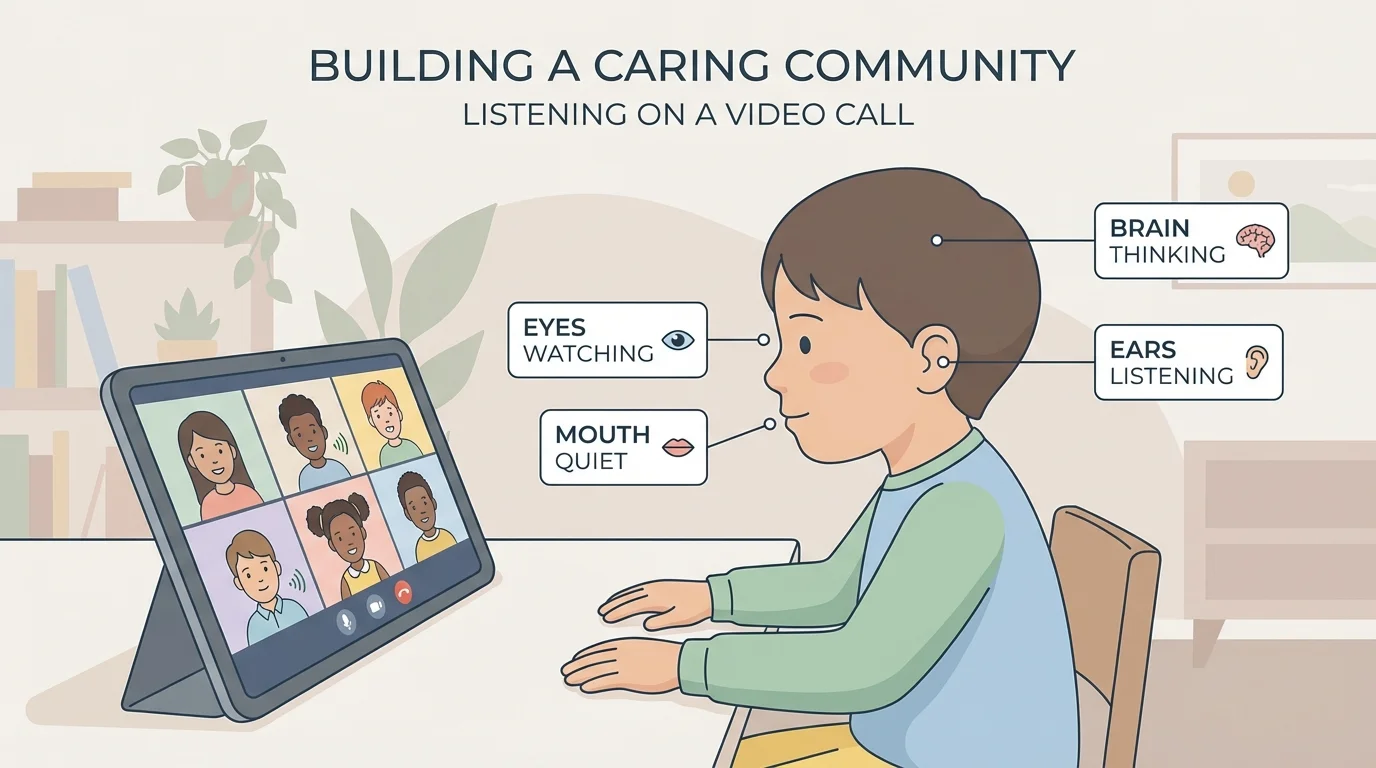
Sometimes listening means reading carefully too. In online school, people may share ideas in a class chat, discussion board, or message. Listening in those moments means reading all the words before answering. It means not rushing. It means making sure you understand before you type back.
Listening also includes your face and voice. A calm face, a nod, or a soft answer can show respect. If you roll your eyes, sigh loudly, or make a silly face while someone else is talking, the other person may feel hurt, even if you did not mean to be unkind.
[Figure 2] Listening helps build empathy: first you listen, then you understand, and then you can choose a kind response. When you know how someone feels, it is easier to help, comfort, or encourage them.
For example, if a classmate says, "My internet stopped working and I missed part of class," you could think, "Why were they late?" But if you listen closely, you understand the problem. Then you may answer, "I'm sorry that happened. I can tell you what the teacher said." That is caring.
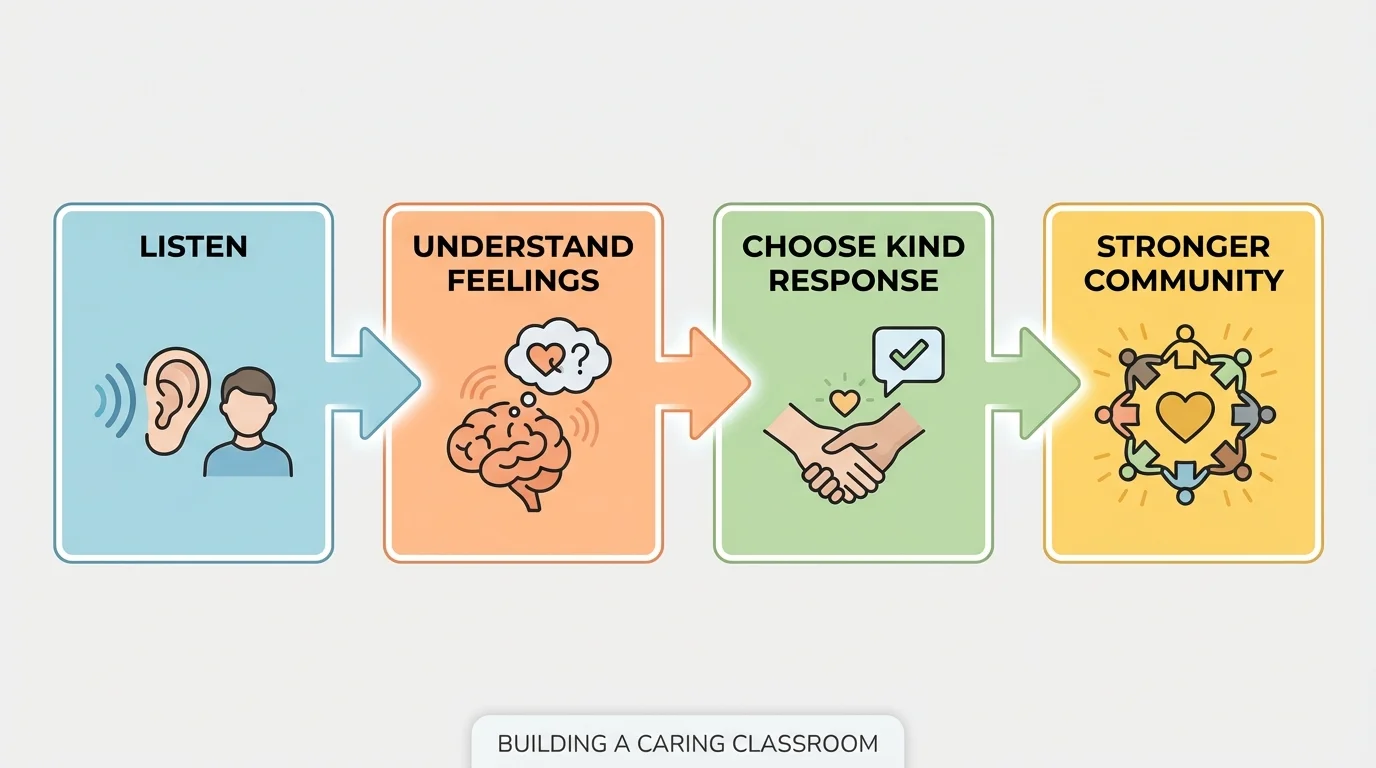
Listening also helps people feel included. Included means feeling like you belong. When everyone gets a turn to speak and knows others will listen, people are more likely to share ideas. Quiet students may feel brave enough to join. Students with different thoughts may feel respected.
Later, this same idea remains important, as [Figure 2] shows in the path from listening to a stronger community. One small listening moment can grow into friendship, teamwork, and trust. A caring classroom is built from many small moments like these.
Listening builds trust. Trust grows when people believe you will treat their words with care. If classmates know you will listen instead of laugh, interrupt, or ignore them, they feel safer sharing their ideas and feelings.
Listening can even help solve problems. If two students disagree during a group project, they may both want to be heard first. But if each person listens, they can understand the problem better and find a fair answer together.
When people do not listen, small problems can become bigger ones. A student might miss directions and do the wrong assignment. Someone might think a classmate is being rude when really the classmate was trying to explain something. Feelings can get hurt very quickly.
Here are some common problems:
Think about an online class discussion. One student shares an idea. Another student does not listen and types, "That makes no sense." Maybe the first student was still explaining. Maybe there was a good idea in the rest of the message. Not listening can make the class feel unsafe and unkind.
The same thing happens at home or in clubs. If your brother, sister, parent, coach, or friend is talking and you only half-listen, you may miss something important. Listening is not just a school skill. It is a life skill.
[Figure 3] You can practice listening with a simple routine: stop your body, look and listen, think about feelings, and answer kindly. These steps help you slow down and give the speaker your full attention.
Step 1: Stop your body. Pause your hands. Put down toys or other tabs if you can. Turn your body or face toward the speaker.
Step 2: Look and listen. Watch the speaker's face if you are on video. Listen to the words all the way to the end. If you are reading a message, read the whole message before you answer.
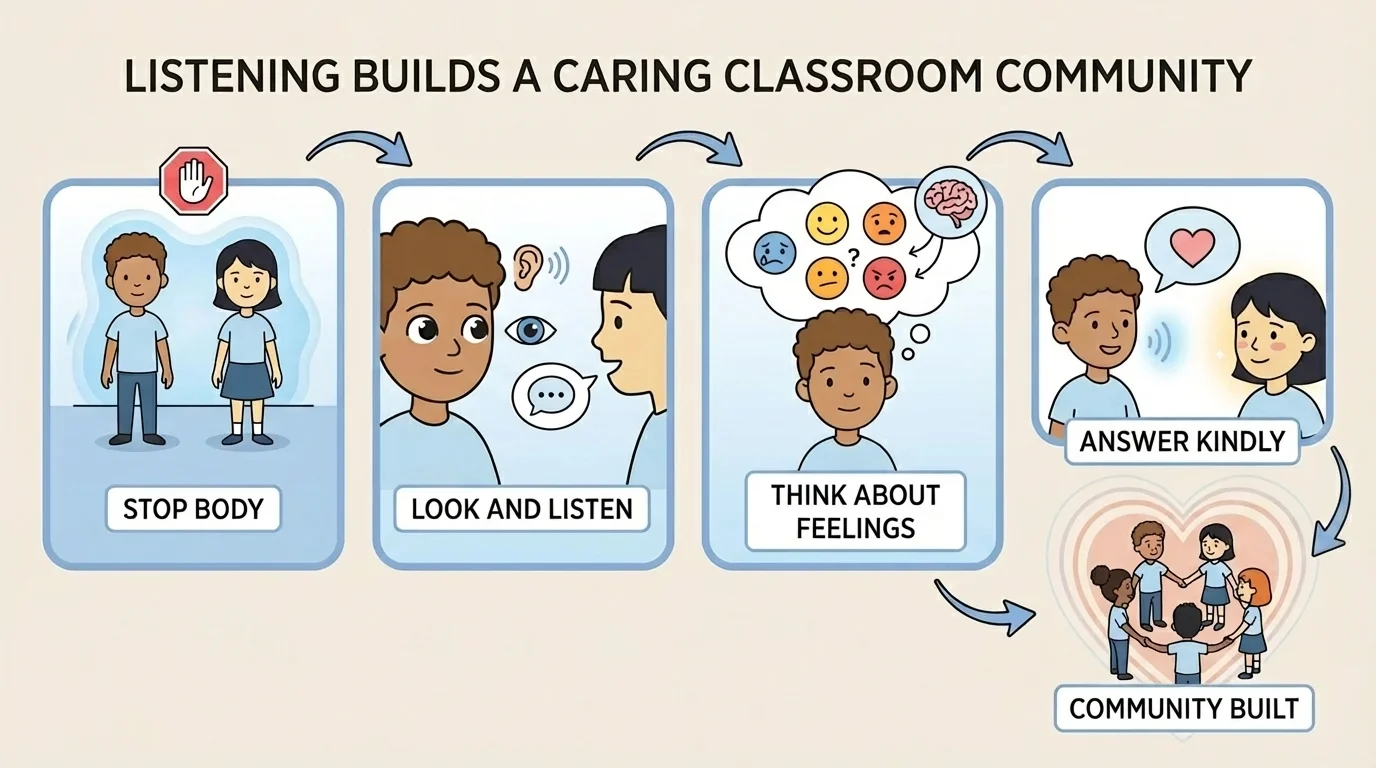
Step 3: Think about feelings. Ask yourself, "How might this person feel?" They may feel happy, worried, proud, lonely, or frustrated.
Step 4: Answer kindly. You can say, "I hear you," "That sounds hard," "Good idea," or "Can you tell me more?" Kind answers show care.
Example: Listening during a video call
Step 1: Your classmate says, "I'm upset because my slide would not load."
Step 2: You stay quiet until they finish speaking.
Step 3: You think about their feeling. They sound frustrated.
Step 4: You answer, "I'm sorry that happened. Do you want to try again?"
This response helps the classmate feel supported instead of embarrassed.
You can also use a helpful check: before you speak, ask yourself, "Did I listen to understand, or did I only wait for my turn?" That little question can help you become a better friend and classmate.
Listening matters in many places, not just during lessons. In online clubs, games, and community groups, people want to be heard. A good listener helps others feel calm and respected.
| Place | What listening looks like | Why it helps |
|---|---|---|
| Online class | Wait your turn, follow directions, listen to ideas | Helps everyone learn and feel included |
| Class chat | Read carefully before typing back | Prevents mistakes and hurt feelings |
| Family talk | Pause what you are doing and pay attention | Shows love and respect |
| Sports or clubs | Listen to rules, plans, and teammates | Improves teamwork |
| Friend conversation | Let the friend finish and respond kindly | Builds trust and closeness |
Table 1. Examples of how listening helps in different parts of daily life.
Even in games, listening is important. If a friend says, "Please stop, I don't like that joke," listening helps you notice their boundary. Then you can change your words or actions. That is one way listening shows respect and care.
Sometimes listening feels hard because you are excited, distracted, or upset. Maybe you really want to share your own story. Maybe there is noise at home. Maybe you feel angry and want to answer fast. That happens to everyone sometimes.
Your brain can get better at listening with practice. Small habits, like pausing before you answer, can help you pay attention more often.
When listening is hard, try these ideas:
If you forget to listen, that does not mean you are a bad person. It means you need to try again. You can say, "I'm sorry. Can you repeat that?" Trying again is part of being caring too.
As you keep practicing, the routine in [Figure 3] becomes easier to use in real life. Strong listeners do not have to be perfect. They just keep choosing attention, kindness, and respect.
"Listening is one of the kindest things you can do."
Every time you listen well, you help build the kind of online classroom community people want to be part of: one where students feel heard, valued, and safe. Caring communities are not built only by big actions. They are built by small choices, again and again, including the choice to listen.
