Have you ever noticed that one small sentence can change a whole friendship? A kind message like "Want to play later?" can make someone feel included. A mean message can make someone feel hurt for a long time. The words you choose matter because they help build or break something very important: trust.
When you talk with friends, teammates, family members, or members of a club, people learn what to expect from you. If you speak kindly and tell the truth, they begin to feel calm and safe with you. That safe feeling helps friendships grow stronger.
Trust means believing that someone will be kind, truthful, and dependable. [Figure 1] shows this as a bridge made from kind and honest actions. In a friendship, trust helps you feel safe sharing ideas, feelings, and fun moments. In a group, trust helps everyone work together better.
If a friend says, "I'll call you after dinner," and then they do, trust grows. If they make a mistake but tell the truth about it, trust can still grow. Trust does not need people to be perfect. It needs people to be real, caring, and honest.
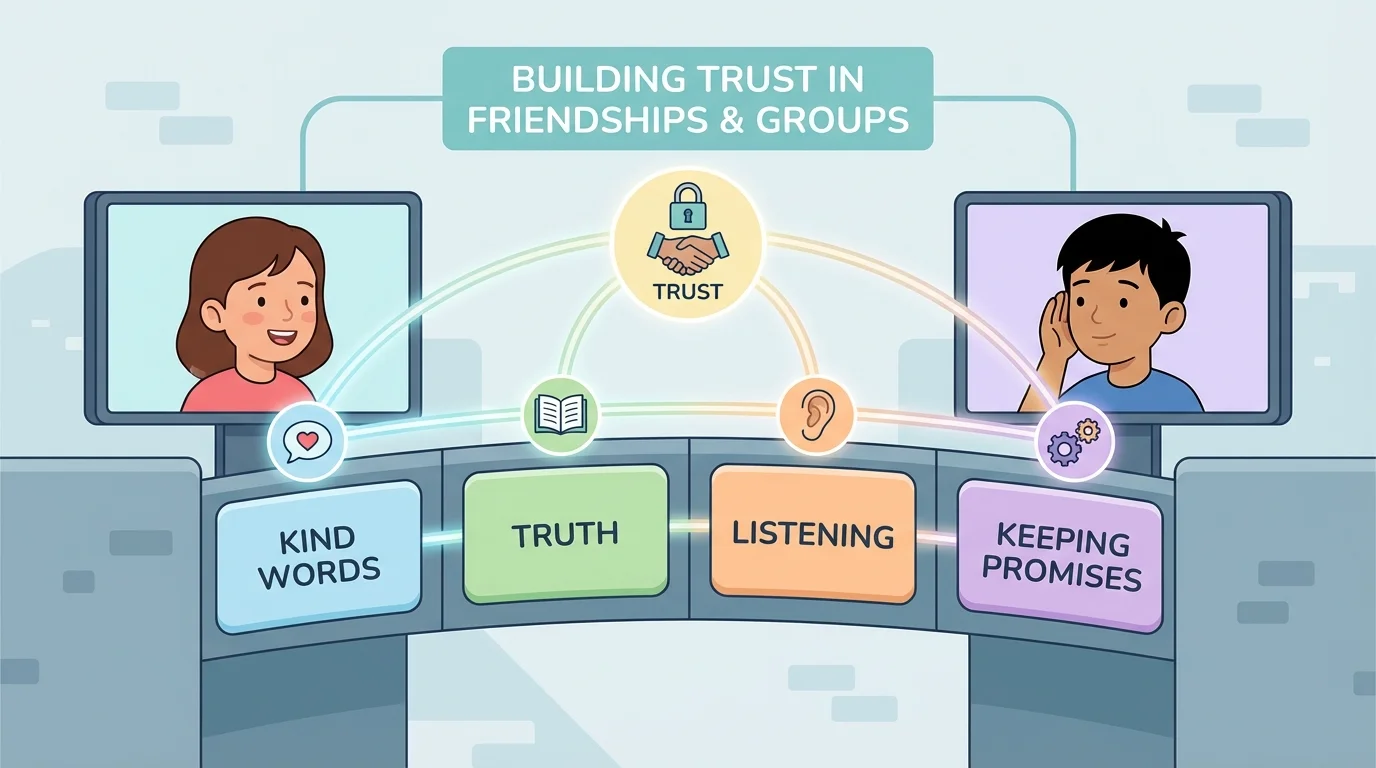
Kind communication means using words and actions that show care and respect.
Honest communication means telling the truth in a clear and respectful way.
Dependable means others can count on you to do what you say you will do.
Without trust, people may worry: "Will this person laugh at me?" "Will they tell the truth?" "Will they keep a promise?" Those worries can make friendships feel shaky. With trust, people can relax and enjoy being together.
Communication is how you share with others by talking, typing, listening, facial expressions, and actions. Kind communication is not only about nice words. It also includes your tone, your timing, and whether you listen.
Kind communication can sound like this: "Good job." "Do you want to join us?" "I see why you feel sad." "I don't agree, but I will be respectful." These words help people feel seen and included.
Kind communication online is important too. On a game chat, in a text, or during a video call, you can still be respectful. You can wait for your turn to speak, avoid typing in all capital letters, and choose words that are calm instead of rude.
Example: Kind words in action
Step 1: Notice the moment.
Your friend shares a drawing on a video call.
Step 2: Choose helpful words.
You say, "I like the colors you picked," instead of "That looks weird."
Step 3: Add interest.
You ask, "What part did you enjoy making most?"
Your friend feels encouraged, and your friendship becomes stronger.
Kind communication does not mean you always say yes. You can still say no kindly. For example, "I can't play right now, but maybe later," is honest and respectful.
Honesty means telling the truth. Sometimes the truth is easy to say. Sometimes it is hard. But honesty helps people know they can believe you.
Honest communication can be simple: "I forgot." "I made a mistake." "I am upset." "I don't understand." These words may feel brave to say, but they help stop confusion and guessing.
Being honest does not mean being harsh. You can tell the truth kindly. Instead of saying, "That game is boring," you could say, "I want to play something different." Instead of saying, "You are wrong," you could say, "I think something else happened."
Kind and honest at the same time
The best communication uses both kindness and honesty together. Kindness without honesty can sound fake. Honesty without kindness can feel hurtful. When you use both, people learn that you care about their feelings and also tell the truth.
People trust honest friends because honest friends are clear. They do not make others guess. They do not hide a mistake and hope no one notices. They tell the truth and try to make things right.
[Figure 2] shows trust as a simple chain from words and actions to trust and teamwork. Trust usually grows little by little, not all at once. One kind message helps. One truthful answer helps. Then more kind and honest moments keep adding up.
Think of trust like stacking blocks. Each good choice adds one more block. Listening adds a block. Keeping a promise adds a block. Telling the truth adds a block. Helping someone feel included adds a block. Over time, the stack gets stronger.
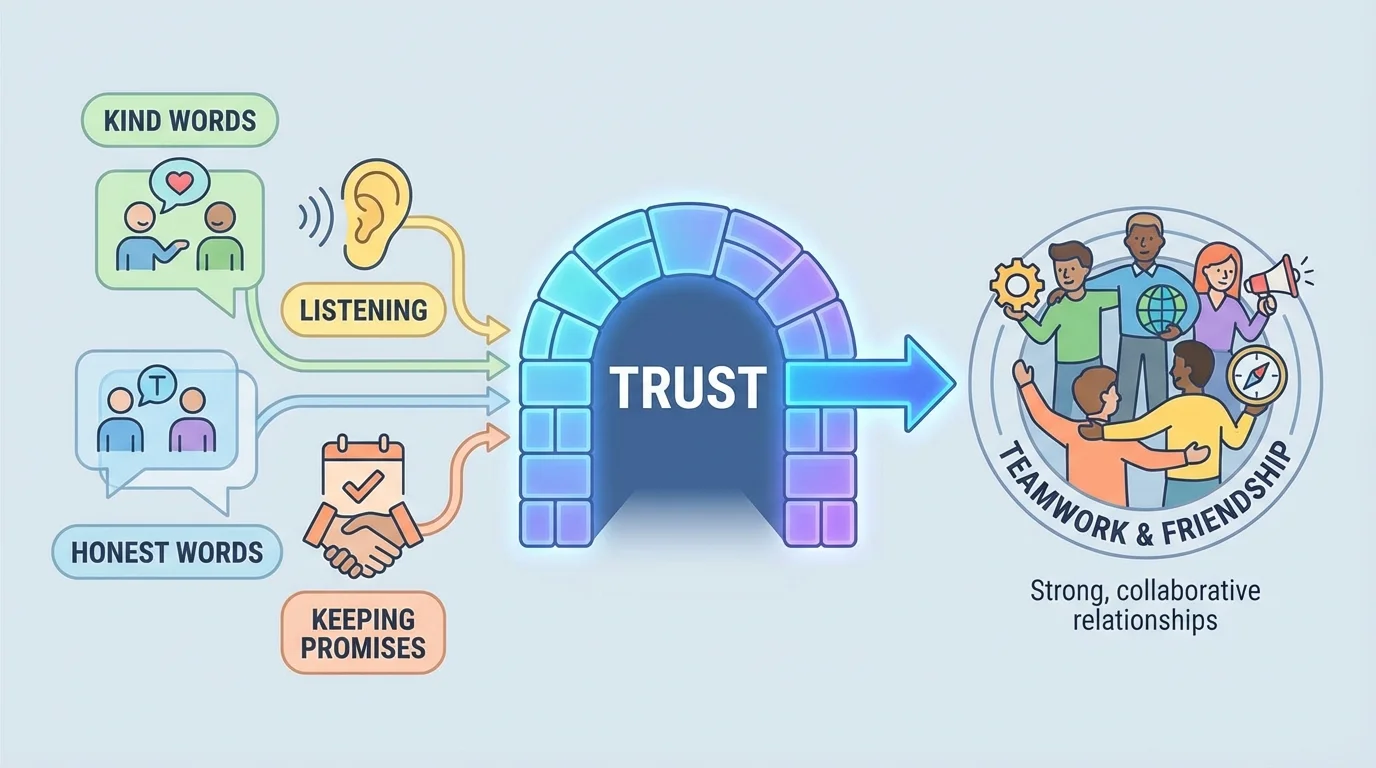
Here are some ways trust grows:
Later, when your group needs to solve a problem, the trust from those small moments helps everyone work together. The same bridge idea from [Figure 1] matters here too: kind and honest actions connect people.
Trust can grow slowly, but it can be hurt quickly. Mean words, teasing, lying, blaming, and sharing a private message without permission can all damage trust.
For example, if a friend tells you a secret and you post it in a group chat, they may feel embarrassed and unsafe. If you say, "I didn't do it," when you really did, people may wonder if they can believe you next time.
Sometimes trust is also hurt by leaving people out. If a group call is happening and one person is ignored or mocked, that person may feel they do not belong. Groups work better when everyone is treated with respect.
People often remember hurtful words for a long time, even if the words were said quickly. That is why pausing before you speak or send a message is such a powerful habit.
Even small jokes can hurt if they are unkind. Before you send a message, ask yourself: "Is it true? Is it kind? Is it helpful?" If the answer is no, stop and change your words.
[Figure 3] shows a step-by-step repair path. Everyone makes communication mistakes. You might interrupt, say something rude, forget a promise, or hide the truth because you feel nervous. The good news is that trust can often be repaired when you act with care.
Fixing a mistake works best when you do it soon. Waiting too long can make the hurt bigger. It is brave to admit a mistake and try again.
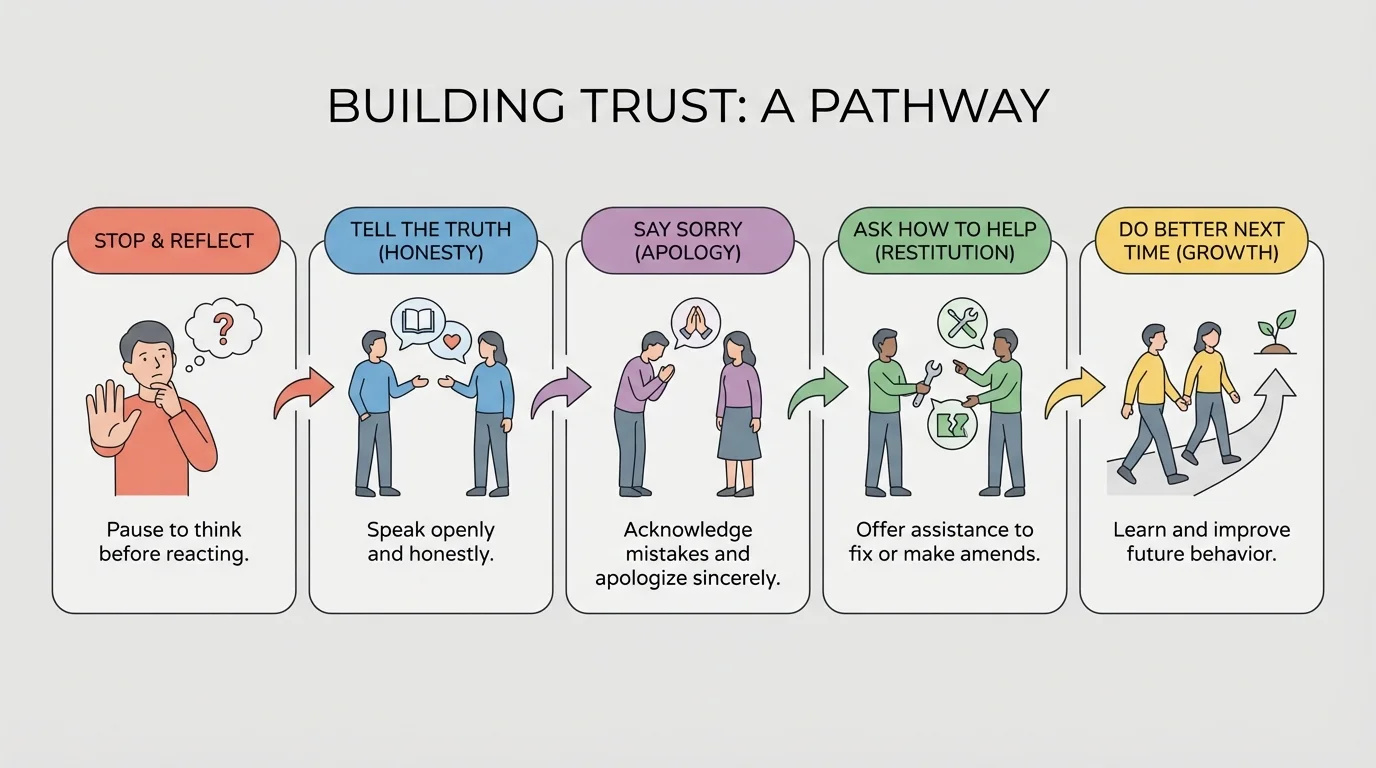
Example: Repairing trust
Step 1: Stop and think.
Notice what happened. Maybe you sent a mean message in anger.
Step 2: Tell the truth.
Say, "I sent that message, and it was not kind."
Step 3: Apologize clearly.
Say, "I am sorry for hurting your feelings."
Step 4: Ask how to help.
Say, "What can I do to make this better?"
Step 5: Do better next time.
Show your apology with changed actions.
A real apology uses both words and actions.
If someone is still upset, give them time. You cannot force trust to come back fast. But you can keep showing honesty, respect, and care. That is how trust grows again, just like the steady steps in [Figure 2].
A group can be a family chat, a sports team, a club, a game team, or a community class. In groups, communication matters because many people are sharing ideas and taking turns.
Good group communication includes looking for ways to include others, letting different people speak, and being honest about problems. If you disagree, you can say, "I have a different idea," instead of "That idea is dumb."
Groups become stronger when members are respectful and dependable. If everyone lies, interrupts, or blames, the group becomes stressful. If people listen, tell the truth, and stay kind, the group becomes a place where people want to join and help.
| Helpful choice | What it shows | Result |
|---|---|---|
| Listening carefully | Respect | People feel heard |
| Telling the truth | Honesty | People believe you |
| Using calm words | Kindness | Problems stay smaller |
| Keeping a promise | Dependability | Trust grows |
| Including others | Care | Group feels welcoming |
Table 1. Simple communication choices that help trust grow in friendships and groups.
When you are online, these same rules still matter. A screen does not make words less powerful. In fact, typed words can be even easier to misunderstand, so being clear and kind is extra important.
Here are some small actions you can use right away:
These steps may seem small, but small choices change friendships. Every kind word, every honest answer, and every respectful action helps others know what kind of person you are.
"Kind words and truthful words make strong friendships."
When people know you are both kind and honest, they can relax around you. They know you will not try to trick them, embarrass them, or hurt them on purpose. That feeling of safety is one of the strongest parts of any friendship or group.
