Sometimes a mean message, a scary dare, or a threat can feel like a heavy rock in your chest. You might wonder, "Should I keep it secret?" The safe answer is no. When someone is being cruel, threatening harm, or pushing unsafe behavior, telling a trusted grown-up is a smart and brave choice.
You are not supposed to solve dangerous problems all by yourself. Kids need help from adults, especially when something feels scary, confusing, or unsafe. Reporting a problem helps protect you, and it can help protect other people too.
If a person keeps being mean, tries to scare someone, says they will hurt a person or pet, tells others to leave someone out again and again, or dares someone to do something dangerous, that is a signal to get help. Your body may give you clues first. Maybe your stomach feels tight. Maybe your heart beats fast. Maybe you want to hide the message or leave the call. Those feelings matter.
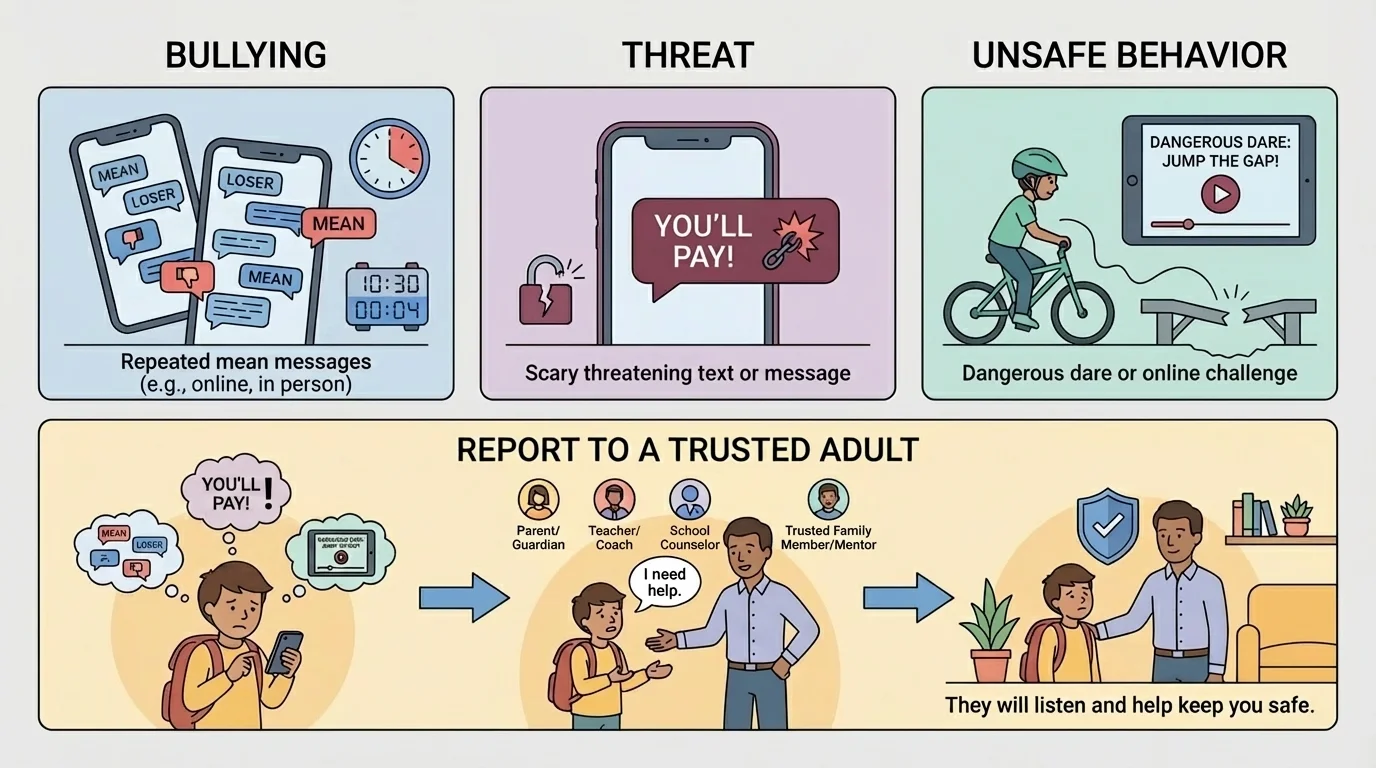
Bullying is repeated mean behavior meant to hurt someone's feelings, embarrass them, or make them feel left out. Threats are words or messages that say someone will hurt a person, pet, or property, or make something scary happen. Unsafe behavior is behavior that could cause harm, such as dangerous dares, asking someone to keep a risky secret, or pushing someone to break safety rules.
Sometimes these problems are easy to spot. Sometimes they are sneaky. A joke that hurts on purpose again and again is not really a joke. A dare that could hurt your body is not just "being silly." A message that says, "If you tell, I'll get you," is serious.
These problems can look different, but they all need adult help, as [Figure 1] shows through simple examples. Knowing the difference helps you explain what happened, but you do not need the perfect word before you tell. If it feels unsafe or very hurtful, tell a trusted adult.
You may also notice that bullying can happen in game chats, group texts, video calls, clubs, sports practice, neighborhood play, or social media. It does not have to happen in one place to be real. If it is happening to you or another child, it matters.
A trusted adult is a grown-up who listens, cares about safety, and takes action to help. This could be a parent, grandparent, guardian, older family member, coach, club leader, neighbor you know well, counselor, or teacher from your online school.
You do not need to pick just one. It is smart to have a short list of safe helpers. Think of at least two or three adults you can tell. If one person is busy or does not understand yet, you can go to the next helper.
Trusted adults help with big problems. A trusted adult does more than say, "Ignore it." They listen, help you get safe, save important information, contact the right people if needed, and stay with you while the problem is handled. Good helpers take your words seriously.
If you are not sure who to choose, ask yourself: Does this person listen kindly? Do they care about safety? Have they helped before? Can they take action? If the answer is yes, they may be a good trusted adult.
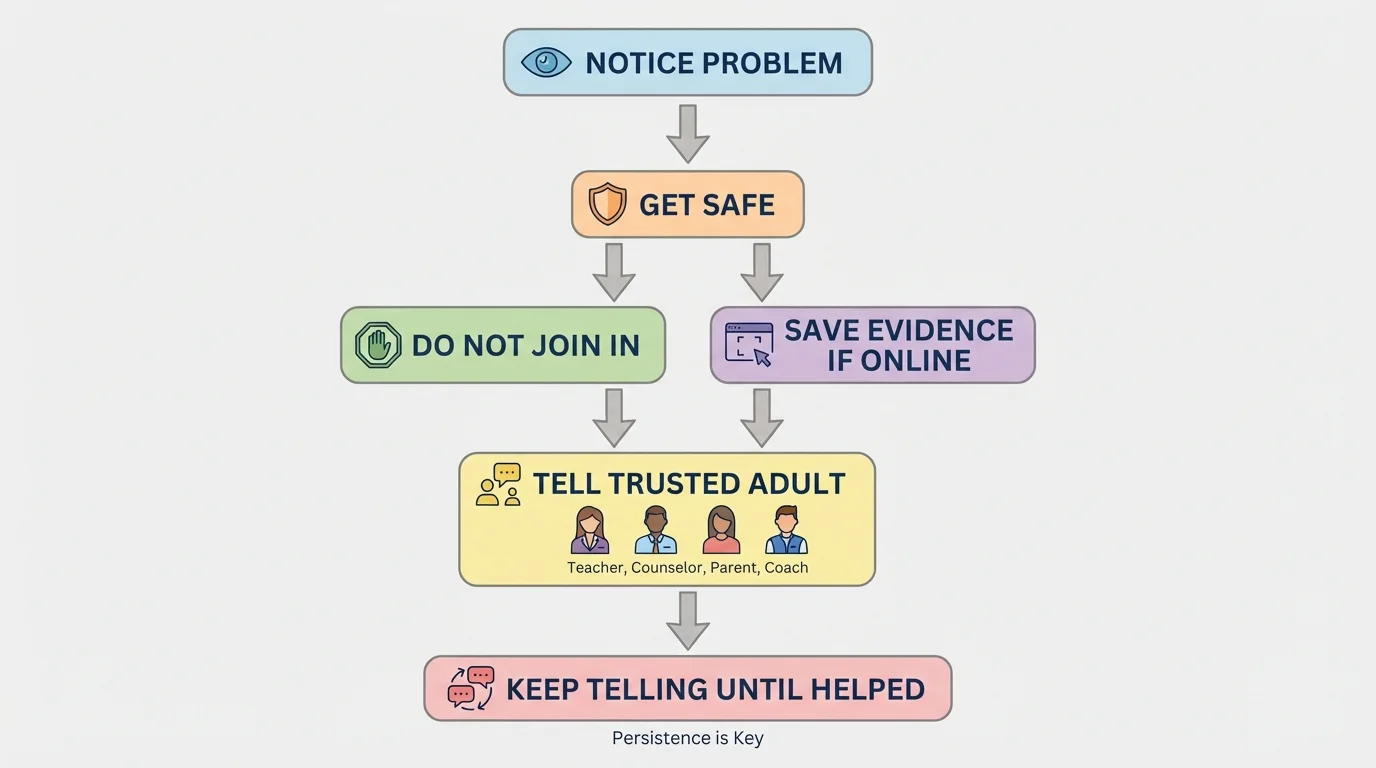
When something unsafe happens, there is an order that helps keep you protected, and [Figure 2] lays out the steps clearly. First get safe. Then report. If the problem is online, save the information if you can do so safely.
Step 1: Stop and notice. If a message, call, dare, or action feels scary, mean, or dangerous, pay attention. Do not brush it away.
Step 2: Get to safety. Leave the chat, step away from the person, move closer to a safe adult, or go where other safe people are nearby. If you are on a device, put it down and go to a grown-up.
Step 3: Do not join in. Do not send mean messages back. Do not accept a dangerous dare. Do not spread hurtful pictures or words.
Step 4: Save proof if it is online. A screenshot, saved message, or username can help an adult understand what happened. Only do this if it is safe and quick. Then stop looking at the hurtful messages.
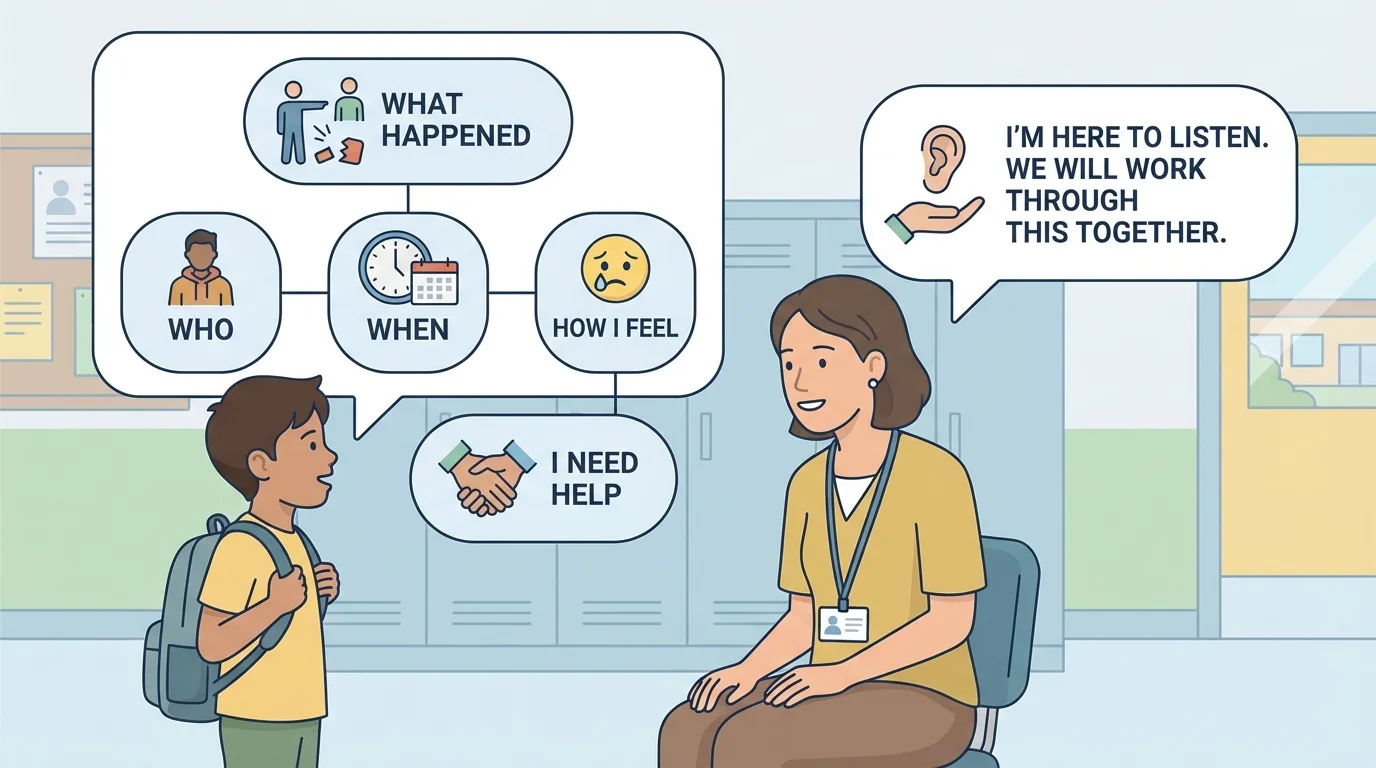
Step 5: Tell a trusted adult right away. Use clear facts: who, what, when, where, and how it made you feel.
Step 6: Keep telling until someone helps. If the first person does not help enough, go to another trusted adult.
Safety comes before politeness. You do not have to stay in a call to be "nice." You do not have to keep a dangerous secret to be a "good friend." Real friends do not ask you to risk safety.
Sometimes the hardest part is starting. You might feel shaky or worried. That is okay. You can still speak. Short, clear words work well.
Here are sentence starters you can use:
Try to include the facts in order. Who did it? What happened? When did it happen? Where did it happen? Is anyone hurt or in danger right now? Your adult does not need a perfect speech. They just need enough information to start helping.
Simple reporting pattern
Step 1: Start with the problem.
"I need to tell you something important."
Step 2: Say what happened.
"During my game chat, Sam kept sending mean messages and said I should disappear."
Step 3: Say if there is danger now.
"I feel scared, and I do not want to go back into the chat."
Step 4: Ask for help.
"Can you stay with me and help me report it?"
If you forget part of the story, that is okay. You can add more after you begin. The important thing is to start telling.
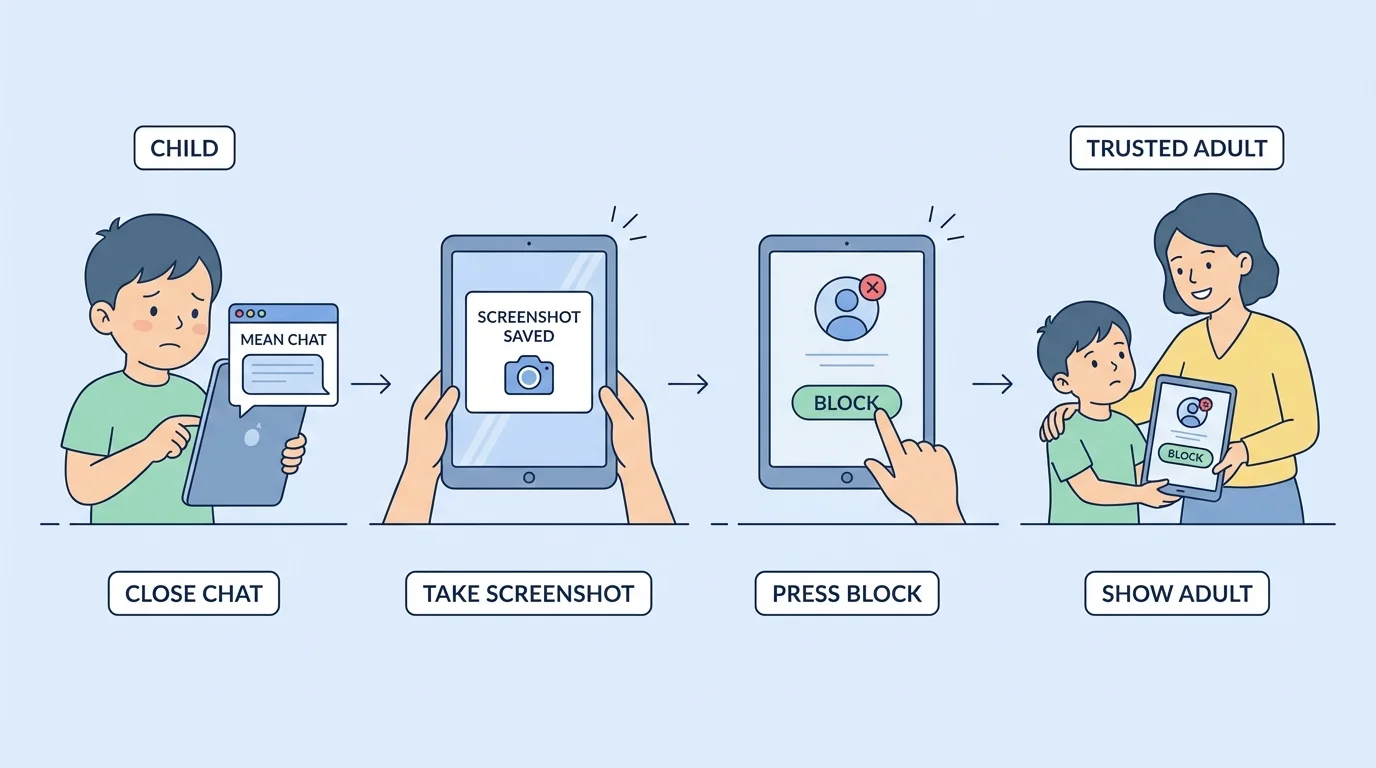
Online problems need quick, safe choices, and [Figure 3] shows what those choices can look like on a device. Mean comments, threats, fake accounts, sharing private pictures, or dangerous dares in a game or chat should never stay secret.
If you can, take a screenshot or save the message. Then leave the chat, block the person if needed, and show the device to a trusted adult. Do not argue back for a long time. Do not keep reading cruel messages over and over.
Sometimes a person says, "Don't tell your grown-up." That is a warning sign. Safe people do not ask children to hide danger from adults.
If someone asks for private photos, your address, your phone number, or to meet in person without your family knowing, tell an adult immediately. That is a big safety issue.
Later, when you think about online safety again, remember the order from [Figure 2]: get safe, save what you need, and tell. Those same steps work in many digital situations.
Most trusted adults want to help right away. But sometimes a grown-up may not understand how serious the problem is at first. If that happens, keep going. Tell another adult on your list of trusted adults.
You can say, "I already told someone, but I still do not feel safe." That sentence is powerful. It lets the next adult know this problem is not solved yet.
You are not tattling when someone is being hurt, threatened, or pushed toward danger. Tattling is trying to get someone in trouble over a small problem. Reporting is getting help for safety. Safety always comes first.
If a threat sounds like someone may get hurt right away, tell an adult immediately. Stay near trusted adults. Emergency situations need fast action from adults.
Being brave does not mean you feel zero fear. It means you do the safe thing even when you feel nervous. If your words get stuck, try these quick tools.
Take one slow breath. Breathe in. Breathe out.
Hold a comfort item. A pillow, small toy, or blanket can help your body calm down.
Use one first sentence. You only need one line to begin: "I need help."
Show instead of saying everything. You can hand the adult the device or point to the message.
Stay with the adult. You do not have to handle the next steps alone.
Your body may feel shaky, quiet, or teary when something scary happens. That does not mean you are weak. It means your body is asking for safety and support.
These tools help you speak up faster. The sooner a safe adult knows, the sooner the problem can be handled.
Clear reporting can be simple and organized. You do not need fancy words. You just need honest words.
[Figure 4] Example 1: During a video game, a player keeps calling you ugly names over and over for several days. That is repeated mean behavior. You leave the game, save a screenshot, and tell your grown-up, "This keeps happening in the game chat. I want help."
Example 2: A child in your club says, "If you tell anyone, I'll smash your bike." That is a threat. Even if the person says it with a smirk, tell an adult right away. Threats are serious.
Example 3: Someone dares you to ride your scooter into the street without looking because it will be "funny" on video. That is unsafe behavior. You say no, move away, and tell a trusted adult.
Example 4: You see hurtful messages sent to another child in a group chat. You are not the target, but you should still get help. You can tell an adult, "I saw messages that were cruel to Maya, and I think she needs help."
Notice how the same safety ideas keep coming back. Like the conversation pattern in [Figure 4], each example starts with noticing the problem and telling a helper clearly. And just like the comparison in [Figure 1], the problem may be bullying, a threat, or unsafe behavior, but all of them deserve action.
When you report, you are protecting your safety, your feelings, and your future choices. Speaking up is a life skill. It helps build safe relationships and stronger trust with the adults who care about you.
"When something is unsafe, telling is brave."
If you ever feel unsure, remember this simple rule: if it is mean again and again, scary, secret, or dangerous, tell a trusted adult. You deserve help.
