Your body works all day long. Your heart beats, your lungs breathe, your legs move, and your brain helps you think, remember, and solve problems. That is a lot of work for one body. To do all those jobs well, your body needs three big helpers: sleep, good food, and movement.
Think of your body like a busy team. If one helper is missing, the team has a harder time. If you stay up too late, you may feel grumpy and forgetful. If you skip food, you may feel weak or have trouble focusing. If you do not move much, your body can feel stiff and your mind may feel restless. But when you get enough rest, eat foods that help your body, and move often, you give yourself a strong start for the day.
Your body and your brain work together all the time. Your brain sends messages. Your muscles help you move. Your stomach helps change food into energy. Your heart moves blood around your body. Every part has a job.
That is why taking care of yourself is an important life skill. You do not need fancy tools. Small everyday habits matter most: going to bed on time, drinking water, eating meals and snacks, and finding ways to move your body. These habits help you learn, play, help at home, and feel better.
Sleep is the time when your body and brain rest and do important repair work. Nutrition means getting the food and drinks your body needs to stay healthy. Movement means using your body through actions like walking, stretching, dancing, playing, or exercising.
When these three helpers work together, you often have more energy, better focus, and a happier mood. You may still have hard days sometimes, and that is normal. But healthy habits can make many days easier.
[Figure 1] While you sleep, your body is not "doing nothing." It is doing important work. Sleep helps your brain remember what you learned, helps your body grow, and helps you wake up ready to move and think.
When you get enough sleep, it can be easier to listen, focus, learn new things online, and stay calm when something is frustrating. Sleep also helps your body heal from busy days of running, jumping, and playing. If you do not get enough sleep, you may yawn a lot, feel cranky, or have trouble paying attention.
Sleep also helps keep you safe. When you are very tired, you may trip more easily, forget steps, or make choices too fast. A rested brain notices more and reacts better.
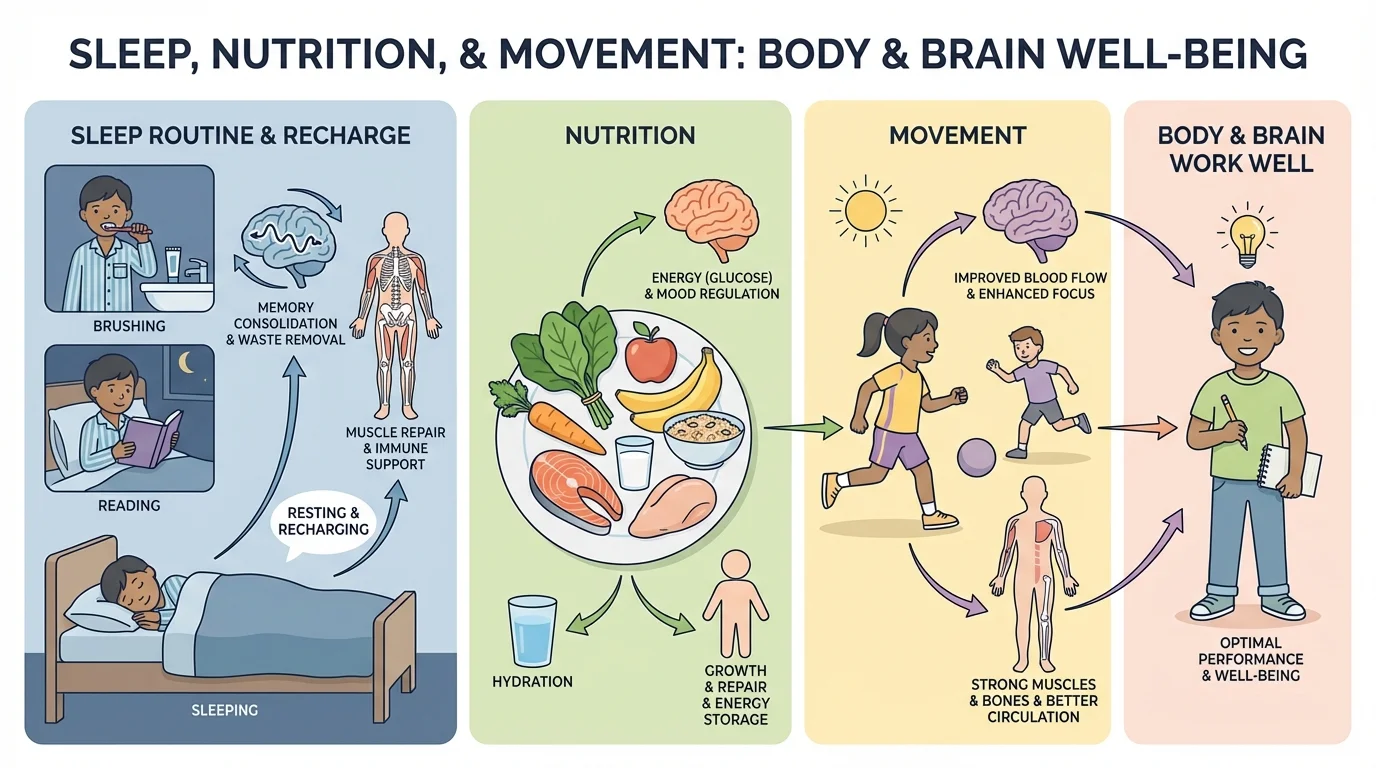
Many children your age need a lot of sleep each night. A grown-up can help you choose a bedtime that gives your body enough rest. Going to sleep and waking up at about the same time each day helps your body know when it is time to rest.
Here are simple bedtime habits that can help: put away bright screens a little before bed, brush your teeth, use calm lights, read or listen to a quiet story, and make your room feel cozy. These steps tell your brain, "It is time to slow down now."
Bedtime plan you can try
Step 1: Finish active play earlier in the evening.
Step 2: Get ready for bed with simple tasks like putting on pajamas and brushing your teeth.
Step 3: Choose one calm activity, like reading or quiet music.
Step 4: Turn off the lights and let your body rest.
A routine helps because your body starts to expect sleep at the same time each night.
If you wake up after a good night of sleep, you may notice you feel ready to get dressed, eat breakfast, and start your day. That is the kind of "recharged" feeling described earlier.
Your body needs fuel, just like a car needs gas. Food is your fuel. [Figure 2] shows a simple way to picture foods that help your body and brain work well. Healthy foods give you energy to play, learn, grow, and heal.
A nutrient is a helpful part of food. Different foods do different jobs. Some foods help build muscles. Some help give quick or steady energy. Some help protect your body so you stay healthy. Water is important too because your body needs it every day.
A balanced meal or snack often includes more than one kind of food. For example, apple slices with peanut butter, yogurt with berries, eggs with toast, or a sandwich with carrot sticks can help you feel fuller and ready to go. Eating only sugary treats may give you quick energy, but it may not last long.
A simple balanced plate can include fruits or vegetables, grains, protein foods, and water, as shown in [Figure 2]. You do not need every meal to look perfect. The goal is to eat a mix of foods often.
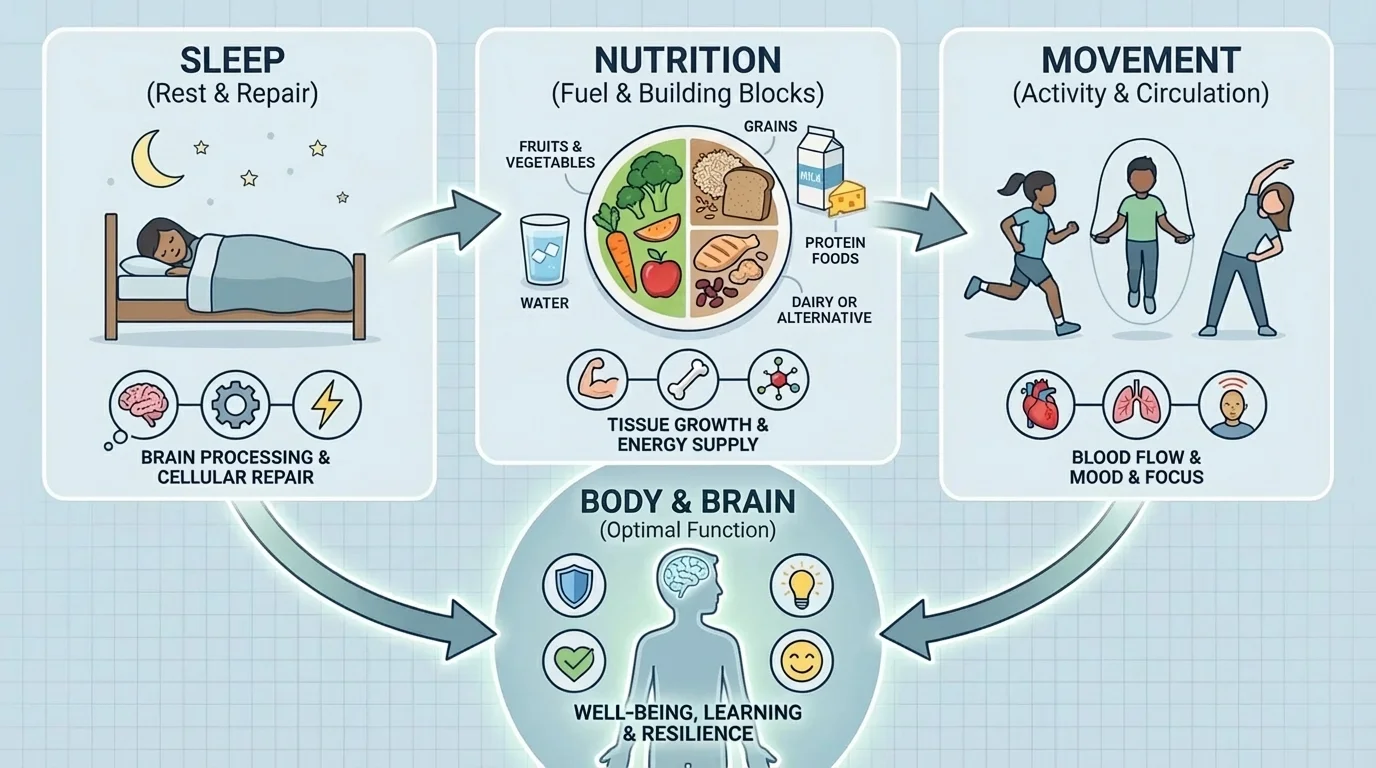
Breakfast matters because it helps you start the day with energy. If you wake up and do not eat anything, your body may feel slow. You might get hungry in the middle of a lesson, feel shaky, or have a hard time focusing. Even a simple breakfast can help.
Water matters too. When you do not drink enough, you can feel tired, get a headache, or find it harder to pay attention. Keeping a water bottle nearby during the day can help you remember to drink.
| Food or Drink | How It Helps |
|---|---|
| Fruit | Gives vitamins and natural energy |
| Vegetables | Help your body stay strong and healthy |
| Whole grains | Give steady energy |
| Protein foods | Help build and repair the body |
| Water | Helps your body work well all day |
Table 1. Examples of foods and drinks and the jobs they do for the body.
Your brain uses energy all day, even when you are sitting still and thinking. That is one reason meals, snacks, and water can make such a big difference in how ready you feel.
If a snack leaves you feeling hungry again very fast, try adding another food group next time. For example, instead of just crackers, try crackers and cheese. Instead of just fruit, try fruit and yogurt. Small choices can help your energy last longer.
Your body is made to move. [Figure 3] shows different ways movement can fit into everyday life. Movement helps your heart get stronger, helps your muscles and bones do their jobs, and can even help your brain focus better.
Muscles work when you walk, climb, stretch, dance, carry things, or play games. When you move often, your body can become stronger and more flexible. That means everyday jobs can feel easier.
Movement also helps with feelings. If you are upset, worried, or full of extra energy, a walk, dance break, scooter ride, or stretch can help your body calm down. Many people notice they can think more clearly after moving for a while.
You do not need a gym or special sports equipment. You can move by helping carry groceries, walking the dog with an adult, dancing to music, stretching between online lessons, tossing a ball, riding a bike, or playing outside safely.
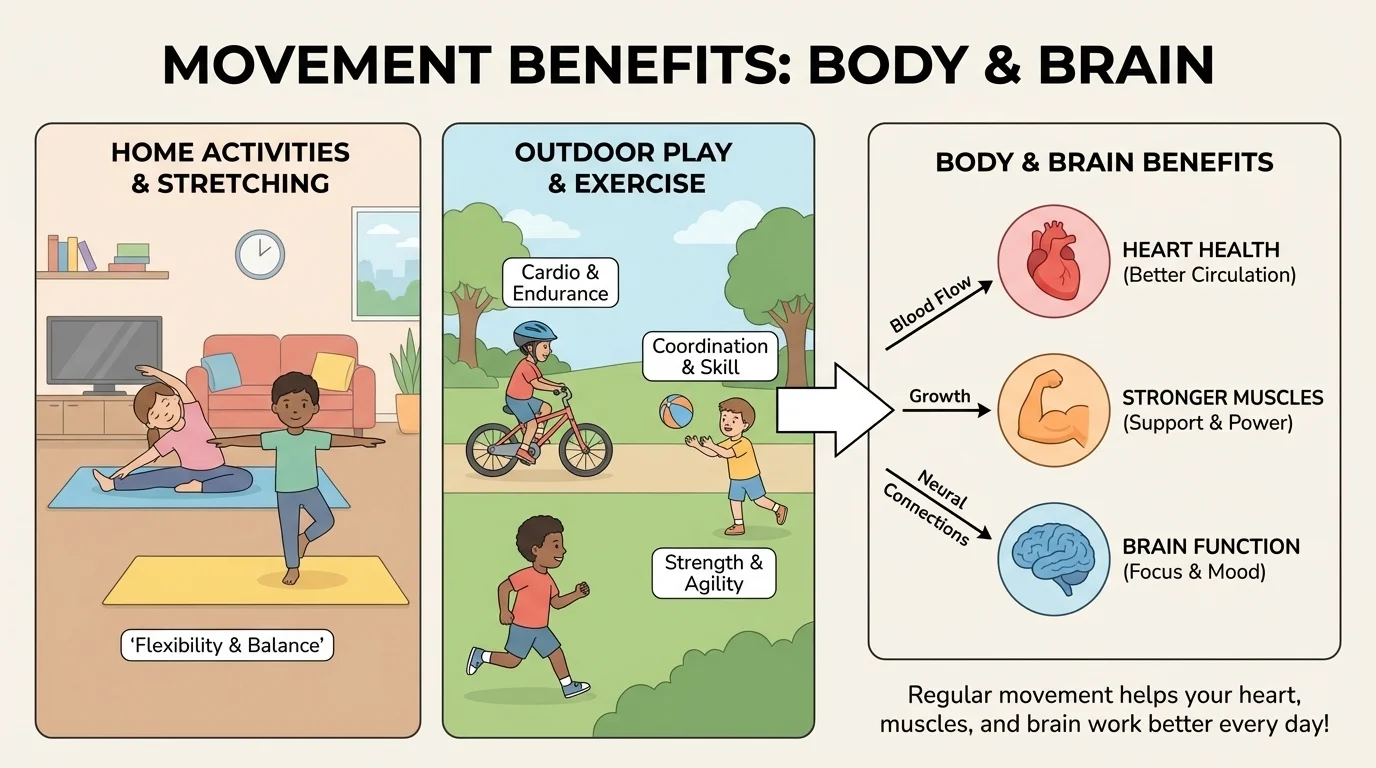
If you sit in one place too long, your body may feel wiggly, tired, or stiff. A short movement break can wake your body up. That is why it helps to stand, stretch, or walk around during the day.
Movement helps more than muscles
When you move, your body and brain both benefit. Your heart pumps blood, your lungs work harder, your muscles practice, and your brain gets signals that can help with attention and mood. That is why active play can help you feel both calmer and more awake.
Later in the day, gentle movement can also help your body feel ready to rest. Fast, active play is great too, but timing matters. Very wild play right before bedtime can make it harder for some children to fall asleep.
The different actions in [Figure 3] remind us that movement does not have to be one thing. Many small kinds of activity count.
Sleep, nutrition, and movement are a team. Each one helps the others. If you move during the day, your body may feel more ready for sleep at night. If you eat healthy meals and drink water, you have energy to move. If you sleep well, it is easier to make good choices about food and activity the next day.
Here is what that can look like in real life. A child wakes up after enough sleep, eats breakfast, and feels ready for an online lesson. Later, the child takes a movement break, drinks water, and comes back feeling more focused. At night, the child feels tired in a good way and follows a calm bedtime routine. The next day starts strong again.
Now think about the opposite. A child stays up late, skips breakfast, and sits too long without moving. That child may feel sleepy, hungry, and fussy. Learning and solving problems may feel harder. This does not mean the child is "bad" at anything. It means the body needs better care.
"Small healthy choices today help you feel better tomorrow."
You do not have to be perfect. You are learning habits, one day at a time. Even one helpful choice can make a difference, like drinking water with lunch, going outside to move, or getting to bed on time.
One easy way to care for yourself is to think about three times of day: morning, daytime, and nighttime. In the morning, wake up, wash up, and eat something that helps fuel your body. During the day, drink water, eat meals and snacks, and move your body in different ways. At night, slow down and get ready for sleep.
You can also notice clues from your body. If you cannot focus, ask yourself: Am I tired? Am I hungry? Do I need water? Do I need to move? These questions help you learn what your body may need.
Easy self-check for a busy day
Step 1: Pause and notice how you feel.
Step 2: Pick one question: Do I need sleep, food, water, or movement?
Step 3: Choose one small action, like getting a healthy snack, drinking water, stretching, or getting ready for bed on time.
Listening to your body helps you take care of yourself.
Grown-ups can help you make these habits easier. They can help with bedtime, shopping for healthy foods, planning meals, and finding safe places to move. Asking for help is a smart part of self-care.
Over time, these habits become more natural. You start to notice, "I feel better when I sleep enough," or "I can focus better after a snack and a stretch." That is your body teaching you what helps it work well.
