Your body belongs to you. That is a big idea, but it is also a simple one. You can have feelings and preferences about your own body, your own space, and who comes close to you. Learning this helps you stay safe, speak up, and respect other people too.
Body autonomy means your body is your own, and you have a say about it. It includes your personal space, which is the space around your body where you feel comfortable. As [Figure 1] shows, you can choose whether you want a hug, a high-five, a wave, or no touch at all when it is not about health or safety.
For example, if a relative wants a hug and you do not want one, you can choose another greeting. You might wave, smile, blow a kiss, or say, "No thank you, I want space right now." Being polite does not mean you have to let someone touch you.
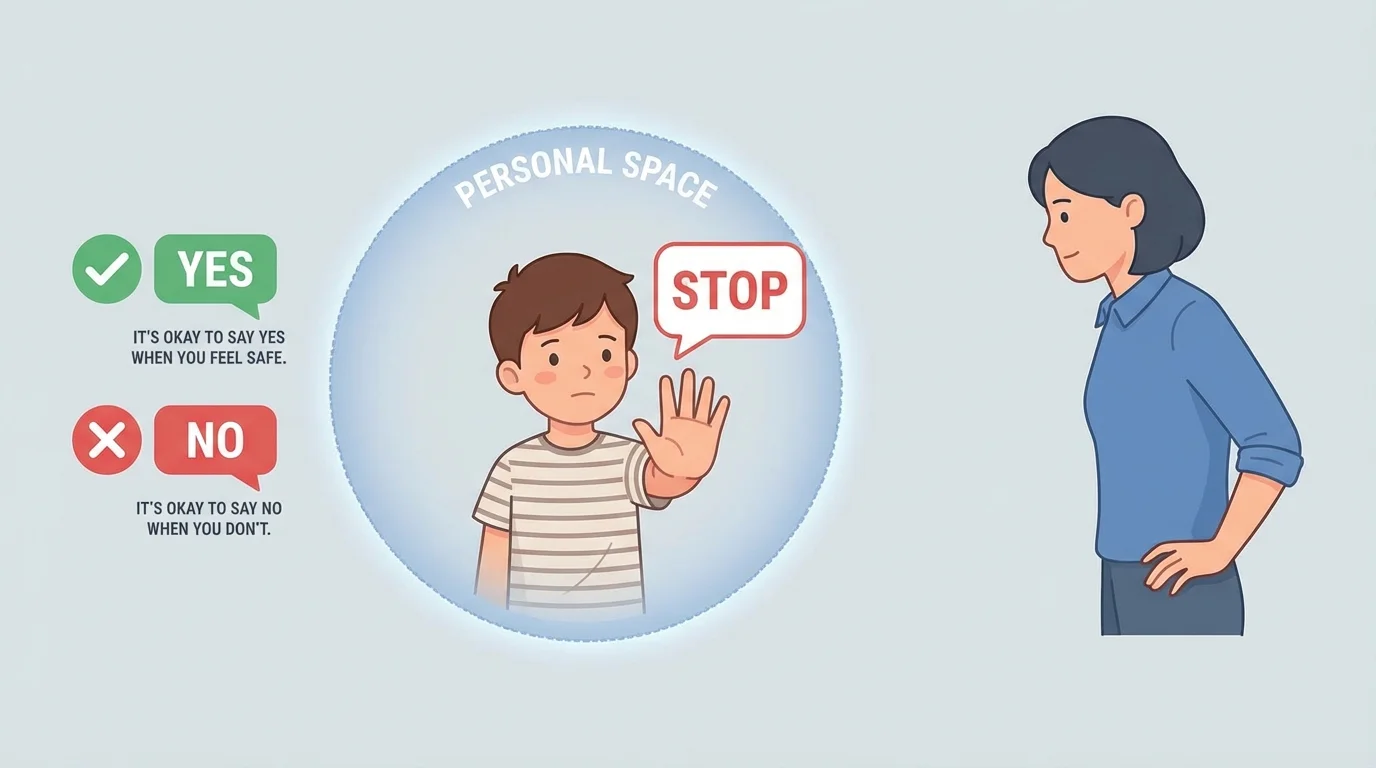
Body autonomy also means other people get to make choices about their bodies. If your sibling does not want to be tickled, you stop. If a friend in an activity group does not want a hug, you can say hello in another way. Respect goes both ways.
Body autonomy means your body belongs to you.
Consent means giving permission. For children, this can mean saying yes to a hug, a hand-hold, or a game that includes touch.
Boundary means a rule about what feels okay and what does not feel okay to you.
Sometimes your answer can change. Maybe you wanted to sit close during story time at home, but later you want more room. That is okay. You can change your mind about touch or space.
Touch is not always the same. Some touch helps you. Some touch hurts. Some touch is not dangerous but is still unwanted. Knowing the difference helps you act quickly.
Safe touch can be a hand helping you cross a street, a parent brushing your hair gently, or a doctor checking your body while a trusted adult is with you. Unsafe touch is touch that hurts you, scares you, or is meant to be a secret. Unwanted touch is touch you do not want, even if it is not meant to hurt.
If something feels yucky, confusing, scary, or too private, pay attention to that feeling. Your feelings matter. You do not need a fancy reason to want space. "I don't like that" is enough.
Your body can send clues
Sometimes your body warns you before your words do. You might feel a tummy ache, a fast heartbeat, suddenly frozen, or a strong wish to move away. These clues can remind you to stop, get space, and find help.
Private parts are the parts covered by a swimsuit. No one should ask to touch, look at, or take pictures of those parts unless it is for health, hygiene, or safety and a trusted adult is helping in a respectful way.
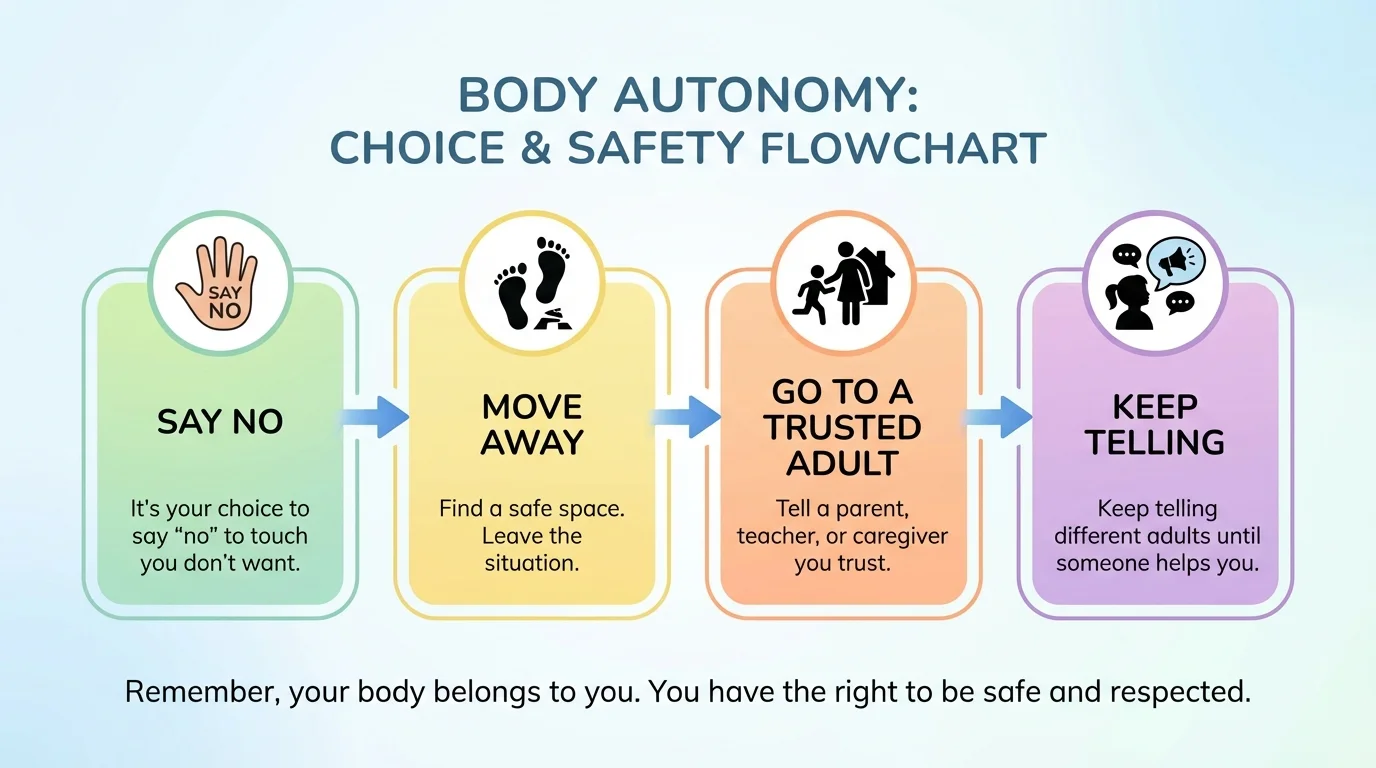
If someone does something that feels wrong or unwanted, you do not have to stay quiet. There is a simple safety plan, and [Figure 2] lays it out in order so you can remember what to do even if you feel nervous.
First, use a strong voice if you can. You can say, "No." "Stop." "Don't do that." "I need space." Short words are powerful.
Next, move away if you can. Go to a safer place where a trusted adult is nearby. Then tell an adult you trust. If the first adult does not listen, tell another one. Keep telling until someone helps you.
What you can say
Step 1: If you do not want touch
Say, "No thank you. I don't want a hug."
Step 2: If someone keeps going
Say, "Stop. I said no."
Step 3: If you feel unsafe
Move away and say, "I need help now."
You are not being rude when you protect yourself. You are being safe. Later, when you think again about the order in [Figure 2], remember the last step matters too: keep telling until a trusted adult helps.
Sometimes adults need to help children with body care. That can happen during bathing, getting dressed, putting on sunscreen, helping with a scrape, or going to the doctor. Those times are about keeping you clean, healthy, or safe.
Even then, respectful adults should explain what they are doing in simple words. They should be calm, gentle, and focused on helping. If something makes you uncomfortable, you can ask questions like, "What are you doing?" or "Can my grown-up stay with me?"
A doctor or nurse may need to check your body, including private parts, but this should happen for health reasons and with a trusted adult knowing about it. It should not be a secret. If someone says, "Don't tell," that is not okay.
Trusted adults are grown-ups who listen, help, and try to keep you safe. Trusted adults may include a parent, grandparent, caregiver, family friend, doctor, coach, club leader, or another adult your family says is safe to talk to.
Needing help with health or hygiene does not take away your voice. You can still say what helps you feel calm, such as "Please tell me first," or "Please be gentle."
There is a big difference between a surprise and a secret. A surprise is something happy that will be shared soon, like a birthday card. A secret about your body, private parts, or someone touching you is not safe to keep.
If anyone says, "This is our secret," you should tell a trusted adult right away. The same is true if someone makes threats, tries to bribe you, or says you will get in trouble for telling. Safe adults do not ask children to keep body secrets.
Many children worry they will get someone in trouble by telling. But telling is the right thing to do when safety is involved. The job of adults is to protect children, not to blame them.
If the first person you tell does not understand, tell another adult. You can say, "I need to tell you something important about my safety." Then explain what happened in your own words.
Body autonomy is not only about in-person touch. It matters online too. As [Figure 3] illustrates, cameras, photos, and video calls all connect to your right to privacy and safety.
No one should ask you to show private parts on a camera, send pictures of your body, or keep online body talk a secret. If anyone asks, do not do it. Leave the chat, close the app, and tell a trusted adult right away.
You can also choose what feels comfortable on family video calls. Maybe you want to wave but not blow kisses. Maybe you want the camera off while changing clothes or after bath time. That is a smart boundary.
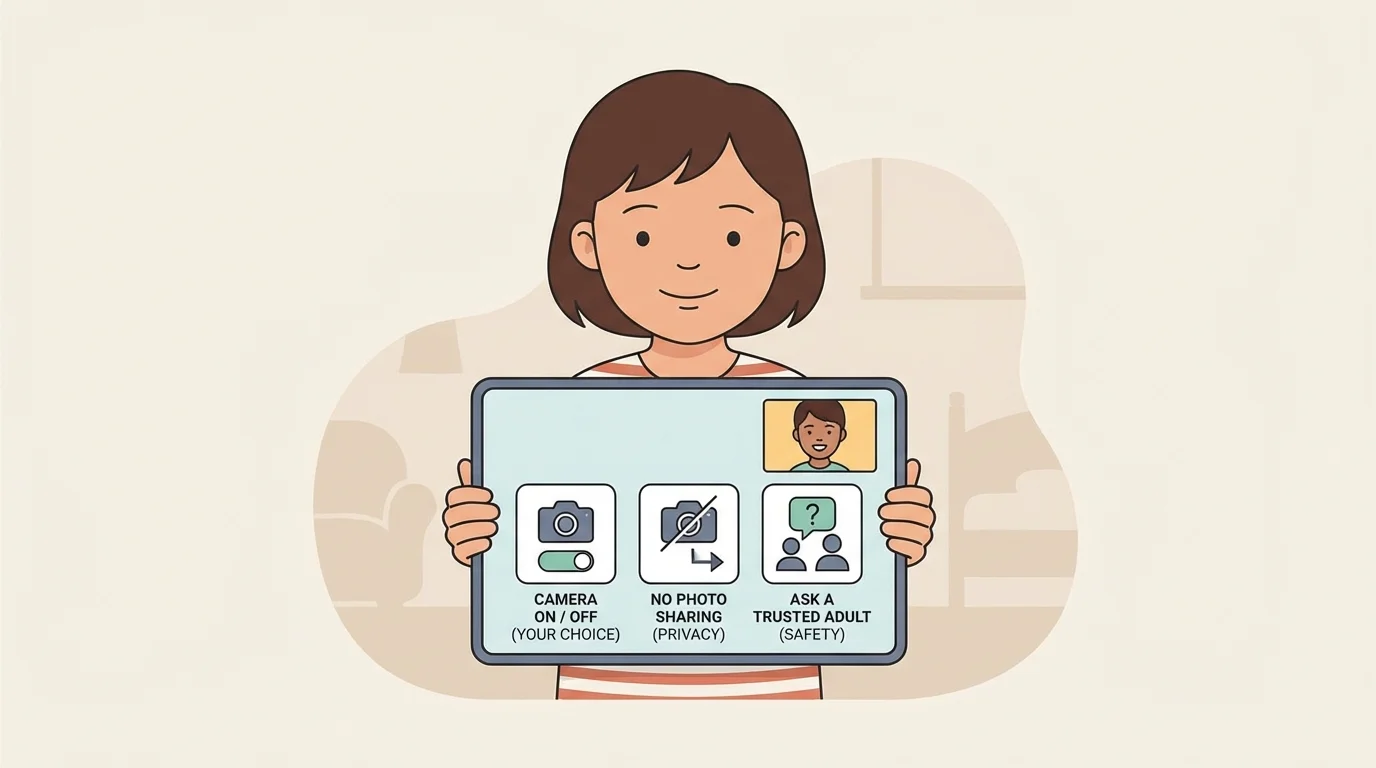
Before sharing a photo of someone else, ask first. This is another way to respect body autonomy. If your sibling says no photo, listen. If a friend does not want to be on camera during an online club meeting, respect that choice.
| Situation | Safe choice |
|---|---|
| Someone online asks for a private photo | Say no, leave, and tell a trusted adult |
| You do not want to be on camera | Ask to turn the camera off or move away |
| You want to post a picture of someone else | Ask first before sharing |
| Someone tells you to keep an online body secret | Tell a trusted adult right away |
Table 1. Safe choices for body autonomy in online situations.
You can practice body autonomy in small, everyday ways. At home, you can say, "I want a fist bump instead of a hug." In a community activity, you can move your chair if someone sits too close. If a game turns too rough, you can stop playing.
When you respect other people's boundaries, you help make everyone safer. Ask before tickling. Ask before hugging. Ask before posting photos. Listening to "no" is part of being kind.
Real-life situations
Situation 1: A family friend asks for a hug.
You can say, "No thank you. I'll wave instead."
Situation 2: Someone keeps poking you after you asked them to stop.
You can say, "Stop. I don't like that," and move away.
Situation 3: A person online asks to see you in your pajamas or swimsuit.
You can leave the chat and tell a trusted adult right away.
Try This: Practice one safety sentence out loud today: "My body belongs to me," or "No thank you, I need space." The more you practice, the easier it is to use when you need it.
Try This: Make a short trusted-adult list with names you can remember. Keep going until you have several people, because if one person is busy, you can tell another.
"My body belongs to me."
— A strong safety reminder
If someone does not respect your boundary, that is not your fault. Children deserve safety, respect, and help. Speaking up is brave, and getting help is always the right choice.
