Have you ever looked for your favorite book, toy, or headphones and thought, "Where did it go?" That happens a lot when things do not have a home. The good news is that small habits can make a big difference. When you use the same routine each day, chores feel faster, cleanup feels easier, and your things stay safer.
A routine is a set of actions you do in the same order again and again. A good routine helps your day feel calm. You do not have to guess what comes next. You already know. That means you can spend less time searching for things and more time doing the things you enjoy.
At home, routines help everyone. When you put dirty clothes in the hamper, your room stays neater. When you place your reading tablet in the same safe spot, it is easier to find for an online lesson or reading time. When you rinse your water bottle after using it, it is ready for later. Little jobs done every day stop big messes from growing.
Chore means a helpful job you do at home. Cleanup means putting things back, wiping or tidying a space, and making it ready to use again. Personal belongings are the things that belong to you, like books, clothes, toys, art supplies, headphones, or a backpack.
When routines are skipped, a small problem can turn into a bigger one. One shirt on the floor may not seem like much. But after a few days, clothes pile up, favorite items get lost, and cleanup takes much longer. Daily habits save time because a little bit of work now prevents a big job later.
A routine does not need to be long or hard. It can be as simple as: wake up, make your bed, put pajamas away, wash your face, and place your cup in the sink. That is a routine because the jobs happen in a regular order.
Some routines happen every morning. Some happen right after you use something. Some happen before bed. A smart routine matches the job to the right time. If you wait too long, it is easier to forget. If you do it right away, it becomes a habit.
Your brain gets faster at jobs you repeat often. That is one reason routines can feel easier after a while—you spend less time deciding and more time doing.
You do not need to do every job alone. Families work as teams. You might put away your own things while an adult does another job nearby. What matters is learning to help, to notice what needs care, and to be responsible for the things that belong to you.
One of the easiest ways to remember chores is to connect them to parts of the day, as [Figure 1] shows. Morning jobs help you start fresh. After-use jobs stop messes right away. Bedtime jobs get your space ready for tomorrow.
Morning jobs can include making your bed, putting pajamas in a drawer or hamper, opening curtains, and placing yesterday's cup or dish where it belongs. These jobs are short, but they make your room look cared for.
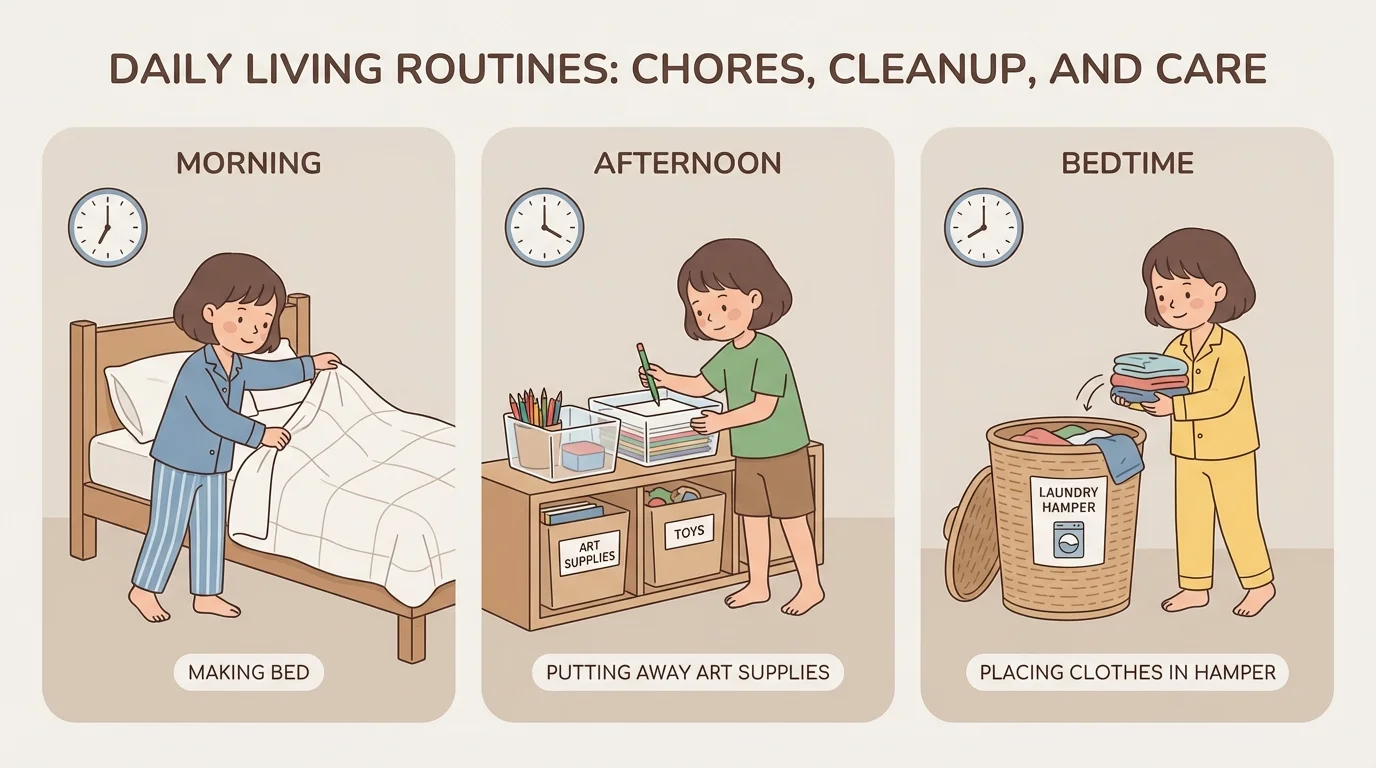
After-use jobs happen when you finish an activity. If you draw, cap the markers and return them to the art bin. If you play with building blocks, place them back in the container. If you read, return the book to the shelf or basket. If you use a tablet or headphones, put them in a safe spot instead of leaving them on the couch or floor.
Bedtime jobs can include putting dirty clothes in the hamper, choosing clothes for tomorrow, returning toys to their places, and checking the floor for anything that could be stepped on. A few minutes at night can make the next morning much smoother.
When you match chores to the time of day, your brain gets a clue: "This is what I do now." That is why routines work so well. The pattern in [Figure 1] helps turn chores into simple habits instead of surprises.
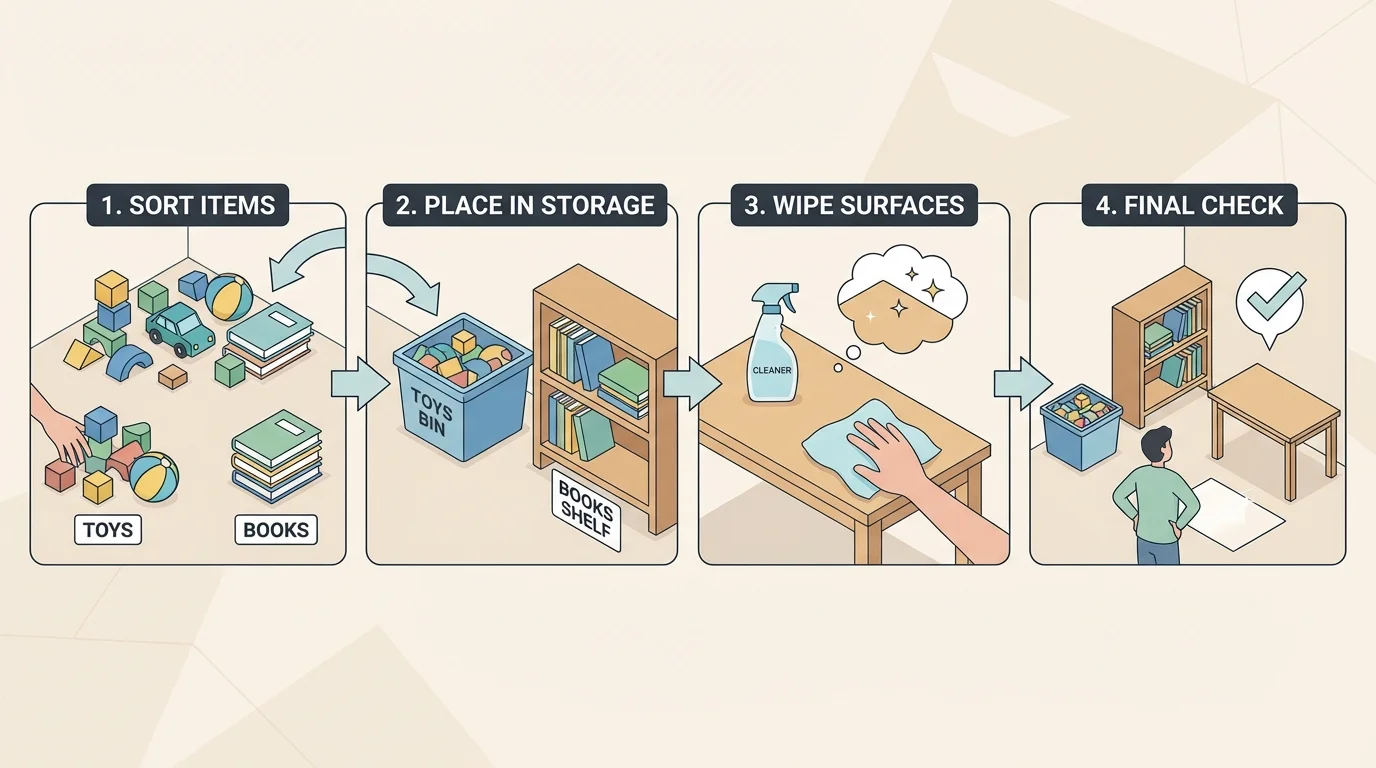
Cleanup feels easier when you follow the same order every time, and [Figure 2] lays out a simple path you can use in almost any room. Instead of staring at a mess and feeling stuck, you can move step by step.
Step 1: Sort the items. Put similar things together. Books with books. Toys with toys. Clothes with clothes. Trash with trash. Sorting helps you see what belongs where.
Step 2: Put things in their places. This is easier when each item has a home, like a shelf, basket, hook, drawer, or box. If something has no home, ask an adult where it should go.
Step 3: Wipe or straighten the space. Fold the blanket, push in the chair, or wipe a sticky table with help if needed. Now the area is not just less messy. It is ready to use again.
Step 4: Check the floor, couch, and corners. Look once more for one or two missed items. A quick final look catches the things you almost forgot.
Cleanup example: finishing an art project
Step 1: Put crayons together, markers together, and paper scraps together.
Step 2: Return crayons and markers to the art box. Put clean paper in one pile and scraps in the trash or recycling if your family uses it.
Step 3: Wipe the table and push in the chair.
Step 4: Check under the table for dropped supplies.
This takes only a few minutes and keeps supplies ready for next time.
If a mess feels large, do not panic. Start with the biggest group first, like clothes or toys. Then do the next group. One small job at a time still counts as progress. The order in [Figure 2] helps because it gives your hands and eyes a plan to follow.
Your personal belongings need care so they last longer and stay ready to use. Different things need different kinds of care, as [Figure 3] illustrates with common items you may use every day.
Books should be kept on a shelf, in a basket, or stacked neatly. Do not bend covers backward or leave books where food or drinks can spill on them.
Clothes last longer when clean clothes are folded or hung up and dirty clothes go into the hamper. Shoes should be placed together in one spot so you can find both shoes when you need them.
Toys and art supplies stay nicer when pieces are kept together. A puzzle with missing pieces is hard to enjoy. Markers dry out if the caps are left off. Glue should be closed after use.
Devices like a tablet, headphones, or a small learning device need gentle handling. Carry them with two hands when needed, keep them away from water, and place them on a table, shelf, or charging spot instead of the floor.
Water bottles and lunch containers should be emptied and rinsed after use if your family asks you to do that. That helps stop smells and keeps them ready for the next day.
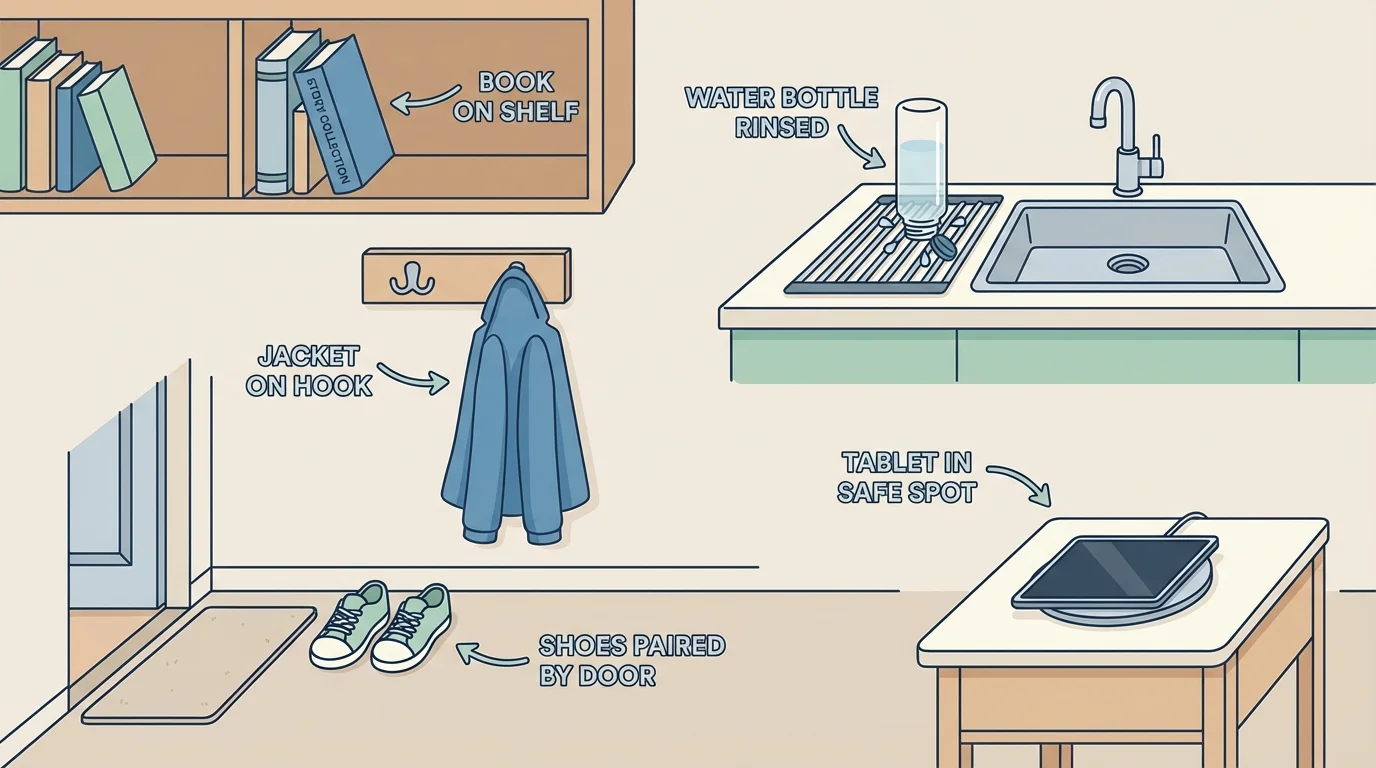
Everything needs a home. When each belonging has one regular place, cleanup becomes faster and finding things becomes easier. A hook for a jacket, a basket for books, and a tray for headphones are simple examples of "homes" for your things.
If you are not sure where something belongs, that is not a failure. It means the item may need a home. Ask: "Where should this go?" Once you know, try to use that same place every time. The safe spots in [Figure 3] show how caring for things is mostly about simple habits.
You can build a routine that works for your real life. Start small. Pick just a few jobs that happen every day. It is better to do a short routine often than a huge routine once in a while.
A simple routine might look like this:
| Time | Routine Job | Why It Helps |
|---|---|---|
| Morning | Make bed | Starts the room neat |
| After snack | Put dish away | Keeps surfaces clear |
| After play | Put toys in bin | Prevents lost pieces |
| Before bed | Clothes in hamper | Makes morning easier |
| Before bed | Return tablet to safe spot | Keeps it protected and easy to find |
Table 1. A sample daily routine that connects chores to times of day.
You can use a checklist, a picture chart, or a reminder from an adult. Some children like saying the steps softly to themselves. Others like a note near their desk or bed. The best routine is the one you can remember and really use.
You already know how to follow steps in order when you brush teeth, wash hands, or get dressed. Home routines work the same way: first one step, then the next step, until the job is done.
It also helps to notice patterns. If the art table gets messy every afternoon, add a quick after-use cleanup. If socks pile up near the bed, put a hamper or basket closer to that spot. Good routines fit your real habits and spaces.
Everyone forgets sometimes. The goal is not to be perfect. The goal is to notice the problem, fix it, and try again tomorrow.
If you leave a book on the floor, someone might step on it and bend the cover. If you leave a tablet on the couch, it might slide off. If you do not cap markers, they may dry out. If dirty clothes stay in a pile, your room may develop an unpleasant odor, and it becomes harder to find what is clean.
Fix-it example: you forgot to put your things away
Step 1: Stop and look at the area calmly.
Step 2: Pick up one kind of item first, such as books.
Step 3: Return each item to its home.
Step 4: Decide what reminder will help next time, such as a checklist or a family cue.
Making a fix-it plan teaches responsibility.
When you remember your routine, life at home often feels easier. You can find what you need, your space is safer, and adults can trust you with more responsibility. That trust grows when you show that you can care for your own things.
Choose one place you use a lot, such as your desk, reading corner, or the spot where you keep your shoes. Give every item there a home. Then do a tiny routine for that spot every day: sort, put away, straighten, and check.
You can also pick one belonging to care for especially well this week. Maybe it is your favorite book, your jacket, or your headphones. Put it in the right place every time you finish using it. Small actions repeated daily become strong habits.
"A little done each day is easier than a lot done all at once."
Routines are not about making your day strict or boring. They are about making life smoother. When you know what to do and where things belong, chores become simpler, cleanup becomes quicker, and your belongings stay in better shape.
