Have you ever tried something new and felt a little nervous? Maybe you joined a new online club, started a dance class, talked to a new classmate on a video call, or learned how to help with a chore at home. New situations can feel exciting, confusing, and a little scary all at once. The good news is this: you do not have to do new things all by yourself. Preparation and support help you do better and feel stronger.
A new situation is any time something is new to you. It might be your first piano lesson online, your first sleepover at Grandma's house, your first time helping cook dinner, or your first time speaking in a community group. Even grown-ups face new situations. They get ready, ask questions, and get help too.
When something is new, your brain is still learning what to do. That is normal. You may not know the rules yet. You may not know where to click, what to bring, what to say, or how long something will take. That is why getting ready matters. The more ready you are, the easier it is to begin.
Preparation means getting ready before something happens. Support means help from people, tools, or plans that make something easier. Confidence is the feeling that you can try and keep going.
Think about learning to ride a bike, bake muffins, or join a video call. If you practice first, check what you need, and have someone help you, you are more likely to do well. If you do not prepare and do not ask for help, you may become frustrated more quickly.
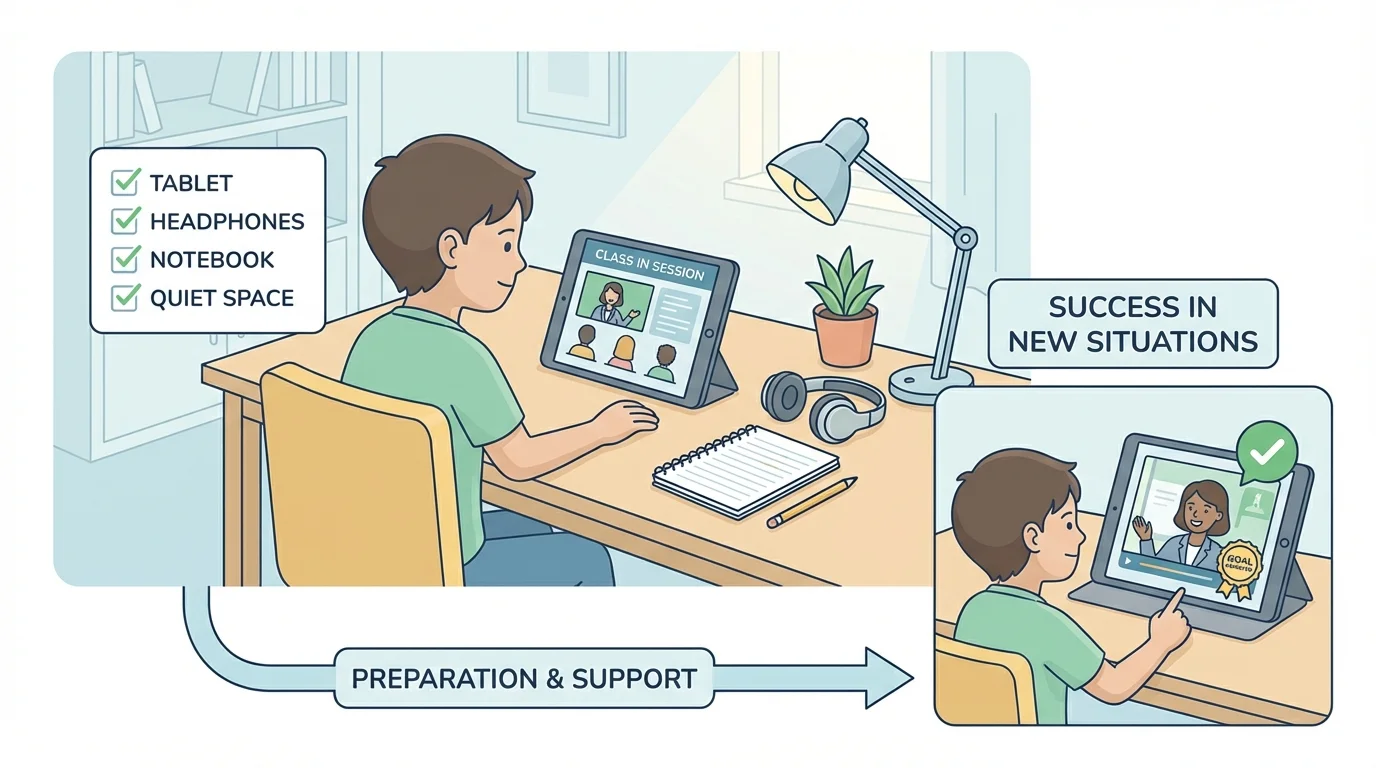
Preparation means getting ready step by step, as [Figure 1] shows with a child setting up for a new online class. Preparation is not just one thing. It can mean learning what will happen, gathering what you need, practicing a little, and making a simple plan.
For example, if you are joining a new art class online, preparation could mean checking that your tablet or computer works, putting paper and crayons on the table, and asking what time the class starts. If you are helping make lunch for the first time, preparation could mean washing your hands, putting ingredients on the counter, and listening to the steps before you begin.
Preparation helps in big and small ways. It saves time. It lowers stress. It helps you feel calm because you know more about what is coming. It also helps you make fewer mistakes. That does not mean everything will be perfect. It means you are more ready to handle what happens.
Here are simple ways to prepare for something new:
Step 1: Find out what will happen. Ask, "What do I need to do?" or "What should I bring?"
Step 2: Get your materials ready. This might be headphones, a notebook, soccer shoes, or ingredients.
Step 3: Practice a little. You can practice saying hello, opening the video link, tying your apron, or putting your supplies in one place.
Step 4: Make a plan. Decide when you will start, where you will be, and who can help if needed.
Step 5: Rest and be ready. A calm body and mind help you learn.
Why preparation works
Preparation helps your brain feel less surprised. When you know some of the steps ahead of time, your brain can focus on learning instead of worrying. That is one reason prepared students often feel braver when they start something new.
If you forget to prepare, little problems can grow bigger. Your device may not be charged. You may be late. You may not have the right supplies. Then you might feel upset before you even begin. We can see the opposite in [Figure 1]: when things are ready ahead of time, starting becomes smoother.
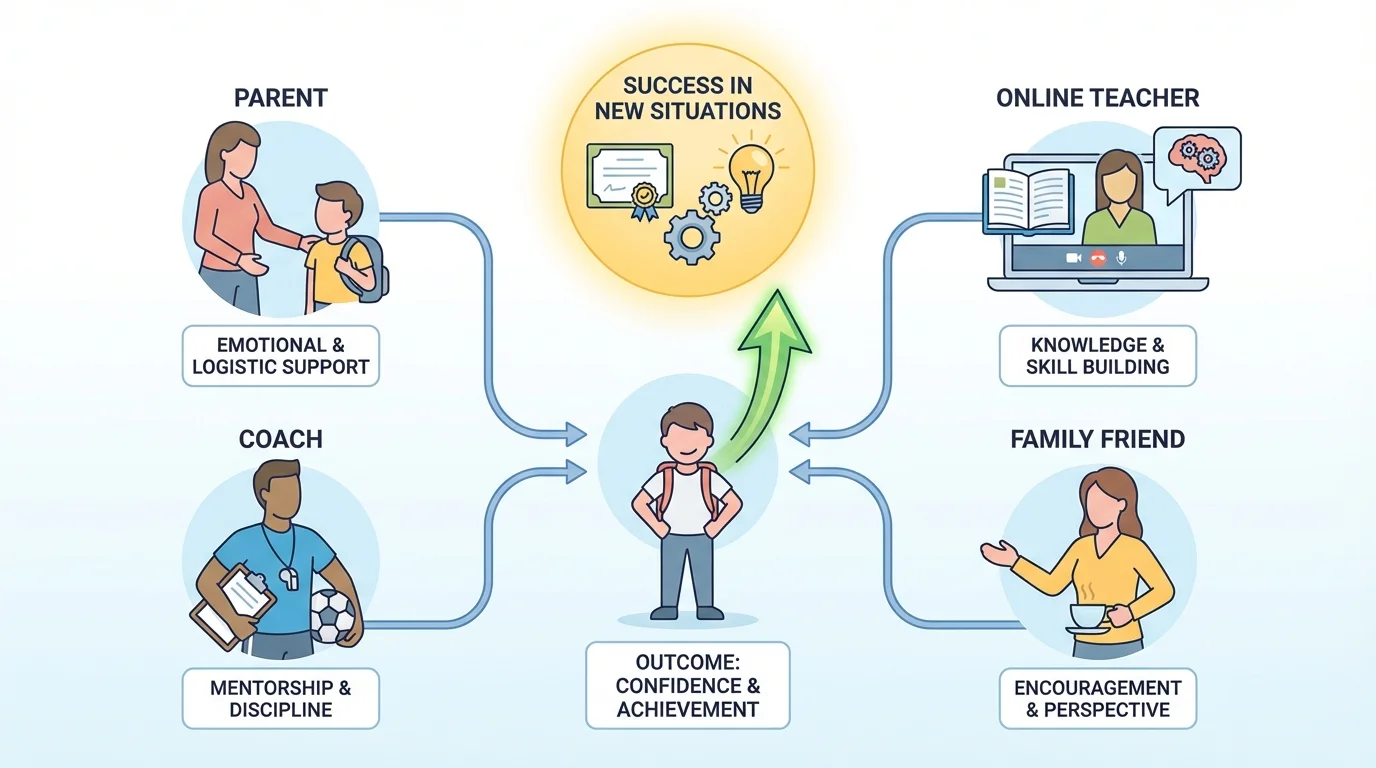
Support comes from trusted people around you, as [Figure 2] illustrates with helpers connected to one child. Support can come from a parent, grandparent, older sibling, online teacher, coach, neighbor, or another trusted adult. Sometimes support also comes from tools, like a checklist, reminder note, or timer.
Some children think asking for help means they are weak. That is not true. Asking for help is a smart choice. It shows responsibility. It means you care about doing your best and staying safe.
Here are some kinds of support you might use:
Emotional support: someone says, "You can do this. I will help you start."
Practical support: someone helps you log in, read directions, or find supplies.
Practice support: someone rehearses with you before the real event.
Problem-solving support: someone helps if something goes wrong.
A good helper does not do everything for you. Instead, a good helper shows you how to do it yourself. For example, if you are nervous about speaking in a kids' club video meeting, a trusted adult might help you practice one sentence: "Hi, my name is Sam, and I like drawing." Then, during the real meeting, you can try it yourself.
Example: Asking for support
You are joining a new music lesson online and feel nervous.
Step 1: Tell the truth
Say, "I feel nervous because I do not know what will happen."
Step 2: Ask a clear question
Say, "Can you tell me how the lesson starts?"
Step 3: Ask for one small help
Say, "Can you stay nearby for the first few minutes?"
This kind of support helps you begin, but you still get to do the learning.
Later, when you face another new challenge, you may remember the helpers from [Figure 2] and realize you are not alone. Everyone needs a team sometimes.
Preparation and support are strongest when they work together. Preparation is what you do to get ready. Support is the help you receive from people and tools. When you use both, you have a better chance of success.
Think of a first swimming lesson. Preparation means packing your towel and swimsuit, eating before you go, and learning pool rules. Support means a grown-up takes you there, a coach explains the steps, and someone encourages you if you feel shy. With both, you are more likely to listen, try, and improve.
If you only prepare but never ask for help, you may still get stuck. If you only ask for help but never prepare, you may depend on others too much. Doing both helps you grow. You become more independent while still knowing when to reach out.
Your brain gets stronger when you try new things with support. Each time you prepare, practice, and keep going, you build skills for the next new challenge too.
This matters for your future. As you grow, you will face more new situations: bigger schoolwork, new hobbies, jobs to do at home, community activities, and one day even college or work training. Learning these habits now helps you later.
Here are some everyday examples of how preparation and support can help you.
Starting a new online class: Check the time, charge the device, open the link early, and keep a notebook nearby. Ask a grown-up to help if the sound does not work.
Trying a new chore at home: Watch first, gather supplies, and ask for directions. If you are learning to sort laundry, a helper can show you how to separate colors and whites.
Joining a club or team: Learn the rules, wear what you need, and practice how to greet people. Ask a coach or trusted adult where to stand and what to do first.
Meeting new people on a video call: Practice introducing yourself. Think of one question you can ask, like "What games do you like?" A family member can practice with you before the call.
Going somewhere unfamiliar: Talk about where you are going, who will be there, and what the plan is. Support helps you feel safe.
| Situation | Preparation | Support |
|---|---|---|
| New online class | Charge device, open link, get supplies | Trusted adult helps with tech |
| New chore | Learn steps, gather tools | Family member shows first |
| Community club | Know time, clothes, and rules | Coach or adult explains what to do |
| Video call with new people | Practice hello and one question | Adult rehearses with you |
Table 1. Examples of how preparation and support help in different real-life situations.
When you face something new, you can use a simple plan. You do not need a fancy chart. You only need a few clear steps you can remember.
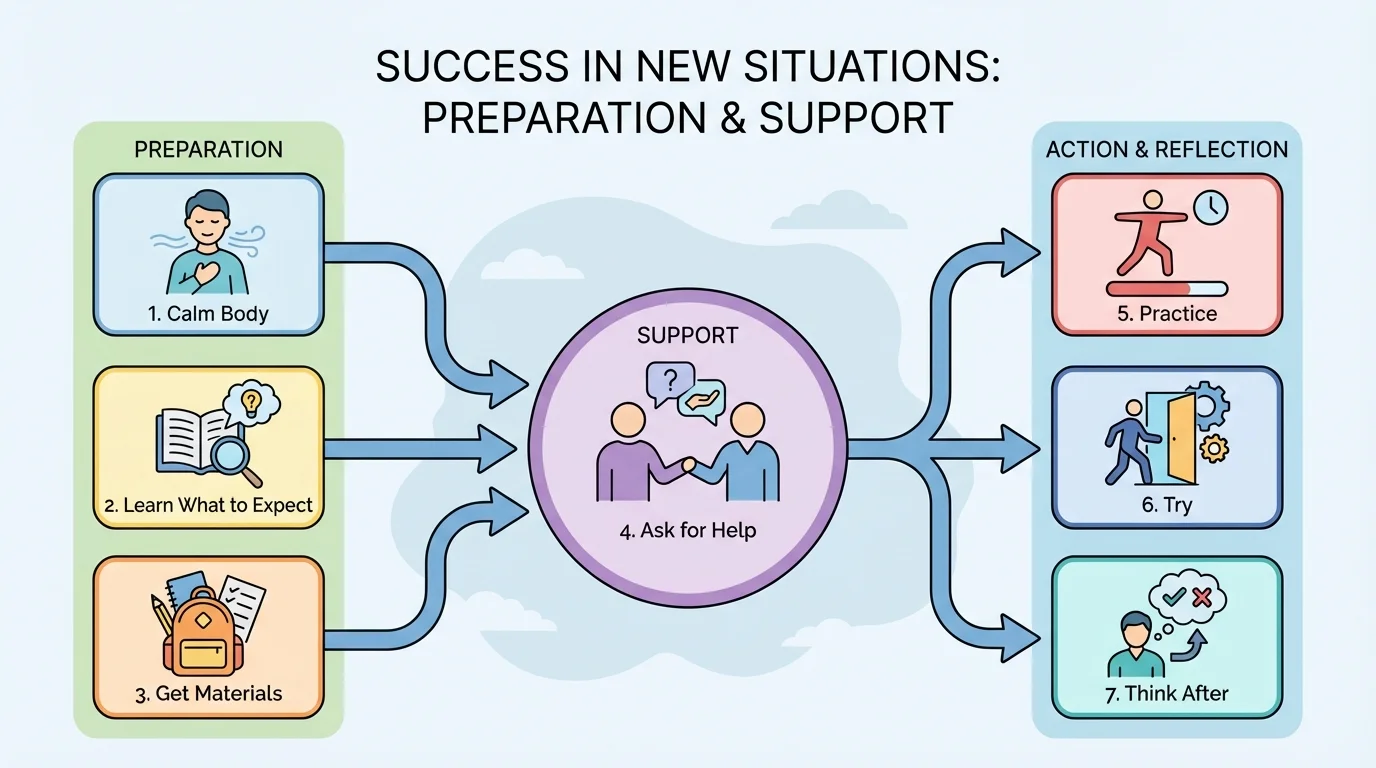
[Figure 3] Here is a success plan you can use almost anywhere:
First, calm your body. Take a slow breath. Stand still. Listen.
Next, learn what to expect. Ask what will happen first, next, and last.
Then, get what you need. Put your materials in one place.
After that, practice one small part. Small practice helps a lot.
Then, ask for help if needed. Use a clear question.
Finally, try your best. You do not need to be perfect. You need to begin.
You can even say this to yourself: "I can get ready. I can ask for help. I can try." That is a strong way to think. It helps build confidence.
"Being ready helps you feel steady."
Try This: Before your next new activity, choose one small thing to prepare. Maybe set out your shoes, test your headphones, or practice one sentence. Then choose one person you can ask for help. One small step can make a big difference.
Sometimes you prepare, get support, and things still feel hard. Maybe the internet stops working. Maybe you forget a step. Maybe you feel shy. That does not mean you failed. It means you are learning.
Mistakes are part of new situations. The important thing is what you do next. You can pause, breathe, ask for help, and try again. The plan in [Figure 3] still works when something goes wrong because it reminds you to calm down, ask questions, and keep going.
You have already learned many things by practicing over time. Reading, tying shoes, using online tools, and helping at home all became easier because you kept trying. New situations work the same way.
If one plan does not work, make a new one. If one helper is busy, ask another trusted person. If the first try feels messy, the second try may go better. Success is not about getting everything right right away. Success is about being ready, getting help, and staying with it.
When you learn how to prepare and how to use support, you are building important life skills. These skills help you now, and they will help you later with bigger changes too. Every time you face something new with a plan and a helper, you grow stronger.
