Have you ever noticed that some days you feel ready to learn, play, and smile, while other days everything feels harder? That is not just luck. The choices you make each day can change how your body feels, how well your brain pays attention, and how calm or upset you feel inside. Even small choices, like drinking water, eating breakfast, or getting enough sleep, can make a big difference.
Your body and brain are always working together. When you make healthy choices, you give yourself a better chance to have steady energy, stronger focus, and better emotional well-being. That means you may feel more ready to finish your online lesson, play outside, solve problems, and handle big feelings in a safe way. Healthy choices do not mean being perfect. They mean doing helpful things for yourself again and again.
[Figure 1] Think of your body like something that needs to be charged and cared for every day. You need sleep to rest, food to fuel your body, water to help your body work properly, and movement to wake up your muscles and brain. You also need quiet time, connection with caring people, and ways to calm down when you feel upset.
When one part is missing, the whole day can feel harder. If you go to bed very late, you might wake up tired. If you skip meals, your stomach may feel empty and your body may feel weak. If you sit for too long without moving, your body may feel sluggish. If you keep worries inside, your feelings may grow bigger. Healthy choices help all these parts work together.
Energy is the strength your body and brain use to do things.
Focus is paying attention to what you are doing.
Emotional well-being means feeling cared for, handling feelings in safe ways, and knowing when to get support.
[Figure 2] Your body gives you clues every day. A yawn may mean you need rest. A headache can sometimes happen when you need water. Feeling grumpy may mean you are hungry, tired, worried, or overwhelmed. Learning to notice these clues is a smart life skill. It helps you take care of yourself before a small problem grows bigger.
Healthy energy does not usually come from one giant choice. It comes from many small choices working together over the course of a day. Good sleep, balanced meals, water, and movement help your body stay steady instead of going up and down quickly.
One of the biggest energy helpers is routine. Going to bed and waking up at about the same time each day helps your body know when to rest and when to be alert. Most people do better when they get enough sleep at night. If you stay up too late playing games or watching videos, the next day may feel foggy and slow.
Food matters too. Your body uses food as fuel. Breakfast can help you start your day with energy. A balanced meal or snack often includes more than one kind of food, such as fruit, yogurt, eggs, oatmeal, cheese, whole-grain toast, or vegetables. Sugary snacks may give quick energy, but that burst can disappear fast, and then you may feel tired or cranky.
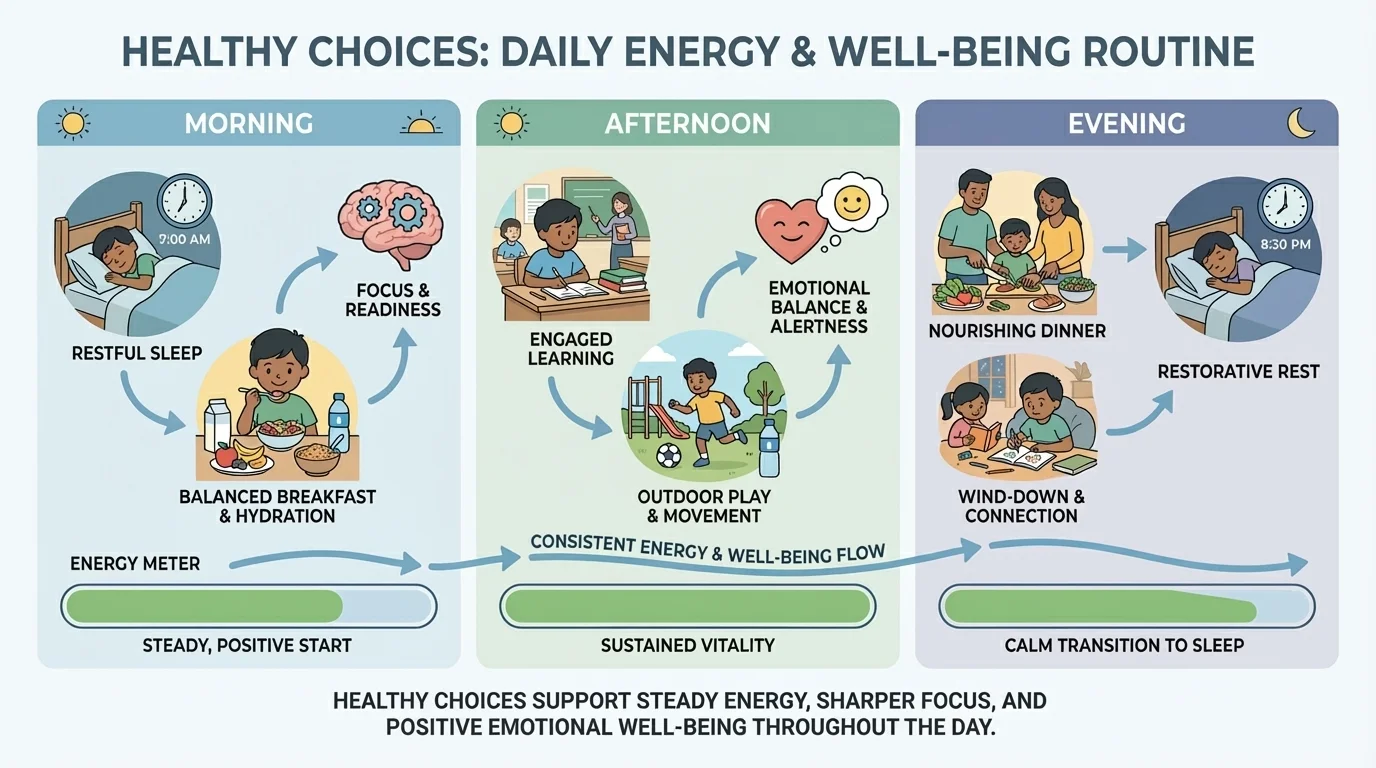
Water is another simple helper. Your body needs hydration, which means having enough water to work well. When you do not drink enough, you may feel tired, dizzy, or have trouble paying attention. Keeping a water bottle nearby during online learning can make it easier to remember.
Movement gives energy too. That may sound surprising, but moving your body can wake you up. A short walk, stretching, dancing to one song, riding a bike, or playing outside can help your heart pump and your brain feel more alert. You do not need to exercise for a very long time. Even a few active minutes can help.
Your brain uses a lot of energy every day, even when you are sitting still. That is one reason sleep, food, water, and movement all matter for learning.
Here is a real-life example. Suppose you wake up after enough sleep, eat oatmeal and fruit, drink water, and take a short stretch break before your lesson. You are more likely to feel steady and ready. But if you wake up late, skip breakfast, and sit too long, your body may feel low on energy before the day really begins. That is the difference healthy choices can make.
Your brain pays attention better when your habits and your space support it. Focus is not just about "trying harder." It is also about setting yourself up to succeed.
A helpful learning space at home does not need to be fancy. It just needs to work for you. Try to sit in a place with enough light, a comfortable chair, and the materials you need. If possible, keep distracting toys, loud sounds, or extra screens away while you work. When your space is calmer, your brain has fewer things to chase.
It also helps to do one task at a time. If you are supposed to read, read. If you are supposed to write, write. Jumping back and forth between many tabs, games, videos, and messages can make your mind feel scattered. A short task list can help: first math, then reading, then a break.
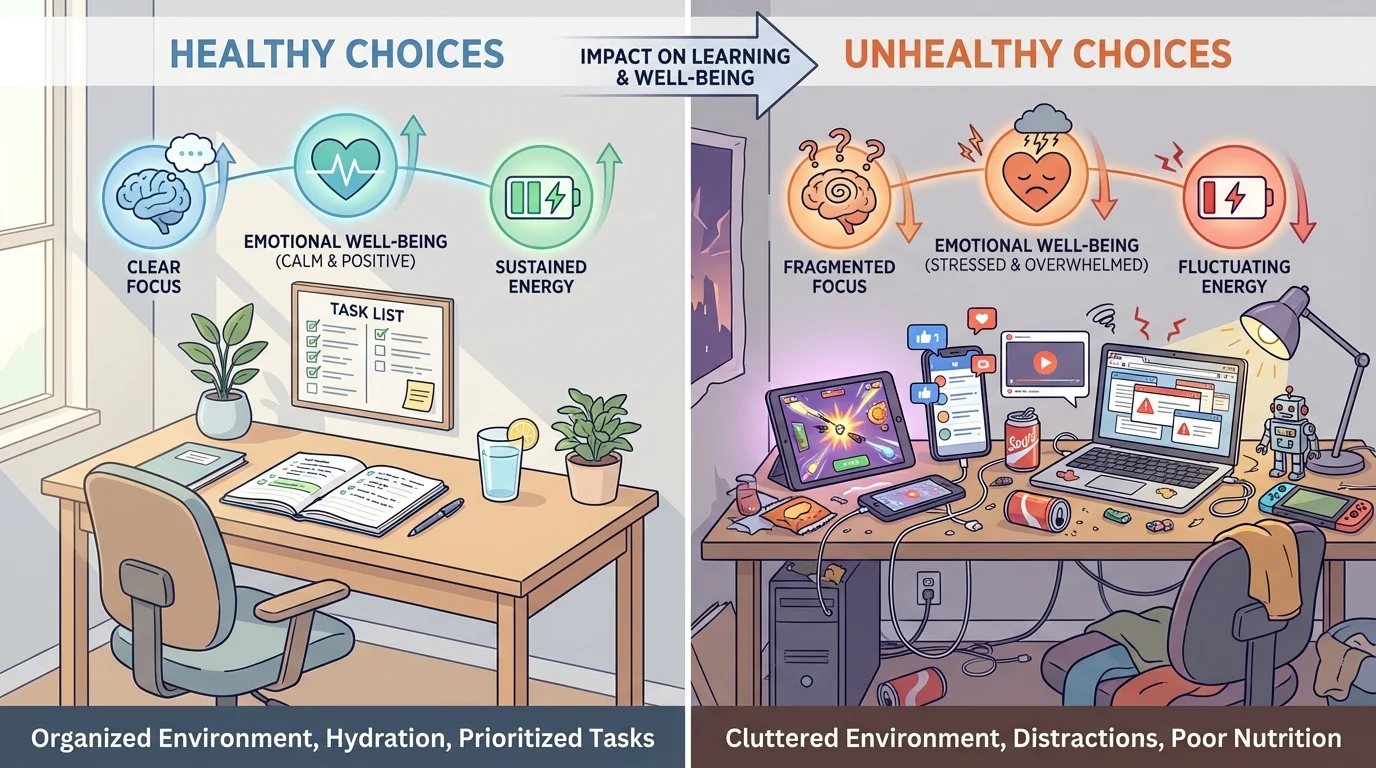
Breaks matter too. Your brain is not meant to stare at a screen without stopping for a long time. A short pause to stand up, stretch, look away from the screen, or take a few breaths can help you reset. When you come back, it is often easier to concentrate again.
Healthy food, sleep, and water also connect to focus. Remember [Figure 1]: the same choices that support energy also support attention. When you are hungry, thirsty, or very tired, your brain has a harder time staying on the job. That does not mean something is wrong with you. It means your body needs care.
A focus-friendly study plan
Step 1: Get ready.
Bring a pencil, paper, headphones if needed, and water to your workspace.
Step 2: Choose one job.
Say the task out loud: "I am finishing my reading page."
Step 3: Work for a short chunk of time.
Do your best until the task or work chunk is done.
Step 4: Reset your brain.
Stand up, stretch, breathe, or walk for a minute before the next task.
This simple plan can help your attention stay stronger.
[Figure 3] If you lose focus, that happens to everyone sometimes. Instead of getting angry at yourself, pause and ask, "What do I need right now?" Maybe you need water, a snack, a quick stretch, a quieter space, or clearer directions. Good problem-solvers notice the problem and make a smart adjustment.
Your feelings are important signals. Healthy choices can make those signals easier to understand and manage with calm-down tools you can keep ready. When your body is cared for, your emotions often feel more steady too.
For example, being very tired can make small problems feel huge. Being hungry can make you more irritable. Too much screen time without breaks can leave you feeling worn out or jumpy. On the other hand, rest, movement, fresh air, healthy food, and quiet time can help you feel calmer and more balanced.
Another healthy choice is naming what you feel. You might feel disappointed, worried, frustrated, lonely, excited, or proud. When you can say the feeling, it becomes easier to handle. You might say, "I am frustrated because this assignment is hard," or "I feel lonely because I have not talked to my cousin today." Naming a feeling is not weakness. It is a strong skill.
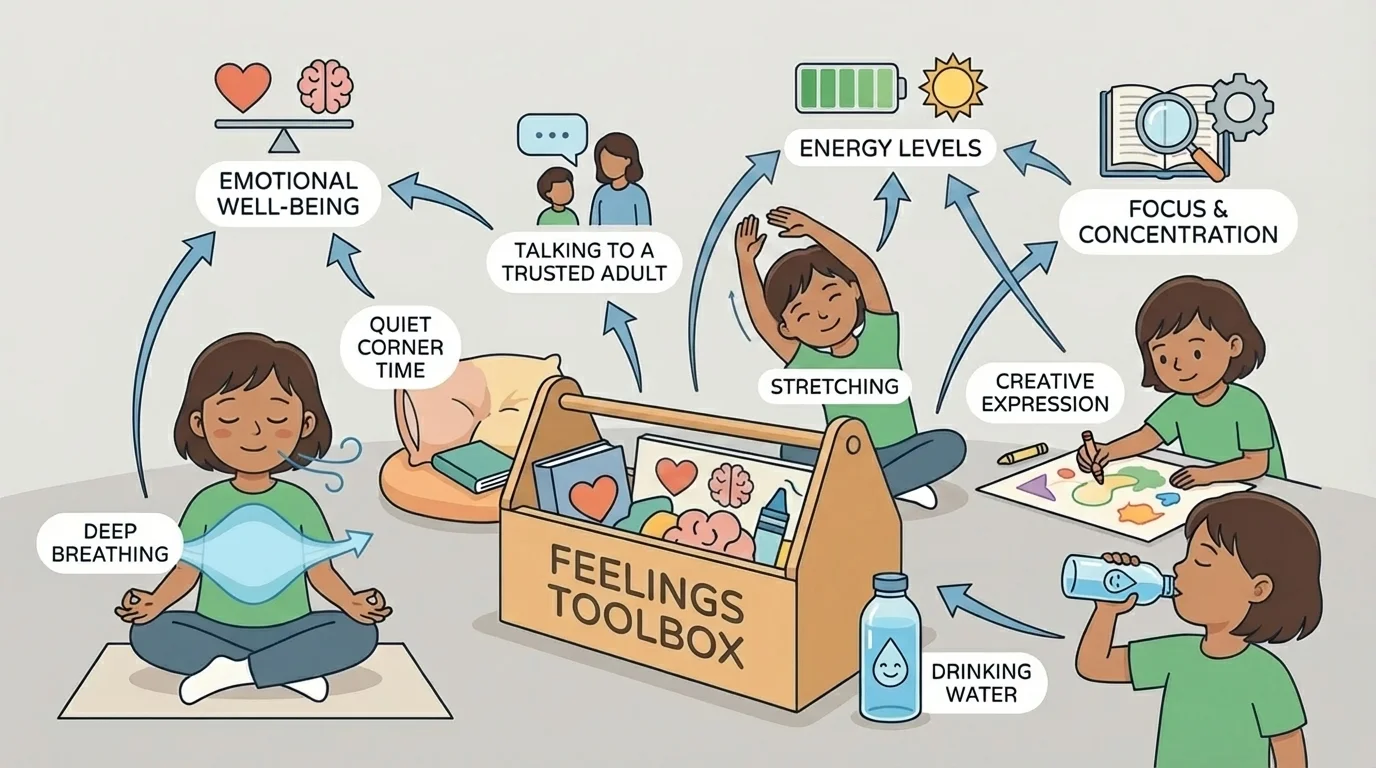
Healthy ways to deal with feelings include deep breathing, drawing, writing, stretching, listening to calm music, talking to a trusted adult, cuddling a pet, or taking a quiet break. These are safer and more helpful than yelling, hitting, slamming objects, or staying upset without asking for help.
Feelings need tools, not shame. Everyone has big feelings sometimes. Emotional well-being grows when you notice a feeling, choose a safe response, and ask for support when you need it. The goal is not to never feel upset. The goal is to handle upset feelings in healthy ways.
Connection matters too. Talking with a parent, grandparent, sibling, coach, neighbor, or another trusted adult can help you feel supported. A kind video call with family or a good conversation during community activities can brighten your mood. People do better when they feel cared for.
Later, when you feel stressed during work time, you can return to the ideas in [Figure 3]. A calming tool works best when you practice it often, not only during the hardest moments. The more you use healthy strategies, the easier they become.
You do not have to change everything at once. Choosing a few small habits is often the best way to start. Little actions repeated every day can build a strong, healthy pattern.
Morning habits can help your whole day begin well. Try waking up with enough time to get ready, eating breakfast, drinking water, getting dressed, and moving your body a little before learning starts. This tells your body, "It is time to wake up and get going."
During online learning, keep water nearby, sit in a helpful spot, and take short movement breaks between tasks. If your eyes feel tired, look away from the screen for a little while. If your mind feels full, take a few slow breaths and then return to one job at a time.
After learning time, make room for play, movement, chores, hobbies, and connection with others. A healthy day is not only about schoolwork. It also includes fun, responsibility, and rest.
Try This: a simple healthy-day checklist
Step 1: Pick one sleep habit.
Examples: bedtime at the same time, no screens right before bed, or reading quietly before sleep.
Step 2: Pick one body habit.
Examples: eat breakfast, carry water, or stretch after each lesson.
Step 3: Pick one feeling habit.
Examples: take three deep breaths, talk to an adult, or write one feeling in a notebook.
Step 4: Practice every day.
Small habits become stronger when you repeat them.
Evening habits matter as much as morning habits. A calmer evening can help you sleep better. Try dimmer lights, a bedtime routine, and quiet activities before bed. Too much excitement or screen time right before sleep can make it harder for your brain to settle down.
Healthy choices are important because they shape real moments in your day. When you take care of yourself, many things become easier. When you ignore your needs again and again, problems can grow.
| Situation | Helpful choice | Likely result |
|---|---|---|
| Before an online lesson | Eat breakfast and drink water | More steady energy and better attention |
| Feeling wiggly during work | Take a short stretch break | Body feels calmer and brain resets |
| Feeling upset | Name the feeling and talk to a trusted adult | Better support and safer choices |
| Staying up too late | Use a bedtime routine | Easier wake-up and better mood next day |
| Doing too many things at once | Work on one task at a time | Stronger focus and less confusion |
Table 1. Examples of healthy choices and their likely effects on daily life.
Here is a realistic comparison. One student goes to bed on time, eats a simple breakfast, keeps water nearby, and takes movement breaks. Another stays up very late, skips breakfast, and tries to do schoolwork while watching videos. The first student is more likely to feel calm, focused, and ready. The second student may feel tired, distracted, and frustrated faster. These patterns do not decide everything, but they do matter.
"Small choices, repeated often, can build a stronger day."
If you notice a pattern that is not helping you, you can change it. Maybe you keep forgetting water. Put a bottle on your desk. Maybe bedtime keeps getting too late. Start getting ready earlier. Maybe you feel upset and do not know what to do. Practice one calming tool and tell a trusted adult. Healthy choices are skills, and skills can grow.
The best healthy plan is one you can really use. Start by paying attention to your own clues. Ask yourself: When do I feel most tired? When do I lose focus? What helps me feel calm? Your answers can help you choose the habits that fit your life.
You do not need a perfect day to have a healthy day. Sometimes you will forget, feel tired, or get upset. That is normal. What matters is noticing what happened and trying again. Caring for your body and mind is something you practice over time.
Healthy choices help you have the energy to play and learn, the focus to finish what matters, and the emotional strength to handle feelings in safe ways. When you sleep well, eat nourishing food, drink water, move your body, and use calm tools, you are taking care of your whole self.
