A small cut, a nosebleed, a smoky room, or a scary phone call can happen fast. The good news is that you do not need to know everything to be safe. You just need to know a few smart moves and use them in the right order. Safety skills are like a toolbox in your mind: when something goes wrong, you can reach for the right tool instead of freezing.
When people feel scared, their brains can race. That is why safety steps should be simple. If you know what to do, you can protect yourself, help someone in a basic way, and get the right person to help. Good safety choices can keep a small problem from becoming a bigger one.
If you spill water and wipe it up, the floor becomes safe again. If you ignore it, someone might slip and get hurt. Emergencies work the same way. Quick, calm action matters.
Emergency means a serious situation that needs help right away because someone could be badly hurt, very sick, or in danger.
Injury means harm to the body, like a cut, burn, bruise, or sprain.
Hazard means something that can cause harm, like broken glass, smoke, fire, or an unsafe person.
Trusted adult means a safe grown-up who helps protect you, such as a parent, guardian, grandparent, neighbor your family knows well, coach, librarian, or community leader.
Not every problem is an emergency. A paper cut is a problem. A fire in the kitchen is an emergency. Feeling a little nervous is a problem. Trouble breathing is an emergency. Learning the difference helps you choose the right action.
An emergency includes things like a person who is not waking up, someone who is having trouble breathing, a large fire, heavy bleeding, a threatening stranger, or a person who may have swallowed poison. It can also include feeling unsafe because of violence, threats, or someone acting in a frightening way.
Some situations are important but not emergencies. A scraped knee, a missing homework file, or a mild headache usually need care, but not an emergency call. When you are not sure, your first step is still the same: get a trusted adult.
You do not have to decide everything alone. Your job is to notice danger, move to safety, and tell the right person.
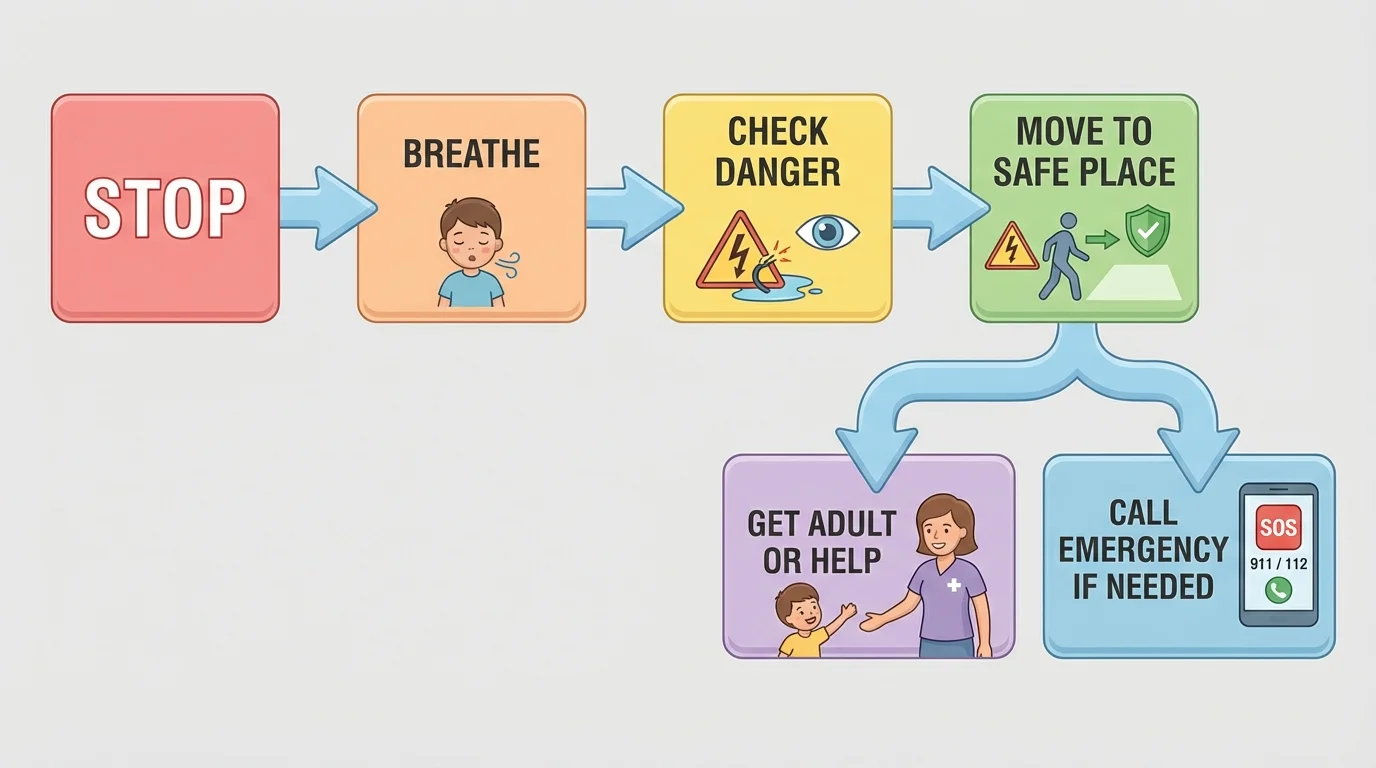
In a scary moment, a simple plan helps, as [Figure 1] shows. You can remember this order: stop, breathe, check, move, tell. These steps help you think clearly instead of panicking.
Stop your body. Do not run toward danger. Breathe slowly one or two times. Check what is happening. Is there fire, smoke, broken glass, a busy road, or a person acting dangerously? Move away from the danger if you can. Tell a trusted adult or call emergency services if needed.
If the area is unsafe, your first job is not to fix the problem. Your first job is to get to a safer place. For example, if you smell smoke, leave the area. If you see a sharp object on the floor, step back so you do not get cut. If a person is yelling and throwing things, move away and get help.
Sometimes kids think being brave means doing everything themselves. Real bravery means making safe choices. If an adult is unconscious, you should not try to carry them. If there is a fire, you should not go back inside for a toy or pet. Safe help-seeking is a strong skill.
Your brain works better when you slow your breathing. Even one slow breath can help you notice important details, like where the nearest safe exit is or which adult can help.
Later, when you practice your family safety plan, you are using the same order from [Figure 1]: first calm down, then notice danger, then get help.
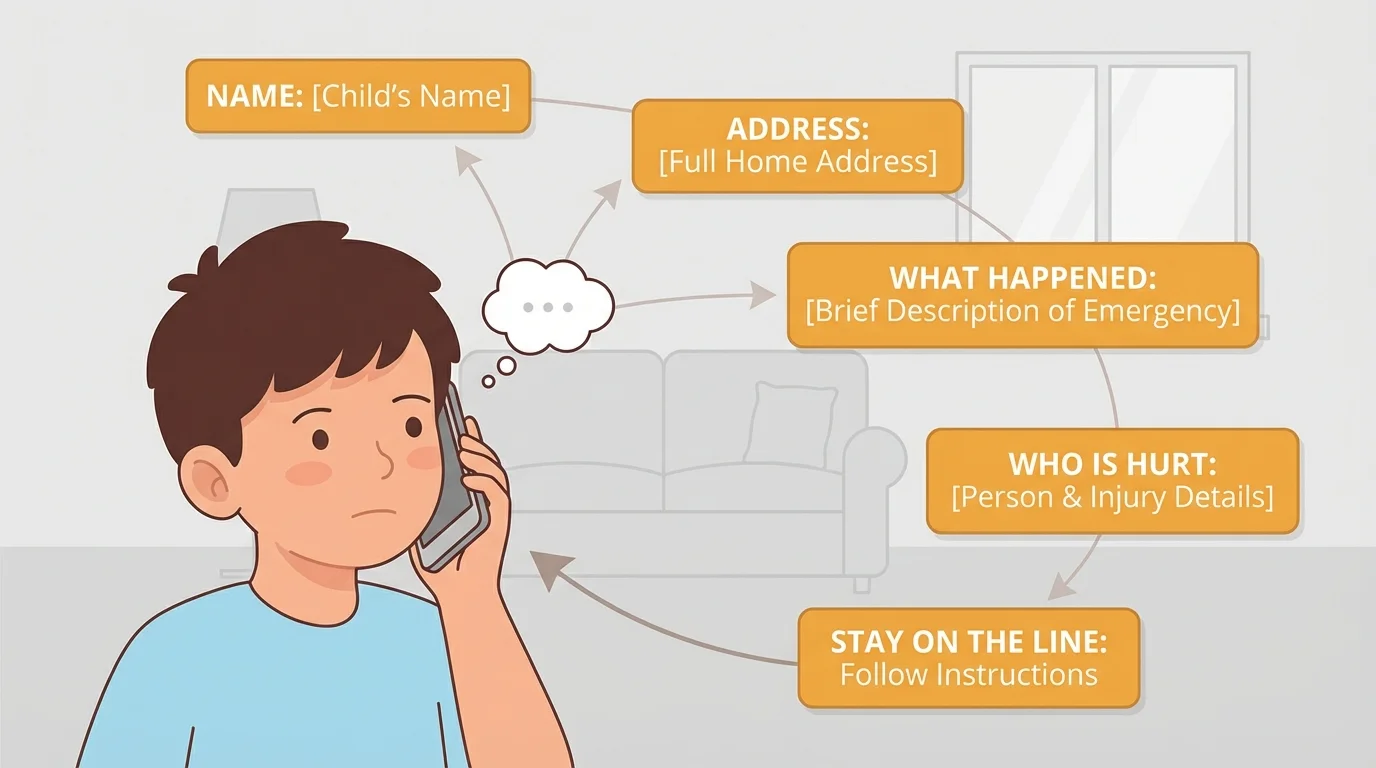
One of the most important safety skills is emergency services. These are the people who come to help in serious situations, such as police officers, firefighters, and paramedics. When there is a real emergency, you may need to call 911 or your local emergency number. The basic job of the caller, as [Figure 2] illustrates, is to say what happened, where it happened, and who needs help.
If you ever call, speak clearly. Try to say these things: your name, the address or location, what happened, whether someone is hurt, and if the danger is still there. For example: "My name is Ava. I am at 25 Pine Street. My grandpa fell and is not getting up. We need help."
If you do not know the full address, say what you do know. You can give the apartment number, the building name, a nearby store, or a phone number. It is smart to learn your home address and at least one grown-up's phone number.
When an emergency operator answers, do not hang up unless the operator tells you to. They may ask questions to help the right team come faster. Even if you feel nervous, keep listening and answering.
You should never call 911 as a joke. A fake call can slow help for someone who really needs it. That can be dangerous.
Example: When to call and what to say
You are at home with an adult who suddenly has trouble breathing and cannot talk well.
Step 1: Move near a phone and look for immediate danger.
Make sure you are in a safe place and the person is not near fire, traffic, or another hazard.
Step 2: Call emergency services.
Say your name, your address, and "An adult is having trouble breathing."
Step 3: Stay on the line.
Listen carefully and follow simple directions while waiting for help to arrive.
The same idea from [Figure 2] works when you get help from a neighbor, librarian, coach, or store worker: tell who needs help, what happened, and where you are.
Different injuries need different first steps, as [Figure 3] shows. You are not expected to be a doctor. Your job is to do safe basics and get adult help.
For a small cut or scrape, wash your hands if you can. Rinse the cut gently with clean water. Tell an adult. A bandage may help keep it clean. If the bleeding does not stop, if the cut is deep, or if there is a lot of blood, get help right away.
For a nosebleed, sit up and lean forward a little. Do not lean your head back. Pinch the soft part of the nose and ask an adult for help. Leaning forward helps blood come out instead of going down your throat.
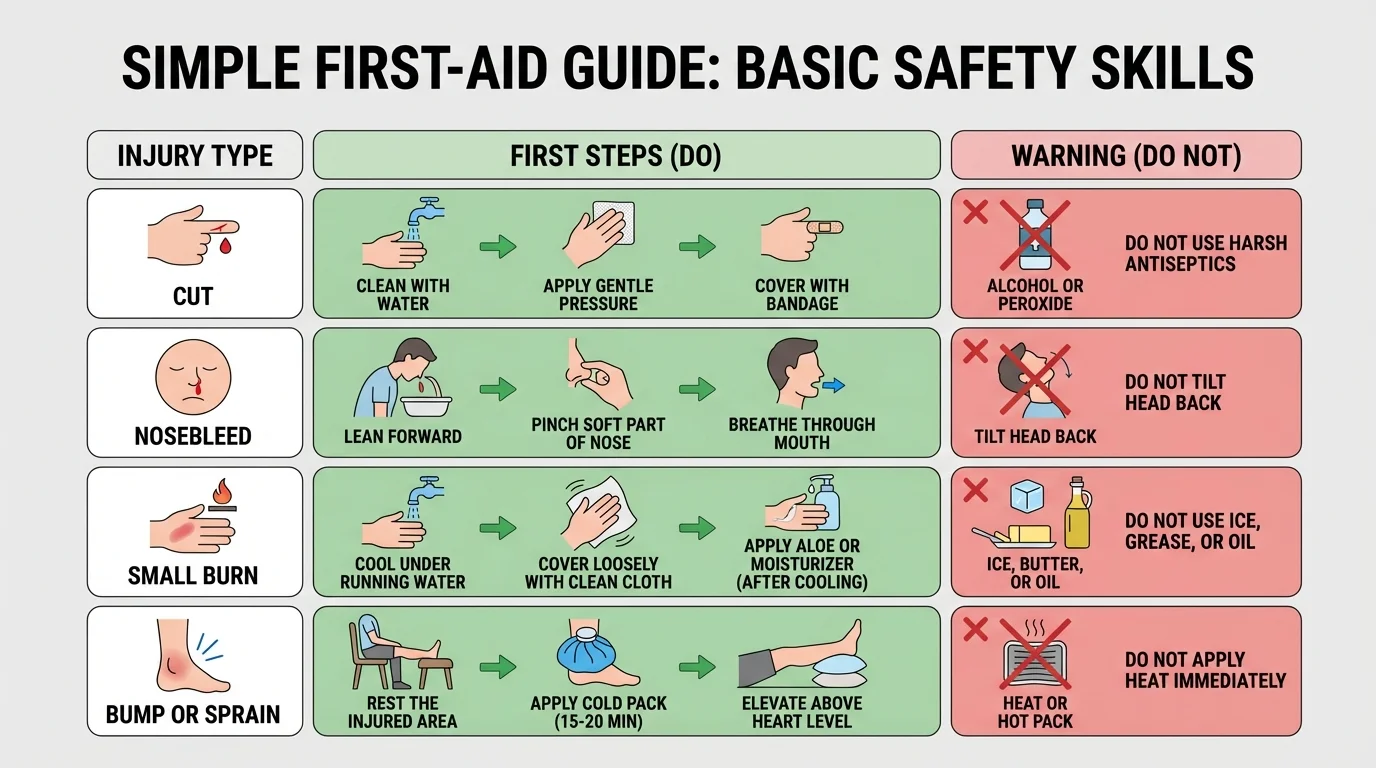
For a small burn, cool it with cool running water. Do not put ice, butter, or toothpaste on it. Tell an adult. If the burn is large, on the face, or looks very serious, get emergency help.
For a bump, bruise, or sprain, rest the area and tell an adult. A cool pack wrapped in cloth may help, but do not place ice directly on skin. If a body part looks bent in a strange way, cannot be moved, or hurts a lot, the injury may be more serious.
If there is blood, it is important to let an adult handle it when possible. If you ever need to help in a very basic way, avoid touching blood with bare hands. Use a clean cloth and get a grown-up fast.
Small help vs. big help
Small help means simple safe actions such as getting a bandage, using cool water on a small burn, or bringing a trusted adult. Big help means calling emergency services, leaving a dangerous area, or getting immediate care for serious bleeding, trouble breathing, or unconsciousness. Knowing the difference keeps you from doing too little or too much.
Later, if you are deciding whether a hurt person needs only a grown-up or emergency care, the injury chart in [Figure 3] reminds you to look for warning signs like heavy bleeding, serious burns, or severe pain.
Some signs mean you need help right away. These include trouble breathing, blue or gray lips, a person who will not wake up, choking, a seizure, serious bleeding, chest pain, signs of poisoning, or a head injury after a hard fall. In these moments, get an adult and call emergency services.
If someone is choking and cannot speak or breathe, that is an emergency. Find a trusted adult immediately and call for help. If a baby or small child is choking, do not guess what to do unless a trained adult is there and telling you what to do.
If someone faints or is unconscious, do not give them food or water. Do not shake them hard. Get help right away. If they wake up, keep talking calmly until an adult or emergency worker takes over.
If someone may have been poisoned by medicine, cleaning products, or something unknown, tell an adult immediately. Keep the container nearby if it is safe to do so. Do not make the person eat or drink anything unless a medical expert tells you to.
You do not need to solve the whole emergency yourself. Your job is to notice the warning signs, stay safe, and connect the situation to the right helper as fast as possible.
If a person has a seizure, move objects away if possible so they do not get hurt. Do not put anything in their mouth. Time matters in emergencies, so getting help quickly is more important than trying lots of things.
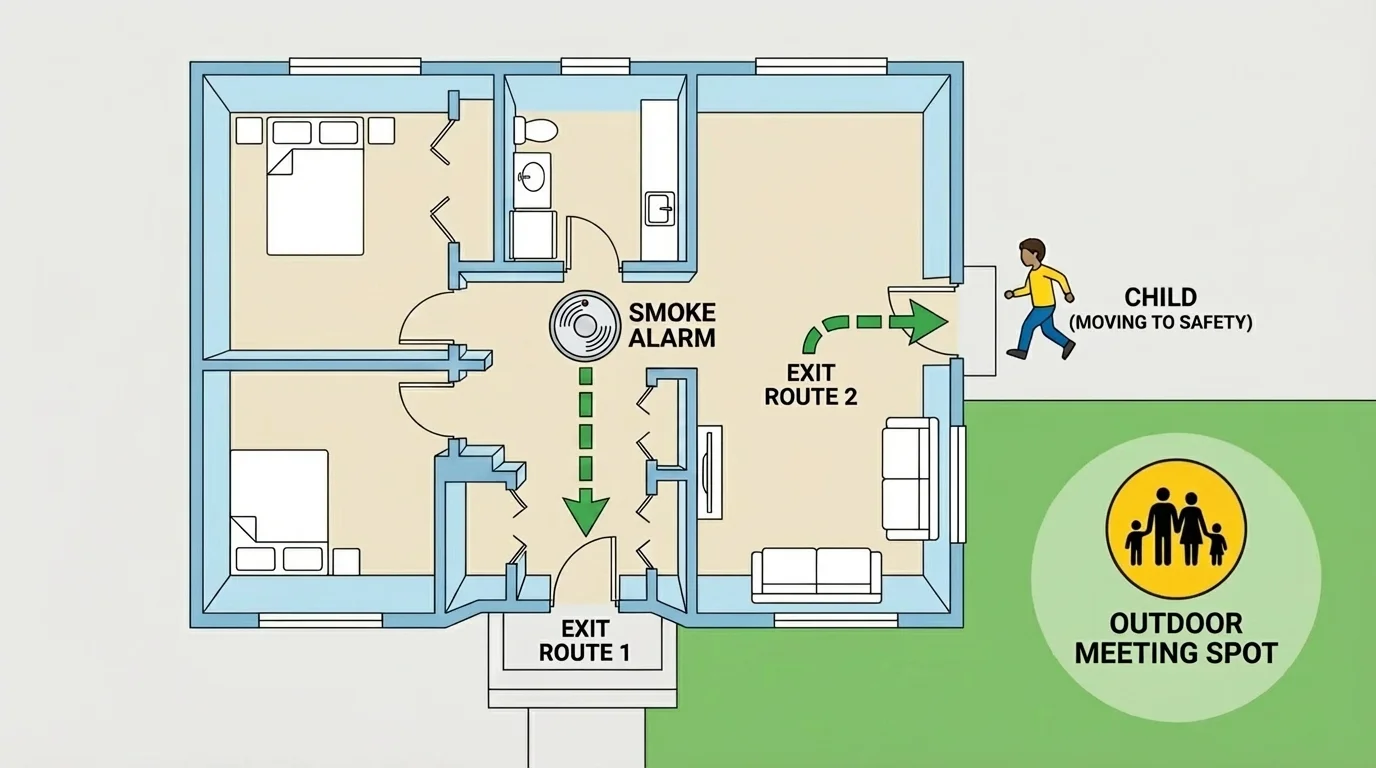
A home safety plan matters because fire and smoke spread fast, as [Figure 4] shows with exits and a meeting place. If you hear a smoke alarm, take it seriously every time.
If there is fire or smoke, get out fast if you can do so safely. Stay low if there is smoke. Once you are outside, stay outside. Go to your family meeting spot, like a tree, mailbox, or sidewalk spot. Never go back in for a phone, backpack, or pet.
If a door feels hot, do not open it. Use another exit if possible. If you cannot get out, go to a room, close the door, and call for help from a window or phone if you have one.
Other home emergencies matter too. If you smell gas, do not turn lights on or off and do not use electronics nearby. Leave and get adult help right away. In a power outage, use flashlights instead of candles when possible. During a storm warning, follow your family plan and move to the safer place your grown-ups have chosen.
The map-like layout in [Figure 4] helps you remember that every room should have a way out and every family should know where to meet outside.
Sometimes help is not right next to you. You may be home with a sibling, at a library program, at a sports practice, or chatting online. The safety rule stays the same: find the safest trusted helper you can.
If you are in the community and feel unsafe, look for an adult whose job is to help people, such as a cashier, librarian, coach, security guard, or another parent with children nearby. Say clearly, "I need help. Please stay with me while I call my grown-up."
If someone online sends scary messages, asks for private information, wants pictures, or tells you to keep a secret from your grown-up, do not answer more. Take a screenshot if a trusted adult tells you to, leave the chat, and tell your grown-up right away. Online problems can become real safety problems.
"If you feel unsure, get help. Safety first is always a smart choice."
If you are home and need help from outside your house, use only trusted numbers and trusted adults your family has already talked about. Do not open the door to strangers. Talk through a closed door if you must, and call your grown-up or emergency services if you are scared or in danger.
A safety plan is a simple set of things you already know before an emergency happens. Plans save time. They also help you feel less panicked because you already know your first move.
Your plan should include your full name, your home address, a grown-up's phone number, any important allergy or medicine information, your safe meeting place outside, and the names of trusted adults you can contact. If you take medicine or have a serious allergy, that is important information to share with helpers.
| What to know | Why it helps |
|---|---|
| Full name | Helpers know who you are. |
| Home address | Emergency workers can find you. |
| Phone numbers | You can reach a trusted adult fast. |
| Allergies or medicine needs | Adults can give safer care. |
| Meeting place | Your family can find each other outside. |
| Trusted adults | You know exactly who to ask. |
Table 1. Important information to include in a personal safety plan.
You can keep this information in a safe spot at home and practice saying it out loud. The more familiar it feels, the easier it is to remember when you are stressed.
Try This
Make a small safety card with your name, address, important phone numbers, allergies, and meeting place. Keep it in a safe place at home and practice reading it with a trusted adult.
Safety skills are not about being scared all the time. They are about being ready. When you know how to spot danger, protect yourself, help in simple ways, and find the right person, you become stronger and safer in real life.
