You do not have to be a grown-up to be an important part of your community. Every day, you make choices that affect other people. When you speak kindly in an online class, return something you borrowed, or tell an adult about something unsafe, you are already practicing citizenship. Knowing your rights helps protect you. Knowing your responsibilities helps you protect others too.
Being part of a school and a community is a little like being part of a team. Team members have things they should be able to count on, like fairness and safety. They also have jobs to do, like listening, helping, and following rules. When people understand both sides, life works better for everyone.
Rights are things every person should have or be able to expect, such as safety, respect, and fair treatment.
Responsibilities are actions you are expected to take, such as being honest, respectful, and careful with rules and shared spaces.
Civic action means doing something to help your school, neighborhood, or community in a responsible way.
A right is not the same as getting everything you want. For example, you may want to interrupt someone during a video call, but other people have the right to be heard too. Rights are about what people need in order to live, learn, and be treated with dignity.
A responsibility is what you do to help make those rights possible. If you want others to listen to you, you also need to listen to them. If you want privacy, you should respect other people's privacy. Rights and responsibilities fit together.
[Figure 1] shows that you have important rights in many parts of your life, including online school, at home, and in your community. One important right is the right to fair treatment. Fair treatment means people should not be mean, leave you out on purpose, or treat you badly because of who you are.
You also have the right to learn. In online school, that means you should have a chance to join lessons, ask questions, and get help when you need it. You have the right to be safe. Safety includes your body, your feelings, and your private information. You should not be pressured to share private details online, and you should be able to tell a trusted adult if something feels wrong.
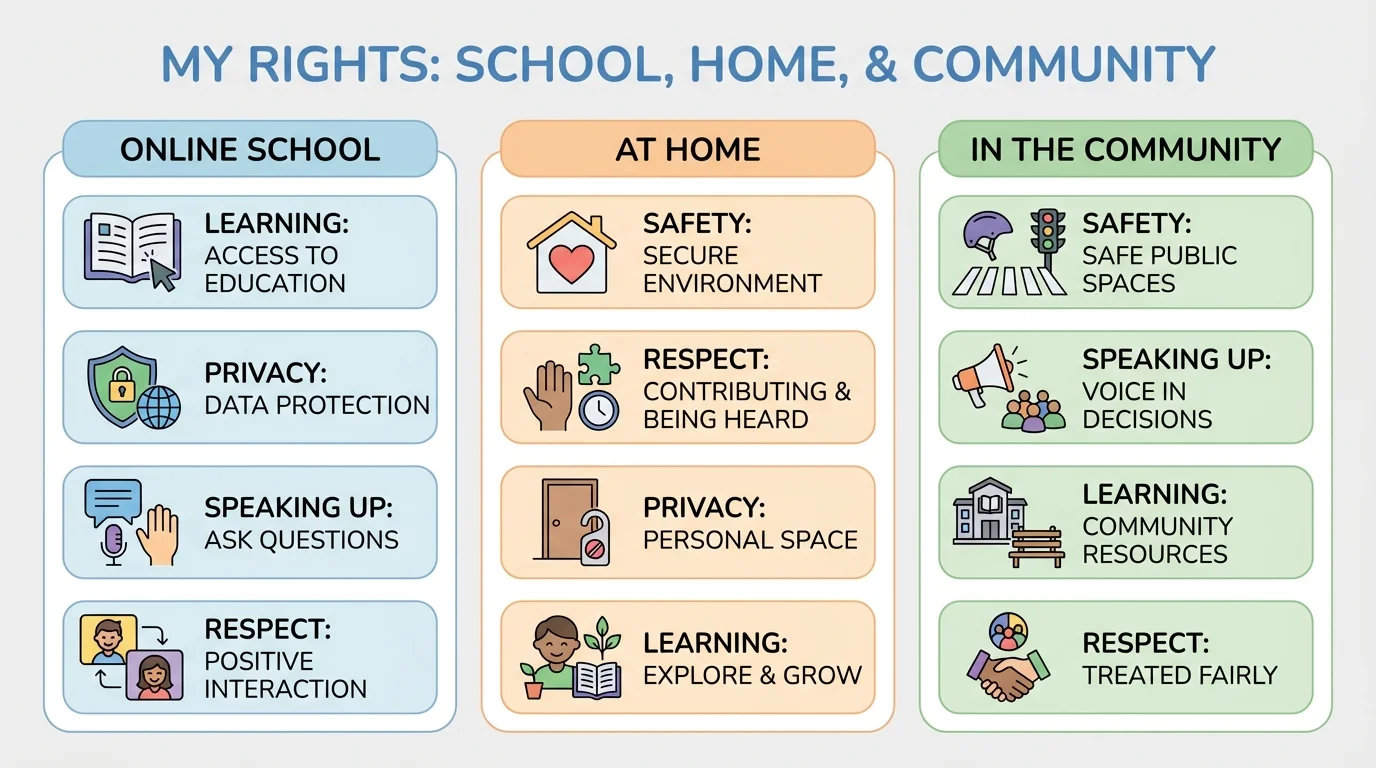
Another important right is the right to be respected. People should speak to you kindly. They should not bully you in messages, games, chats, or video calls. You also have the right to speak up. Speaking up can mean asking a question, saying that something is unfair, or telling an adult about a problem.
You have a right to privacy too. Privacy means some information belongs to you and should be protected. Your full address, passwords, and personal photos should not be shared carelessly. A trusted adult can help you decide what is safe to share and what should stay private.
Children can make a real difference in communities. Many neighborhood gardens, food drives, library projects, and clean-up events welcome young helpers when an adult is involved.
These rights matter because they help you grow, learn, and feel safe. When rights are not respected, people can feel scared, left out, or powerless. That is why communities create rules and expectations to protect everyone.
Having rights does not mean "I can do anything I want." It means you should be treated fairly, and you should treat others fairly too. If you want to be heard in an online discussion, your responsibility is to wait your turn and not type rude comments in the chat.
One responsibility you have is to be respectful. That includes using polite words, telling the truth, and thinking about how your actions affect others. Another responsibility is to follow directions from trusted adults when those directions are meant to keep people safe and help things run smoothly.
You are also responsible for taking care of shared spaces and shared tools. At home, that may mean cleaning up after a project. In a community center, it may mean putting away supplies. In online school, it can mean using class platforms correctly, keeping your microphone muted when needed, and not disrupting lessons.
Responsibilities also include helping when you can. You may not be able to fix every problem, but you can do your part. Small actions matter. Returning a library book, thanking a helper, or picking up litter from a park with an adult all show care for your community.
[Figure 2] explains how rules and laws guide people toward safety, respect, and fairness. People do not always agree, so communities use rules and laws to help everyone live together. A rule is something made by a family, group, club, or school program. A law is a rule made by government that everyone in that place must follow.
For example, a family rule might be, "Ask before downloading a new app." An online class rule might be, "Use respectful language in discussion boards." A community law might be, "Wear a seat belt in the car." These are not all the same, but they all help protect people and create order.
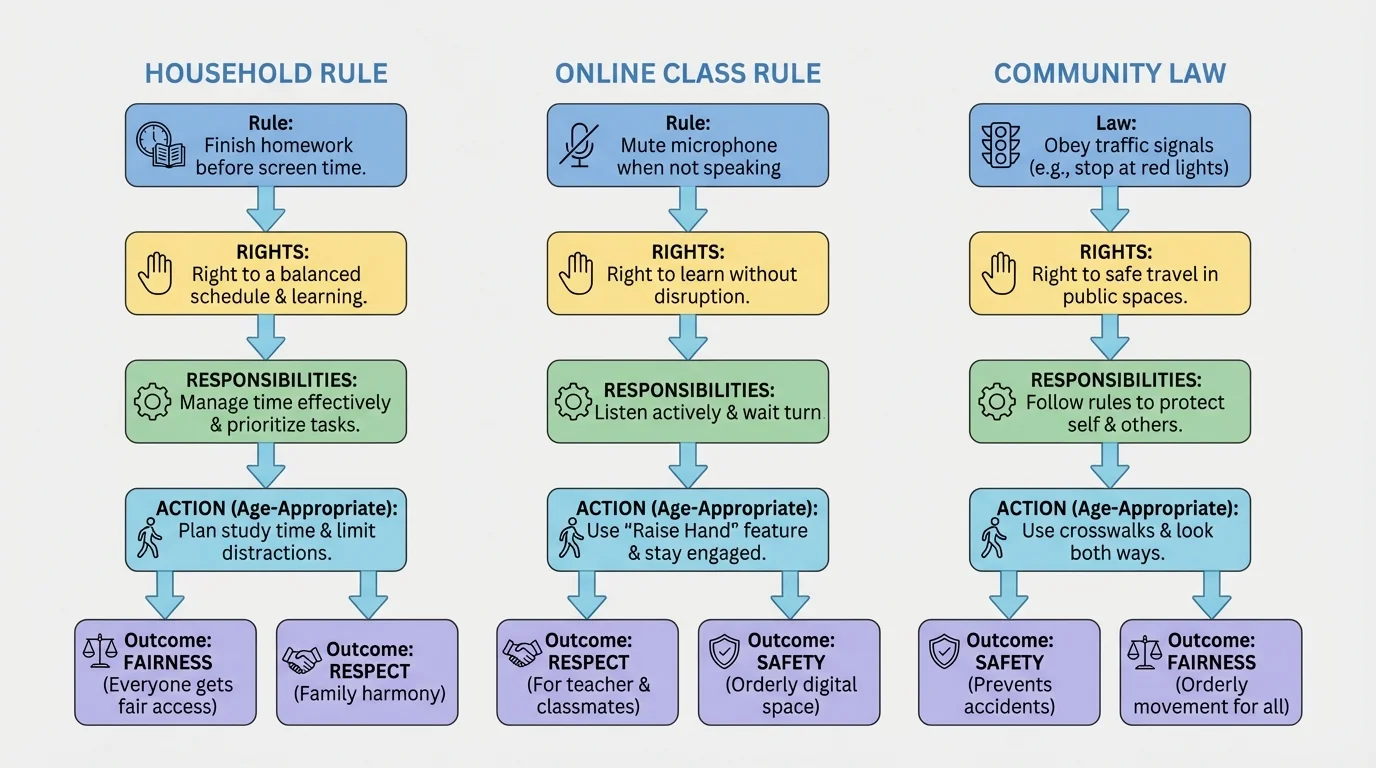
Good rules and laws are meant to be fair. They help prevent harm, solve problems, and protect rights. If there were no rules in a shared online space, people might interrupt, insult others, or post unsafe things. If there were no traffic laws, roads would be dangerous.
When someone breaks a rule or law, there can be consequences. A consequence is what happens after a choice. Sometimes the consequence is natural, like losing trust when you lie. Sometimes it is set by an adult or authority, like losing access to a website or having to repair damage you caused. Learning to connect actions and consequences helps you make wiser choices.
| Type | Example | Why It Matters |
|---|---|---|
| Home rule | Ask before sharing family photos online | Protects privacy and safety |
| Online school rule | Be respectful in chats and video calls | Helps everyone learn |
| Community rule | Clean up after using a public area | Keeps shared spaces pleasant |
| Law | Ride in a booster or seat belt when required | Protects people's lives |
Table 1. Examples of rules and laws and the reasons they matter.
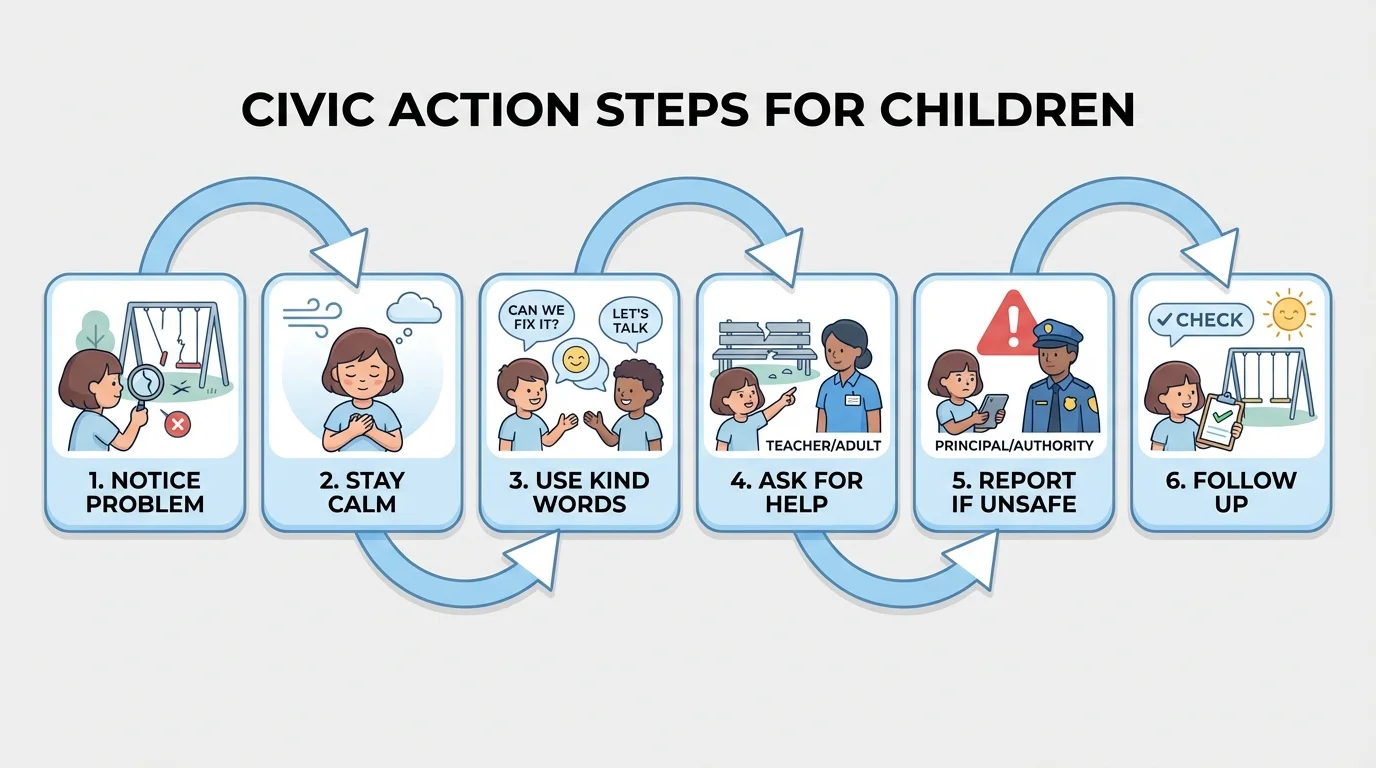
[Figure 3] lays out a smart order for handling problems safely and respectfully. Problems happen. Someone may be rude in a game chat. A neighbor may throw trash in the wrong place. A person in a group might leave others out.
First, stop and notice what is happening. Ask yourself: Is this unfair? Is it unsafe? Is someone being hurt? Next, stay calm. Taking a slow breath can help you think better. Then choose a respectful action. Sometimes that means using kind words. Sometimes it means walking away. Sometimes it means getting an adult right away.
How to respond to a problem respectfully
Step 1: Name the problem.
Say to yourself, "This is not okay," or "This rule is being broken."
Step 2: Decide if it is safe to speak.
If the problem is small and safe, you can use calm words. If it feels scary or dangerous, go to an adult right away.
Step 3: Use respectful words.
You can say, "Please stop," "That is not kind," or "I do not want to share that information."
Step 4: Report when needed.
Tell a trusted adult, parent, guardian, coach, group leader, or teacher if the problem continues or involves safety.
Step 5: Follow up.
Check that the problem was handled and ask for more help if it was not.
Speaking up is not tattling when someone is being hurt, a rule is being broken in a serious way, or safety is at risk. Reporting helps protect people. Asking for help is a strong choice, not a weak one.
You do not have to solve every problem by yourself. Good citizens know when to act on their own and when to involve a trusted adult. That is part of being responsible.
[Figure 4] gives examples of what civic action can look like. Civic action means helping your school or community in ways that are safe and right for your age. You are not expected to do an adult job. Your role is to notice needs, care about others, and take helpful action with support when needed.
You can take civic action by helping keep shared spaces clean, making welcome cards for new neighbors, joining a park clean-up with an adult, collecting books for a community drive, thanking local helpers, or sharing a respectful idea when your group asks for suggestions. You can also help by including others, standing up kindly against unfairness, and being dependable.
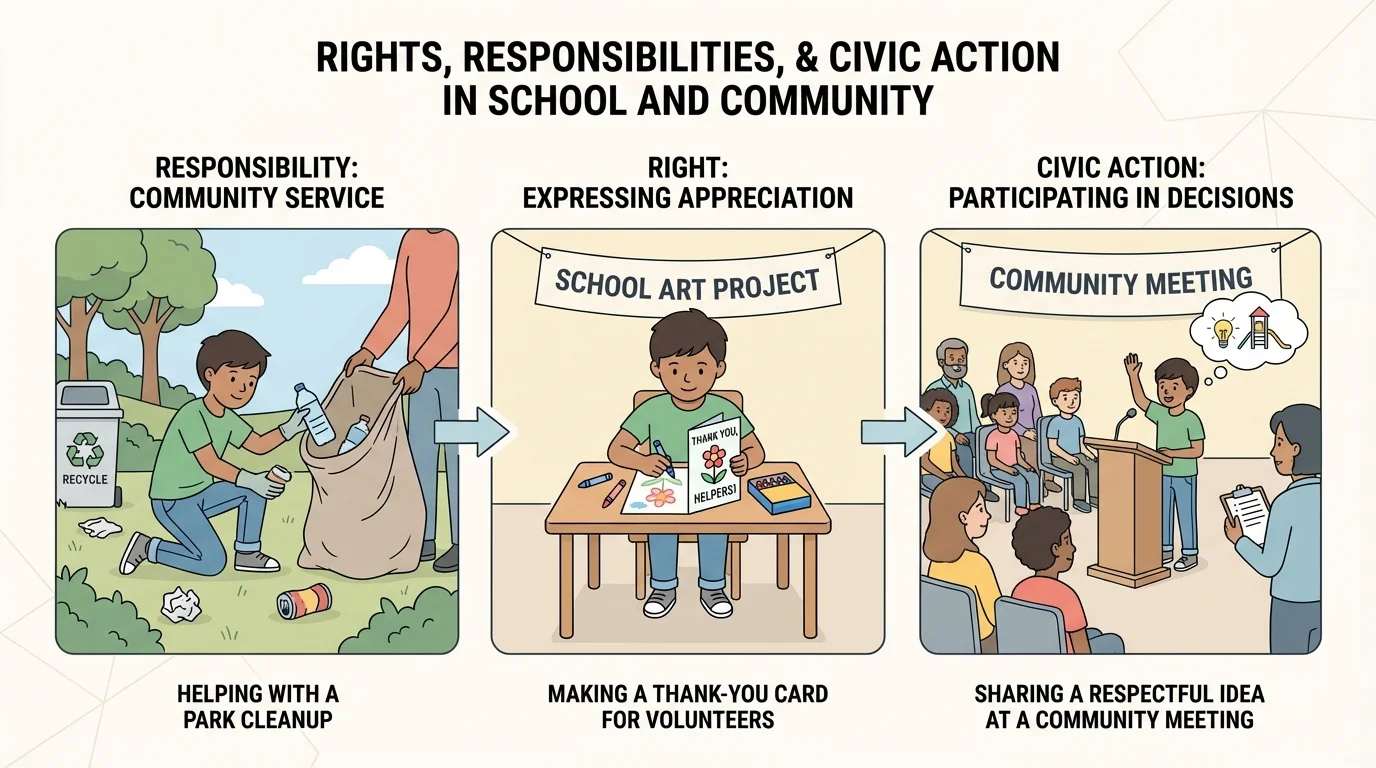
Some civic actions are quiet but powerful. For example, if you notice that younger kids at a community event feel shy, you can greet them kindly. If you see litter on a sidewalk while walking with an adult, you can help pick it up safely. If your neighborhood is collecting food for families, you can sort cans or make encouraging signs.
Other civic actions involve using your voice. You might write a polite note to ask for more books at a little free library. You might tell an adult that a playground needs repair. You might respectfully share an idea in a youth club meeting. Civic action is not about being loud. It is about being helpful, thoughtful, and respectful.
Small actions build strong communities
Communities become safer and kinder when many people do small helpful things over time. One child holding a door, reporting a hazard, welcoming someone new, or cleaning a shared space may seem like a small action, but repeated caring actions change the way a group feels and works.
When you take age-appropriate civic action, you show that problems are not "someone else's job" all the time. You learn that your choices matter. The examples in [Figure 4] remind us that helping can happen in many different ways.
Because you learn online, citizenship includes digital spaces too. Being a good online citizen means using technology in safe, respectful, and honest ways. The same values matter online as in person: respect, fairness, safety, and responsibility.
That means you should not post hurtful messages, spread rumors, or share private information about yourself or others. It also means giving credit when you use someone else's work, asking permission before posting photos, and telling an adult if someone online is being unsafe or unkind.
Privacy is especially important online. A password is private. Your home address is private. Personal photos and full names may also need protection, depending on the situation. Protecting privacy is part of protecting safety.
If someone sends a mean message, asks for private information, or makes you uncomfortable, do not try to handle it alone. Save the message if a trusted adult tells you to, block or report the account when appropriate, and tell an adult. The same problem-solving order we used earlier still works, just like the steps in [Figure 3].
You already know that words can help or hurt. Online words matter too, even when you cannot see the other person's face.
Being careful online protects not only you but also your family, classmates, and community groups. Good digital habits are part of being a responsible citizen.
Here are a few situations that show rights, responsibilities, and civic action in real life.
Example 1: Online class chat
A student keeps typing silly comments while others are trying to answer.
Step 1: Notice the right involved.
Everyone has the right to learn without disruption.
Step 2: Notice the responsibility involved.
Students should use respectful behavior in the chat.
Step 3: Choose civic action.
You can stay on task, avoid copying the behavior, and tell the teacher or another trusted adult if needed.
That response helps learning continue and supports fair treatment for everyone.
Example 2: Community park
You notice snack wrappers on the grass during a family visit.
Step 1: Think about shared responsibility.
Parks are shared spaces, so everyone should help care for them.
Step 2: Take age-appropriate action.
With an adult, safely pick up some litter or help place it in a bin.
Step 3: Keep it positive.
You do not need to shame people. Quietly helping is useful civic action.
This is one reason communities work better when many people do small helpful things.
Example 3: Unfair behavior in a club
A child in a club video meeting keeps leaving one person out on purpose.
Step 1: Name the problem.
Leaving someone out on purpose is unfair and unkind.
Step 2: Use respectful words if safe.
You might say, "Let's make sure everyone gets a turn."
Step 3: Get help if needed.
If it continues, tell the adult leading the group.
That action supports the rights of the excluded person and shows responsibility and courage.
Learning these skills now helps you later. Adults who are active, helpful citizens usually started with small habits when they were young: listening, following fair rules, helping others, and speaking up safely. You are building those habits now.
You may be only one person, but one person can improve the mood of a group, protect someone's feelings, or help solve a problem. Rights help you know what you deserve. Responsibilities help you know what to do. Civic action helps you turn caring into real steps.
"A community grows stronger when people care for both themselves and each other."
Each respectful choice you make adds to the kind of community you live in. That is true in online school, in your neighborhood, and in the places where you spend time with others.
Try This: Notice one shared space you use today, one right you want everyone there to have, and one responsibility you can practice to help protect that right.
