Have you ever noticed that some days your brain feels sharp and ready, and other days everything seems harder? You may forget directions, get grumpy faster, or have trouble sitting still. That is not just about "trying harder." Your body and brain need the right fuel, enough rest, and regular movement to do their best.
Your brain is always working. It helps you pay attention during online lessons, remember what you read, solve problems, and control your actions. But your brain is part of your body, so what happens in your body affects what happens in your mind. When you eat well, sleep enough, and move your body, you often feel more ready to learn and more able to make good choices.
Learning is not only about getting information. It is also about being able to focus, stay calm, follow directions, and keep trying when something is hard. These skills are affected by your health habits. If you skip meals, stay up too late, or sit for too long without moving, learning and behavior can both become harder.
Nutrition is the food and drink your body needs to grow, stay healthy, and have energy. Behavior means the way you act and respond. Focus means paying attention to what matters right now.
Think of your body like a device that needs charging, updates, and good care. Food is like fuel. Sleep is like recharging and organizing. Exercise is like turning the system on and helping it run smoothly. When one part is missing, the whole system can feel off.
Your body gets energy from food. Your brain needs that energy to think, remember, and solve problems. A balanced meal gives your body different kinds of nutrients so energy lasts longer. Meals and snacks with fruits, vegetables, whole grains, protein, and water can help you feel steady instead of tired and cranky.
[Figure 1] For example, if you eat breakfast before starting your online work, you may find it easier to pay attention. If you skip breakfast, you might feel hungry, distracted, or slow. Hunger can make small problems feel bigger. A person who is hungry may get annoyed more quickly or find it harder to stay patient.
Water matters too. Hydration means having enough water in your body. Even mild thirst can make it harder to focus. If your mouth feels dry, your head hurts, or you feel extra tired, you may need water.
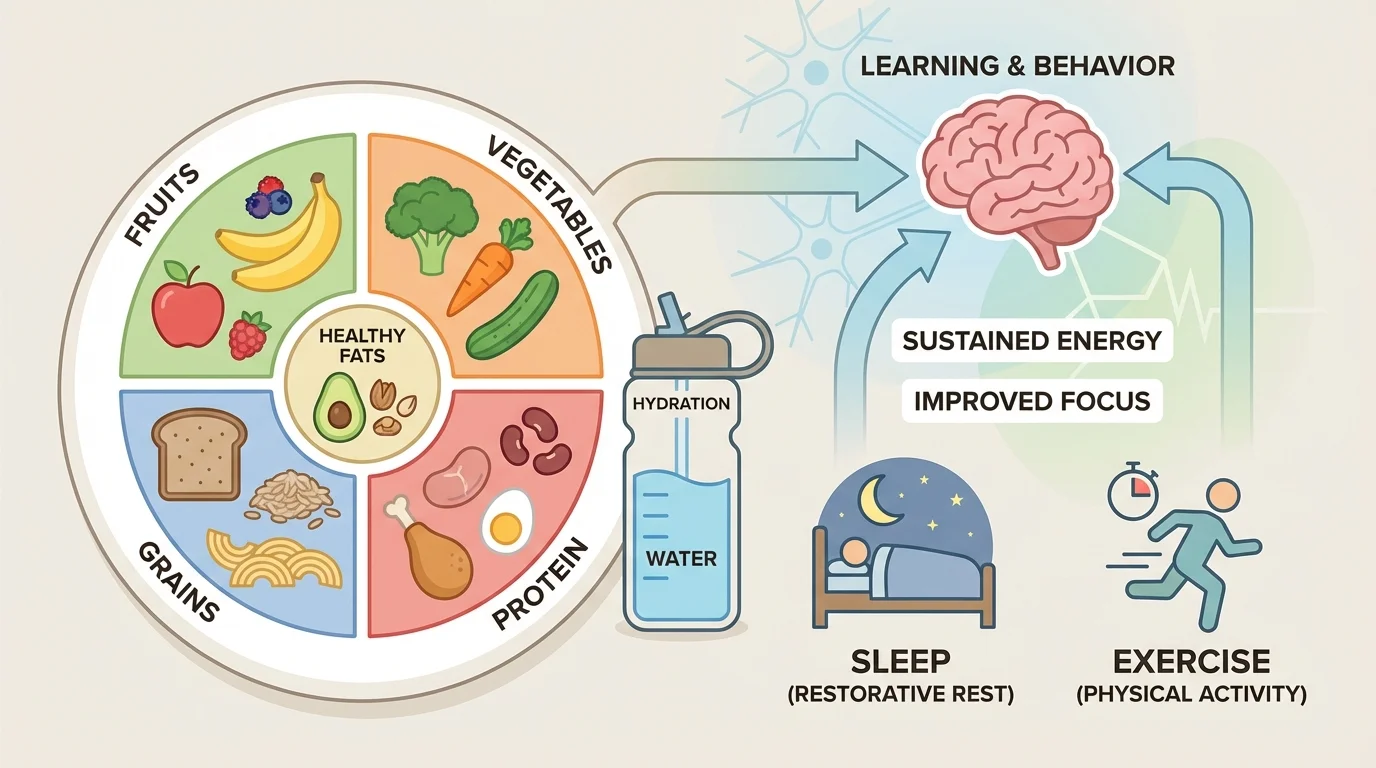
Not all foods help in the same way. Foods with a lot of sugar may give you quick energy, but that energy can drop fast. Then you may feel sleepy, shaky, or unfocused. This does not mean you can never have sweet foods. It means they should not be the main fuel for learning time.
Helpful foods before learning time can include oatmeal, eggs, yogurt, fruit, peanut butter toast, cheese, nuts if they are safe for you, vegetables, beans, rice, chicken, or a sandwich. These foods often help energy last longer. A meal does not have to be fancy. A simple breakfast and a glass of water can make a big difference.
Real-life example: Two mornings, two different results
Step 1: On one morning, Maya eats toast with peanut butter, apple slices, and water before logging in.
Step 2: On another morning, she skips breakfast and only grabs a sugary drink later.
Step 3: During the first morning, Maya feels steadier and follows directions better. During the second morning, she feels distracted, hungry, and more annoyed when work gets hard.
Her learning skills did not disappear. Her body just had different support on each day.
Sometimes families are busy, and mornings can feel rushed. If that happens, plan something simple the night before. You can set out a banana, fill a water bottle, or ask an adult to help choose an easy breakfast.
Later, when you compare healthy and unhealthy routines, [Figure 4] helps you notice how food choices can affect mood, patience, and focus across the whole day.
Your brain uses a lot of the energy your body makes, even though your brain is only one part of your body. That is one reason regular meals and water matter so much for learning.
Another smart habit is noticing how food makes you feel. One snack may help you feel ready, while another may leave you sleepy or hungry again too soon. Paying attention to your own body helps you make better choices over time.
Sleep is not wasted time. During sleep, your brain does important jobs. It helps sort and save what you learned, supports your mood, and gets you ready for the next day. A steady bedtime routine helps your body know when it is time to rest.
[Figure 2] When you get enough sleep, it is easier to remember instructions, stay calm, and control your reactions. When you do not get enough sleep, you may forget things more often, feel upset more quickly, or laugh and act silly when it is not the right time. Sometimes tired behavior can look like bad behavior, but the real problem is lack of sleep.
Routine means doing things in a regular order. A bedtime routine can include finishing active play, turning off screens, brushing teeth, putting on pajamas, reading quietly, and going to bed at about the same time each night.
Screens can make sleep harder because bright light and exciting videos can keep your brain alert. If possible, turn off tablets, phones, games, and videos some time before bed. Quiet activities help your body slow down.
If you wake up feeling very tired, that is a clue. If you yawn all morning, cannot focus, or get upset over small things, your body may need more sleep. Sleep helps with memory, which is your brain's ability to keep and use what you learn.
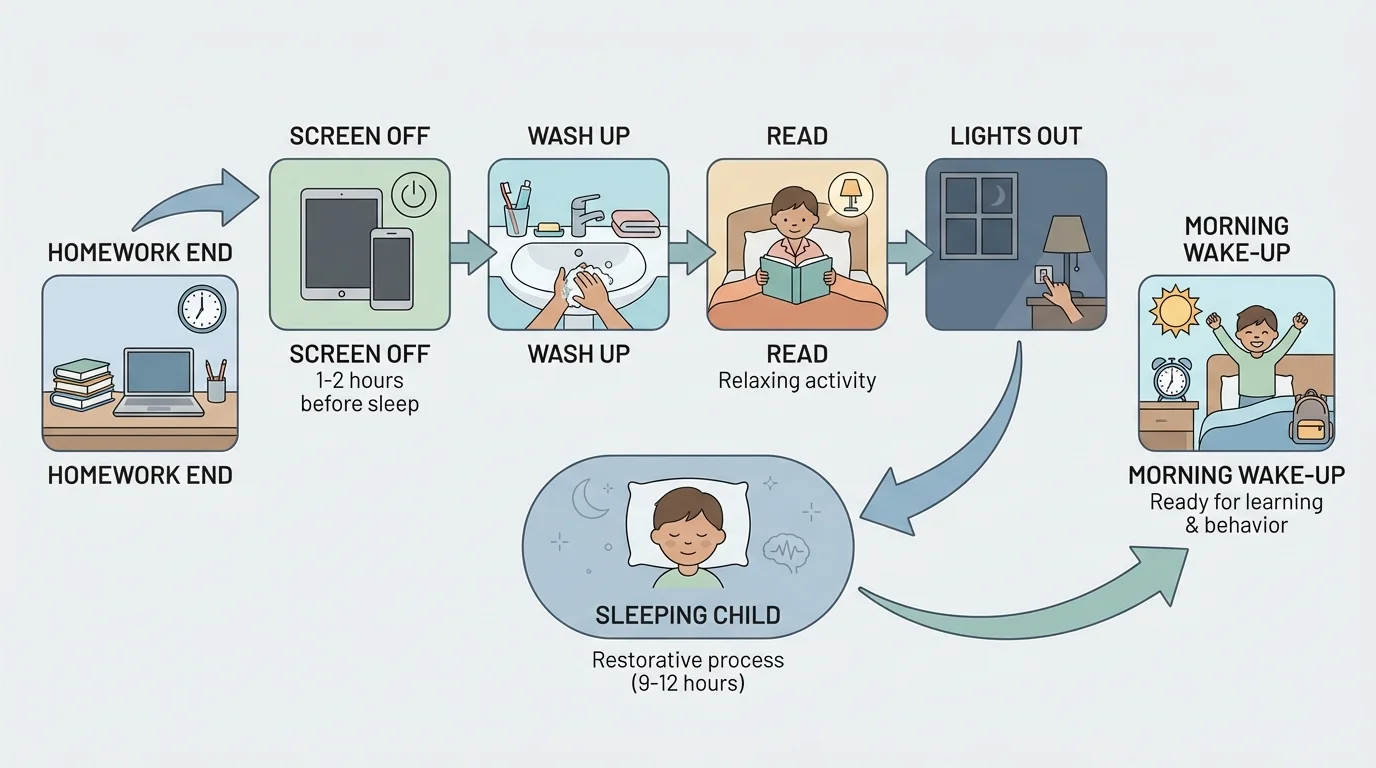
A good sleep routine does not have to be perfect. The goal is to make bedtime calmer and more regular. Going to sleep and waking up at similar times each day can help your body clock stay steady.
Why sleep helps learning
When you learn something new, your brain needs time to organize it. Sleep gives your brain that time. This is one reason why a child who studies while rested may remember more than a child who studies while exhausted.
If you remember the flow in [Figure 2], you can see that small steps before bed matter. Sleep does not begin only when your eyes close. It begins with the choices you make earlier in the evening.
Exercise is planned movement, and even simple movement helps. Running, dancing, biking, stretching, walking, jumping jacks, and playing outside all count. Exercise helps your heart, muscles, and brain. It can wake up your body and improve attention.
[Figure 3] When you move your body, you often feel more alert afterward. That can make it easier to sit down and work. Movement can also help when you feel restless or frustrated. Instead of trying to force yourself to stay still when your body feels jumpy, a short movement break may help you reset.
Long online learning times can be hard because you may sit in one place for too long. Your body is built to move. If you have been sitting for a while, stand up, stretch your arms, roll your shoulders, or walk around the room for a minute or two. Short breaks can help you come back more focused.
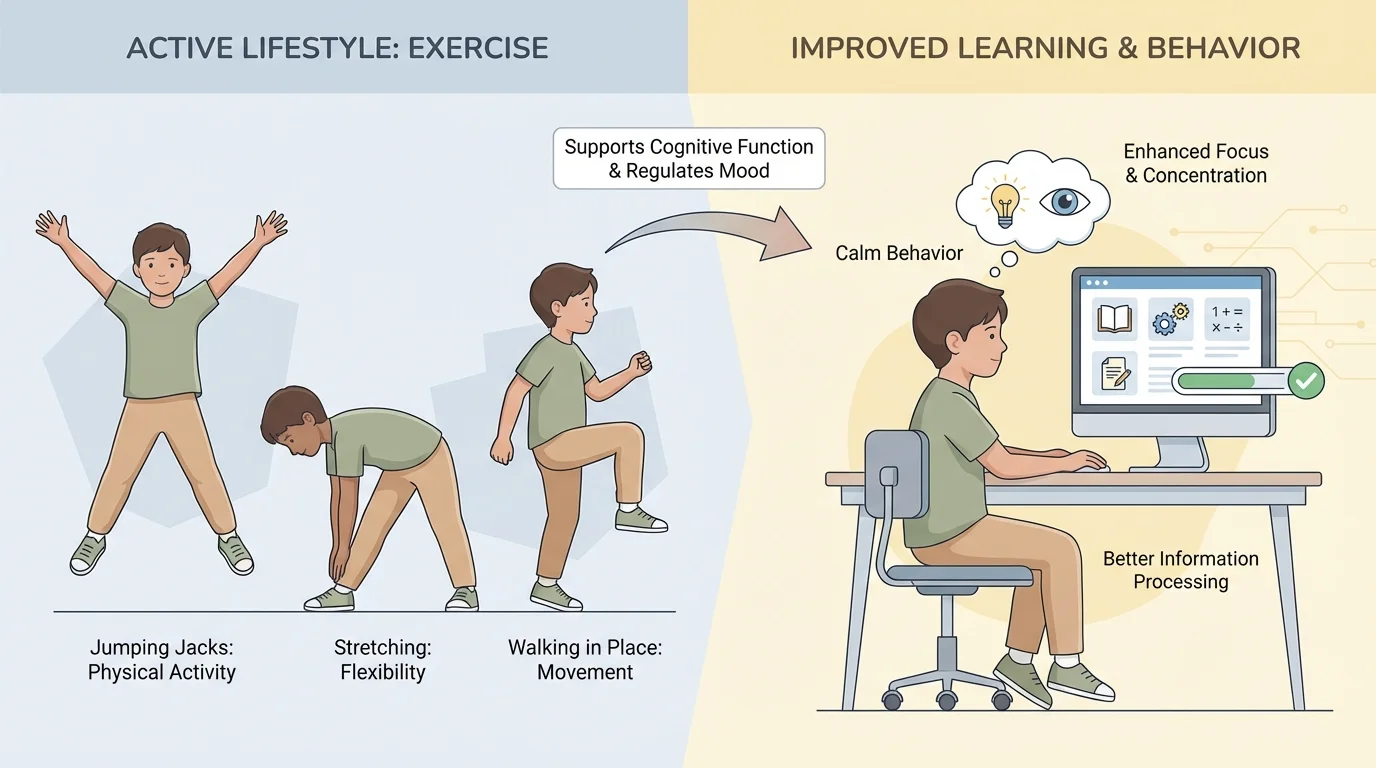
Exercise also affects behavior because it can improve mood. If you feel angry, bored, or worried, movement can help your body release some of that tension. This does not solve every problem, but it often makes problems easier to handle.
Try This: A quick movement reset
Step 1: Pause your work at a stopping point.
Step 2: Do one minute of marching in place, stretching, or jumping.
Step 3: Take a drink of water.
Step 4: Sit back down and notice whether your body feels more ready to focus.
Small actions can create a big change in how ready your brain feels.
Later in the day, regular physical activity such as playing outside, helping with active chores, or joining a sport or class in your community can support better sleep too. That means exercise helps learning in more than one way.
The scene in [Figure 3] reminds you that movement is not just for sports. It is also a tool for learning better at home.
Nutrition, sleep, and exercise work like a team. When one habit improves, the others often get easier. If you move more during the day, you may sleep better at night. If you sleep better, you may make better food choices. If you eat regular meals and drink water, you may have more energy to move and learn.
[Figure 4] Now compare two different daily patterns. One child wakes up after enough sleep, drinks water, eats breakfast, takes movement breaks, and gets some active play later. Another child goes to bed very late, skips breakfast, sits for hours, and drinks very little water. Which child is more likely to stay calm, remember directions, and keep trying through a hard assignment? The first child usually has a stronger learning setup.
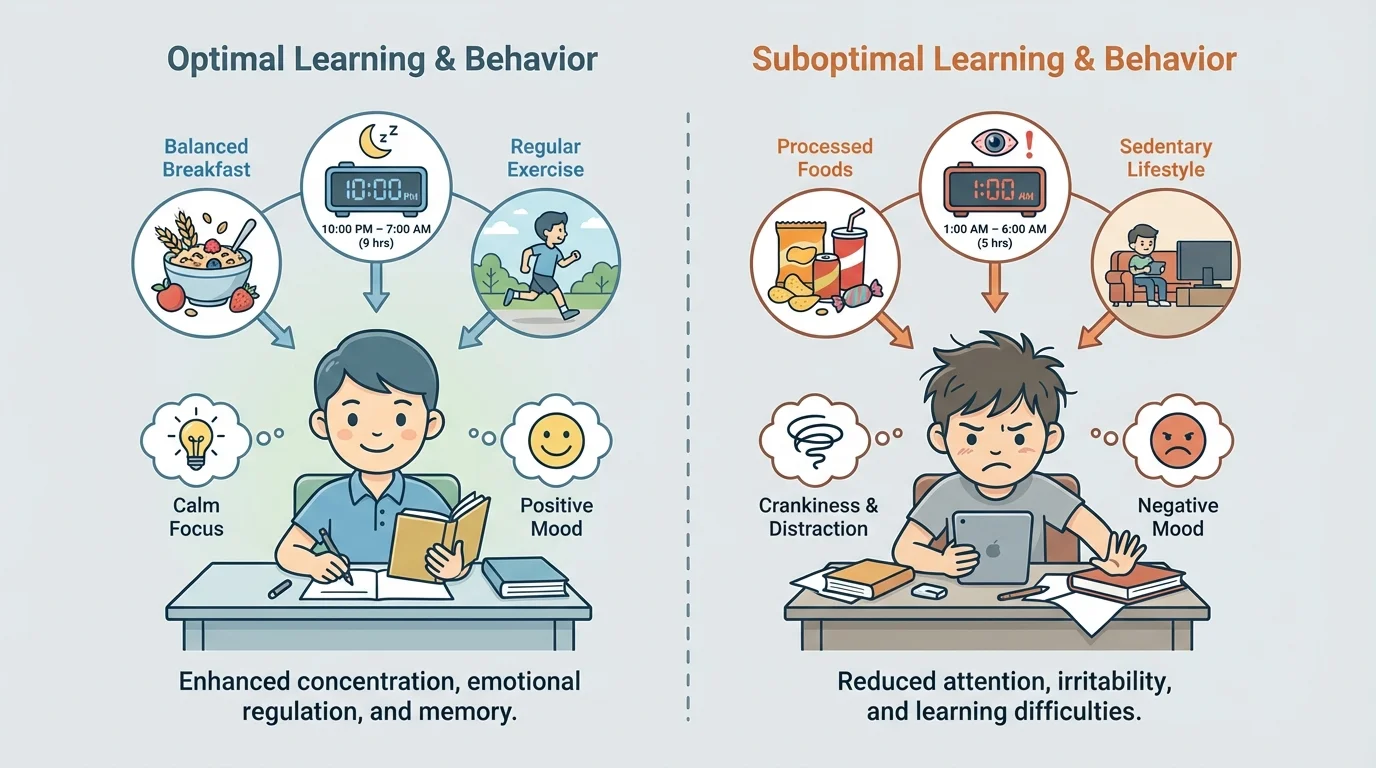
This does not mean a perfect day is required. Everyone has rough days. The important thing is to notice patterns. If you have many difficult days in a row, ask whether your body needs better fuel, better rest, or more movement.
| Habit | When it helps | When it is missing |
|---|---|---|
| Healthy food and water | Steady energy, better focus, calmer mood | Hunger, thirst, tiredness, crankiness |
| Enough sleep | Better memory, patience, and self-control | Forgetfulness, big emotions, poor focus |
| Regular exercise | More alertness, better mood, less restlessness | Jumpy body, low energy, trouble settling down |
Table 1. This table compares how healthy habits support learning and what may happen when they are missing.
When you look back at [Figure 4], you can see that behavior is often connected to body needs. A child who seems distracted or irritable may not need to be blamed first. They may need support and better routines.
You do not need a complicated plan. Small habits are powerful when you do them often. Start with one or two changes you can really keep doing.
Helpful daily habits include eating breakfast if you can, carrying a water bottle, standing up between online tasks, going outside when possible, and following a calming bedtime routine. You can also notice signals from your body. A headache, yawning, grumpy mood, or wiggly body may be your body asking for care.
Your body sends clues before problems get big. Feeling hungry, thirsty, overtired, or restless is not a failure. It is information you can use to make a smart choice.
Here is a simple checklist you can use in your head before learning time: Did I eat something? Did I drink water? Did I sleep enough? Have I moved today? If one answer is no, that may explain why learning feels harder right now.
You can also prepare your space and schedule. Keep water nearby. Ask an adult to help plan simple snacks. Put a bedtime reminder in a common place. Build movement into your day, such as stretching after one lesson or taking a short walk before starting homework.
"Take care of your body. It's the only place you have to live."
— Jim Rohn
Healthy habits are not about being perfect or earning praise. They are about giving your brain and body what they need so you can feel and do your best.
Sometimes simple changes are not enough. Tell a trusted adult if you often feel very tired, have trouble sleeping, skip meals a lot, feel dizzy, get frequent headaches, or feel upset most days. If food is hard to get at home, or if your schedule makes sleep difficult, adults can help solve problems and find support.
You should also speak up if screens, stress, or worry are keeping you awake. Health is not just about willpower. It is also about support, safety, and routines that fit your real life.
Children who get enough sleep, healthy food, and regular activity often do better with attention and mood not because they are "better kids," but because their bodies are better supported.
As you grow, learning how to care for your body is part of becoming responsible. Taking a drink of water, eating a healthy snack, going to bed on time, or doing a movement break may seem small, but those choices can help you learn more, feel better, and treat others more kindly.
