Your body is already changing, even if some changes are easy to notice and others are not. One surprising thing about growing up is that two children the same age can grow in very different ways, and both can still be completely normal. Growing up is not a race. It is a process, and your body and feelings may change little by little over time.
Growing up means your body, brain, and emotions are developing. You may get taller, stronger, or need different clothes and shoes. You may also notice new thoughts, bigger feelings, or a stronger wish for privacy. These changes are a normal part of becoming older.
Not everyone changes at the same time. One child may grow taller first. Another may notice body odor first. Another may feel more emotional before they notice many body changes. That is one reason it is important not to compare yourself too much with siblings, friends, people in activities, or kids you see online. Bodies follow their own schedules.
Growing up means the natural changes that happen as your body, brain, and emotions develop over time.
Consent means giving permission. If someone does not want a hug, tickle, photo, or touch, their answer should be respected.
Boundaries are the limits that help protect your body, space, feelings, and privacy.
As you grow, it helps to know what is normal, what is private, and when to ask trusted adults questions. A trusted adult might be a parent, guardian, grandparent, older family member, doctor, counselor, coach, or another safe adult who listens carefully and takes your concerns seriously.
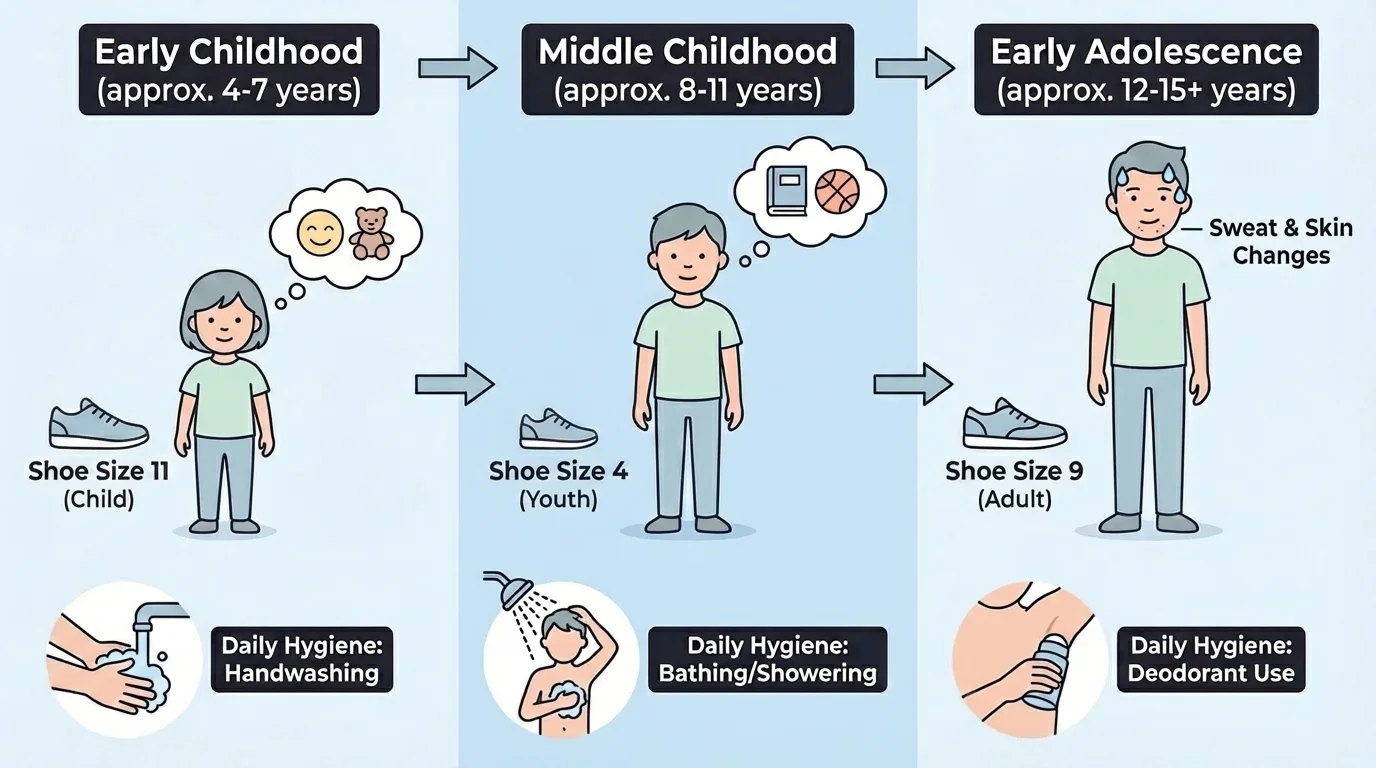
Many body changes happen step by step, as [Figure 1] shows. You might grow taller, gain weight, or notice that your hands, feet, or legs seem to change size before the rest of your body catches up. Sometimes growing can feel exciting. Sometimes it can feel awkward. Both reactions are okay.
One common change is that your body may begin to sweat more, especially when you run, play sports, spend time outside, or feel nervous. Sweat itself is normal, but it can cause body odor. That means your body may smell stronger than it used to. Washing regularly, changing into clean clothes, and using deodorant when a trusted adult says you are ready can help.
Your skin may change too. Some kids begin to get small pimples or oily skin. This is sometimes called acne. It does not mean you are dirty. It means your skin is changing. Washing your face gently and talking with a trusted adult if your skin feels painful or upsetting can help.
You may also notice more hair growing in new places, such as under your arms, on your legs, or around private body areas. Hair growth is a normal body change. Some people also notice that their voice starts to sound a little different over time.
Because of these changes, good hygiene becomes even more important. Hygiene means taking care of your body so you stay clean and healthy. That can include bathing or showering, washing your face, brushing your teeth, wearing clean clothes, and using clean underwear every day. Later, when you think about your own care routine, the hygiene habits in [Figure 1] still matter because small daily actions can help you feel comfortable and confident.
Why hygiene matters more as you grow
As your body changes, you may sweat more, produce more oil on your skin, and need more privacy for personal care. Good hygiene helps prevent odor, supports healthy skin, and helps you feel ready for daily life, whether you are at home, at practice, on a video call, or spending time with family and friends.
If you forget hygiene, the real-world result can be discomfort, stronger body odor, dirty clothes, or feeling less confident around others. If you build a simple routine, you are more likely to feel fresh, calm, and ready for your day.
Some body changes happen more often in people with certain body parts. Learning about them helps you understand your own body and respect other people's privacy too.
People with breasts, vulvas, and uteruses may notice breast growth beginning over time. They may also eventually start menstruation, also called a period. A period is when blood and tissue leave the uterus through the vagina. It is a normal body process. It can feel surprising at first, so it helps to talk with a trusted adult ahead of time about pads, period underwear, and what to do if a period starts unexpectedly.
People with penises and testicles may notice growth in those body parts, more hair growth, and sometimes erections. An erection is when the penis becomes firmer. This can happen for many reasons and sometimes for no clear reason at all. It can feel embarrassing, but it is a normal body change. Privacy and calm are usually the best response.
Some people may notice changes that seem earlier or later than others. If a change confuses you, hurts, or worries you, ask a trusted adult or doctor. Questions about your body are important questions.
It is also important to remember that private body parts are not for other people to look at, touch, photograph, or joke about, except in specific health or caregiving situations with a safe adult when needed. Even then, you deserve explanation, respect, and privacy.
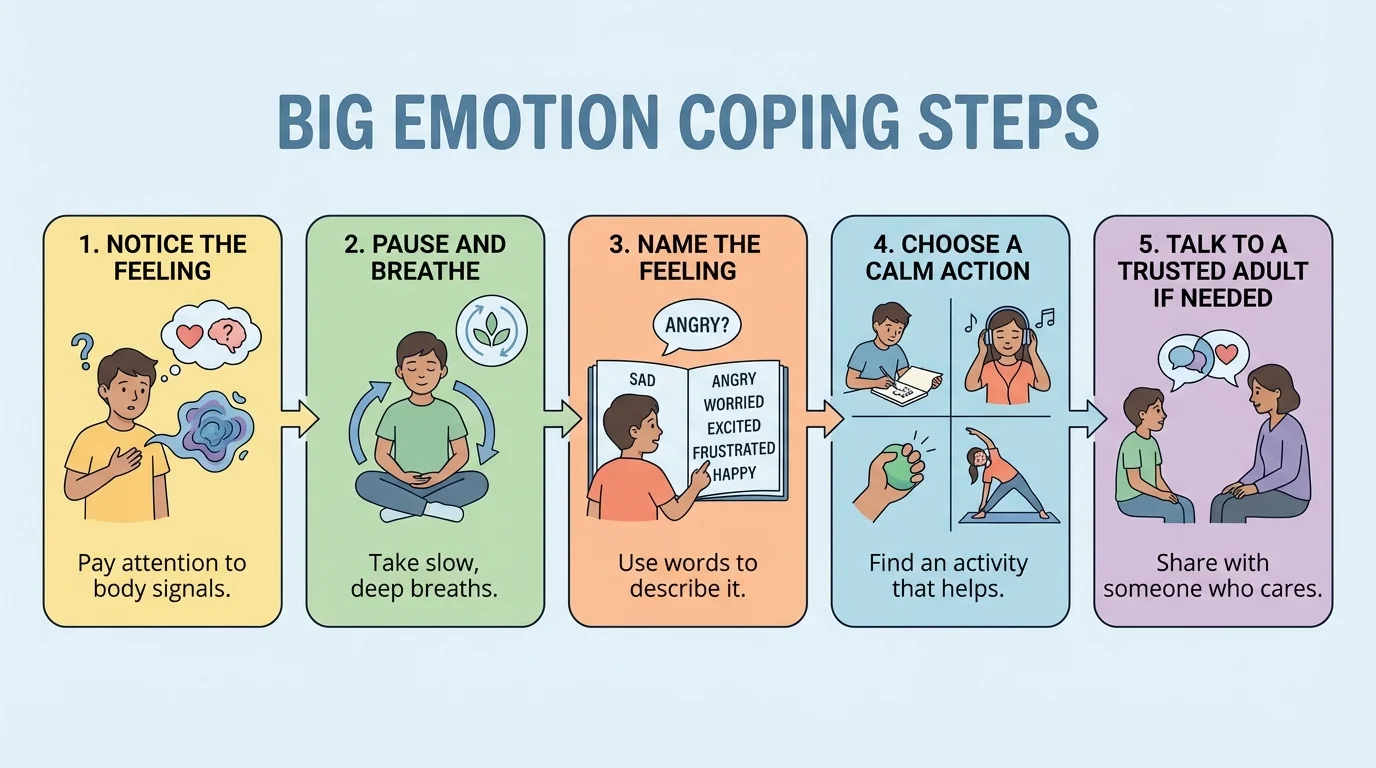
Growing up is not only about your body. Your feelings can change too, and [Figure 2] shows a helpful way to slow down and handle big emotions. You might feel happy one moment and irritated the next. You might feel more sensitive, more private, or more aware of what other people think. These changes can happen because your brain is developing and because life gets more complicated as you grow.
You may start wanting more independence. That means you want to do more things on your own, make more choices, or have more privacy. Wanting independence is normal. So is still needing support. Growing up does not mean you have to figure everything out by yourself.
Some kids begin to feel shy about their bodies or worried about how they look. That is called being self-conscious. You might compare yourself to people online, athletes, actors, or even siblings. But online photos and videos are often edited, filtered, or chosen very carefully. Real people do not look perfect all the time.
You might also have a crush on someone or admire someone in a new way. A crush is a strong liking for someone. Having a crush is normal. What matters is how you act. Healthy behavior means being respectful, not bothering someone, not demanding attention, and accepting their feelings.
Handling a big feeling during the day
You are getting ready for an online club meeting and suddenly feel upset because your face has a pimple and your hair will not cooperate.
Step 1: Notice what you are feeling.
You might say to yourself, "I feel embarrassed and frustrated." Naming the feeling can make it easier to handle.
Step 2: Pause before reacting.
Take a few slow breaths. Get water. Step away from the screen for a minute if needed.
Step 3: Choose a helpful action.
Wash your face gently, fix what you can, and remind yourself that one pimple does not determine your worth.
Step 4: Get support if the feeling stays big.
Tell a trusted adult, "I'm feeling really self-conscious today and I need some help calming down."
This is a much healthier choice than insulting yourself, hiding for hours, or being rude to others.
If your moods feel strong, that does not mean something is wrong with you. It means you need skills for handling them. The steps in [Figure 2] work well because they help you pause, name the feeling, and choose a smart next step instead of reacting without thinking.
Your brain keeps growing and changing for many years. That is one reason your feelings, choices, and reactions can change as you get older too.
Privacy can become more important during this time. You may want to change clothes in private, keep a journal private, or have more personal space. Those are healthy needs. At the same time, privacy does not mean keeping unsafe secrets. If someone tells you to hide touching, photos, messages, or anything that makes you uncomfortable, tell a trusted adult.
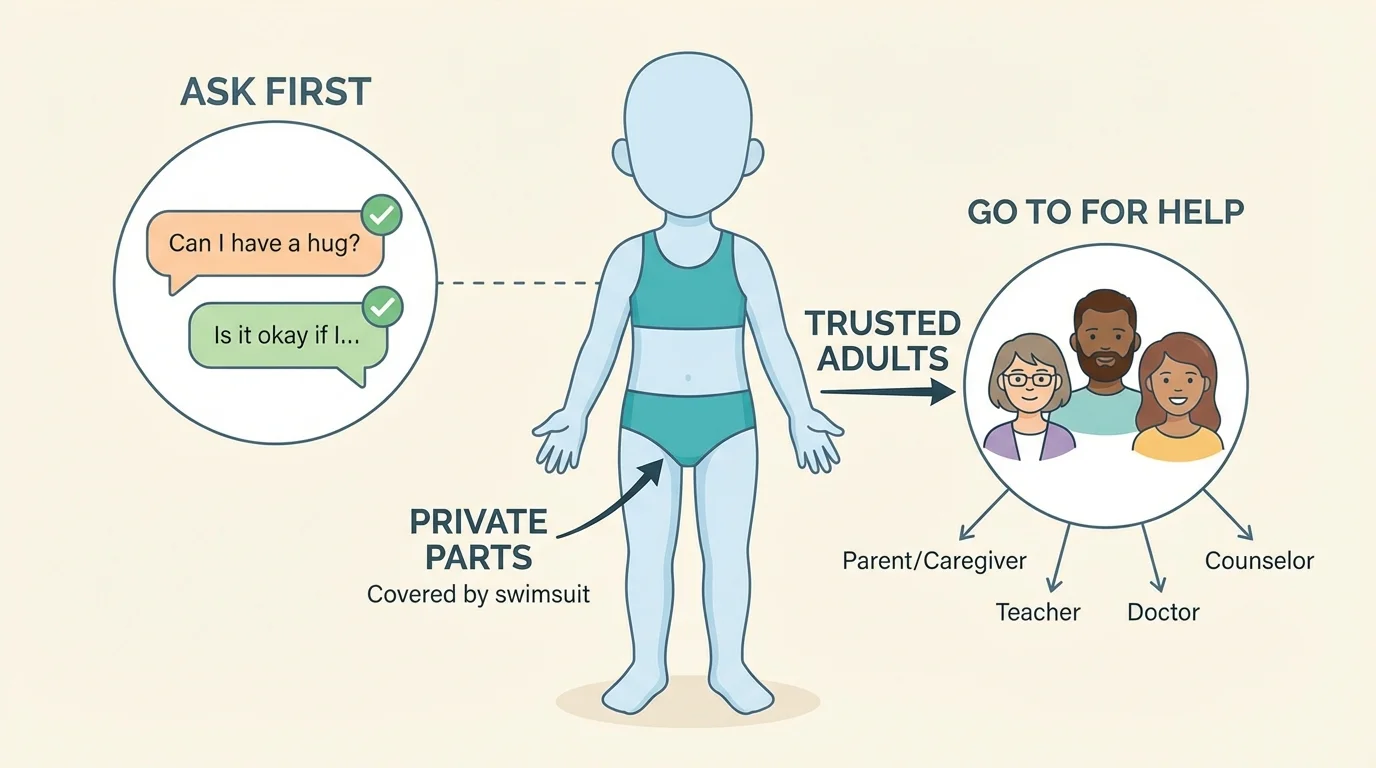
Your body belongs to you, and your feelings matter too. As [Figure 3] illustrates, boundaries help protect your body, your space, and your emotions. You get to decide who touches you in everyday ways like hugs, hand-holding, or tickling, unless there is a health or safety emergency and a caregiver must help keep you safe.
Private parts are the parts of the body covered by a swimsuit. These areas are private. No one should touch, ask to see, or ask for pictures of those body parts except for health, hygiene, or safety reasons with a safe adult involved. If anyone breaks that rule, tries to make it a secret, or makes you feel confused or unsafe, tell a trusted adult right away.
Consent matters in smaller situations too. Before hugging someone, sitting very close, posting their picture, or sharing personal information about them online, it is respectful to ask. If the answer is no, stop. If you say no, other people should stop too.
Sometimes kids worry about being "rude" if they do not want affection. But you can be respectful and still protect your boundary. You can say, "No thank you," "I don't want a hug," or "Please give me space." If someone keeps pushing, move away and tell a trusted adult.
Online boundaries matter as much as in-person boundaries. Never send pictures of your private body parts. Never ask anyone else for those pictures. If someone online asks for a secret photo, asks body questions that feel wrong, or pressures you to chat privately, stop responding and tell a trusted adult right away. The safety rules in [Figure 3] apply online too: your body is private, and secrets about unsafe touch or images should always be told.
"Your body belongs to you."
— A key rule for safety and respect
Healthy relationships are built on respect. Respect means listening when someone says yes, no, stop, or not now. It also means not teasing people about body changes, periods, erections, sweat, voice changes, or emotions. Jokes about private body changes can hurt people deeply, even if someone says they were "just kidding."
Knowing about changes is helpful, but using that knowledge in daily life matters even more. You can build habits that help you feel prepared instead of surprised all the time.
Take care of your body. Make a simple routine: shower or bathe regularly, wash your face, brush your teeth, wear clean clothes, and tell a trusted adult if you need deodorant, skin care help, or period supplies. Keep extra underwear or hygiene items in a private spot at home so you know where they are.
Take care of your feelings. If you notice yourself getting upset quickly, pause. Breathe slowly. Move your body. Write your thoughts down. Listen to calming music. Talk to someone safe. Strong emotions become easier to handle when you have a plan.
Use clear words. If you need privacy, say so. If you do not want touch, say so. If you are confused about a body change, ask. Clear words can protect you and help other people understand what you need.
Simple scripts you can use
Sometimes the hardest part is knowing what to say. Here are some clear, respectful examples.
Step 1: If you need body-care help
"I think my body is changing, and I need help getting deodorant or other hygiene supplies."
Step 2: If you want more privacy
"I want privacy while changing clothes, please."
Step 3: If you do not want touch
"No thanks. I don't want a hug right now."
Step 4: If something feels unsafe
"I need to tell you something important. Someone did something that made me uncomfortable."
Choose trustworthy information. If you are curious about body changes, ask a trusted adult, a doctor, or use kid-safe health resources chosen by your family. Random videos, comments, or social media posts can be confusing or wrong.
Be kind to others. Everyone is growing too. If someone else gets acne, starts a period, seems moody, or wants more privacy, do not tease them. Kindness makes growing up easier for everybody.
Some changes are normal but still deserve support. Ask for help if you have pain, strong worry, bullying, unsafe touch, pressure to keep secrets, or emotions that feel too big to manage alone. Asking for help is a smart action, not a weak one.
Tell a trusted adult right away if someone touches your private parts, asks to see them, asks for pictures, sends sexual messages or images, or tells you to keep body-related secrets. If the first adult does not listen, tell another adult. Keep telling until someone helps.
Also ask for help if you feel sad, angry, scared, or anxious for a long time, or if your feelings make it hard to sleep, eat, do your daily tasks, or enjoy normal activities. Mental and emotional health are just as important as physical health.
You never have to solve a body-safety problem by yourself. A trusted adult's job is to help protect you, answer questions, and take action when something is wrong.
Growing up brings changes, but those changes do not take away your rights. You still deserve respect, privacy, safety, honest answers, and support. The more you understand your body and emotions, the better prepared you are to care for yourself and build healthy relationships with others.
