What would happen if trash was never picked up, roads were never fixed, or no one answered an emergency call? A community might look normal on the outside, but every day, many people work together to keep life safe, clean, organized, and fair. Even when you are learning from home, these helpers and services still affect your life every single day.
A community is a group of people living and working in the same area. Some people in a community have special jobs, called community roles, that help others. Some community support comes from services, which are systems or actions that meet people's needs. Roles are often done by people, while services are often organized programs that many workers help run.
Community role means a job or responsibility a person has to help others in a town, city, or neighborhood.
Service means help provided to people in a community, such as trash collection, libraries, or emergency response.
Safety means being protected from danger, harm, or injury.
When you compare community roles and services, you begin to notice something important: they do not all help in the same way. Some respond fast during emergencies. Some prevent problems before they happen. Some make daily life easier and healthier. All of them matter.
No single person can do every job in a community. A firefighter cannot repair every power line. A librarian does not drive an ambulance. A sanitation worker does not answer emergency phone calls. Different helpers have different training, tools, and responsibilities.
This teamwork is one reason communities work well. One group may protect people during danger. Another may make sure homes have clean water. Another may create places to learn, read, and gather. If even one important service stops, daily life becomes harder.
Think about your own week. You may drink water from a sink, walk on a sidewalk, visit a park, borrow a book digitally or in person from a library, or see a road repair truck in your area. These things may feel ordinary, but they depend on people doing their jobs well.
Many community services are easiest to notice when something goes wrong. People often think about electricity workers during a power outage or road crews after a storm damages streets.
That is why it helps to compare helpers by asking simple questions: What problem do they solve? When do people need them? How do they make life safer or easier?
Some community jobs focus mainly on safety, as [Figure 1] illustrates by showing that different problems need different trained helpers. These roles are especially important when someone is in danger, hurt, lost, or needs quick help.
Emergency workers handle urgent situations. Police officers help enforce laws, respond to dangerous situations, and protect people and property. Firefighters put out fires, rescue people, and may help during floods, storms, or car crashes. Paramedics and emergency medical technicians give fast medical care and help people get to a hospital safely.
Another important helper is the dispatcher. A dispatcher answers emergency calls and sends the right team to the right place. This job may seem less visible, but it is one of the most important safety roles because dispatchers help connect people in trouble with trained responders quickly.
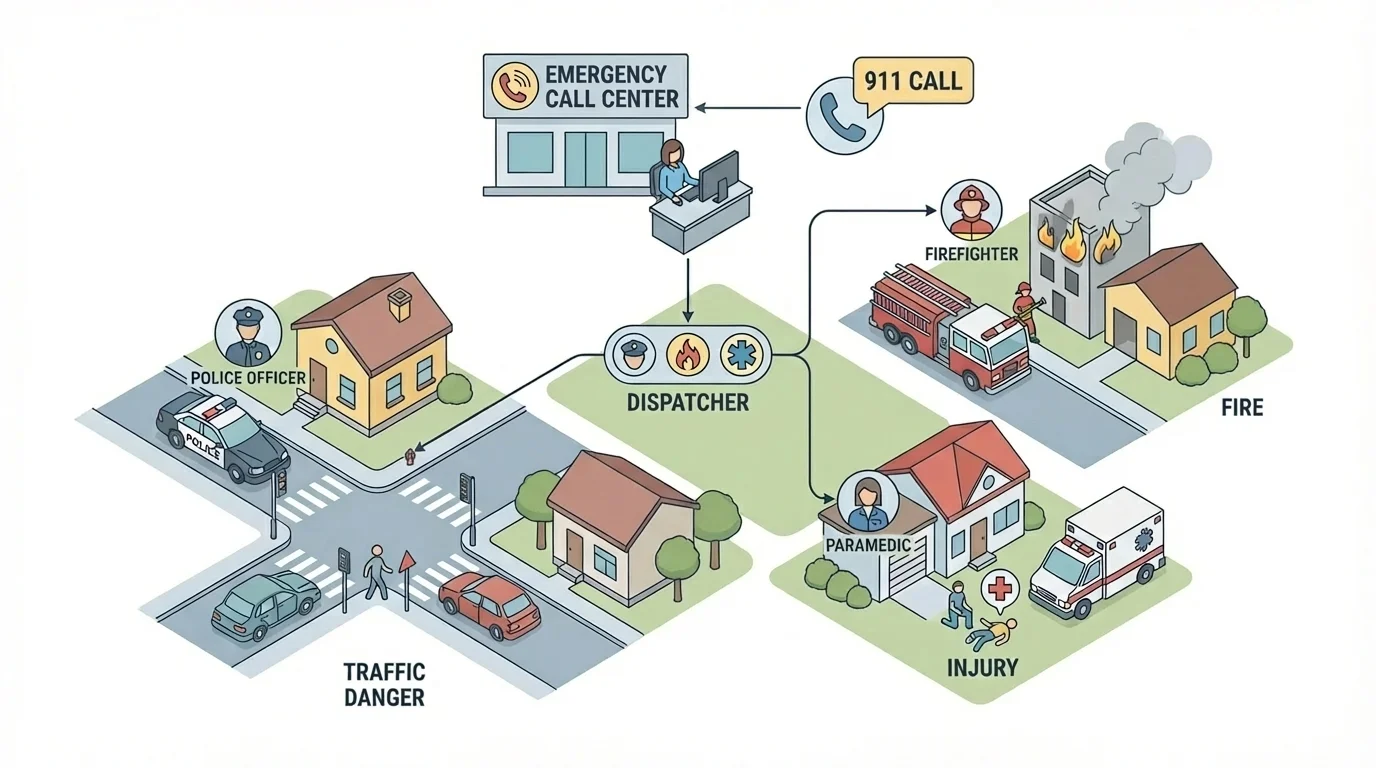
Other safety helpers may include crossing guards near busy streets, animal control workers who respond to dangerous stray animals, and public health workers who help communities stay safe from disease. Each role protects people in a different way.
These roles can be compared by purpose. Police officers often deal with crime, unsafe behavior, or protection. Firefighters often respond to fire, smoke, and rescue situations. Paramedics focus on injury or sudden illness. Dispatchers organize the first response. As you saw in [Figure 1], the jobs connect, but they are not the same.
| Community Role | Main Job | Example of When Needed | How It Supports Safety |
|---|---|---|---|
| Police officer | Protect people and enforce laws | A dangerous situation or theft | Helps stop harm and keep order |
| Firefighter | Put out fires and rescue people | A kitchen fire or storm rescue | Protects lives and property |
| Paramedic | Give urgent medical care | Someone faints or is badly hurt | Provides fast care in emergencies |
| Dispatcher | Send help where it is needed | A person calls for emergency help | Connects callers to the right responders |
Table 1. A comparison of key community safety roles and how each one helps in different situations.
When these workers do their jobs well, people get help faster and problems are less likely to grow. When people do not know which helper is needed, they may lose valuable time. That is why learning the differences matters.
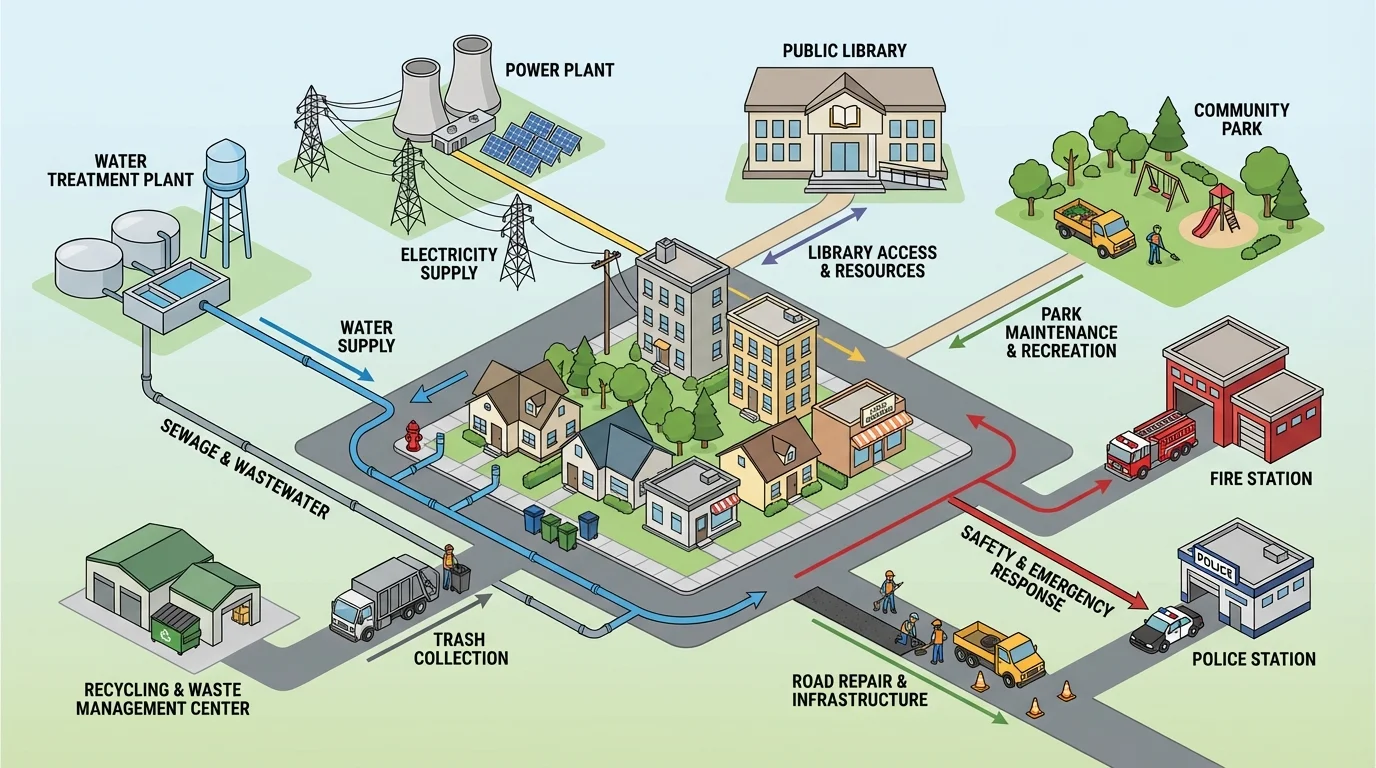
Not every community helper rushes to emergencies. Many important services happen quietly in the background, and [Figure 2] shows how homes depend on connected services like water, roads, trash pickup, parks, and libraries. These services make ordinary life possible.
Sanitation workers collect trash and recycling. This keeps neighborhoods cleaner and healthier. If garbage stayed outside too long, it could smell bad, attract pests, and spread germs.
Water workers and utility workers help homes receive clean water and electricity. You use these services when you drink water, wash your hands, turn on lights, charge a device, or keep food cold in a refrigerator.
Road crews repair streets, signs, and sidewalks. Safe roads help people travel, emergency vehicles move quickly, and deliveries reach homes. Parks staff care for playgrounds, fields, and green spaces so families have safe places to exercise and relax.
Librarians support learning by helping people find books, digital resources, and community information. Libraries are not only about reading. They also give people access to knowledge, internet tools in many places, and community programs.
Some communities also have public transportation, such as buses or trains, that help people get to work, appointments, stores, and events. Other areas may depend more on roads and family vehicles. Different communities use different systems, but the goal is the same: helping people move through daily life.
These services support safety too, even when safety is not their only purpose. Clean water protects health. Road repair prevents accidents. Trash collection reduces health risks. Park care helps prevent injuries from broken equipment. As shown earlier in [Figure 2], daily life depends on many systems working together.
Safety support and daily-life support often overlap. Some community helpers protect you during urgent danger, while others prevent problems before they begin. A firefighter may respond after a fire starts, but an inspector or utility worker may help prevent hazards. A sanitation worker may not look like an emergency responder, but clean neighborhoods help protect health every day.
When these services work well, life feels smooth and normal. When they do not, families may face stress, delays, health risks, or unsafe conditions. That is why communities need both emergency roles and everyday services.
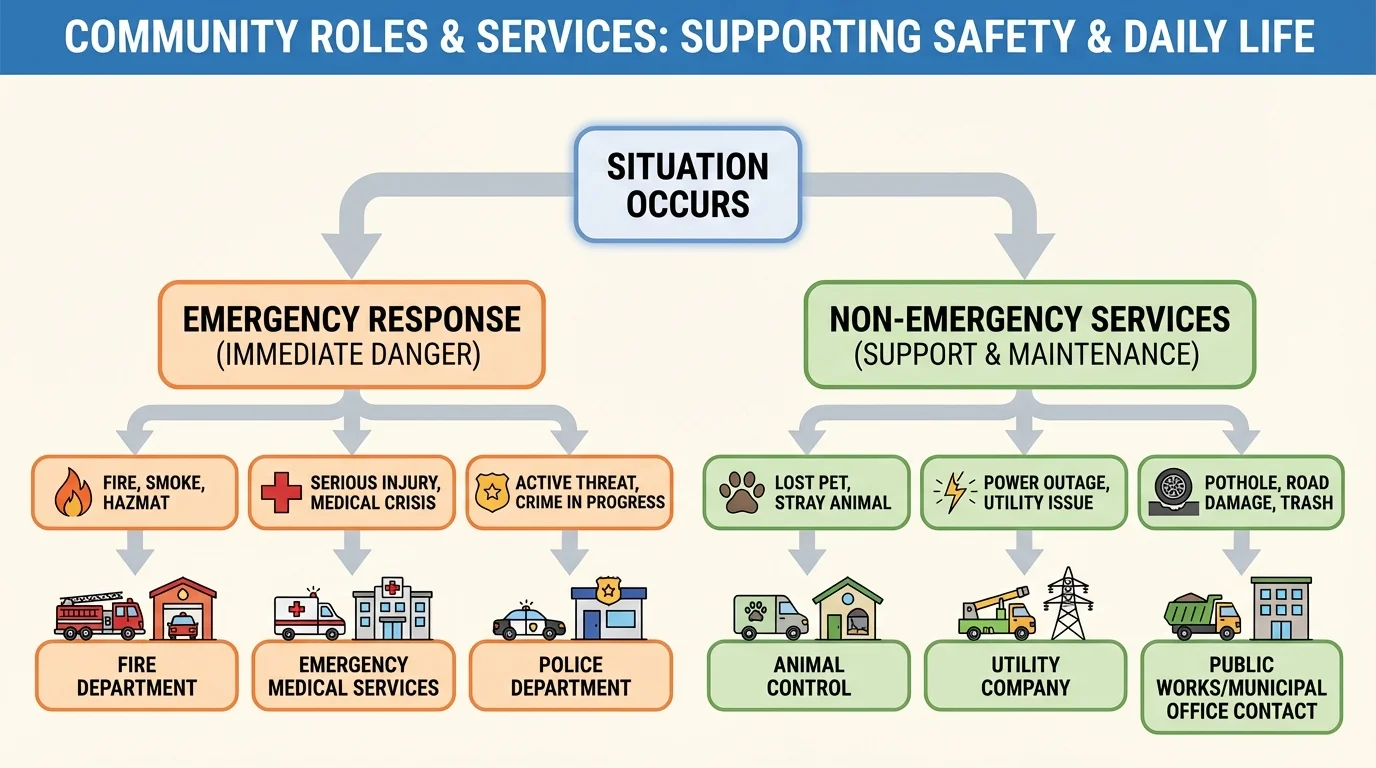
[Figure 3] shows a simple decision path that can help you think clearly in a stressful moment. Sometimes the hardest part is not knowing who helps; it is knowing which helper to contact.
First, ask: Is someone in immediate danger? If there is a fire, serious injury, crime in progress, or another urgent threat, tell a trusted adult right away and call emergency services if needed. If the situation is not an emergency, the next step is to think about the type of problem.
A pothole in the street is not the same as a house fire. A lost pet is not the same as someone who cannot breathe. A power outage is not the same as suspicious behavior nearby. Matching the problem to the right helper saves time and gets better results.
How to choose who to contact
Step 1: Stay calm and notice the problem.
Ask yourself what is happening: danger, damage, sickness, lost property, or an everyday service issue.
Step 2: Decide if it is urgent.
If someone may be badly hurt or unsafe, get a trusted adult and contact emergency help right away.
Step 3: Match the problem to the helper.
Fire or smoke: firefighters. Medical emergency: paramedics. Crime or danger: police. Broken streetlight, pothole, missed trash pickup, or water problem: local service department or city office.
Step 4: Share clear information.
Give your location, explain what happened, and answer questions calmly.
Step 5: Follow directions and stay safe.
Listen carefully and wait with a trusted adult if possible.
You do not need to solve every problem yourself. Your job is to notice, stay calm, tell a trusted adult when needed, and help connect the problem to the right person or service.
Later, when you compare a fire emergency with a missed recycling pickup, the difference becomes obvious. [Figure 3] helps organize that thinking: urgent danger needs emergency response, while community problems often need a service office or local department.
Comparing community roles and services means looking at both similarities and differences. A firefighter and a sanitation worker both help the public, but their jobs are very different. One often responds to sudden danger. The other works on a schedule to keep the area clean and healthy.
Police officers and road crews also both help safety, but in different ways. Police officers may respond when a road is unsafe because of a crash or dangerous behavior. Road crews help prevent danger by fixing signs, filling holes, and repairing damaged streets.
Librarians and paramedics both serve the community, but one supports learning and access to information while the other responds to health emergencies. This does not mean one is more important than the other. It means they meet different needs.
| Role or Service | Usually Helps With | Emergency or Everyday? | Main Kind of Support |
|---|---|---|---|
| Fire department | Fire, rescue, danger | Mostly emergency | Immediate safety |
| Police department | Law, protection, dangerous situations | Often emergency, sometimes ongoing | Safety and order |
| Paramedics | Injury and illness | Emergency | Medical care |
| Sanitation service | Trash and recycling | Everyday | Cleanliness and health |
| Library service | Books, information, learning tools | Everyday | Learning and access |
| Road and utility services | Travel, water, power | Everyday, sometimes urgent repairs | Infrastructure and safety |
Table 2. A comparison of how community roles and services support either emergencies, everyday life, or both.
A useful way to compare them is to ask whether they are reactive or preventive. Reactive helpers respond after a problem begins. Preventive helpers work to stop problems before they start. Many jobs do both.
For example, firefighters react to fires, but they also teach fire safety. Utility workers repair broken power lines, but they also check systems to prevent outages. Park staff fix dangerous equipment, but they also inspect spaces before someone gets hurt.
You are part of your community too. Even though adults usually hold official jobs, children still have responsibilities. Being a good community member means following rules, respecting shared spaces, and speaking up safely when something seems wrong.
Civic engagement means taking part in ways that help your community. For a fourth grader, that can include throwing trash away properly, being respectful in public places, treating workers kindly, reporting concerns to a trusted adult, and learning how local systems work.
You can also show responsibility online. If your town library has digital programs or your community shares updates online, use those tools respectfully. Never post false emergency information, prank-call emergency numbers, or spread rumors about safety problems. That can waste time and make it harder for real helpers to do their jobs.
"A strong community is built when people do their part and care about each other."
Helping does not always mean doing something big. It may mean reminding a family member about library due dates, telling an adult about a broken sidewalk, or staying calm and giving clear information during a problem. Small responsible actions can make a real difference.
Real-life comparison
Suppose you notice three different problems in one week: a broken park bench, a neighbor who slips and is badly hurt, and overflowing trash cans after a windy day.
Step 1: Compare the level of danger.
The injured neighbor is an urgent safety issue. The broken bench and trash cans matter, but they are not the same level of emergency.
Step 2: Match the helper.
The injured neighbor may need emergency medical help. The bench may need parks staff or the local city office. The trash issue may need sanitation workers.
Step 3: Decide your role.
Get a trusted adult, explain clearly what you noticed, and let the right helpers handle the problem.
This is how community awareness works in real life. You notice, compare, and act responsibly.
Communities change over time. As neighborhoods grow, they may need more parks, more library services, better roads, or faster emergency response. Leaders and community members often make decisions about these needs together.
You do not have to be an adult to start paying attention. Notice what helps your family most. Is it clean water? Safe sidewalks? Quick road repairs after storms? Library access? Reliable trash pickup? These are clues about what your community needs to work well.
Learning about local roles and services helps you become more independent. It also helps you respect the people who make daily life possible. When you understand who does what, you are better prepared to stay safe, solve problems, and contribute in helpful ways.
Try This: The next time you are out in your neighborhood or looking at local updates online with an adult, notice one safety role and one daily-life service at work. Ask yourself what problem each one helps solve.
Try This: Make a small family list of important local contacts with a trusted adult, such as emergency numbers, utility numbers, and your local library or city office. Keep the list in an easy-to-find place.
Try This: When you hear about a community problem, practice sorting it into one of three groups: emergency, service issue, or something a trusted adult should check first. That simple habit can help you respond wisely.
