Big changes do not always start big. Sometimes a future transition begins with something small, like needing to wake up earlier, keep track of a new online class time, or remember supplies for a community activity. The students who seem "ready" are usually not just guessing. They are planning ahead.
As you grow, you will move through many changes. You may have harder schoolwork, new hobbies, different responsibilities at home, or chances to join clubs, teams, lessons, camps, or volunteer activities. Learning how to plan for these changes now helps you feel calmer, more confident, and more prepared later.
A transition is a change from one stage, activity, or routine to another. You already go through transitions all the time. You transition from summer to a school routine, from unstructured play to homework time, and from needing help with everything to doing more on your own.
Planning matters because change can feel confusing when it sneaks up on you. If you do not prepare, you might forget something important, feel rushed, or get upset. If you do prepare, you are more likely to know what to do, what to bring, who can help, and what your next step is.
Transition means moving from one situation, stage, or routine to another.
Readiness means being prepared for what is coming next.
Planning habit means a helpful action you do regularly, like checking a calendar or making a checklist.
Being ready does not mean everything is perfect. It means you have thought ahead and done what you can. That is a strong life skill, and it helps at school, at home, and in your community.
Some transitions are exciting, like starting music lessons or joining a sports team. Some are uncomfortable, like learning a new online schedule or adjusting after a family move. Some are both exciting and challenging at the same time.
When a change is coming, your brain may ask questions: What if I forget? What if I do not know what to do? What if it is harder than I thought? Those questions are normal. Planning gives your brain answers. It turns a giant worry into smaller jobs you can handle.
For example, suppose you will start a weekly art class in your community next month. Without a plan, you may suddenly realize the night before that you do not know the time, your supplies are missing, and your ride is not arranged. With a plan, you can write the day and time on a calendar, check supplies early, and ask an adult about transportation ahead of time.
Your brain often feels safer when it knows the next step. Even a short plan can make a new situation feel less scary.
This is why planning habits are powerful. They are not just about getting things done. They also help your feelings settle down so you can focus better.
Good planning works like a roadmap, as [Figure 1] shows. You do not need a fancy system. You just need a few habits that you use again and again.
One helpful habit is using a checklist. A checklist is a short list of what you need to do or bring. Another helpful habit is setting a goal. A goal is something you want to accomplish. For a future transition, your goal might be "Be ready for my new schedule" or "Take care of my materials by myself."
Another strong habit is breaking one big job into smaller tasks. "Get ready for camp" sounds huge. But "label water bottle," "pack clothes," "learn drop-off time," and "put shoes by the door" are smaller and easier.
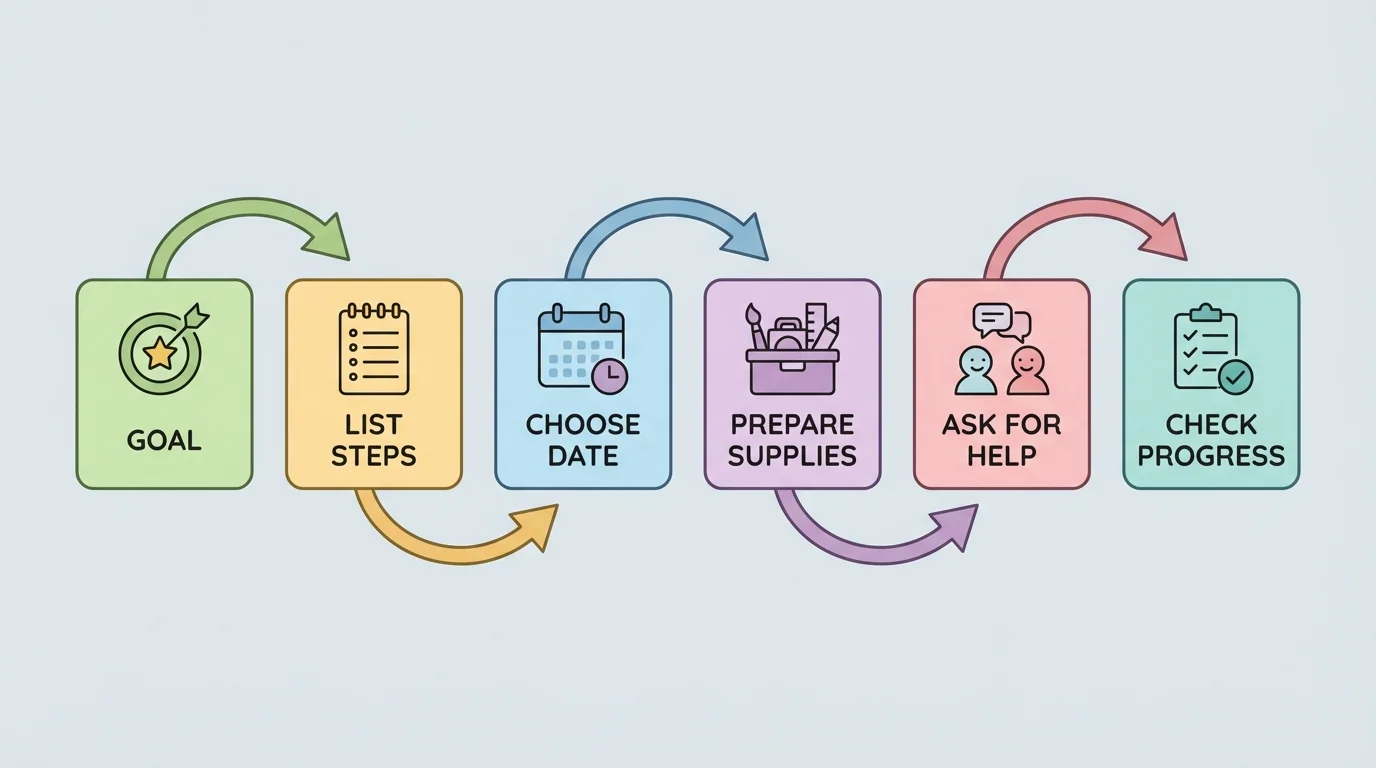
You can also use a calendar to notice what is coming soon. A calendar helps you see whether a change is tomorrow, next week, or next month. That matters because jobs should be done at the right time. If the change is still a long way off, you can make a simple plan. If it is close, you may need to act right away.
A planning habit becomes stronger when you repeat it. If you check your calendar every morning, keep your list in one place, and pack needed items the night before, you are training yourself to be ready for bigger changes later in life too.
Small habits build big readiness
When you repeat useful actions, they start to feel natural. A student who often checks dates, asks questions early, and prepares supplies does not have to start from zero each time something changes. Those habits transfer to many future situations.
That transfer is important. The same planning habit can help you prepare for a new class schedule, a doctor appointment, a family trip, a volunteer project, or a larger homework load.
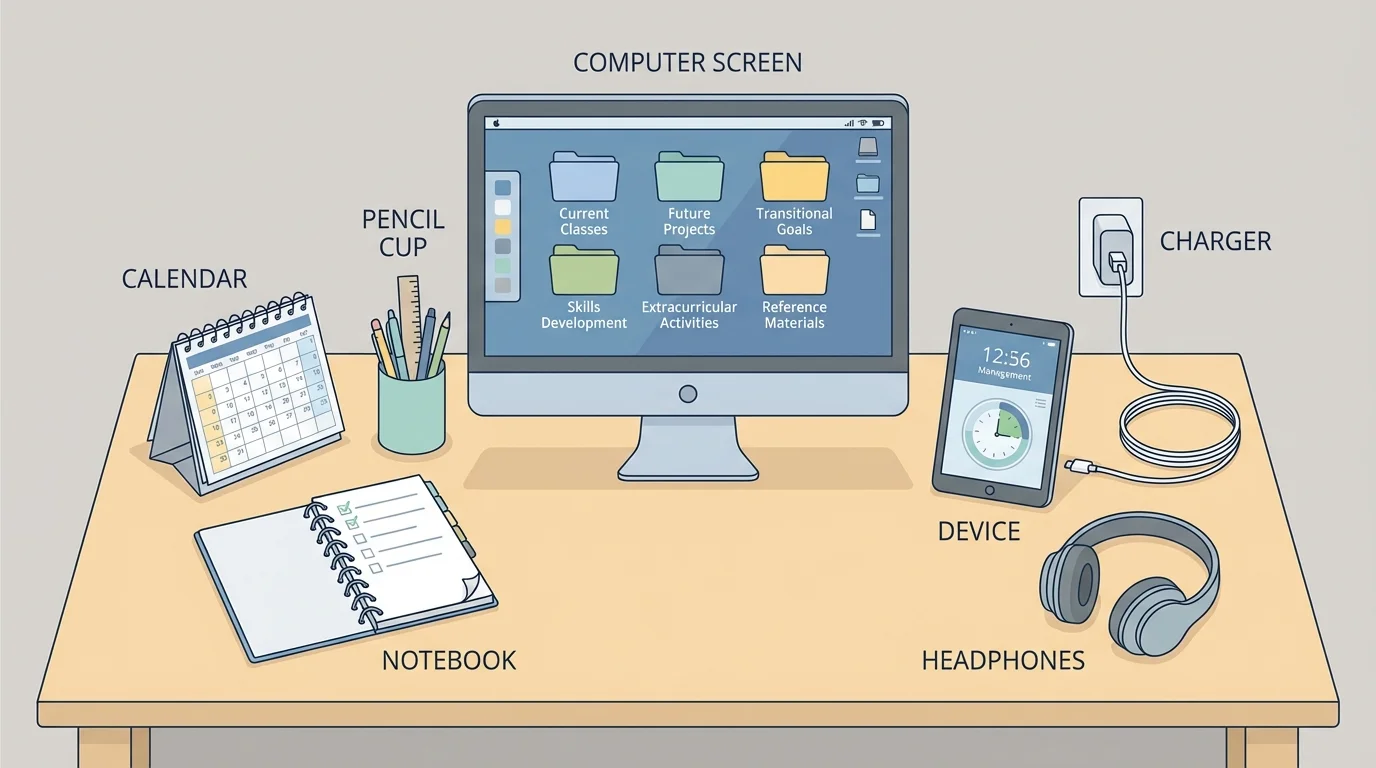
Organization saves time and lowers stress, as [Figure 2] illustrates with a simple home learning setup. When your space and your digital materials are easy to find, transitions go more smoothly.
For online school, this means keeping your notebook, charger, headphones, and writing tools in a regular place. It also means naming digital folders clearly. Instead of saving files everywhere, you might have folders such as "Math," "Reading," "Science," and "Projects."
Physical and digital organization work together. If your desk is messy and your files are scattered, you may waste time searching. If your space is tidy and your files are labeled, you can start tasks faster and feel more in control.
You should also keep important information in a safe place with help from an adult. For example, if you need a login for an online activity, your family can decide on a safe way to store it. Children should not manage sensitive passwords alone, but you can still learn the habit of putting important information where it belongs.
A good organization habit is the "reset." At the end of the day, spend a few minutes putting materials back where they belong. Then your future self has less work to do. That is one of the best gifts you can give yourself.
| Planning Problem | Helpful Habit | How It Helps |
|---|---|---|
| Forgetting what to do | Checklist | Keeps tasks in one place |
| Missing an event | Calendar reminder | Helps you look ahead |
| Losing materials | Use a regular storage spot | Makes supplies easy to find |
| Feeling overwhelmed | Break tasks into steps | Makes big jobs feel smaller |
| Not knowing what comes next | Ask questions early | Gives clear directions |
Table 1. Common planning problems, helpful habits, and the benefit of each habit.
Time planning is really about noticing the future before it becomes the present. If something important is happening in three days, you should not wait until the last minute if you can help it.
A useful skill is estimating how long tasks take. If packing your activity bag takes about ten minutes and setting up your computer takes about five minutes, then you know you need at least fifteen minutes, not just "a second." In math, you can think of that as \(10 + 5 = 15\), which reminds you that small minutes add up.
Another smart habit is leaving buffer time. Buffer time means extra time built into your plan in case something goes wrong. Maybe your device needs an update, or maybe you cannot find your notebook right away. If you leave extra time, you are less likely to feel rushed.
Example: Planning backward from an event
You have an online club meeting at 4:00 p.m. and need to be fully ready on time.
Step 1: List what must happen first.
You need to get a snack, open your device, find the link, and bring your notebook.
Step 2: Estimate the time.
Snack takes about five minutes, device setup takes five minutes, and gathering materials takes five minutes. That is \(5 + 5 + 5 = 15\) minutes.
Step 3: Add buffer time.
Add another five minutes so you are not rushing. Now the total is \(15 + 5 = 20\) minutes.
Step 4: Choose your start time.
If the meeting starts at 4:00 p.m., starting at 3:40 p.m. gives you twenty minutes to get ready.
Planning backward helps you arrive calm and prepared instead of late and stressed.
When you use buffer time, you are not "wasting" minutes. You are protecting your plan. That is a responsible habit you can start practicing now.
You do not have to prepare for every change by yourself. A big part of readiness is knowing when to ask for help and who to ask. A support system is the group of people who help you solve problems, learn new skills, and stay safe.
Your support system may include a parent, grandparent, older sibling, tutor, coach, club leader, neighbor, family friend, or another trusted adult. Different people can help with different things. One person may help you remember dates. Another may help you practice a new skill. Another may explain directions.
Asking for help early is a planning habit. It is much easier to ask, "What time should I be ready on Saturday?" two days ahead than five minutes before you need to leave. Good planners ask questions before there is a problem.
"Being prepared is a way of taking care of your future self."
You can also learn by watching how responsible adults plan. Notice how they write appointments down, keep bags ready, check messages, and think ahead. Those are planning habits in action.
Even with a good plan, a new situation may still make you feel nervous. That is normal. Readiness includes your feelings, not just your supplies.
One helpful skill is flexibility. Flexibility means being able to adjust when something changes. Maybe a meeting time moves, the weather changes your outdoor plan, or a needed item is not available. A flexible planner does not give up. They make a new plan.
Another useful habit is calm self-talk. You can say, "I have a plan," "I can ask for help," or "I can do this one step at a time." These simple sentences help you stay steady.
You may already know that strong emotions can make it harder to focus. Taking slow breaths, pausing, and naming your next step can help your brain get back on track.
If something does not go perfectly, that does not mean you failed. It means you learned what to fix next time. Planning gets better with practice.
That is also true in the planning flow we saw earlier in [Figure 1]. After you check progress, you may need to change a step, ask a new question, or prepare a missing item. Good planning is active, not frozen.
Here are some everyday transitions a student your age might face:
Each one needs similar habits: look ahead, gather information, break the job into steps, get organized, and ask for help when needed.
Example: Getting ready for a new chore
Your family asks you to take care of feeding a pet every evening.
Step 1: Learn the exact job.
Ask what time the pet eats, how much food to give, and where the supplies are.
Step 2: Make a reminder.
Put the chore on a calendar or set a family-approved reminder.
Step 3: Prepare the space.
Keep the bowl and food in the right place so the job is easy to do.
Step 4: Check your work.
After a few days, notice whether you remembered on time and what needs to improve.
This kind of planning builds trust and independence.
Suppose your family is moving to a new neighborhood. You cannot control everything, but you can still use planning habits. You might pack favorite items in a labeled box, keep important routines like reading time or bedtime, and ask adults what will stay the same and what will change.
Or suppose your schoolwork becomes more independent. The lesson folders and labeled supplies in [Figure 2] still matter, because good organization gives you a stronger start when responsibilities grow.
You do not need ten different systems. One repeatable routine is enough to help you through many transitions. The order in [Figure 3] keeps the process simple and clear.
Start by looking ahead. Ask yourself, "What change is coming?" Then ask, "What do I need to know, do, or prepare before it happens?"
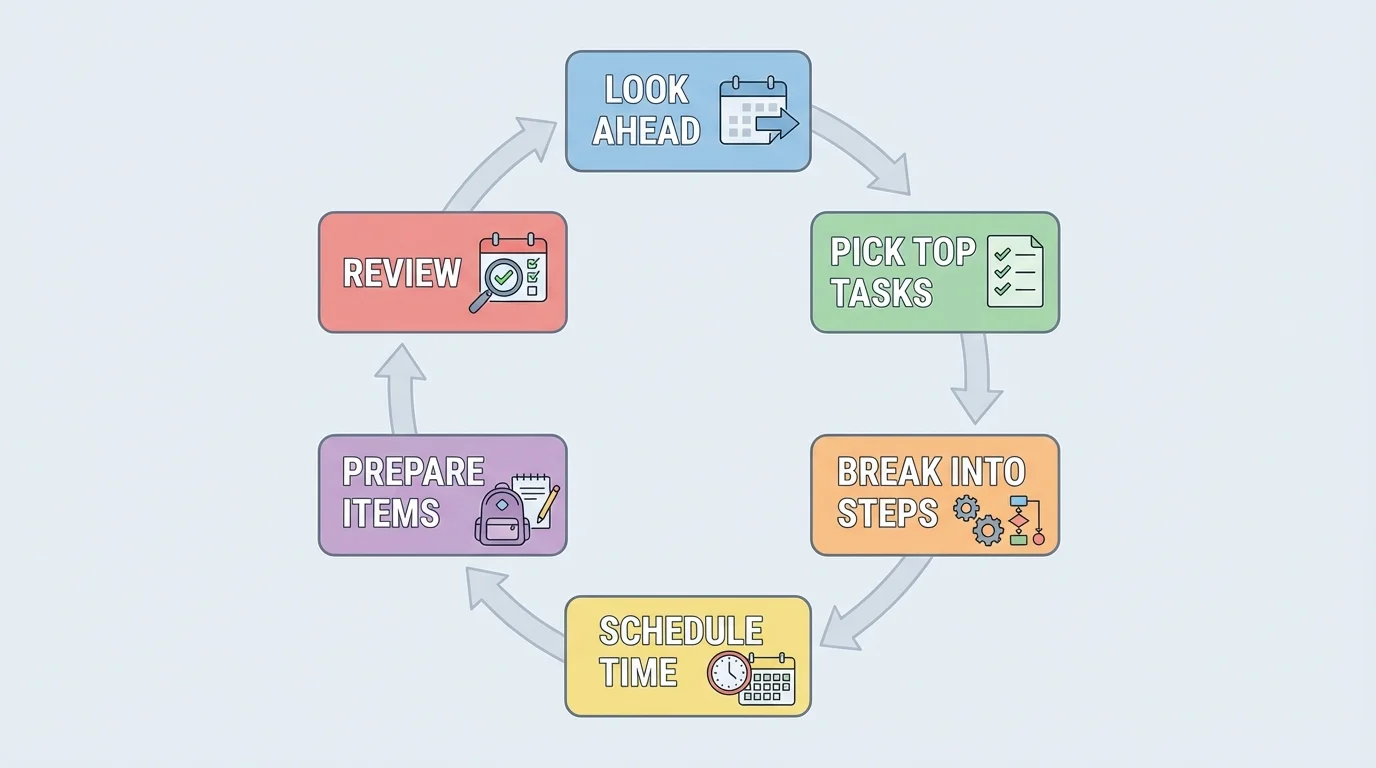
Step 1: Look ahead. Check the next day or week on your calendar.
Step 2: Pick the top tasks. Choose the most important things to do first.
Step 3: Break them into steps. Big jobs become small actions.
Step 4: Schedule time. Decide when you will do each step.
Step 5: Prepare what you need. Gather materials, links, clothes, notes, or questions.
Step 6: Review. Ask, "Am I ready? What still needs attention?"
This routine works well once a week and also the night before something important. It is short, but it can save a lot of stress.
Example: Using the routine for a weekend activity
You have a Saturday volunteer event at a park.
Step 1: Look ahead.
You check the date, start time, and location.
Step 2: Pick top tasks.
You need water, comfortable clothes, and a ride plan.
Step 3: Break into steps.
Fill the water bottle, set clothes out, and ask an adult when you will leave.
Step 4: Schedule time.
You prepare most items on Friday evening and finish on Saturday morning.
Step 5: Review.
You check the weather and make sure everything is ready by the door.
Because you planned early, the morning feels smoother.
As you practice, this routine becomes more automatic. Later, when life gives you bigger transitions, you will already know how to begin.
And if a plan needs to change, the routine still helps. Just return to the steps in [Figure 3]: look ahead again, update your tasks, and review what is now needed.
