A group can look friendly on the outside and still leave someone feeling invisible. That can happen in a video call, a game chat, a club meeting, a team practice, or even a family event. The good news is that small actions from one person can change the whole feeling of a group. When you notice others, treat them with respect, and make space for them to join in, you help protect their dignity and support their participation.
Inclusion means making sure people feel welcome, respected, and able to take part. Dignity means every person deserves to be treated like they matter. Participation means having a real chance to join, speak, help, and belong. These ideas matter anywhere people interact: online classes, gaming groups, sports teams, neighborhood events, clubs, friend groups, and family gatherings.
When people are included, they are more likely to share ideas, ask questions, and try new things. When people are excluded, they may feel embarrassed, lonely, angry, or unsafe. That is why inclusive actions are not just "being nice". They are practical ways to help a group work better and help people feel human, respected, and seen.
Dignity is the worth every person has, no matter what. Participation is being able to join in and contribute. Inclusion is taking actions that help others feel welcome, respected, and able to take part.
You do not need to be the loudest person in a group to be inclusive. Often, the most powerful actions are simple: greeting someone by name, making room for them to speak, explaining something clearly, and checking whether they want to join. These actions tell others, "You belong here too."
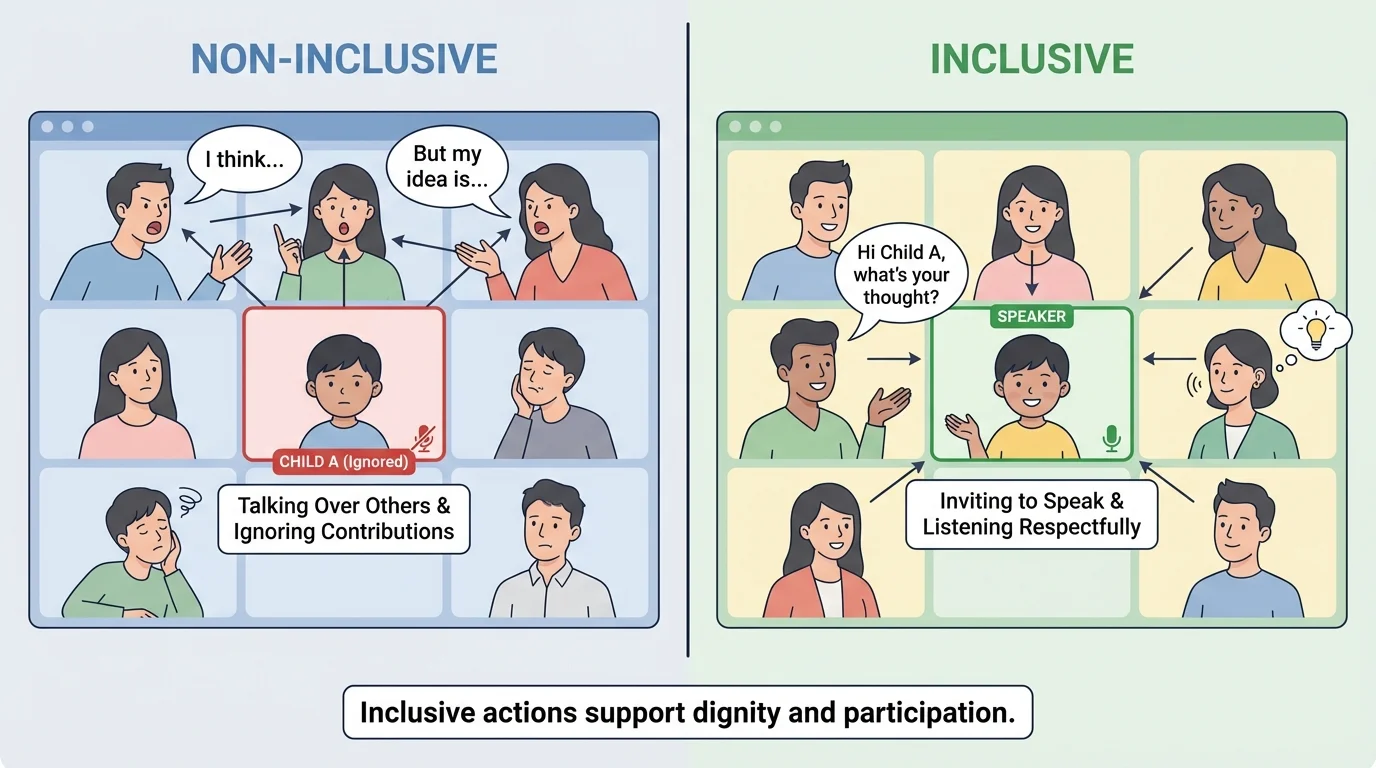
Inclusive actions are behaviors that help others feel respected and able to participate, as [Figure 1] shows through the difference between ignoring someone and welcoming them in. Inclusive actions are active. They are not just about avoiding harm. They are about doing something helpful and respectful.
Some inclusive actions are easy to notice. You greet a new person in a group chat. You ask, "Do you want to join us?" You slow down and explain the plan when someone seems confused. You stop talking long enough for a quieter person to finish. You share the link, directions, or rules so everyone has the same information.
Other inclusive actions are smaller, but still important. You avoid inside jokes that leave one person out. You do not pretend to understand someone if you really did not hear them. You ask kindly instead of making assumptions. You notice if one person keeps getting interrupted. You think about whether everyone can actually join, not just whether they were technically invited.
Inclusion is not about being perfect. It is about paying attention and making choices that open the door instead of closing it. If you are not sure what would help, a respectful question often works: "Would you like me to explain that?" or "Do you want a turn?"
Real-life example: making room in a group chat
Step 1: Notice what is happening.
A new member says hello, but the chat keeps moving and no one answers.
Step 2: Do one welcoming action.
You reply, "Hey, welcome! We're planning Saturday's game."
Step 3: Help them participate.
You add, "Want to help choose the map?"
Step 4: Keep the door open.
If they are quiet, you do not pressure them. You simply give them a chance.
This works because it respects both dignity and choice.
Notice the balance: being inclusive does not mean forcing someone to join. It means making sure they have a fair and comfortable chance to join if they want to.
Dignity is protected when you treat people as capable, valuable, and worthy of respect. One important part of this is using the name a person wants to be called. If someone shares how to say their name, try to say it correctly. If you make a mistake, correct it and keep trying. That shows respect.
Another part of dignity is privacy. If someone tells you something personal, do not share it to entertain others or get attention. Private information is not group chat material unless the person says it is okay. Respecting privacy helps people feel safe.
Dignity also means helping without embarrassing someone. For example, if a person is confused during a video call, you do not say, "Wow, how do you not know this?" A better response is, "I can explain that if you want." Both responses involve the same situation, but only one protects dignity.
Be careful with jokes. A joke is not harmless if it depends on making someone feel small. Teasing about how a person talks, looks, learns, believes, moves, or participates can hurt even if someone says, "I was just kidding." Respectful humor does not push others down.
People often remember the feeling of an interaction long after they forget the exact words. A short moment of respect can build trust, and a short moment of disrespect can make someone stop participating.
It also matters how you offer help. Sometimes people need support, but they still want independence. Ask before stepping in when possible. "Would you like help?" is usually better than taking over. Helping with respect means supporting someone, not controlling them.
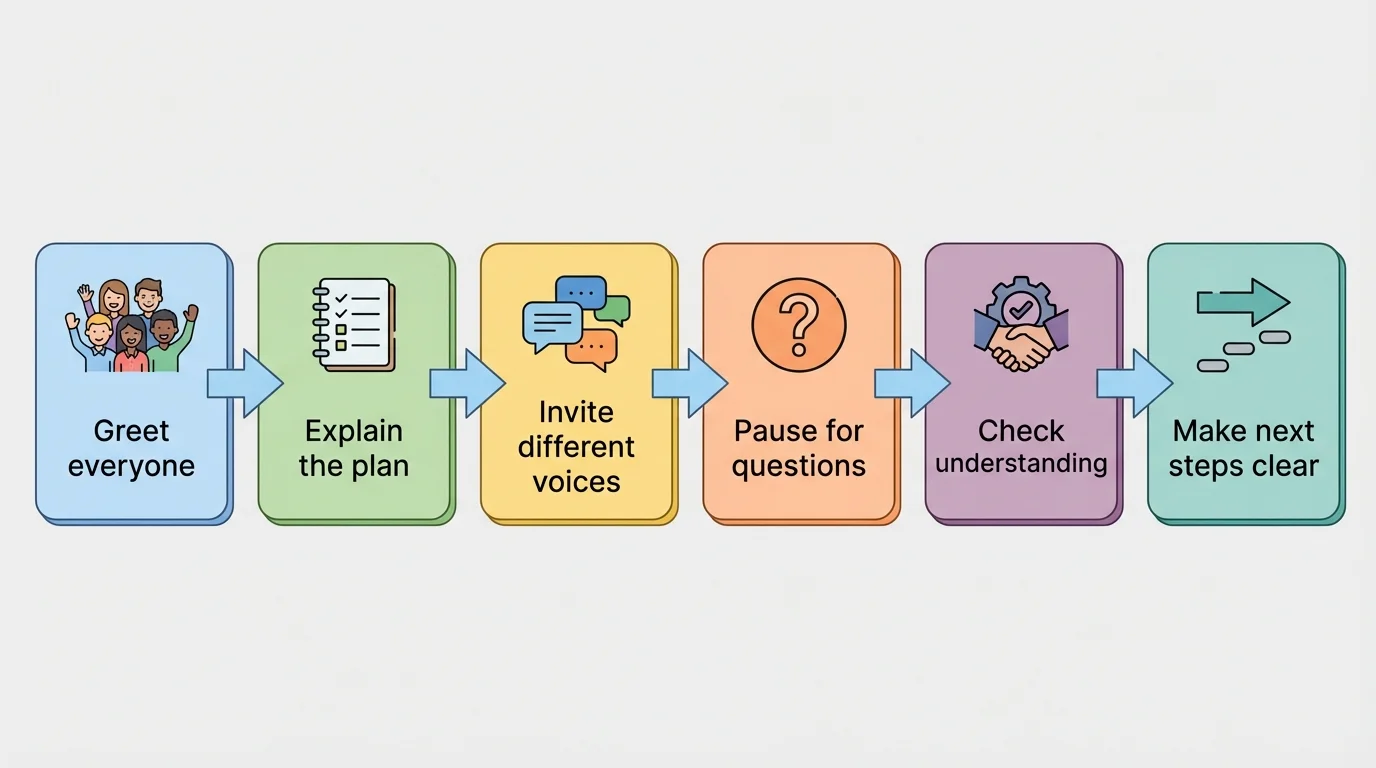
Online groups can be great for connection, but they can also make it easy for people to be missed. Faces may be tiny on a screen. Messages can fly by quickly. Some people need more time to type or think. A clear structure helps everyone join in, as [Figure 2] illustrates with simple steps for sharing space and checking understanding.
If you are in a video call, you can support participation by taking turns, pausing after you speak, and inviting quieter people in. You might say, "We've heard a few ideas. Maya, do you want to add anything?" That is different from putting someone on the spot in a harsh way. Your tone matters. Keep it warm and low-pressure.
If you are chatting online, remember that not everyone reads at the same speed or understands the same slang. If someone seems lost, explain without acting annoyed. If plans are being made, post the key details clearly: time, link, rules, and what to bring. When information is hidden in a flood of messages, participation becomes harder.
Accessibility is part of inclusion too. Some people may need captions, written instructions, extra time, or fewer distractions. You may not always know what someone needs, so avoid assuming. A useful habit is to give information in more than one way, such as saying directions out loud and typing them in the chat.
The same idea applies outside school in clubs, sports, community groups, and family activities. A person participates more easily when they know what is happening, feel respected, and are given a true chance to join. Just like the process in [Figure 2], inclusion often works best when the group greets, explains, invites, and checks in.
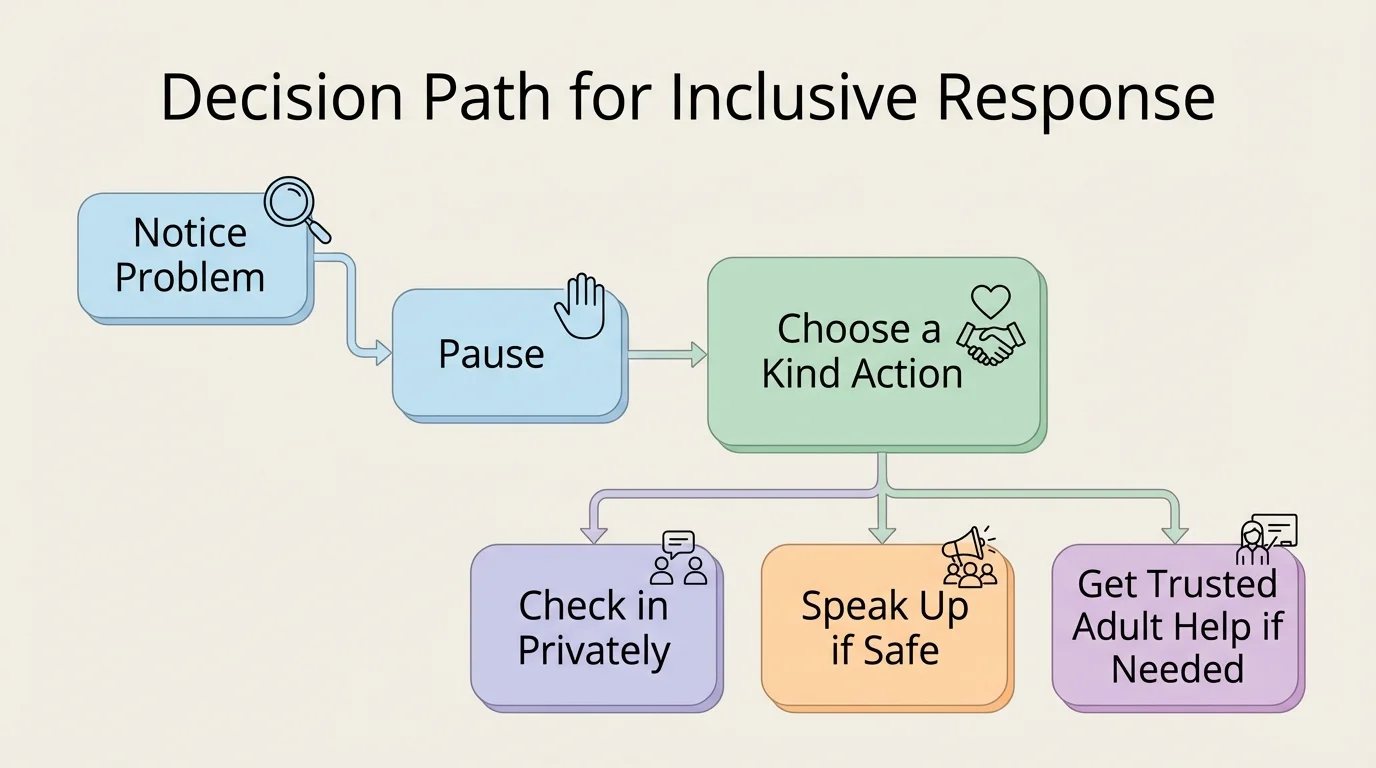
Sometimes you can tell right away that someone is being left out. Other times the signs are smaller: one person never gets a turn, no one answers their messages, or people laugh when they speak. A simple response plan, shown clearly in [Figure 3], can help you act instead of freezing.
Here are four common situations and what you can do.
When someone is left out: Invite them in. You can say, "We're choosing roles now. Do you want one?" or "You can join our call if you want." If they say no, respect that. Inclusion offers a chance; it does not force participation.
When someone is interrupted: Help return the floor. Try, "I want to hear the rest of what Sam was saying." This is a strong ally move because it protects someone's chance to participate without attacking the other person.
When someone is confused: Explain kindly. Use clear words, not eye rolls or sarcasm. You might say, "Here's the short version," or "The link is at the top of the chat."
When someone is treated unfairly: Speak up if it feels safe. A calm response can be powerful: "That comment wasn't respectful," or "Let's not joke about that." If the situation feels bigger than you can handle, ask a trusted adult for help.
Case study: a teammate gets ignored on a planning call
Step 1: Notice the pattern.
Jordan tries to share an idea twice, but other people keep talking over them.
Step 2: Use a respectful interruption.
You say, "Hold on, I think Jordan was still talking."
Step 3: Open the space.
You add, "Jordan, what was your idea?"
Step 4: Support after the moment if needed.
If Jordan seems upset, send a kind message later: "I noticed that happened. Are you okay?"
This supports dignity because Jordan is treated like their voice matters.
If you are unsure whether to say something publicly or privately, think about what protects dignity best. Correcting a harmful joke in the moment may be necessary. But if someone is simply confused or embarrassed, private help may be kinder.
Everyone makes mistakes. You might interrupt someone, forget to include them, use the wrong name, laugh at the wrong moment, or fail to speak up when you should have. What matters next is whether you repair the harm.
An ally is a person who supports others through respectful action, especially when someone is being left out or treated unfairly. Being an ally does not mean acting like a hero. It means noticing, caring, and doing what you reasonably can.
How to make a real apology
A real apology is simple and honest. Say what you did, show that you understand the impact, and make a better choice next time. For example: "I interrupted you earlier. That was disrespectful. I'm sorry. I'll be more careful to let you finish."
A weak apology sounds like this: "Sorry if you were offended." That pushes the problem onto the other person. A stronger apology takes responsibility.
Sometimes allyship means using your voice. Other times it means sharing access, giving credit, or asking someone what support they want. If a friend's idea gets ignored and then praised when someone else repeats it, you can say, "That connects to what Elena said earlier." That simple sentence gives credit where it belongs.
There are moments when adult help is the right choice. If someone is being bullied, threatened, targeted again and again, or made to feel unsafe, do not try to manage it alone. Ask a trusted adult for support. Getting help is not tattling when safety and dignity are at risk.
"You do not need to be in charge to make a space more welcoming."
As shown earlier in [Figure 3], even a simple sequence of notice, pause, include, and get help if needed can turn a hard moment into a safer one. Small actions matter because groups are built from many small moments.
Inclusion becomes stronger when it turns into habit. You do not have to wait for a big problem. You can practice small actions every day.
Try This: When you join a group online, greet at least one person who has not been greeted yet.
Try This: If you notice one person has not spoken much, leave space and invite them gently.
Try This: If directions are unclear, help by posting a simple version everyone can understand.
Try This: If you make a mistake, apologize clearly and fix it fast instead of becoming defensive.
Try This: In any group activity, ask yourself, "Who might be missing? Who might need a clearer path to join?"
These habits help build belonging, which is the feeling that you are accepted, valued, and part of the group. Belonging grows when people feel safe enough to speak, ask, laugh, contribute, and be themselves.
| Situation | Less Inclusive Response | More Inclusive Response |
|---|---|---|
| Someone is new | Ignore them and continue | Welcome them and explain what is happening |
| Someone is quiet | Assume they have nothing to say | Invite them gently and give time |
| Someone is confused | Mock them or act annoyed | Explain clearly and kindly |
| Someone is interrupted | Let it keep happening | Help return the turn to them |
| Someone is hurt by a comment | Say "It was just a joke" | Acknowledge the harm and stop |
Table 1. Comparison of less inclusive and more inclusive responses in everyday situations.
You will not always know the perfect thing to say. That is okay. A good rule is this: be respectful, be clear, and make room for others. If your actions help someone feel valued and able to participate, you are moving in the right direction.
You already use executive functioning when you pause before acting, pay attention to the group, and choose a helpful response. Inclusion is not separate from self-control and awareness; it depends on them.
Groups become kinder and stronger when people protect one another's dignity and open doors for participation. That work belongs to everyone, including you.
