Two people can face the exact same problem and choose different solutions. Some choices solve the problem well, while others make it worse. What makes the difference? Usually, it is not luck. It is using good information and careful thinking. When you use facts, observations, and clear reasons instead of guessing, you give yourself a much better chance of making a smart choice.
This skill matters in real life all the time. You might be choosing the best way to organize your homework, deciding which snack is safest for someone with an allergy, picking between two online clubs, or figuring out how to spend $20. In each case, there may be more than one possible answer. Your job is not to pick the first answer you see. Your job is to choose the best answer based on what you know.
[Figure 1] Problems often have multiple solutions. For example, if your room is too noisy while you work, you could wear headphones, move to another room, ask family members to lower the volume, or work at a different time. All of those are possible solutions. But they are not all equally helpful in every situation.
Choosing well can save time, money, energy, and frustration. Choosing poorly can lead to wasted effort, unsafe situations, or even bigger problems later. If you pick a solution just because it sounds cool, because someone online said it worked for them, or because you are in a hurry, you may miss a better option.
Evidence is information that helps you decide whether something is true or whether a solution is likely to work. Reasoning is the thinking you use to connect the evidence to your choice. Solution means a way to solve a problem.
Good decision-makers do not try to know everything. They ask, "What do I need to know to make the best choice right now?" Then they look for useful evidence and think through it carefully.
When you hear the word evidence, think of clues that help you figure something out. Evidence can come from your own experience, from a trusted adult, from product details, from reviews, from trying something on a small scale, or from noticing patterns. But not all evidence is equally strong.
Reasoning is what helps you make sense of the clues. Suppose you want a planner app to help you remember assignments. If one app has lots of ads, another app costs money, and a third app sends helpful reminders and has good reviews, your reasoning helps you decide which details matter most. If reminders are your main need, the third app may be your best choice.
It also helps to know the difference between a fact and an opinion. A fact can usually be checked. For example, "This app is free" can be checked. "This is the coolest app ever" is an opinion. Opinions can still be useful, but they are stronger when they include reasons, such as "This app helps me because it sends clear reminders and does not distract me."
Good decisions are not random
Using evidence and reasoning does not guarantee a perfect result every time. Sometimes two choices are both pretty good. Sometimes new information appears later. But evidence and reasoning help you make the best choice with the information you have now, and they help you explain why you chose it.
If you can explain your choice with words like "I chose this because..." and then give facts, observations, or clear reasons, you are already using strong decision-making skills.
A simple decision process helps you slow down and think clearly. You do not need a complicated system. You just need a few steps that keep you from rushing.
Step 1: Identify the problem. Be specific. Instead of saying, "I hate my mornings," say, "I keep being late for my online class because I lose track of time before logging in." A clear problem is much easier to solve.
Step 2: List possible solutions. Try to think of at least two or three choices. If you only think of one, you might miss something better. For the morning problem, possible solutions could be setting two alarms, laying out materials the night before, or using a timer while getting ready.
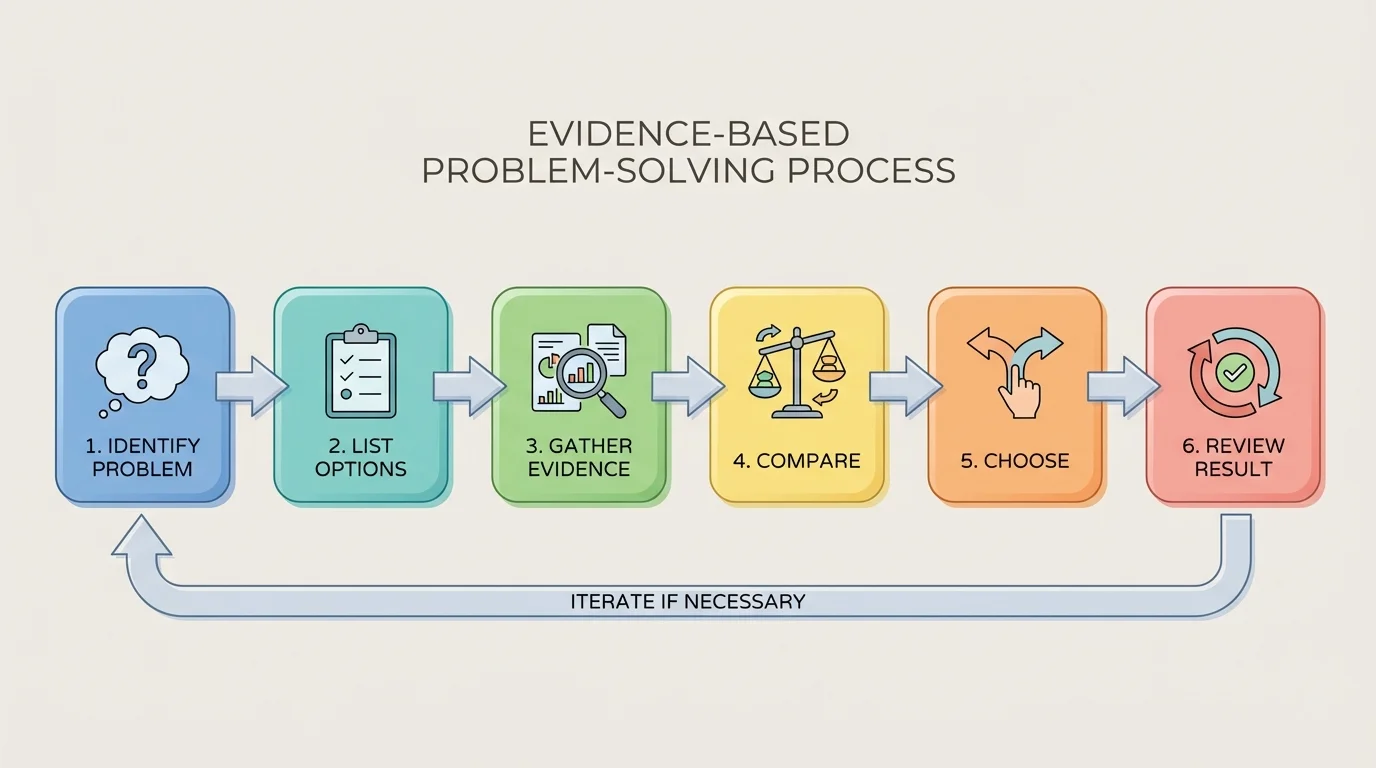
Step 3: Gather evidence. Ask questions such as: Which option has worked before? Which option is safest? Which one fits my schedule? What do trusted people recommend? What details can I check?
Step 4: Compare the choices. Look at the pros and cons of each option. Some may be faster but less helpful. Others may work better but cost more or take more effort.
Step 5: Choose the best solution for now. Pick the one that matches the evidence most closely. You are not looking for magic. You are looking for the strongest fit.
Step 6: Review the result. After trying the solution, ask: Did it work? If yes, keep using it. If not, use what you learned and choose again. This is one reason [Figure 1] ends with review instead of stopping at choose.
Example: Solving a morning routine problem
Step 1: State the problem clearly
The problem is not "mornings are bad." The problem is "I forget to log in on time because I get distracted while eating breakfast."
Step 2: List three solutions
Option A: set one alarm. Option B: set two alarms and put the device near breakfast. Option C: ask a family member to remind you every day.
Step 3: Use evidence
One alarm has failed before. A family reminder may help, but the person may be busy. Two alarms plus keeping the device nearby matches the actual problem better.
Step 4: Choose and test
Option B is the best first choice because it is simple, free, and directly solves the problem of forgetting the login time.
The key is that the choice comes from evidence, not from a random guess.
Notice that the best solution is not always the fanciest one. Often, the best solution is the one that fits the problem most directly.
Evidence is stronger when it is clear, trustworthy, and connected to the problem you are trying to solve. If you are choosing a backpack, it helps more to know whether it fits your laptop and feels comfortable than to know whether a famous person likes the brand.
Some strong kinds of evidence include your own careful observations, results from trying something yourself, details from trusted sources, and advice from people with real experience. For example, if you are deciding how to keep a plant healthy, strong evidence might include how much sunlight your window gets, what the care instructions say, and what happened when you watered it more or less.
[Figure 2] Weak evidence includes rumors, guesses, one random comment online, or information that does not connect to your problem. If you are choosing a safe bike helmet, color is much less important than whether it fits correctly and meets safety rules.
| Type of information | How useful it is | Why |
|---|---|---|
| Product details from a trusted source | High | You can check the facts. |
| Your own careful test or observation | High | It connects directly to your situation. |
| Advice from an experienced adult | Medium to high | Useful if the person understands the problem. |
| One random online comment | Low | It may not be true or may not match your situation. |
| What "looks best" | Low | Looks do not always tell you what works. |
Table 1. Comparison of stronger and weaker kinds of information for making choices.
Another smart idea is to ask whether the evidence is recent and complete. For example, if a review says a game runs well but the review is from years ago, it may not match the newest version. Good thinkers look for information they can trust now.
Your brain often likes fast answers because they feel easier. Slowing down for even a minute to check evidence can lead to much better choices.
You do not have to spend hours collecting evidence. Sometimes a few good facts are enough. The goal is not to become stuck. The goal is to avoid choosing based only on a feeling.
When you have several options, using criteria helps you compare them fairly. Criteria are the things you will judge each solution by. Common criteria are safety, cost, time, ease, and usefulness.
For example, if you are deciding how to spend $15 on something helpful for your hobbies, you might compare three choices: art markers, a digital drawing app, or storage bins for supplies. You might ask: Which one helps me most? Which one lasts longer? Which one fits my budget? Which one solves a problem I actually have?
Sometimes one solution is better in one way but worse in another. This is called a trade-off. A trade-off means you gain something but give up something else. A faster option might cost more. A cheaper option might break sooner. Good reasoning means noticing those trade-offs instead of ignoring them.
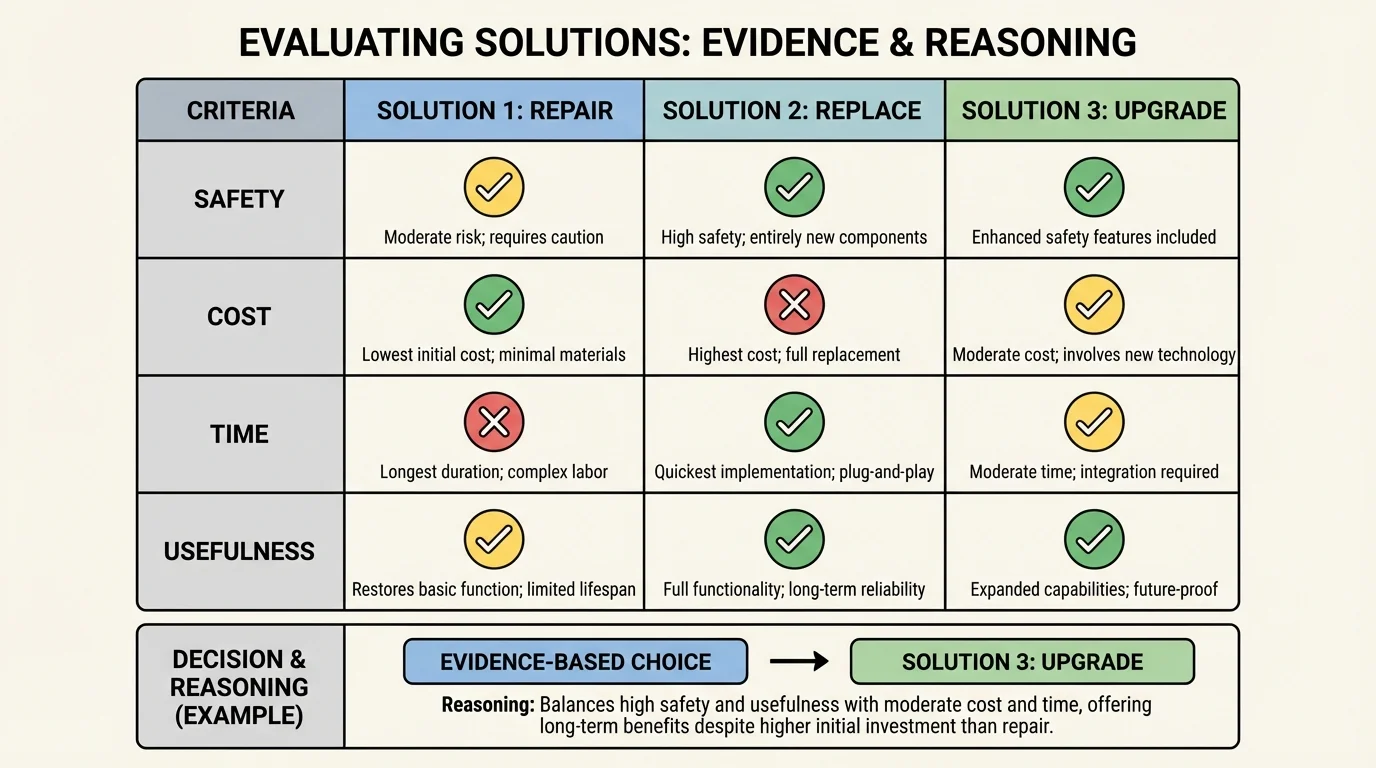
You can even score your options in a simple way. For instance, if you rate each choice from \(1\) to \(5\) for usefulness, time, and cost, you can compare the totals. This does not make the choice automatic, but it can help you see patterns. If one option gets \(5\), \(4\), and \(5\), its total is \(14\). If another gets \(3\), \(5\), and \(3\), its total is \(11\). The higher total may point to the stronger option.
Still, not every criterion matters equally. Safety usually matters more than style. A tool that looks cool but is unsafe should not win. This is one reason [Figure 2] is useful: it reminds you that comparing means looking at the right things, not just your favorite thing.
Example: Choosing the best way to carry water on a hot day
Step 1: List options
Option A: a tiny bottle, Option B: a medium reusable bottle, Option C: a heavy giant jug.
Step 2: Choose criteria
Useful criteria are how much water it holds, how easy it is to carry, and whether it leaks.
Step 3: Compare trade-offs
The tiny bottle is light but may not hold enough. The giant jug holds a lot but is hard to carry. The medium bottle may balance both needs.
Step 4: Make the choice
The medium reusable bottle is likely the best solution because it solves the problem without creating a new one.
That is what smart comparison looks like.
If you are stuck between two choices, ask yourself one more question: "Which option best matches the actual problem?" That question often clears away distractions.
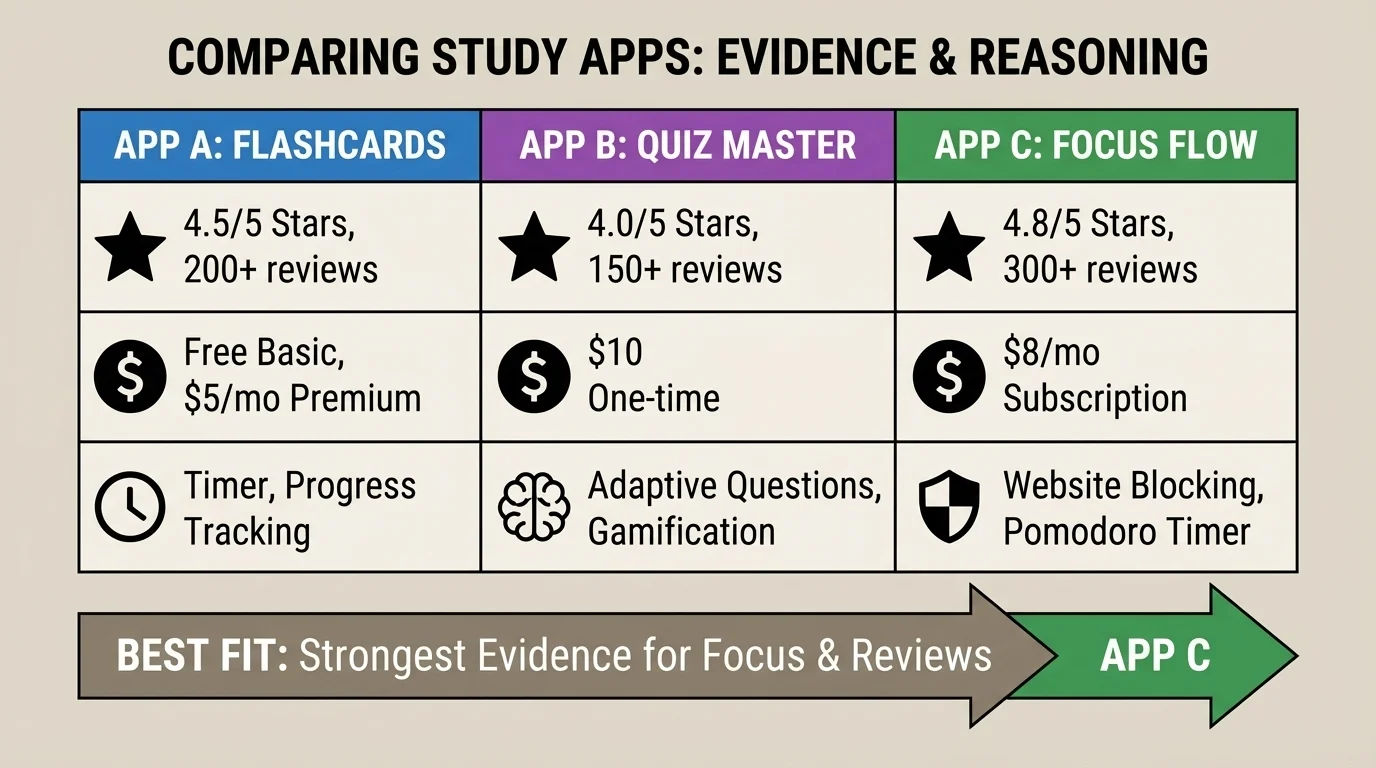
[Figure 3] Real problems become easier when you can see how evidence and reasoning work in ordinary life. Here are a few situations you could actually face.
Example 1: Choosing a study app. You want an app to help track assignments. Option A has bright colors but lots of ads. Option B costs money every month. Option C is free, has reminder alerts, and has reviews saying it is easy to use. The evidence points toward Option C if your main goal is staying organized without distraction.
Example 2: Helping a pet drink more water. Suppose your pet is not drinking enough. You think of three solutions: move the water bowl, clean it more often, or use a different bowl. You gather evidence by noticing where the bowl is, whether it stays clean, and whether your pet prefers certain bowls. Instead of guessing, you test one change at a time and watch what happens.
Example 3: Spending birthday money. You have $25 and want to make a smart purchase. You can buy a game accessory, save for something bigger, or buy supplies you need now. Evidence includes how often you will use the item, whether it solves a real need, and how close you are to a larger goal. The best solution may be saving if that gets you something more useful later.
Example 4: Solving a communication problem. A friend in an online group keeps missing your messages. You could send more messages, use clearer wording, or agree on one main chat app. Evidence might show that the friend checks one app more often than another. Choosing one main place to communicate may solve the problem better than simply repeating yourself.
"Smart choices are built, not guessed."
These examples may look different, but they use the same thinking pattern: define the problem, compare solutions, look for evidence, and choose the option with the strongest support.
One common mistake is choosing too fast. A quick choice can feel good because it ends the problem right away, but fast is not always smart. Even pausing for a short moment to ask, "What evidence do I have?" can improve your decision.
Another mistake is following the crowd. If many people like something, that can be one piece of information, but it should not be your only reason. The best solution for someone else may not fit your problem, your budget, or your schedule.
A third mistake is relying only on feelings. Feelings matter because they can tell you what you care about, but feelings alone are not enough. If you buy something just because it looks exciting, then realize you cannot use it much, your feelings led but your evidence did not.
A fourth mistake is ignoring new information. Suppose you choose one plan, try it, and see that it is not working. Strong thinkers do not stubbornly stick with a weak choice just because they already picked it. They review, adjust, and choose again. That is the last step we saw earlier in [Figure 1].
When you solve a problem, changing your mind after getting better information is not failure. It is a sign that you are paying attention and thinking clearly.
You can also protect yourself from mistakes by asking a few checkpoint questions: Is this source trustworthy? Does this evidence connect to my actual problem? Am I ignoring a safer or more useful option? What might happen next if I choose this?
This skill is useful far beyond schoolwork. At home, you use it when deciding how to organize chores, how to save money, or how to fix a broken routine. Online, you use it when choosing what information to trust, which app settings are safest, or how to respond to a problem in a group chat.
In activities and hobbies, evidence and reasoning help you improve faster. If your basketball shot is not consistent, you can test changes to your form and notice which one helps most. If what you bake turns out dry, you can compare possible causes such as too much time in the oven, not enough liquid, or incorrect measuring. Instead of saying "I'm bad at this," you become a problem-solver.
This is also a skill for growing independence. As you get older, you will make more choices on your own. Knowing how to compare options, look for evidence, and explain your reasoning will help you make stronger decisions in all kinds of situations.
You do not need to wait for a big problem to practice this. You can use it on small choices every week. The more you practice, the more natural it becomes.
Here is a quick guide you can keep in mind:
Ask: What is the real problem?
List: What are at least two or three possible solutions?
Check: What evidence supports each one?
Compare: Which option is safest, most useful, and most realistic?
Choose: Which solution fits best right now?
Review: Did it work, or do I need to adjust?
Try This: The next time you need to choose between two or three options, write down one reason for and one reason against each choice. Then circle the option with the strongest evidence, not just the one that feels easiest.
Try This: If a problem feels confusing, say the problem in one clear sentence. Many bad decisions happen because people are solving the wrong problem.
Try This: When you hear advice online, ask who is giving it, whether it fits your situation, and what proof supports it. That one habit can protect you from weak choices.
