Your body and your emotions are always sending messages. If you stay up too late, your body may feel tired and your mood may become irritable. If you are worried or upset, your stomach might hurt or you may develop a headache. That is why a wellness routine matters: it helps you take care of your whole self, not just one part.
A wellness routine is a group of healthy habits you do again and again. It does not need to be fancy. It can be as simple as drinking water in the morning, stretching after sitting a long time, eating meals at regular times, brushing your teeth, and taking a few quiet minutes to notice how you feel. Small habits can make a big difference when you repeat them every day.
When you have a routine, your day feels more steady. You do not have to guess what comes next all the time. That can lower stress and help you make better choices. A routine also helps your body know when to wake up, move, eat, relax, and sleep.
Think about two different days. On one day, you skip breakfast, watch videos for hours without a break, forget to drink water, and go to bed very late. On another day, you eat, move, rest, and talk to someone when you feel upset. Which day is more likely to help you feel calm, focused, and strong? Most people do better with healthy patterns than with random habits.
Wellness means taking care of your physical health, emotional health, and daily habits so you can feel your best and handle life's challenges better.
Physical health is how well your body works, including sleep, food, movement, hygiene, and rest.
Emotional health is how you understand, express, and manage feelings such as happiness, frustration, worry, or sadness.
Good wellness habits do not make life perfect. You will still have hard days. But a routine gives you tools. It is like packing a backpack before a trip. If you pack what you need, problems are easier to handle.
Your physical health and emotional health are connected. If you do not get enough sleep, your emotions can feel bigger and harder to manage. If you feel nervous for a long time, your body may feel shaky, tired, or tense. Taking care of one helps the other.
For example, if you feel disappointed after a hard assignment online, taking a short walk, drinking water, and talking to a trusted adult can help. That is a body action, a feeling action, and a support action all working together.
Body and feelings work as a team. Your brain, body, and emotions affect one another all day. Healthy routines help this team work better by giving you energy, calm, and support at the right times.
This is why a strong routine includes both action and reflection. You need habits that help your body, and you also need moments to notice what is happening inside you.
Before building a new routine, it helps to look at your current one. You are not trying to judge yourself. You are trying to understand your day. A habit is something you do often, sometimes without even thinking about it.
Ask yourself simple questions. What time do you usually go to bed? When do you eat? How much water do you drink? How often do you move your body? How much time do you spend on screens for fun? When do you feel calm? When do you feel stressed, lonely, frustrated, or bored?
You may notice patterns. Maybe you feel grumpy when you skip lunch. Maybe your eyes feel tired after too much screen time. Maybe you feel better when you go outside. These clues help you build a routine that fits your real life.
Quick self-check example
Step 1: Notice one body habit.
You realize you often forget to drink water until late afternoon.
Step 2: Notice one feeling pattern.
You get more annoyed during online work when you feel thirsty and tired.
Step 3: Pick one simple fix.
You place a water bottle near your learning space and drink some at the start of each break.
This is a wellness routine change because it connects body care to emotional comfort.
Start small. If you try to change everything at once, your plan may feel too hard. One or two strong habits are better than ten habits you quit after two days.
A healthy routine has several parts working together, as [Figure 1] shows. You do not need to be perfect in every area. The goal is to build a pattern that gives your body energy and gives your emotions support.
One important building block is hydration, which means getting enough water. Another is nutrition, or giving your body food that helps it grow and work well. You also need sleep, movement, hygiene, calm time, and connection with caring people.
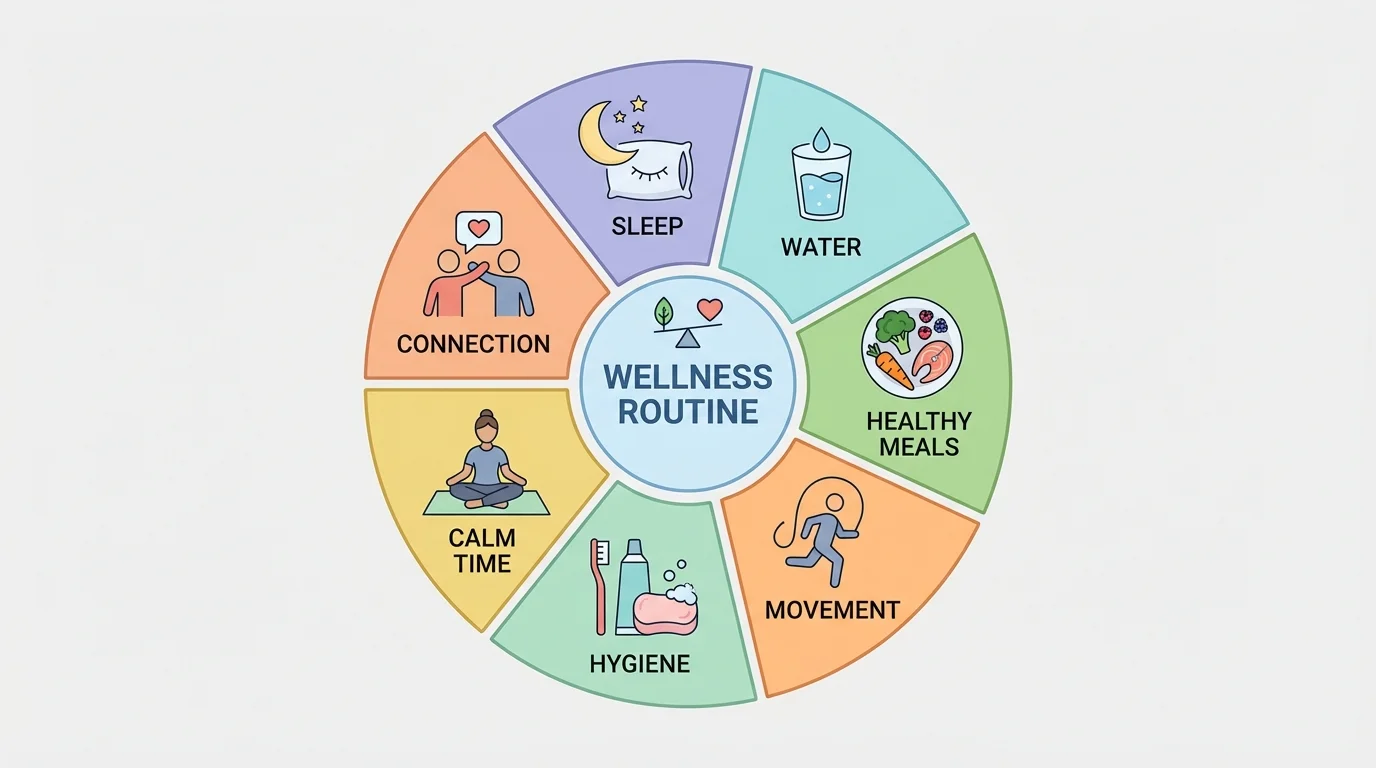
Sleep: Your brain and body need enough sleep to recharge. A regular bedtime helps you wake up with more energy. Sleep can also make it easier to focus and control strong feelings.
Healthy food and water: Your body needs fuel. Try to eat regular meals and snacks with foods that help you grow, such as fruits, vegetables, proteins, dairy or other calcium-rich foods, and whole grains when possible. Drinking water through the day helps your brain and body work better.
Movement: Exercise does not only mean playing a sport. It can be dancing, walking, stretching, biking, jumping rope, helping with active chores, or following a movement video. Moving your body can improve both energy and mood.
Hygiene: Hygiene means daily care like brushing teeth, washing hands, bathing, and wearing clean clothes. These habits protect your health and help you feel comfortable and confident.
Calm time: Your routine should include a few minutes to slow down. You might breathe slowly, draw, listen to quiet music, read, pray, journal, or sit in a peaceful place. This helps when your brain feels crowded.
Connection: People need support. Talking with a parent, guardian, sibling, friend, coach, neighbor, or other trusted adult can help you feel less alone. Healthy connection is part of wellness too.
Notice that none of these pieces stands alone. The routine wheel in [Figure 1] makes this easy to see: if one area is neglected for too long, the whole day can feel less balanced.
Your brain uses a lot of energy every day, so basic habits like sleep, food, water, and movement can change how clearly you think and how strongly you react.
Screen time fits into wellness too. Screens are useful for online learning, hobbies, and talking with people. But too much screen time without breaks can make your eyes tired, your body stiff, and your mood grumpy. A healthy routine includes screen breaks, especially when you have been sitting a long time.
[Figure 2] shows how a routine works best when you can picture the order of your day clearly. You do not need every day to look exactly the same, but having a basic plan helps you stay steady.
An easy way to build a routine is to divide your day into three parts: morning, middle of the day, and evening. Think about what your body and feelings need in each part.
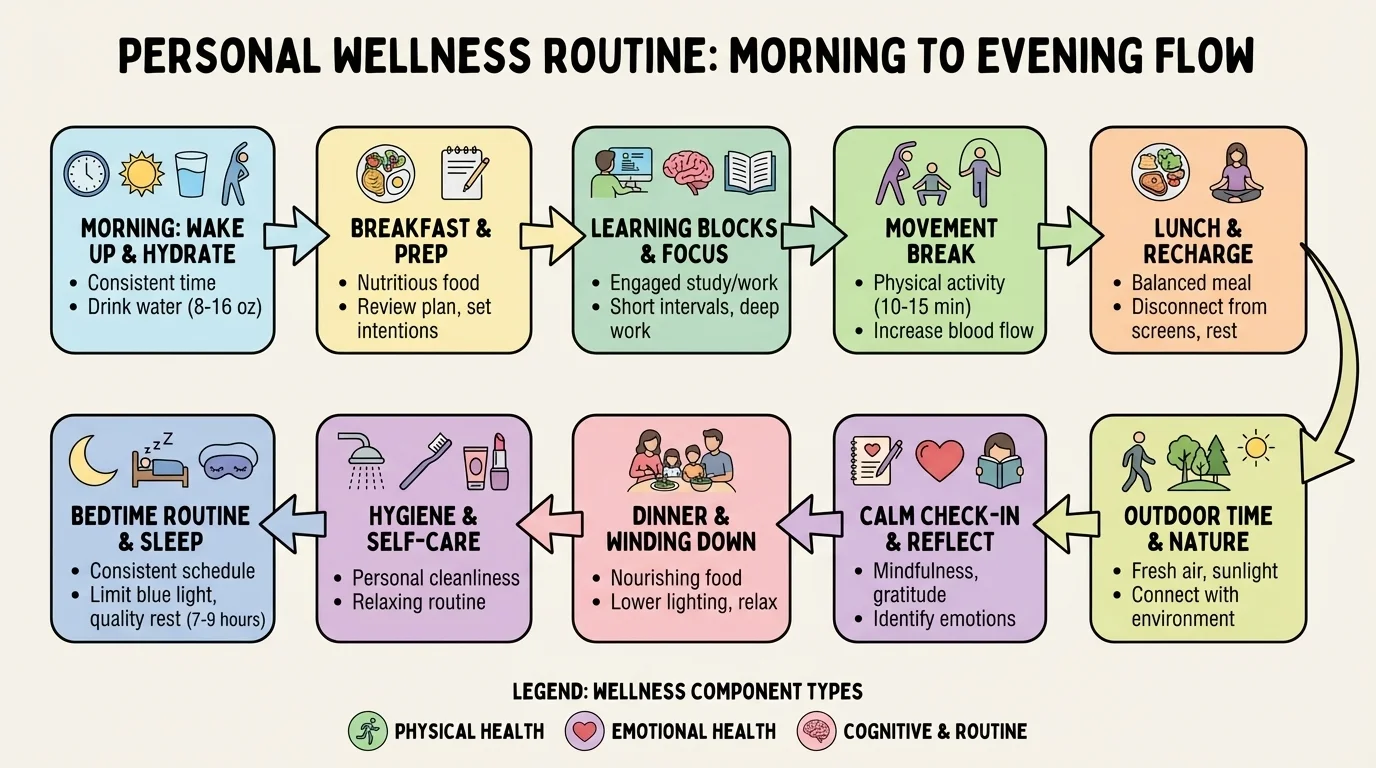
Morning ideas: Wake up around the same time each day, make your bed if that helps you feel organized, drink water, wash your face, eat breakfast, get dressed, and do a quick emotional check-in. Ask yourself, "How am I feeling today?"
Middle-of-the-day ideas: Take movement breaks between online tasks, eat lunch, go outside if possible, stretch, refill your water, and notice whether you are getting overwhelmed. If you are, take a short calm break before returning to work.
Evening ideas: Eat dinner, tidy your space, do hygiene tasks, spend some quiet time away from screens, talk with someone you trust, and get ready for bed at a regular time.
Sample routine you can adjust
Step 1: Choose anchor habits.
Pick habits you want to happen every day, such as brushing your teeth, drinking water after waking up, and going to bed on time.
Step 2: Add one body habit and one feelings habit.
For example, take a walk after lunch and spend five quiet minutes drawing or breathing in the evening.
Step 3: Make it realistic.
If your plan is too long, shrink it. A routine you follow is better than a perfect routine on paper.
Step 4: Put it where you can see it.
You can keep a checklist on your desk, your wall, or your device.
The best routine is not the busiest one. It is the one you can actually use.
Here is a simple way to think about it: your routine should help you fuel your body, move your body, clean your body, calm your mind, and connect with others.
| Part of the day | Body care habit | Feelings care habit |
|---|---|---|
| Morning | Drink water and eat breakfast | Name your mood |
| Midday | Stretch or walk | Take a short reset break |
| Evening | Brush teeth and get ready for bed | Talk to someone or do calm time |
Table 1. A simple way to pair physical and emotional wellness habits across the day.
If you want, you can rate how a habit went using a simple scale from one to three: \(1\) means "I forgot," \(2\) means "I did part of it," and \(3\) means "I did it well today." This is not for punishment. It is just a way to notice progress.
[Figure 3] shows that even strong routines get interrupted. You may get sick, have a busy family schedule, feel upset, or simply forget. Getting back on track is a step-by-step process. One rough day does not mean your routine failed.
When a routine breaks, do not say, "I ruined everything." Instead, ask, "What is one small thing I can do next?" Maybe you cannot fix the whole day, but you can still drink water, take three deep breaths, wash up, or go to bed on time.
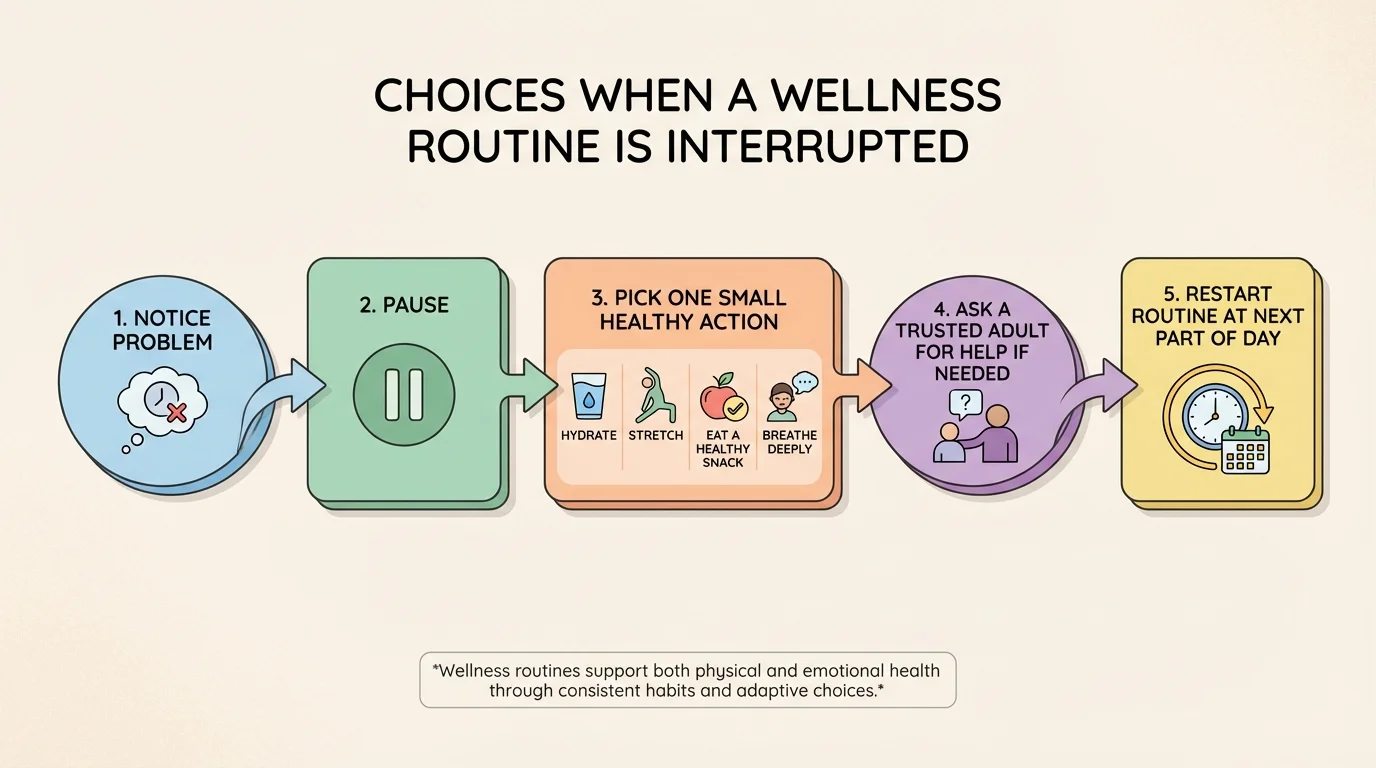
Here are helpful restart steps. First, pause. Second, name the problem. Are you tired, upset, too busy, or distracted? Third, choose one small fix. Fourth, restart at the next part of the day instead of waiting for tomorrow.
For example, suppose you spent too long gaming and now you feel tense and behind. A healthy restart could be: stand up, stretch, drink water, wash your face, tell a parent or guardian you need help resetting, and then start your next task. This restart path reminds you that recovery can be simple.
"You do not have to control every thought or every day. You only need to practice your next healthy choice."
It also helps to expect hard moments. If you know afternoons are tricky, plan a movement break before you get too tired. If bedtime is hard, start your evening routine earlier. Planning for problems is part of being smart, not weak.
Wellness routines are helpful, but they are not meant to solve every problem by yourself. Sometimes you need support from a trusted adult. That is part of healthy living too.
Ask for help if you notice warning signs such as feeling sad or worried for many days in a row, not wanting to do things you usually enjoy, big sleep problems, strong anger that feels hard to control, changes in eating, or body pain without a clear reason. Also tell an adult if someone makes you feel unsafe online or in your community.
Trusted adults can include a parent, guardian, counselor, doctor, coach, group leader, or another grown-up who listens, cares, and helps you stay safe.
If you are ever in immediate danger or think someone else is, get help from a trusted adult right away. Personal wellness includes personal safety. You deserve support, respect, and care.
The best routines are simple enough to repeat. If your plan is too big, make it smaller. If you forget, begin again. Healthy routines grow through practice.
Try building your routine around a few questions: What helps me feel energized? What helps me feel calm? What habits keep me clean and healthy? Who can support me when I am having a hard day? Your answers can guide your choices.
Here are some Try This ideas you can use right away:
Your routine does not need to look like anyone else's. What matters is that it supports your body, your feelings, and your safety in a way that fits your life.
