A community does not get stronger by accident. Parks stay clean because someone cares. Food pantries stay stocked because people give. Neighborhoods become safer because people notice problems and work together. Even at a young age, civic participation can begin with one simple choice: seeing a need and deciding not to ignore it.
You are part of more than your home. Your community may include your neighborhood, apartment building, local library, recreation center, faith group, online clubs, and town or city. When people in a community help one another, everyone has a better chance to stay safe, healthy, informed, and connected.
Community need is something people in a group require in order to live well, stay safe, or feel supported. Service means helping meet a need through action. Volunteer means offering time and effort by choice, usually without being paid.
Some needs are easy to see, like litter on a sidewalk or broken playground equipment. Other needs are less obvious, like loneliness among older adults, families needing food, or younger children needing reading help. Communities often have many needs at the same time, shown through different places and people in one shared area.
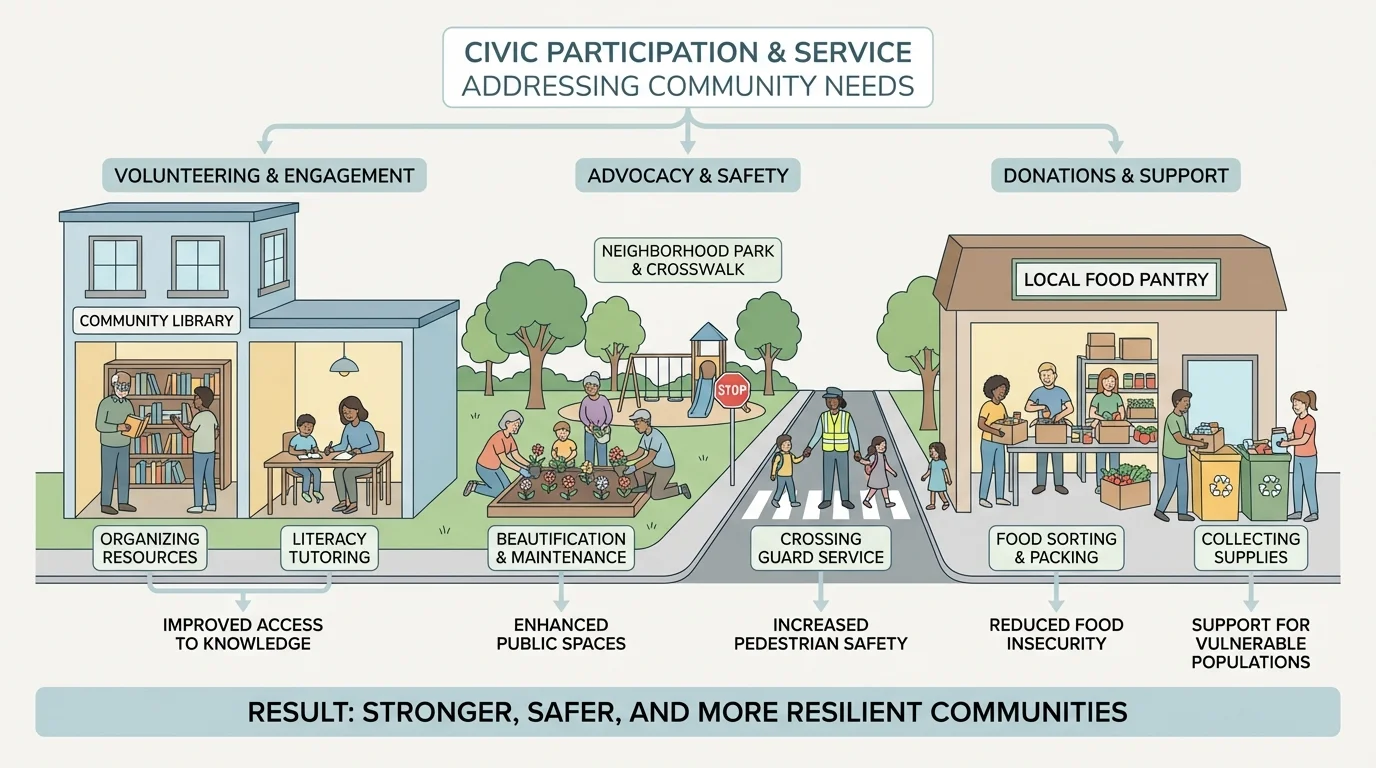
[Figure 1] A community is a group of people who share a place, a goal, or both. People in communities depend on each other. One family may need help after a storm. A local shelter may need supplies. A crossing near a park may need adults to report a safety concern. Communities work best when people notice what is missing and respond in helpful ways.
Needs can be physical, like food, clean spaces, and safe roads. They can also be social, like kindness, inclusion, and support for people who feel left out. They can be informational, like helping neighbors learn about a recycling event, a blood drive, or a town meeting.
When needs are ignored, problems often grow. A small pile of trash can become a bigger mess. A lonely neighbor may feel even more isolated. A rumor shared online can confuse people if nobody checks whether it is true. But when people step up, even small actions can create positive change.
You do not need to solve every problem alone. In fact, strong communities usually improve when many people do small helpful things together. One person donates books. Another shares correct information. Another helps organize a supply drive. These actions connect, and the whole community benefits.
Many community projects begin with one person noticing something specific, such as an empty food shelf, an unsafe path, or neighbors who need company. Big change often starts with careful attention to a small problem.
That is why paying attention matters. If you look around with a helpful mindset, you will begin to notice places where action is needed. The scene in [Figure 1] reminds us that community care is not just one big job. It is many small jobs that fit together.
Civic participation means taking part in helping your community work well. This can include service, sharing ideas respectfully, following community rules, joining local projects, and speaking up about needs in safe and honest ways. Civic participation is about being involved instead of staying on the sidelines.
One part of civic participation is service. Service means doing something useful for others, such as collecting canned food, making thank-you cards for local workers, or helping a community garden. Another part is advocacy, which means speaking up for a cause or a need. For example, if families in your area need more books, you might help raise awareness and ask people to donate gently used books. These three ideas connect in different ways, as [Figure 2] illustrates.
Not every helpful action looks the same. Sometimes you help directly by doing a task. Sometimes you help by organizing people. Sometimes you help by sharing accurate information. All of these can support a community when they are done respectfully and responsibly.
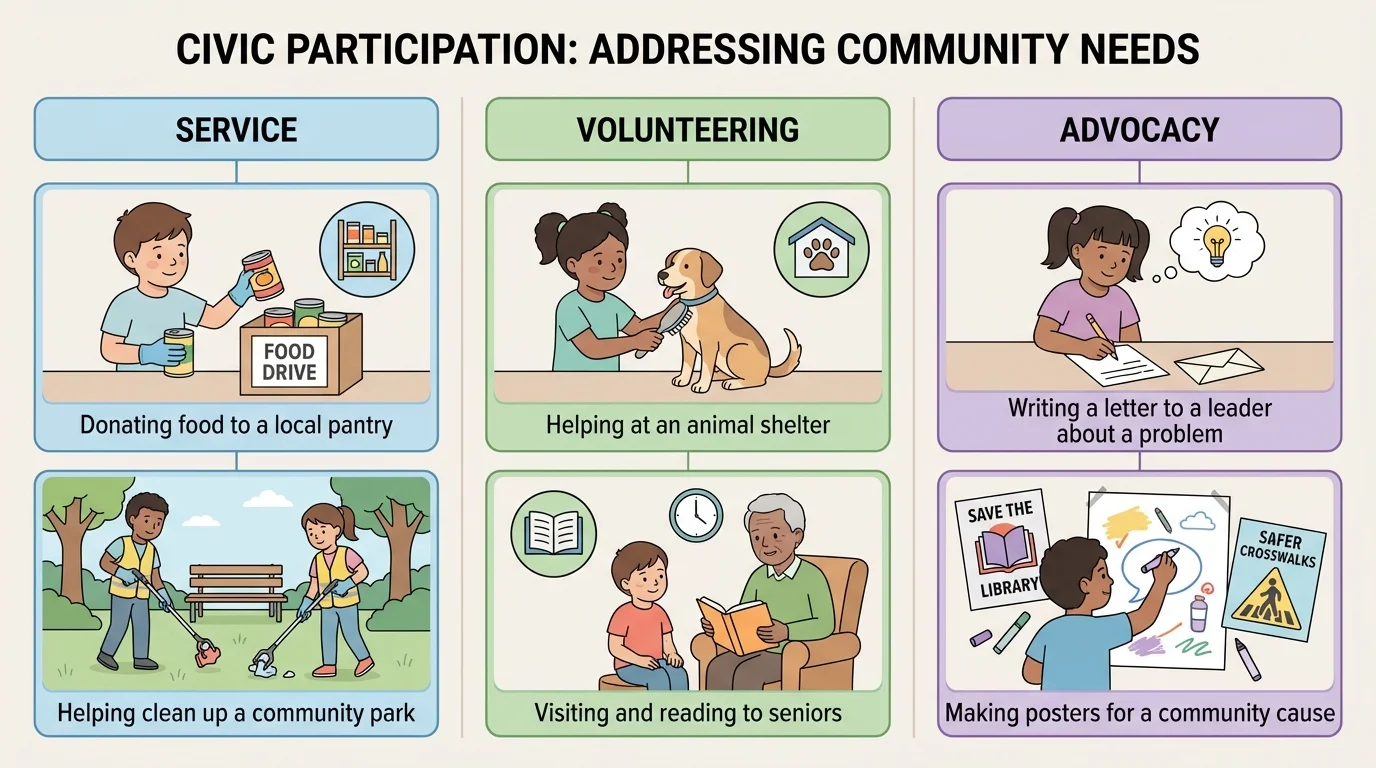
Here is a simple way to tell them apart:
| Type of action | What it means | Example |
|---|---|---|
| Service | Helping meet a need through action | Sorting donated clothing |
| Volunteering | Choosing to give your time | Helping at a park cleanup |
| Advocacy | Speaking up about a need or cause | Making a flyer about a book drive |
Table 1. A comparison of three common ways people support their communities.
For students your age, civic participation often starts with everyday actions: being dependable, listening to others, helping with local projects, and using your voice kindly. You may not vote yet, but you can still be a responsible community member by learning, helping, and communicating well.
"Never doubt that a small group of thoughtful, committed people can change the world."
— Margaret Mead
That quote matters because community improvement rarely happens all at once. It usually happens person by person. The chart in [Figure 2] makes it easier to see that helping is not only about physical work. Thinking, planning, and speaking up matter too.
You can help your community in ways that are realistic for your age. Start with jobs that are safe, useful, and approved by a trusted adult. Helping does not have to be huge to matter.
Here are some examples of age-appropriate civic participation and service:
Good service matches the real need. If a family needs meals, giving random toys may not help much. If a park is dirty, posting about it online may not be enough by itself. Helpful action asks, What is actually needed here?
Helpful action solves the right problem. Community service works best when the action matches the need. Before helping, ask what the problem is, who is affected, and what kind of support would truly make things better.
Think about the difference between helping well and helping poorly. If people donate broken items, workers at a charity must spend extra time sorting trash from usable things. If someone spreads unverified information about a fundraiser, people may show up at the wrong time or place. Careful help saves time and builds trust.
Try This: Look around your home or neighborhood today and write down three needs you notice. Then ask yourself which one is safe and realistic for you to help with.
Good civic action starts with noticing, learning, and planning. It is not just jumping in. A simple process helps you make sure your action is safe and useful instead of rushed or confusing.
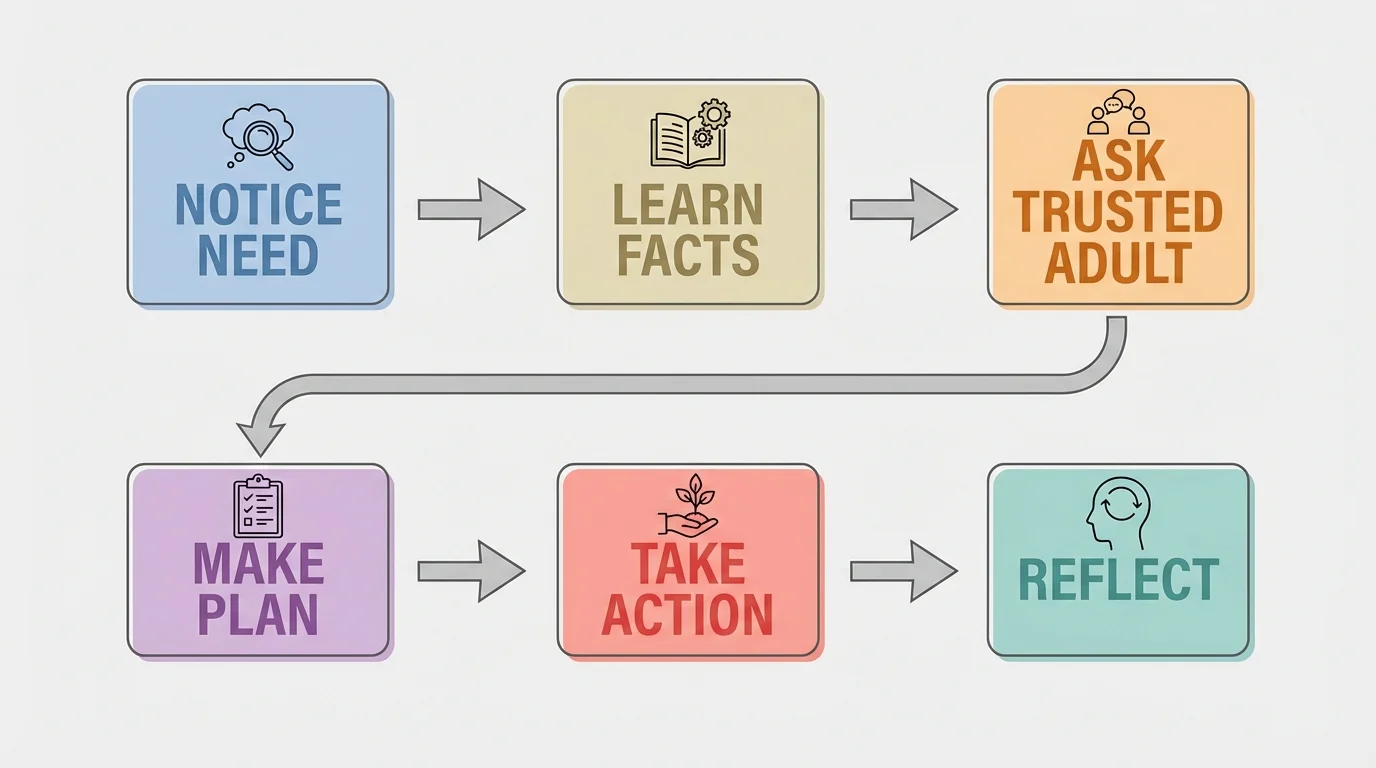
[Figure 3] First, notice a need. Maybe your local park has litter, a donation center needs supplies, or younger kids in your area need help reading. Second, learn more. Ask a trusted adult what the need really is. Third, make sure your idea is safe and allowed. Fourth, create a simple plan. Fifth, take action and then reflect on what happened.
Those steps sound simple, but they matter. If you skip the fact-checking step, you may solve the wrong problem. If you skip permission, you may break a rule. If you skip planning, your help may be disorganized.
Example: Planning a mini book drive
Step 1: Notice the need
You learn that a local community center wants more children's books for its waiting area.
Step 2: Check the facts
A trusted adult contacts the center to ask what kinds of books are needed and whether used books are accepted.
Step 3: Ask permission
You get approval from a parent or guardian before collecting books from family friends or neighbors.
Step 4: Make a plan
You decide where books will be collected, how long the drive will last, and who will help sort them.
Step 5: Take action and reflect
You deliver the books and think about what went well, such as clear labels and good communication.
This project helps because it matches a real need and includes planning, permission, and follow-through.
Here is a helpful checklist you can use:
Try This: Choose one small need and say your plan out loud in five parts: notice, learn, ask, act, reflect. That makes the process easier to remember.
Later, when you work on a real project, the sequence in [Figure 3] can keep you from missing important steps.
Helping others is a good goal, but it still needs rules. Community projects should be safe, honest, and respectful. Simple legal awareness means understanding that some actions require permission, privacy protection, adult supervision, or following local rules.
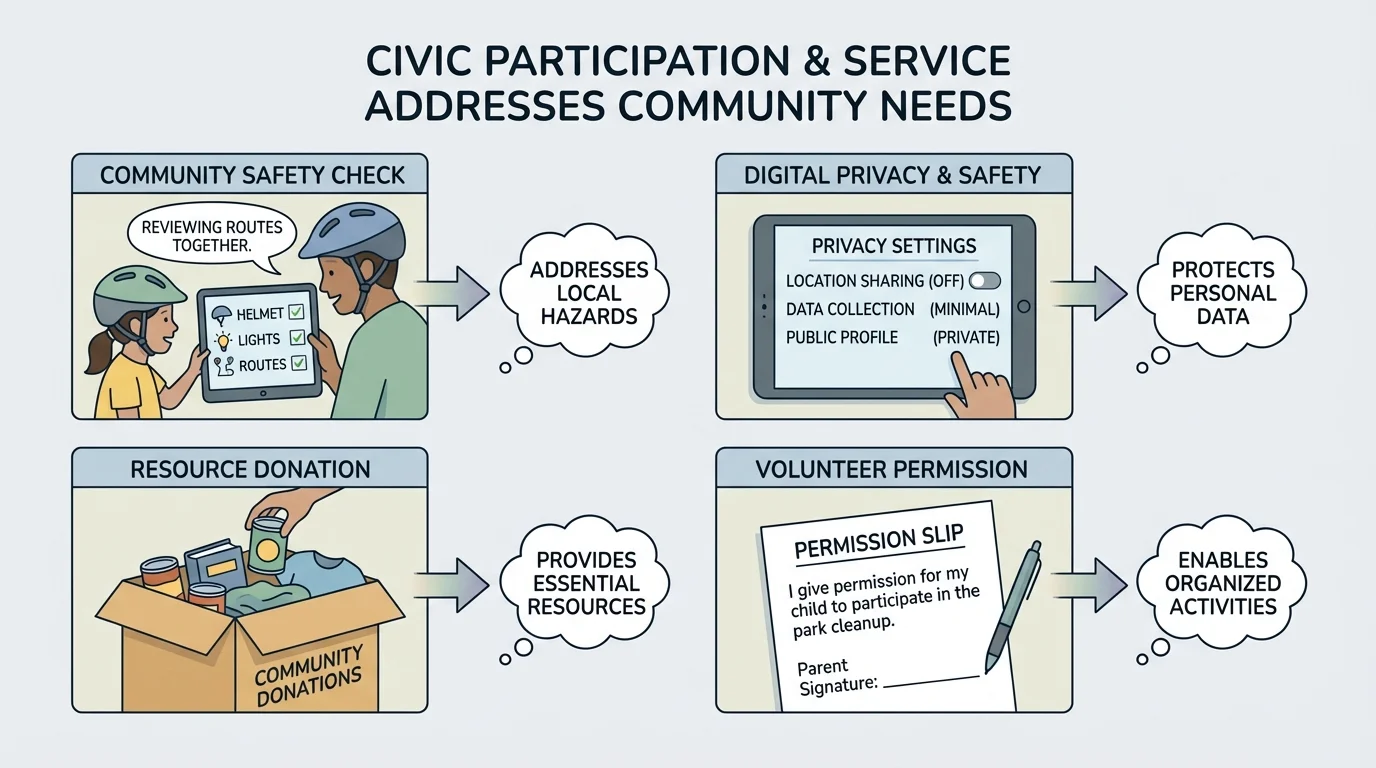
[Figure 4] For example, you should not collect money online, share someone else's address, post photos of people without permission, or organize public events by yourself. These actions can cause safety and privacy problems. A trusted adult should guide any project that involves donations, public communication, transportation, or contact with organizations.
Privacy means keeping personal information safe. Names, phone numbers, home addresses, medical information, and private photos should not be shared carelessly. When you serve others, you protect their dignity as well as their safety.
Responsibility means doing what you said you would do and making careful choices. If you promise to help sort supplies, show up on time. If you are asked to label donations clearly, do it neatly and truthfully. Trust is built when people know they can count on you.
Rules are not there to stop people from helping. They are there to protect people, property, money, and private information. Responsible service follows directions instead of ignoring them.
Legal awareness also includes telling the truth. If you make a flyer for a drive, the date, time, place, and purpose should be correct. If you say donated items are going to a certain organization, that should be true. Honesty matters because people are more likely to support community work when they trust the people leading it.
Another important rule is inclusion. Do not choose helpers based on popularity. Invite people kindly. Think about whether your project is fair and accessible. Could someone help from home by sorting, writing, or sharing approved information? Strong communities include many kinds of people and many ways to contribute.
Later, when you check your own choices, the reminders in [Figure 4] can help you remember permission, privacy, and clear labels.
Good civic action is not only about being busy. It is about being useful, respectful, and dependable. A well-planned project helps people without causing confusion.
Here are signs that an action is working well:
This last point matters a lot. Sometimes people feel helpful, but they do not actually solve the problem. If you collect winter coats in summer for a center that asked for toiletries, your effort may not meet the current need. Real service means checking whether the action truly helped.
Example: Measuring whether a project worked
Step 1: State the goal
Your goal is to collect enough pet towels to help a local shelter for one week.
Step 2: Ask what success looks like
A trusted adult asks the shelter how many towels would be useful.
Step 3: Compare the result to the goal
If the shelter needed 20 towels and your group collected 24, then the project met the goal because it collected more than enough.
Step 4: Reflect
You think about what helped the project succeed, such as clear labels, reminders, and adult support.
Reflection helps you improve the next project instead of guessing.
When you reflect, ask: What worked? What was harder than expected? What should we change next time? Reflection turns one helpful action into a stronger skill for the future.
Here are a few realistic situations that show how civic participation and service can address community needs.
Scenario 1: A storm leaves branches and trash in a nearby common area. Instead of complaining online, you help a parent contact the neighborhood association, then join an approved cleanup. This addresses the need for safety and cleanliness.
Scenario 2: A local pantry needs cereal and canned soup. Rather than guessing, your family checks the pantry's current list. You donate the requested items and help sort them. This addresses the need for food in a useful way.
Scenario 3: Younger children in your community struggle with reading during summer. With adult supervision, you record short read-aloud videos or join scheduled virtual reading sessions. This addresses the need for learning support.
Scenario 4: A park sign is damaged and visitors are confused about rules. You do not fix it yourself or post rumors. Instead, you help an adult report the problem to the proper office. This is civic participation because you are helping the system work better.
Scenario 5: An older neighbor feels lonely. With a caregiver's permission, you drop off a kind card or join a supervised call. This addresses a social need, not just a physical one.
Community needs are not all the same. Some projects help with supplies, some improve safety, some build knowledge, and some strengthen connection between people. Service is strongest when you match the action to the kind of need.
These examples show something important: helping is not only about doing more. It is about doing the right thing in the right way. Accurate information, respect, planning, and follow-through turn good intentions into real help.
Communities change over time. When people practice helping, speaking up respectfully, and following through, they build habits that shape the future. A child who learns to notice needs today may become an adult who volunteers, leads projects, votes, or works in service of others later on.
You do not need to wait until you are older to matter. Right now, you can listen carefully, act kindly, follow rules, and join efforts that improve the lives of others. Those are powerful skills. They make you someone others can trust.
Try This: This week, choose one small action that helps someone beyond your own household. It could be donating one useful item, writing one encouraging note, or asking an adult how to help with one local need.
When many people do small responsible actions, communities become more prepared, more connected, and more hopeful. That is how civic participation and service address community needs: not by magic, but by people choosing to care and then taking thoughtful action.
