Your future does not suddenly appear when you become an adult. It starts forming right now, in the small choices you make every day. The way you spend your time, the things you care about, and the responsibilities you handle all help shape what options you may have later. That is powerful news, because it means you can start building a strong future today.
Future pathways can include many possibilities. You might go to college one day. You might choose a training program, learn a skill through classes, start a business, serve your community, or explore a job that matches your talents. You do not need to have your whole life planned out at age 10. But you can begin to notice what matters to you and how your actions help you move forward.
Think about two students who both say they want to be successful when they grow up. One student practices useful skills, completes online assignments on time, helps at home, and keeps trying when something feels hard. The other student gives up quickly, ignores responsibilities, and spends all day avoiding challenges. Even if both students have big dreams, their daily actions lead them in different directions.
That is because future pathways are built from patterns. A pattern is something you do again and again. If you build a pattern of effort, responsibility, and curiosity, you are more likely to be ready for future opportunities. If you build a pattern of avoiding work or quitting, you may miss chances that could have helped you later.
Many adults say the skills that help them most are not only job skills. They also use time management, responsibility, communication, and problem-solving every day.
When people talk about getting ready for college or other future plans, they are not only talking about grades. They are also talking about habits. Can you manage your time? Can you finish what you start? Can you ask for help? Can you keep learning? Those habits matter in almost every pathway.
[Figure 1] Your future choices are shaped by three important parts working together: your goals, your interests, and your responsibilities. Each one matters on its own, but they become even more powerful when they connect.
A goal is something you want to reach. It could be small, like reading for 20 minutes a day, or big, like becoming a veterinarian, game designer, chef, teacher, or engineer someday. Goals give you direction. They help answer the question, "Where am I trying to go?"
An interest is something that catches your attention and makes you want to learn more. Maybe you love drawing, coding, baking, animals, music, sports, nature, helping people, or fixing things. Interests matter because they give you energy. They can help you discover what kind of future work or learning might feel meaningful to you.
A responsibility is something you are expected to do and follow through on. That might include completing your online lessons, helping with chores, caring for a pet, being honest, showing up for a video call on time, or practicing a skill when you said you would. Responsibilities build trust. When people know they can count on you, more opportunities become available.
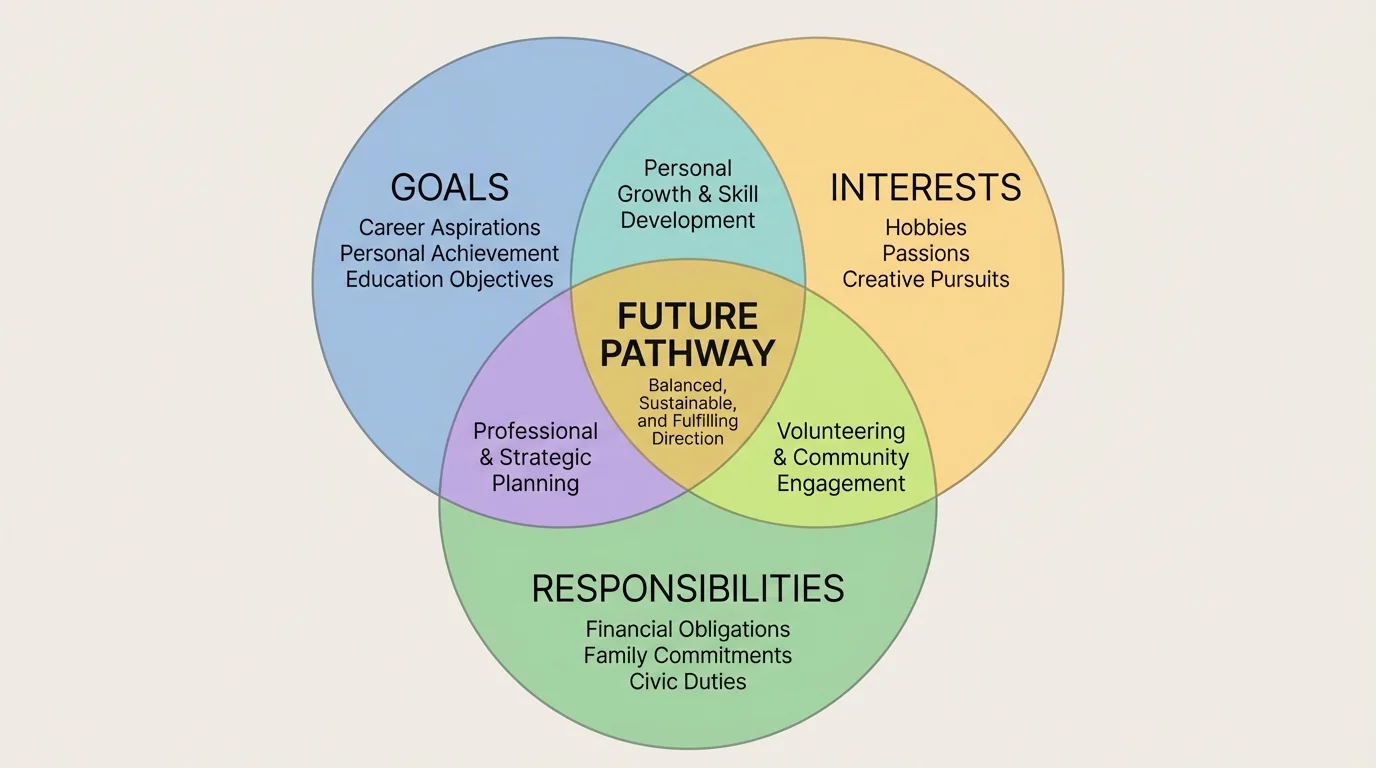
These three parts often connect in real life. For example, maybe you are interested in animals, your goal is to work with them one day, and your responsibility is to care for your family pet every day. That responsibility helps you practice real skills, such as noticing needs, staying consistent, and being dependable.
Future pathway means the direction your life can take based on your choices, skills, interests, and opportunities. A pathway can include school, training, jobs, hobbies, community roles, and personal goals.
Notice that a pathway is not just one single decision. It is more like a road made of many steps. The choices you make now may not decide everything, but they do help shape what roads stay open for you later.
Goals work best when they are clear. Saying "I want a good future" is a nice thought, but it is too broad. A more useful goal is something like, "I will finish my online assignments by Friday each week," or "I will practice keyboarding for 15 minutes four days this week." Clear goals help you know what to do next.
There are short-term goals and long-term goals. A short-term goal is something you can work on soon, such as improving your reading routine this month. A long-term goal takes more time, such as preparing for college, a training program, or a future career. Short-term goals often support long-term goals.
For example, if your long-term goal is to create video games, your short-term goals might include learning basic coding, practicing digital art, and improving teamwork skills. If your long-term goal is to help people as a nurse, doctor, counselor, or therapist, your short-term goals might include learning how to listen carefully, staying organized, and doing your best in science-related lessons.
Why goals matter
Goals help you make decisions. When you know what matters to you, it becomes easier to choose how to spend your time, what skills to practice, and what habits to build. Goals do not have to stay the same forever, but they give you a starting direction.
Goals also help when distractions show up. Maybe you want to play games online, but you also have work to finish. If your goal is to become more responsible and ready for future opportunities, that goal helps you decide to finish your work first. One choice may seem small, but repeated choices create strong habits.
Sometimes students think goals must be huge to matter. That is not true. Small goals can change a lot over time. Reading a little each day, practicing an instrument, helping with younger siblings, learning to cook simple meals, or improving your communication skills can all support future pathways.
Your interests are clues. They may point to talents you already have or skills you want to build. If you love making videos, maybe you enjoy storytelling, editing, design, or technology. If you like baking, maybe you enjoy following steps, measuring carefully, being creative, and sharing with others. If you like helping neighbors or relatives, maybe you are developing service, leadership, and empathy.
Interests can also grow. You do not have to be amazing at something right away. Sometimes an interest starts because you are curious. Then, the more you try it, the more you learn, and the more interested you become. This is important because many future pathways begin with curiosity, not perfection.
Pay attention to the activities that make you want to keep going, even when they are challenging. That often means the activity connects to something important inside you. As you learn more about yourself, you can begin matching interests with possible futures. A student who likes solving puzzles may enjoy coding, engineering, or repair work. A student who enjoys writing stories may be interested in communication, journalism, teaching, or content creation.
Real-life connection: turning an interest into a pathway idea
Step 1: Notice the interest.
Maya loves drawing characters on her tablet and watching tutorials about animation.
Step 2: Name related skills.
She is practicing patience, design, storytelling, and technology skills.
Step 3: Explore future options.
These skills might connect to animation, graphic design, game art, advertising, or digital media.
Step 4: Take a next step.
She could build a small art folder, learn one new tool each month, and ask an adult to help her find safe online classes or community programs.
Your interests do not have to become your career. Some stay hobbies, and that is fine. But even hobbies can teach valuable skills, build confidence, and connect you with people who share your passions.
Responsibilities may not always feel exciting, but they are extremely important. Being responsible means doing what you are supposed to do, even when no one is reminding you every second. It means being honest, prepared, and dependable.
This matters because future opportunities often go to people who can be trusted. If you join a volunteer project, work on a team, apply for a special program, or someday interview for a job, adults will want to know whether you follow through. Responsibility shows that you can handle freedom well.
Simple responsibilities now can prepare you for bigger ones later. Completing online assignments on time helps you learn time management. Taking care of your belongings helps you stay organized. Keeping promises helps you build a strong reputation. A reputation is what people come to expect from you based on your actions.
If your reputation is "this person does their best and can be counted on," that can help open doors. If your reputation is "this person often quits, forgets, or avoids work," people may be less likely to trust you with important chances.
"Small disciplines repeated with consistency every day lead to great achievements gained slowly over time."
— John C. Maxwell
Responsibilities also teach you how to balance what you want with what you need to do. That balance is a big part of growing up. Adults use it every day when they manage work, family, bills, health, and community commitments. You can start practicing now in age-appropriate ways.
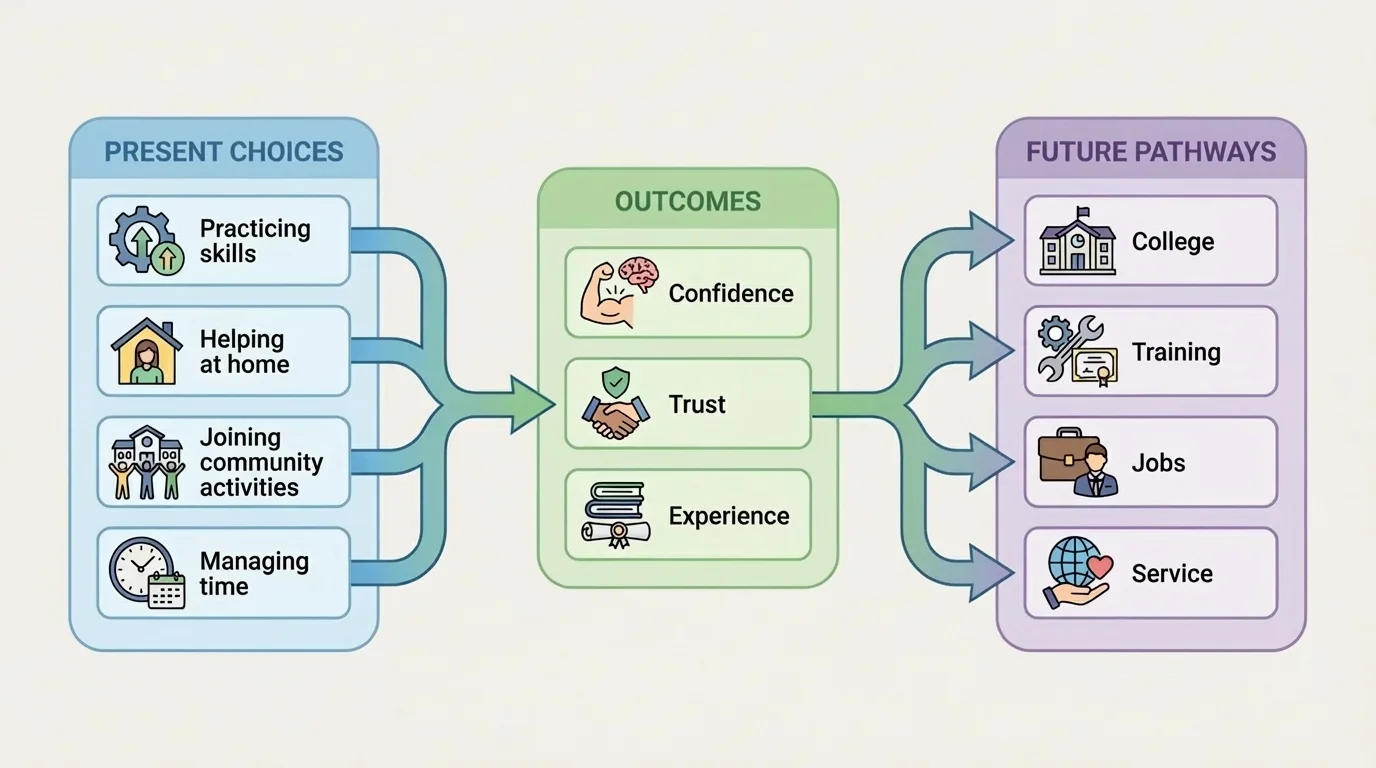
[Figure 2] Future pathways usually grow from small actions over time. You do not wake up one day and suddenly become prepared for college, training, or a career. You build toward those possibilities step by step.
Here is how the three parts can work together. Your interests help you discover what excites you. Your goals help you choose a direction. Your responsibilities help you build the habits needed to keep moving forward. When all three are working together, your pathway becomes stronger.
Suppose you are interested in cooking. Your goal might be to learn to prepare three simple meals by yourself this year. Your responsibilities might include helping plan grocery lists, cleaning up after cooking, and practicing safely with adult guidance. Over time, this could lead to stronger life skills, confidence, hospitality, and maybe even interest in culinary school or food-related work later.
Or maybe you are interested in technology. Your goal could be to learn basic coding or digital safety. Your responsibilities might include managing screen time wisely, finishing your tasks before entertainment, and using online tools respectfully. These habits support future learning in technology and many other fields.
As you saw earlier in Figure 1, these parts overlap. A strong future pathway often comes from asking three questions: What do I care about? What am I working toward? What am I responsible for right now?
| Part | Question to Ask | Example | How It Helps Later |
|---|---|---|---|
| Goals | What am I trying to reach? | Finish work on time each week | Builds discipline and readiness |
| Interests | What do I enjoy learning about? | Animals, art, coding, music | Points toward meaningful options |
| Responsibilities | What do I need to do well now? | Chores, honesty, practice, time management | Builds trust and strong habits |
Table 1. How goals, interests, and responsibilities each support future pathways.
Different students can have different pathways, and that is normal. There is not one perfect future for everyone. What matters is learning how to make thoughtful choices.
One student may love helping people and be very dependable. That student might enjoy volunteering in the community, practicing communication, and later exploring healthcare, education, counseling, or community service. Another student may be fascinated by how things work. That student might enjoy building projects, robotics, fixing items at home, and later looking into engineering, skilled trades, or technical programs.
A third student might be passionate about music or video production. If that student sets goals, practices regularly, and handles responsibilities well, those interests could lead to future opportunities in performance, production, teaching, audio work, or digital media. Even if the exact job changes later, the skills developed along the way still matter.
You do not have to choose one final future right now. At your age, the important work is noticing your interests, building good habits, and learning how your choices affect opportunities.
Community matters too. Your future pathway is shaped not only by what happens in lessons, but also by what you do outside of schoolwork. Helping with family tasks, participating in community groups, joining clubs, creating projects at home, attending workshops, or serving others can all help you build experience and confidence.
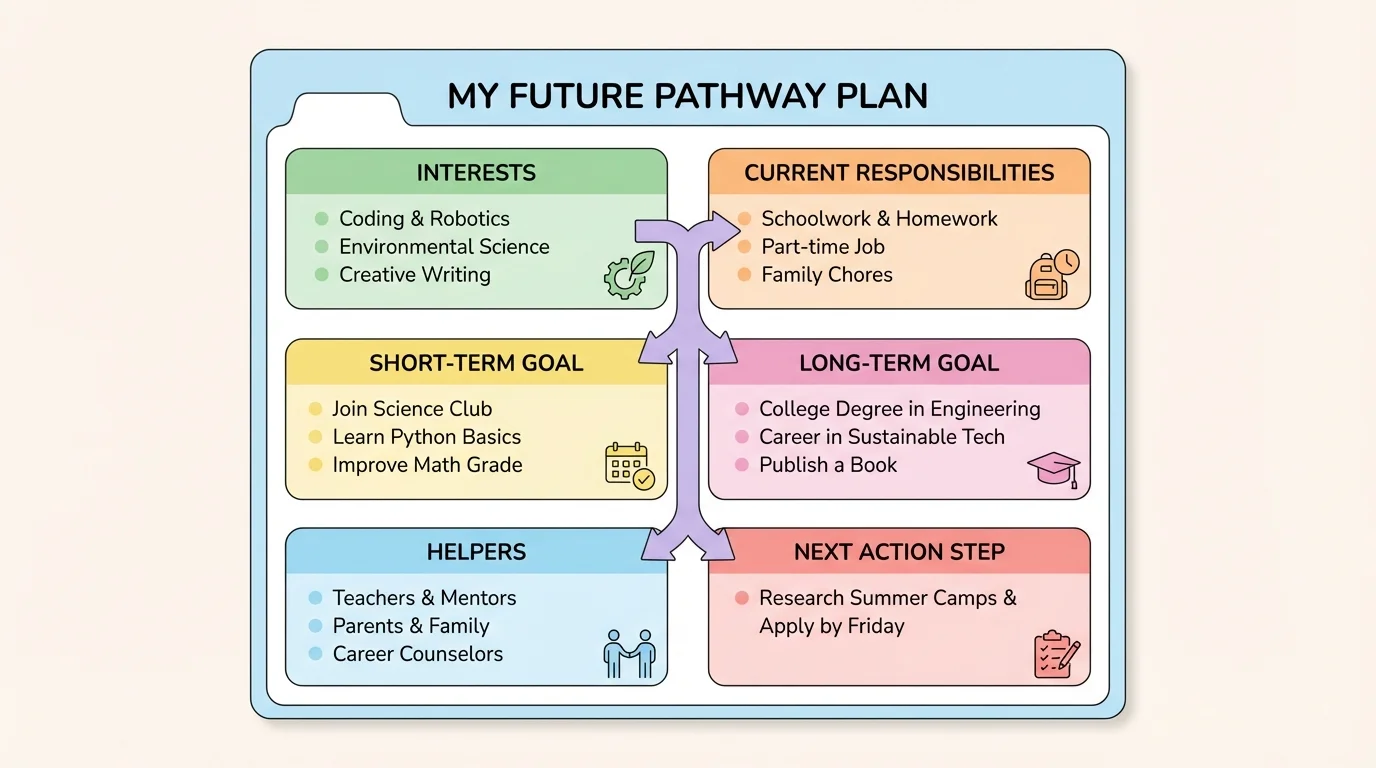
Thinking about the future can feel big, but a simple planning page can make it manageable, as [Figure 3] shows. You do not need a perfect master plan. You just need a few useful next steps.
Start by writing down a few interests. What do you enjoy doing? What do you like learning about? What makes you curious enough to keep trying?
Next, list your current responsibilities. Be honest. These are the things you are expected to do now, such as completing lessons, helping at home, showing respect online, or caring for something or someone. These responsibilities are not in your way. They are part of your training for the future.
Then choose one short-term goal and one long-term goal. Your short-term goal should be specific enough that you can work on it this week or this month. Your long-term goal can be broader, such as being ready for advanced learning, college, or a future career area that interests you.
Planning example you can copy
Step 1: Name an interest.
"I really like animals and learning how to care for them."
Step 2: Name current responsibilities.
"I feed the dog, clean up my workspace, and complete my online lessons."
Step 3: Set a short-term goal.
"This month, I will read two books or articles about animal care and keep track of what I learn."
Step 4: Set a long-term goal.
"I want to explore jobs where people help animals."
Step 5: Choose one action.
"I will ask an adult to help me find a local shelter website, a safe virtual tour, or a beginner class about pets or wildlife."
Here are a few Try This ideas you can use right away:
Later, when you look back at Figure 2, you can see how these small actions lead to bigger opportunities. A pathway is not one giant leap. It is a series of helpful steps.
It is normal for goals and interests to change as you grow. You might think you want one thing now, then discover something new later. That does not mean you failed. It means you are learning more about yourself.
What should stay strong, even when plans change, are your responsibility habits. If you learn to manage time, communicate respectfully, solve problems, ask questions, and follow through, those skills can help in almost any pathway. They are useful whether you later choose college, a certificate program, a trade, community leadership, creative work, or something else.
Setbacks also happen. Maybe you try a club, class, or project and realize it is not for you. Maybe you struggle with motivation or organization. The important thing is to notice the problem and adjust. You can ask for support, make a smaller goal, or try a different strategy. Growing is not about always getting everything right. It is about learning and improving.
Flexible planning
A strong plan is not stiff. It can change when you learn new things. The best future pathways are built by people who stay curious, work responsibly, and keep moving forward even when the path bends.
As shown earlier in [Figure 3], planning works best when you check in with yourself regularly. Ask: What still interests me? What responsibilities do I need to handle better? What goal should I focus on next? These questions help you stay active in shaping your future instead of just waiting for it to happen.
Every time you practice responsibility, explore an interest, or take a step toward a goal, you are building readiness. That readiness can help you enter future learning with confidence, whether that means college, training, service, work, or another path that fits who you are becoming.
