Have you ever noticed that some days feel smooth and easy, while other days feel like a pile of forgotten chores, missed meals, and missing socks? That difference is often not about being lucky. It usually comes from having routines that help you know what to do next. Good routines are like invisible helpers. They make everyday life simpler.
When you have a plan for meals, laundry, organizing your space, and daily jobs, you spend less time guessing. You also avoid small problems that can turn into big ones. For example, if you forget to wash clothes, you may run out of clean things to wear. If you never plan food, you may skip meals or grab snacks that do not keep you full. If you leave items everywhere, you waste time searching for chargers, notebooks, or headphones.
Routines do not mean every minute of your day must be planned. A routine is simply a repeated way of doing something. It helps your brain remember, "This is what I usually do." That makes life easier because you do not have to make as many decisions.
Routine means a set of actions you do regularly in about the same way. Responsibility means a job or duty that you are expected to handle. System means an organized method for getting something done.
Think of a routine like brushing your teeth. You probably do not debate it every day. You just do it. Meals, laundry, and tidying can work the same way when you build simple habits around them.
Doing these tasks well has real results. Your room feels calmer. Your family can count on you. You are more prepared for online meetings, activities, or trips outside the house. You also build skills that older teens and adults need every day.
The easiest routines are connected to parts of the day you already have. These are called anchors. A routine works best when one action leads into the next, as [Figure 1] shows with a morning-to-evening flow. For example, after you get dressed, you make your bed. After lunch, you wash your dish. Before screen time in the evening, you do a quick room reset.
This works because you are not trying to remember random tasks. You are attaching a new action to something you already do. That makes the routine more automatic over time.
Start small. If you try to change everything at once, it may feel too hard. Pick one morning task, one afternoon task, and one evening task. Keep them simple and repeat them daily.
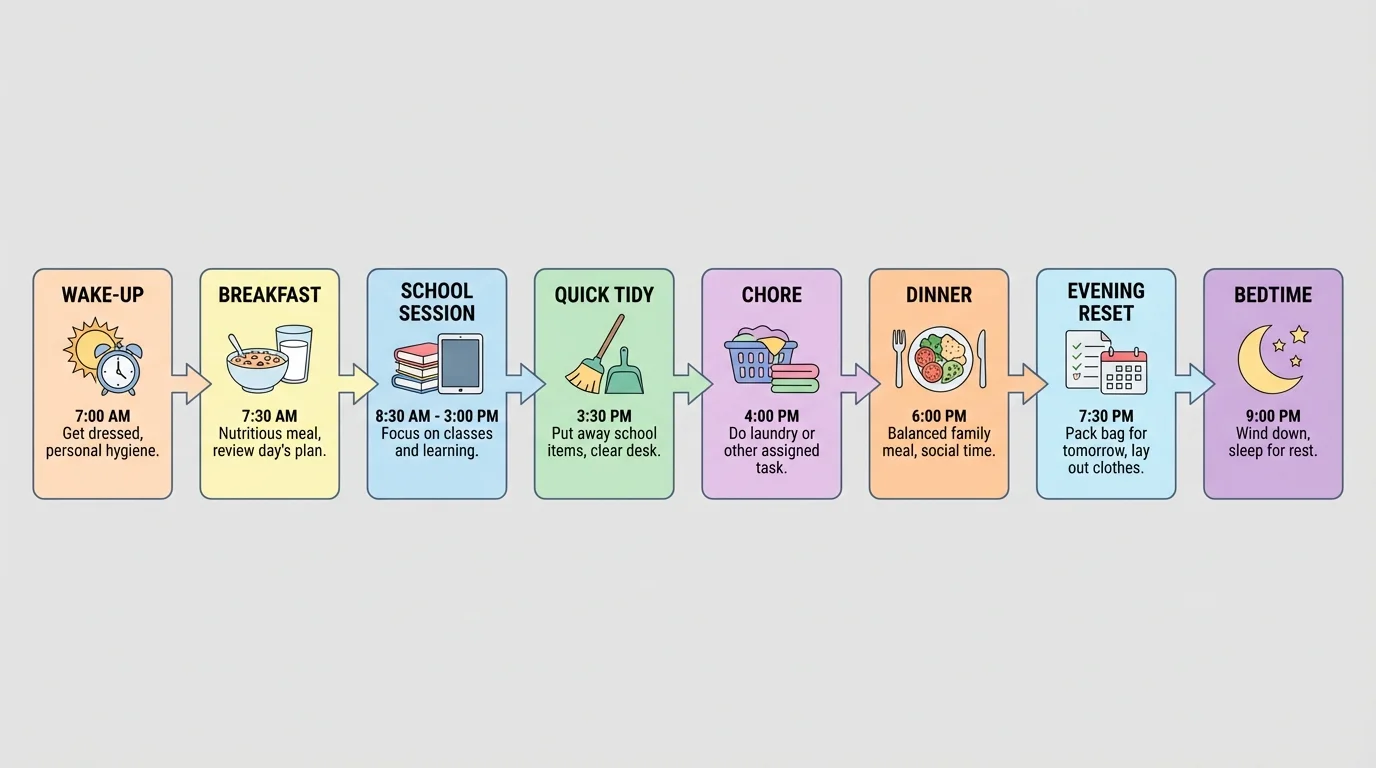
A helpful tool is a checklist. A checklist can be on paper, on a whiteboard, or in a notes app. It gives you a clear place to look instead of holding every task in your head. For many people, checking off a task also feels satisfying and motivating.
Here is one simple daily pattern:
Morning: make bed, get dressed, eat breakfast, clear dish.
Afternoon: put away school materials, have a snack, do one home task.
Evening: help with dinner or cleanup, set out clothes for tomorrow, do a 5-minute tidy.
Later, when you build a weekly schedule, you can connect bigger jobs to certain days. That is where routines become even more powerful. Instead of wondering when to do laundry or clean your desk, you already know.
Why small repeated actions beat big random cleanups
A huge cleanup session once in a while can help, but it is tiring. Small routines stop mess and stress from building up. Spending just a few minutes each day often works better than waiting until everything feels overwhelming.
If your routine breaks one day, that does not mean it failed. It only means you missed one round. The goal is not perfection. The goal is returning to the routine again.
Food is one of the easiest places to build useful independence. A meal plan is a simple plan for what you will eat over the next few days. It saves time, helps you notice what ingredients you need, and lowers the chance of getting hungry and making rushed choices. Planning a few repeat meals instead of inventing something new every day keeps things realistic, as [Figure 2] makes clear.
You do not need fancy recipes. Start with a few easy options you can help prepare or fully prepare with permission and supervision when needed. Examples include oatmeal, yogurt with fruit, sandwiches, wraps, scrambled eggs, pasta, soup, rice bowls, cut vegetables, and toast with nut butter if safe for your home.
A practical meal routine usually includes four parts: planning, preparing, eating, and cleaning up. If one of these parts is skipped, the routine falls apart. For example, if you make a snack but leave the mess, the kitchen becomes harder for the next person to use.
One easy strategy is to make categories instead of exact meals for every single day. You might decide: breakfast is quick, lunch is simple, snack is fruit plus protein, and dinner includes a vegetable. That gives structure without making the week too strict.
When you do choose specific meals, think ahead. If you need bread, fruit, eggs, or yogurt, check whether you have them. If your family shops once a week, planning before shopping helps a lot.
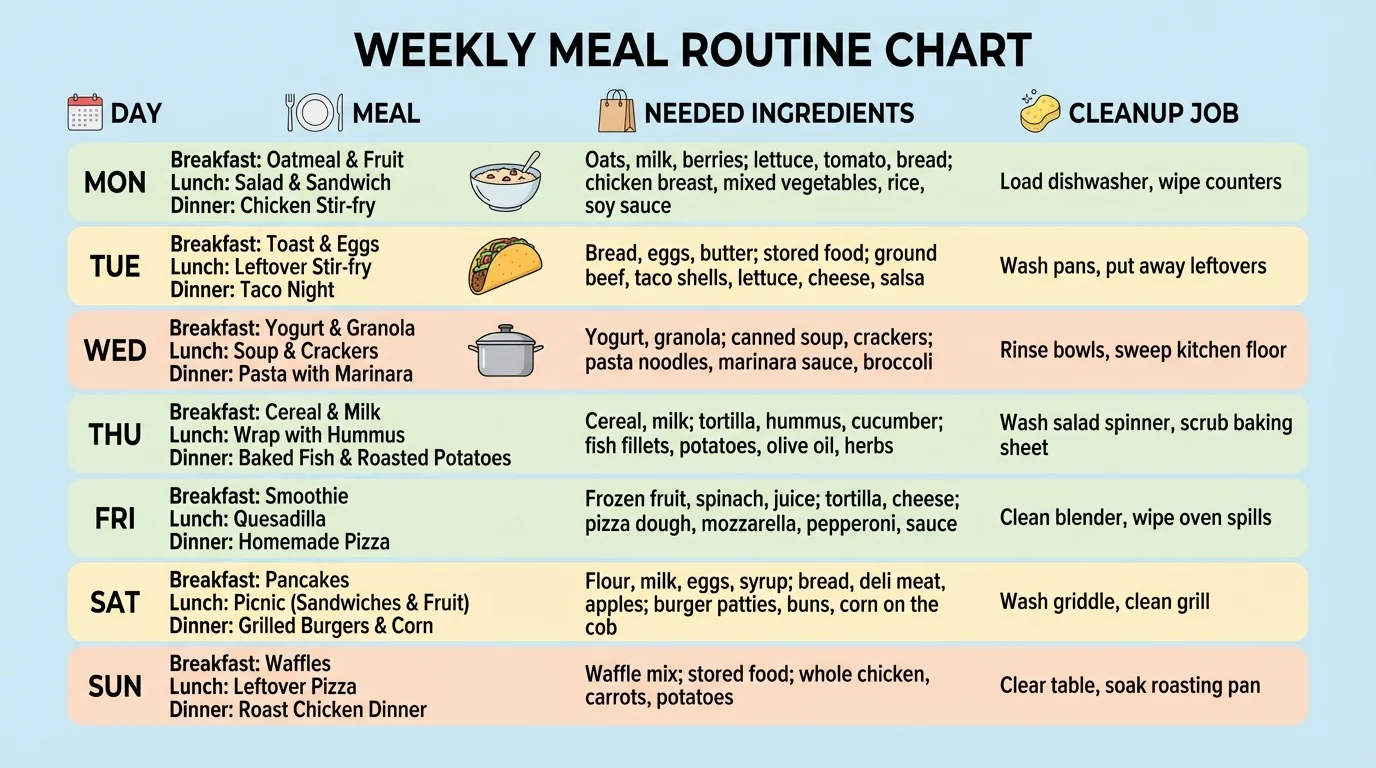
Meal routines also include food safety. Wash your hands before handling food. Put cold foods like milk, yogurt, and leftovers back in the refrigerator. Use clean dishes and wipe counters when finished. If you are unsure whether food is safe, ask an adult.
Cleanup should be part of the meal, not an extra surprise. That might mean rinsing a bowl right after breakfast, loading dishes, wiping the table, or putting leftovers away. A meal is not fully done until the space is ready for the next use.
A simple weekday meal routine
Step 1: Pick repeat breakfasts.
Choose two or three easy breakfasts such as oatmeal on some days and eggs with toast on others.
Step 2: Plan simple lunches.
Use easy combinations like a sandwich, fruit, and water, or leftovers from dinner.
Step 3: Prepare one smart snack.
Pick a snack that actually keeps you full, such as apple slices with cheese or crackers with hummus.
Step 4: End with cleanup.
Put food away, rinse dishes, and wipe the counter.
This routine helps you eat regularly and keeps the kitchen from getting messy.
If you often forget meals because you are focused on online work or hobbies, use a timer or schedule break times. Eating at regular times helps your energy and mood stay steadier through the day.
Later, when you build your weekly plan, the meal chart in [Figure 2] is useful again because it shows that planning food and planning cleanup belong together.
Laundry can feel huge when clothes are everywhere, but it becomes manageable when you always do it in the same order. That repeatable order, shown in [Figure 3], follows these steps: sort, wash, dry, fold, and put away. If you stop halfway, the job is not really finished.
The first step is sorting. Common groups are lights, darks, towels, and special items. Some homes may combine certain loads, but sorting helps prevent problems such as light clothes picking up dark color. Also check pockets before washing. Tissues, wrappers, and small objects can create a mess.
Another important habit is reading labels. Clothing labels may give directions such as cold wash, gentle cycle, or do not tumble dry. You do not need to memorize every symbol right now, but it is smart to know that labels give care instructions.
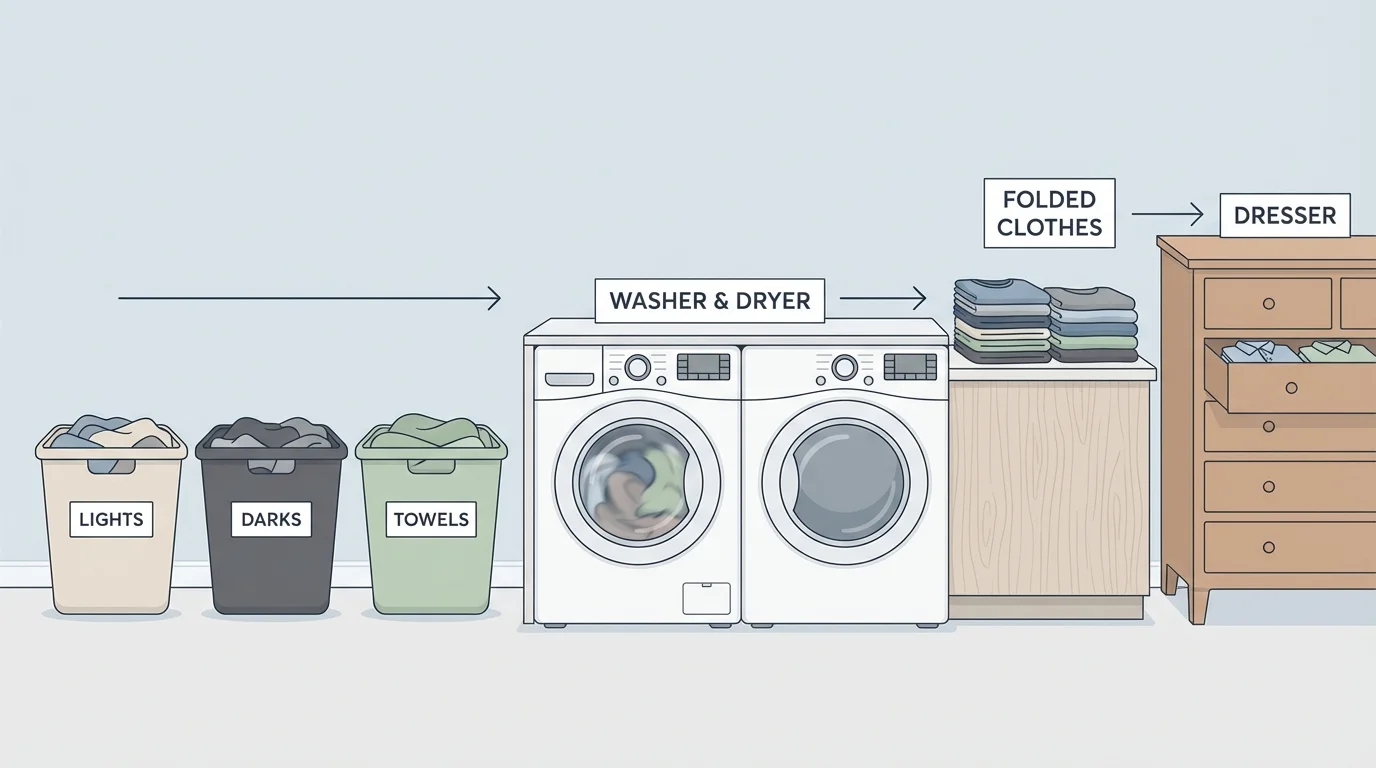
After sorting, use the washer the way your household does. Ask which settings are normal in your home. If detergent is used, measure carefully. More soap is not always better. Too much can leave residue or make the washer work poorly.
When the washing is done, move clothes to the dryer if that is how your home dries laundry, or hang items if needed. Try not to leave wet clothes sitting too long because they can start to smell bad.
Folding matters more than some people think. If clean clothes stay in a basket for days, they wrinkle, get mixed up, or end up on the floor. Putting laundry away right after folding finishes the routine and makes mornings easier.
| Step | What to do | Why it matters |
|---|---|---|
| Sort | Separate lights, darks, towels, and special items | Protects clothes and helps loads wash evenly |
| Check | Empty pockets and read labels | Prevents damage and messy surprises |
| Wash | Use the correct cycle and detergent amount | Cleans clothes without extra wear |
| Dry | Dry or hang items soon after washing | Prevents odors and wrinkles |
| Finish | Fold and put away | Keeps clothes usable and organized |
Table 1. The basic laundry routine from sorting to putting clothes away.
A good laundry schedule might be once a week for your own clothes, or a specific day for towels or bedding depending on your home. If laundry is shared in your household, ask what your part is. Maybe you sort your own clothes, fold towels, or put away your load.
Wet towels and sports clothes often need extra attention because trapped moisture can cause strong smells. Hanging them up right after use can make laundry day much easier.
The order in [Figure 3] is useful beyond clothing. It teaches an important life skill: complete the whole process, not just the first part.
A messy space is often not caused by having too much stuff. It is often caused by not having clear homes for things. A zone is a specific area with a specific purpose, and [Figure 4] shows how zones make a room easier to use. For example, your desk zone is for school materials, your charging zone is for devices, and your laundry zone is where dirty clothes go.
When items have homes, putting them away becomes faster. If your headphones belong in one drawer, your water bottle has one shelf, and your laundry always goes in a hamper, you spend less time searching and less time making piles.
One strong habit is the 5-minute reset. Set a timer for five minutes and return items to their homes. Put trash in the bin, dishes in the kitchen, clothes in the hamper or drawer, and papers in the correct spot. This works because it is short enough to start, even on a busy day.
Another useful rule is "one touch when possible." If you finish using something, try to put it away right then instead of setting it down somewhere random. Random placement creates future work.
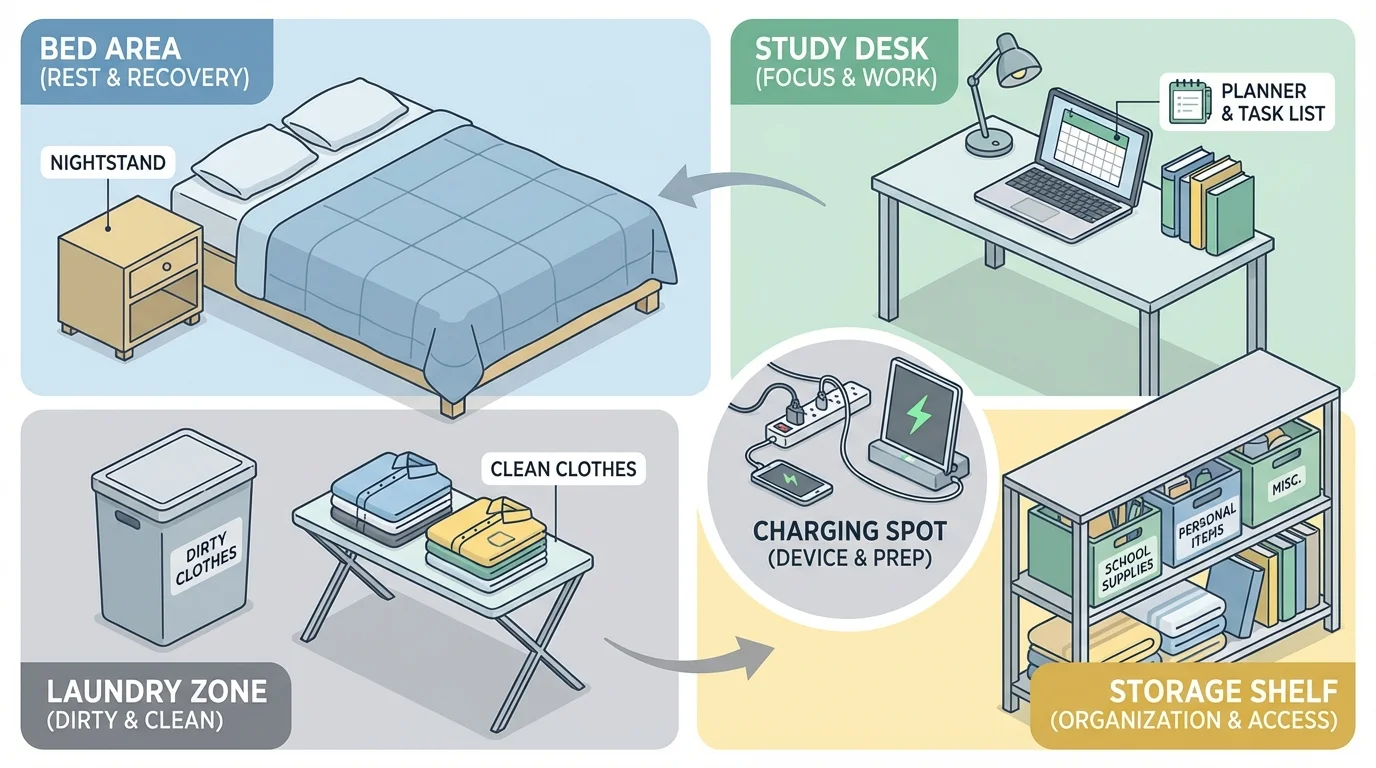
Organization also includes digital life. Your tablet, laptop, or computer can get messy too. Create folders for school subjects or projects. Name files clearly. Delete screenshots or downloads you do not need. A clean digital space saves time just like a clean desk does.
If your room gets messy fast, notice your trouble spots. Maybe papers collect near your chair. Maybe socks pile up near the bed. Maybe dishes stay on a side table. Trouble spots tell you where your system needs help. You might need a small bin, a hook, or a reminder note.
Organization is about access, not perfection
The goal is not making your room look like a store display. The goal is being able to find what you need, clean up quickly, and use your space without stress. A good system is one you can keep using.
Later, when your week gets busy, the zone system in [Figure 4] still helps because it turns a messy room into a set of smaller, easier jobs.
Home responsibilities may include feeding a pet, taking out trash, unloading dishes, helping with younger siblings, cleaning a bathroom sink, or wiping the table after dinner. The exact jobs depend on your home, but the skill is the same: know what is expected, know when to do it, and do it without waiting to be reminded every time.
Communication matters here. If you are not sure what your job is, ask clearly. Good questions sound like this: "Do you want me to do this every day or only on certain days?" "Should I do it before dinner or after?" "How will I know it is finished correctly?" These questions prevent confusion.
A routine becomes stronger when jobs are tied to times or events. For example, trash goes out after dinner on Tuesday, dishes are unloaded in the morning, and pet water is checked before bed. Vague plans like "I'll do it later" usually lead to forgotten tasks.
You can also use time blocks. A time block is a planned chunk of time for a type of task. For example, from one part of the afternoon to the next, you might handle snack, quick cleanup, and one household responsibility before free time. The point is not to schedule every minute. The point is to protect time for important jobs.
How to handle a new chore responsibly
Step 1: Learn the full job.
Ask what the chore includes from start to finish. "Clean the table" might mean wiping it, pushing in chairs, and throwing away trash.
Step 2: Learn the timing.
Ask when it should happen and how often.
Step 3: Gather supplies first.
Bring what you need before starting, such as a cloth, trash bag, or basket.
Step 4: Finish completely.
Check the area before leaving so you do not stop halfway through.
This makes you more dependable and helps others trust you with bigger responsibilities.
There is also a fairness part to responsibilities. In a shared home, if one person leaves a mess or avoids chores, someone else has to do extra work. Doing your share shows respect.
No routine works perfectly every day. Illness, trips, special events, tiredness, or schedule changes can interrupt even a good system. The important skill is not "never make a mistake." The important skill is "restart quickly."
When a routine breaks, first avoid blaming yourself too much. That can make you want to quit. Instead, ask a simple question: "What is the next useful action?" Maybe it is washing one load of clothes, making one simple meal, or doing one 5-minute room reset.
If a routine keeps failing, it may be too big. Make it smaller. Instead of "keep my room clean all week," try "put laundry in the hamper every night." Instead of "cook every lunch," try "plan three easy lunches." Smaller routines are easier to repeat.
"You do not have to get everything done. You do have to know what to do next."
It also helps to notice obstacles. If you never put dirty clothes in the hamper, maybe the hamper is in a bad spot. If you skip breakfast, maybe your options take too long. If your desk stays messy, maybe your supplies do not fit the space well. Improve the system instead of only trying to "try harder."
Another smart move is using a reset day. A reset day is a time when you catch up on the basics: laundry, room tidy, school materials, and meal prep for the next few days. For many homes, this works well on a weekend.
Here is one realistic example for a student learning from home. You would change it to fit your family, your schedule, and your responsibilities.
| Day | Main routine focus | Small daily habits |
|---|---|---|
| Monday | Plan meals for a few days | Make bed, clear breakfast dish, 5-minute room reset |
| Tuesday | Wash one load of clothes | Put dirty clothes in hamper, fold clean laundry |
| Wednesday | Organize desk and digital files | Return supplies to desk zone after work |
| Thursday | Help with kitchen cleanup | Wipe counter after snack, unload dishes if assigned |
| Friday | Check room trouble spots | Put away chargers, dishes, papers, and clothes |
| Saturday | Reset day | Laundry, tidy room, prepare for next week |
| Sunday | Light prep and rest | Pick clothes, check supplies, review chores |
Table 2. A sample weekly routine that combines meals, laundry, organization, and home responsibilities.
You do not need a packed plan to be responsible. Even a few repeated actions can make a big difference. The daily flow in [Figure 1], the meal structure in [Figure 2], the laundry order in [Figure 3], and the room zones in [Figure 4] all point to the same idea: when you make decisions once and repeat them, everyday life gets easier.
A strong routine should feel helpful, not impossible. If your plan takes too long or is hard to remember, simplify it. Choose routines you can really keep doing.
The more you practice these skills now, the more prepared you will be later for bigger responsibilities. Being able to feed yourself, care for your clothes, manage your space, and follow through on daily jobs is a real form of independence.
