Have you ever noticed that on some days everything feels harder for no obvious reason? You get annoyed faster, your work takes longer, and even simple choices feel difficult. On other days, you handle problems better, stay calmer, and finish what you need to do. A lot of that difference comes from three things that quietly shape your day: your habits, your sleep, and your workload.
These three factors affect how you feel, how well you pay attention, and how much control you have over your actions. That matters in real life: when you are joining a live class online, messaging a friend, helping at home, practicing a sport, or trying to finish a project, your brain is constantly managing emotions, attention, and choices.
Your brain does not perform the same way all the time. It responds to how you treat it. If you stay up very late, skip breaks, jump between apps every few minutes, and leave tasks until the last minute, your brain has to work under pressure. That often leads to frustration, poor focus, and weaker self-control. If you build steady routines, get enough rest, and manage your work in smaller pieces, your brain has a better chance to stay balanced.
This is part of self-management: noticing what affects you and making choices that help you function well. It is also part of emotional regulation and resilience. You cannot control every stressful event, but you can learn how to protect your energy and respond in smarter ways.
Mood is your general emotional state. It is not just whether you are happy or sad; it also includes whether you feel calm, tense, irritated, hopeful, or low-energy. Focus is your ability to direct attention to what matters and stay with it. Self-control is your ability to pause, think, and choose your actions instead of just reacting.
Mood affects how you experience the day. Focus helps you stay on a task. Self-control helps you manage impulses, words, and actions. These skills work together: when one weakens, the others often get weaker too.
For example, if you are tired, your mood may become more negative. That negative mood can make it harder to focus. Poor focus can make your workload feel bigger. Then you may snap at someone in a group chat or give up on your task too quickly. A small problem turns into a bigger one because these skills are connected.
Habits are repeated actions that become automatic over time. They often work like loops: something triggers the habit, you do the action, and your brain gets a result, such as comfort, entertainment, relief, or progress. Because habits repeat, they can either support you or slowly drain you.
Helpful habits include going to bed at a similar time, starting schoolwork before you feel rushed, drinking water, moving your body, and putting your phone away during important tasks. Unhelpful habits include scrolling late at night, opening multiple tabs while trying to work, ignoring hunger until you feel cranky, or telling yourself, "I'll do it later," again and again.
One reason habits matter so much is that they reduce the number of choices you have to make. If your morning routine is set, you do not waste energy deciding every tiny step. That saves mental energy for harder tasks. But if your routine is chaotic, you start the day already using up patience and attention.
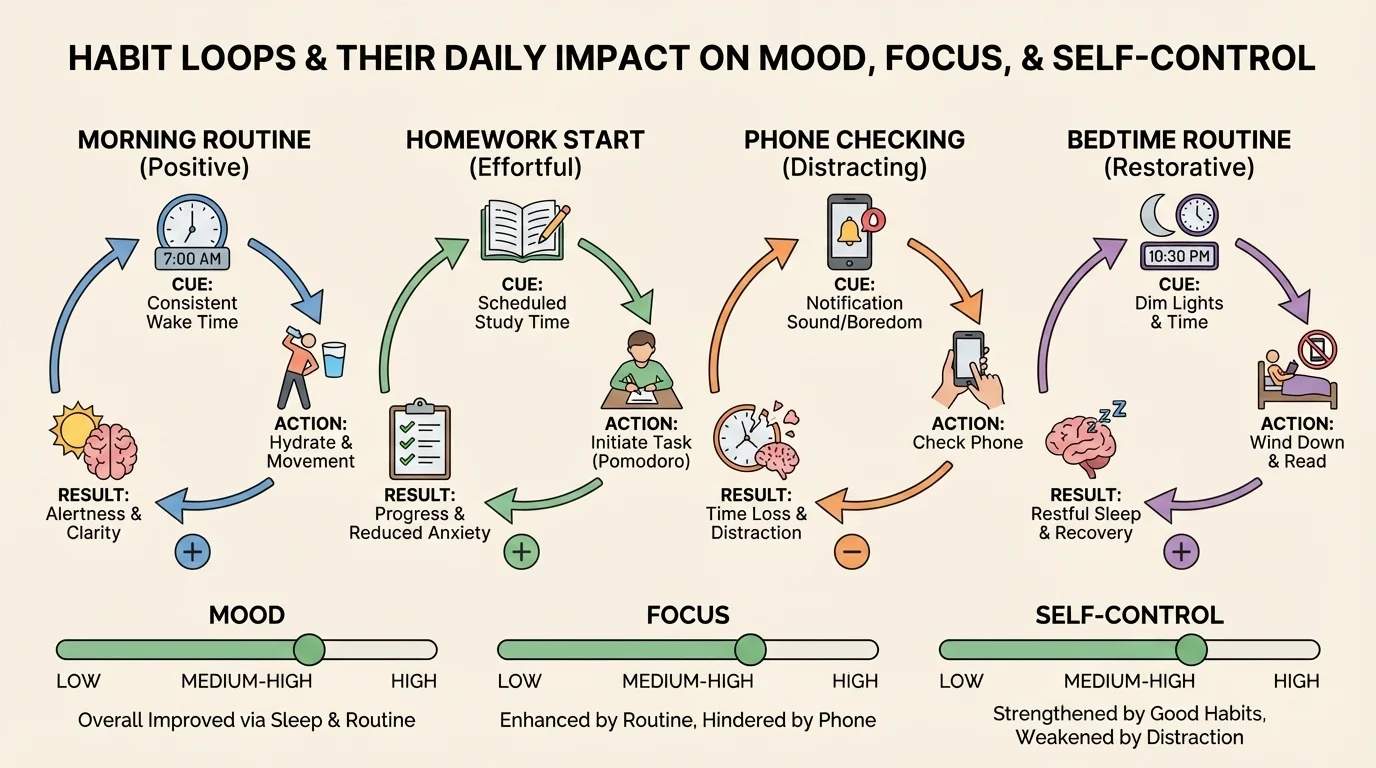
[Figure 1] Think about this example: you wake up and check social media right away. Ten minutes becomes thirty. Now you feel rushed. Because you feel rushed, your mood gets tense. Because your mood is tense, it is harder to focus during your first task. Later, you may feel annoyed at yourself, which lowers motivation even more. The habit did not just take time; it changed your overall mental state.
Now compare that with a different habit. You wake up, drink water, get dressed, and look at your task list before opening entertainment apps. That habit makes the first part of the day calmer. You begin with a sense of direction instead of stress.
Helpful habits are like brain shortcuts. When you repeat a healthy routine, your brain spends less effort on starting and switching tasks. This protects your attention and makes self-control easier because you are not arguing with yourself over every decision.
Try This: Pick one tiny habit that supports focus. Make it so small that it feels easy to repeat. For example: "Before I start my online class, I will put my phone across the room," or "At night, I will plug in my device outside my bed area." Small habits are more powerful than big plans you do only once.
Sleep deprivation means not getting enough sleep for your body and brain to recover well. Sleep affects almost every mental skill you use in a day. When sleep is too short, too late, or poor in quality, your brain has a harder time regulating emotions, remembering information, and controlling impulses.
When you are well-rested, it is easier to notice your feelings before they take over. You are more likely to pause before reacting. You can listen better, make better choices, and stick with a task longer. When you are tired, small problems can feel huge. You may feel more sensitive, more negative, or more dramatic than usual, even if the situation has not changed much.
[Figure 2] Too little sleep often shows up in everyday ways: rereading the same sentence several times, forgetting what you were about to do, laughing less, feeling unusually irritated, or wanting fast rewards like junk food, endless videos, or quitting a task. This happens because tired brains prefer quick comfort over long-term goals.
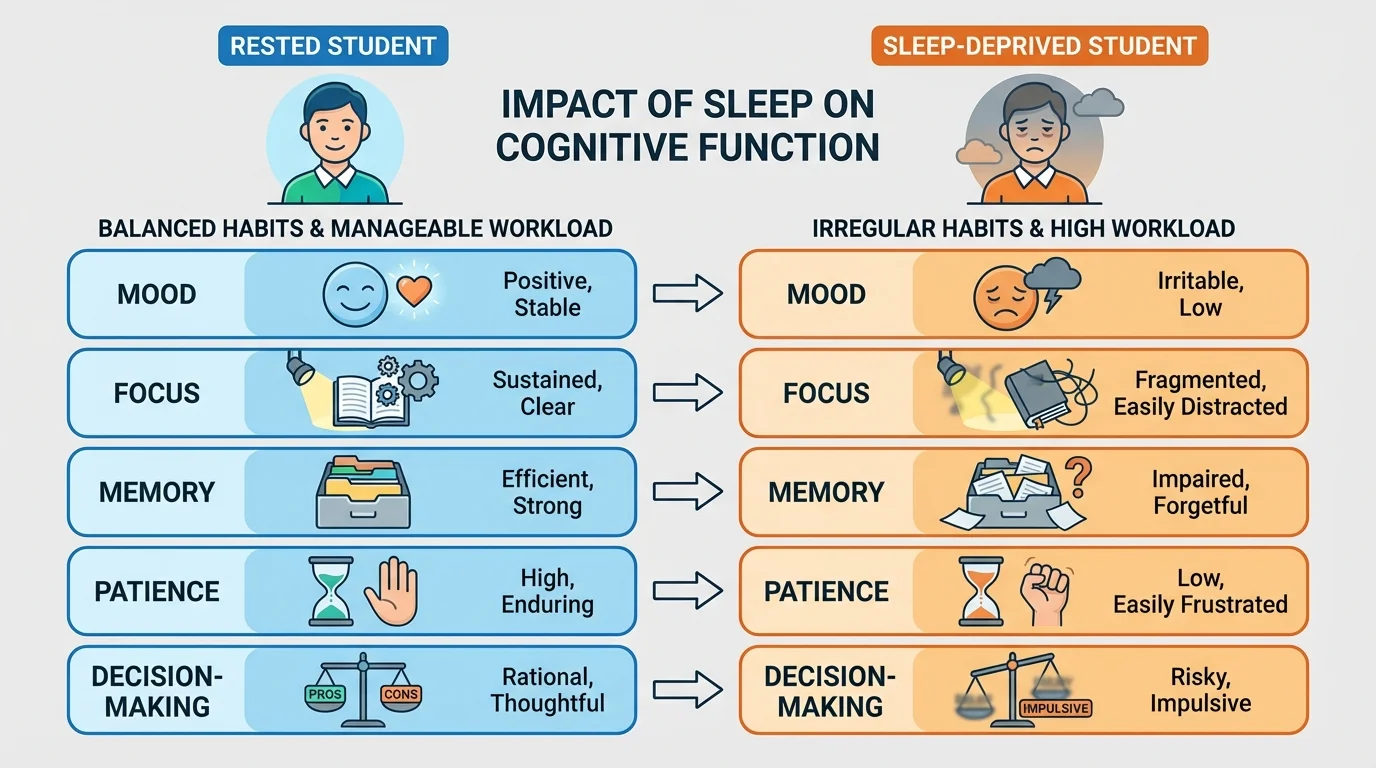
Sleep also affects relationships. If you are exhausted during a video call or while texting, you may misunderstand someone's tone, answer too sharply, or assume the worst. Later, when you are calmer, you might realize the problem was not as serious as it felt.
Many students think, "I can handle being tired." Sometimes you can get through the day, but getting through is not the same as functioning well. A tired brain usually works more slowly, makes more mistakes, and needs more effort for the same result. That means poor sleep can quietly increase your workload too.
Your brain still works while you sleep. Sleep helps with memory, emotional balance, and restoring mental energy, which is why a single late night can affect much more than just your morning.
Try This: Choose one sleep-protecting action for the next few nights. You might dim lights earlier, stop videos a set amount of time before bed, or keep a notebook nearby so worries do not bounce around in your head.
Workload is the amount of work, responsibilities, and mental effort you are carrying. It is not only about homework. It can include chores, sports practice, family responsibilities, messages you feel you need to answer, and personal goals you are trying to keep up with.
Workload affects mood and focus in two main ways. First, too much at once can create stress and overwhelm. Second, poorly organized work can feel bigger than it really is. A list of five tasks might be manageable, but if you avoid them all day, your brain treats them like a giant cloud hanging over you.
When workload gets heavy, your body may move into a stress response. You might feel tense, restless, or mentally crowded. This can lower concentration and make you more likely to rush, procrastinate, or argue. You may not be bad at managing work. You may just be overloaded.
| Workload situation | Common effect on mood | Common effect on focus | Common effect on self-control |
|---|---|---|---|
| Too many tasks at once | Overwhelmed, tense | Jumping between tasks | More likely to quit or snap |
| Work left until late | Guilty, stressed | Rushed thinking | More impulsive choices |
| Work broken into smaller steps | Calmer, more confident | Better task attention | Easier to stay patient |
| Balanced schedule with breaks | Steadier energy | Longer focus | Better decision-making |
Table 1. Common ways workload level and organization influence mood, focus, and self-control.
A low workload can also affect you. If you are bored for long periods, your brain may look for stimulation. That can lead to distraction, restlessness, or starting drama online just because you want excitement. Balance matters more than simply having less to do.
These three factors rarely act alone. They often create a chain reaction. A late-night habit can reduce sleep. Poor sleep can weaken focus. Weak focus can make work take longer. Longer work time can increase stress. Stress can damage mood and self-control, which then makes it harder to keep good habits the next day.
This is why students sometimes feel "stuck." The problem is not always laziness or attitude. Sometimes it is a cycle. Once you see the pattern, you can change one part of it and start improving the whole system.
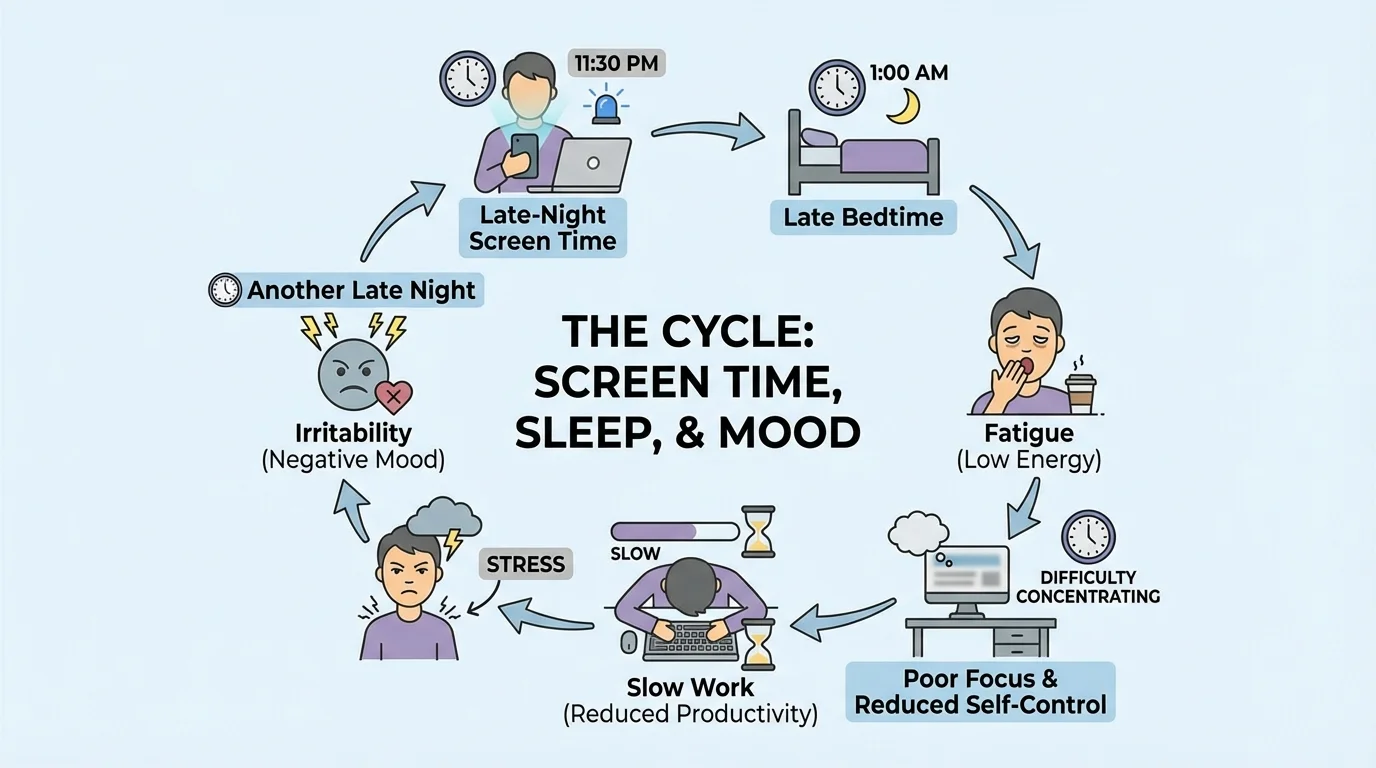
[Figure 3] For example, suppose you stay up watching videos because you feel stressed about unfinished work. The next day you are tired, so you work more slowly. Because you work slowly, the unfinished work grows. By evening, you feel even more stressed and use more videos to escape. The original problem gets repeated instead of solved.
Changing one link in the chain can help a lot. If you protect sleep, focus improves. If focus improves, tasks may take less time. If tasks take less time, your mood can stabilize. As we saw earlier with routines in [Figure 1], small repeatable actions can shift bigger outcomes.
Real-life chain reaction example
Step 1: A student delays a project and starts it late at night.
Step 2: The student loses sleep and wakes up tired.
Step 3: Because focus is weaker, the student rereads instructions and gets distracted often.
Step 4: The project takes longer, stress rises, and the student becomes short-tempered during messages with a friend.
Step 5: A better plan would be to start earlier, stop at a set bedtime, and continue the next day with a clearer mind.
This is resilience in action: not pretending you always feel great, but noticing what is happening and adjusting before things spiral.
Your body and mind usually send signals before things fall apart. Learning to catch these signs early is a powerful self-management skill. Some signs are physical: heavy eyes, headaches, tense shoulders, or feeling jittery. Some are mental: forgetting steps, rereading, zoning out, or feeling like everything is "too much." Some are emotional: irritation, sadness, hopelessness, or sudden anger. Some are behavioral: procrastinating, overeating, scrolling endlessly, or saying things you regret.
When you notice these signs, do not jump straight to self-criticism. Instead, ask: What is affecting me right now? Is it my sleep? My habits? My workload? More than one? This question helps you solve the real problem instead of just blaming yourself.
"You can do hard things better when you take care of the brain that is doing them."
If you keep a short daily check-in, patterns become easier to see. You do not need a complicated chart. A few quick notes can help: sleep quality, stress level, energy, and whether you stayed on track with one key habit.
When your mood, focus, or self-control starts slipping, you do not need a perfect life plan. You need a reset. Start with the simplest useful action.
Step 1: Pause and name the problem. Say to yourself, "I am tired," "I am overloaded," or "I am distracted." Naming the problem makes it easier to respond wisely.
Step 2: Shrink the next task. If a task feels huge, make the first step very small. Open the document. Write one sentence. Read one page. Put one item away. Small starts reduce resistance.
Step 3: Protect the basics. Drink water, eat something if needed, stand up, stretch, and clear one distraction. Basic care improves brain function more than many students expect.
Step 4: Use time on purpose. Work for a short block, then take a short break. For example, you might work for about twenty minutes, then reset briefly. The exact length can vary; the key is to stop drifting and start choosing.
Step 5: Make tonight help tomorrow. Put materials where you can find them, set one clear priority for the next day, and protect bedtime as much as possible. This is where sleep and habits work together.
Resetting is not quitting. A reset is a smart adjustment when your current approach is no longer working. It helps you regain control instead of forcing yourself forward in a frustrated state.
Try This: The next time you feel overwhelmed, use this sentence: "What is one helpful action I can do in the next five minutes?" That question turns panic into action.
Habits, sleep, and workload do not only affect private feelings. They affect how you treat people. If you are tired, you may read messages in a harsher tone. If you are overloaded, you may ignore someone too long and then respond suddenly with frustration. If your habits keep you scattered, you may forget commitments and seem unreliable.
This matters in online learning and daily life. During group projects, clubs, gaming communities, family conversations, or text chats, people notice whether you are thoughtful, reactive, or hard to reach. Strong self-management improves trust.
If you know you are not in a good state, use a simple relationship strategy: pause, slow down, and choose clear words. You can say, "I'm tired and need a little time before I answer," or "I'm overloaded right now, but I'll reply later tonight." That is much better than sending a rude message you regret.
Sleep and stress also affect how you interpret other people. As the comparison in [Figure 2] makes clear, a rested brain is usually better at patience and judgment. When you are tired, try not to assume that every delayed reply or short message is a personal insult.
You do not need to change everything at once. In fact, trying to fix your whole life in one day usually fails because it creates even more pressure. A better plan is to choose one sleep goal, one habit goal, and one workload goal.
For example, your plan might be: bedtime routine starts by a certain time, phone stays away during the first work block, and large tasks get broken into smaller steps before dinner. This is realistic because it focuses on repeatable actions, not on trying to feel motivated all the time.
Simple weekly self-check
Step 1: Ask, "When did I feel most focused this week?" Look for patterns in sleep, routine, and timing.
Step 2: Ask, "When did I lose self-control fastest?" Notice whether tiredness, hunger, stress, or overload were involved.
Step 3: Keep one strategy that helped and replace one strategy that did not.
Step 4: Set one small goal for the next week that you can actually repeat.
Good self-management is not about being perfect every day. It is about understanding your patterns and making better choices more often. Over time, these choices strengthen resilience. You recover faster from rough days because you know what supports your brain and what drains it.
When you assess your habits, sleep, and workload honestly, you gain something important: the power to change your day before your day controls you.
