Many people think job skills start when you get your first paycheck. Actually, they start much earlier—any time you work with other people to finish something that matters. If you help organize a neighborhood donation drive, create a group presentation online, assist with a community event, or work with a team in a youth club, you are already practicing the same habits that employers look for later.
These habits are called employability skills. They are not about knowing one school subject. They are the skills that help you be someone others can count on. When you use them well, projects run more smoothly, people trust you more, and you build a strong reputation. When you ignore them, even a smart or creative person can become hard to work with.
Employability skills are the personal and teamwork habits that help someone succeed in work-like situations. They include communication, responsibility, problem-solving, time management, adaptability, and professionalism.
Think about two students helping with the same service project. One answers messages, finishes tasks on time, asks questions when confused, and stays respectful. The other disappears for days, sends one-word replies, and blames others when something goes wrong. Even if both have good ideas, the first student is much more likely to be trusted again.
Collaborative projects and service activities are real-world practice. You may not be in a workplace yet, but these situations still involve deadlines, shared goals, communication tools, and other people depending on you. That means your actions have real consequences.
When you build these skills now, you become better at joining online teams, leading community efforts, volunteering responsibly, and preparing for future jobs. You also become more confident because you know how to contribute instead of just hoping things work out.
Many employers say they can teach job-specific tasks, but they struggle more to teach reliability, communication, and teamwork. Those habits often make the biggest difference.
Another reason these skills matter is that they affect more than work. They help in family responsibilities, clubs, sports teams, community groups, creative projects, and even friendships. Being dependable is a life skill, not just a job skill.
One major skill is communication. This means sharing ideas clearly, listening carefully, asking useful questions, and keeping others updated. In online teamwork, communication includes written messages, video calls, shared documents, and voice notes. Clear communication prevents confusion before it starts.
Another key skill is responsibility. Responsibility means owning your part of the work. If you say you will do something, people should not have to chase you down. Responsible teammates meet deadlines, admit mistakes honestly, and try to fix problems.
Teamwork means working with others toward a shared goal. It is not just "being nice." It means sharing ideas, respecting different strengths, compromising when needed, and helping the group succeed instead of focusing only on yourself.
Initiative is the habit of taking helpful action without waiting to be told every tiny step. A student with initiative might notice that the group needs a checklist and create one, or see that a volunteer event needs reminder messages and send them after getting approval.
Adaptability matters because plans change. A teammate may get sick. A community event may move online. A shared file may be lost. Adaptable people stay calm, adjust the plan, and keep moving.
Finally, there is professionalism. For a student, professionalism means acting mature, respectful, and dependable. You do not need to wear a business suit to be professional. You show it through your tone, your effort, your honesty, and how you treat others.
Much of group stress happens because people begin working before they really understand the goal. A strong start includes knowing what the group is trying to accomplish, who is doing what, and when each part is due. Good planning is an employability skill because it saves time, reduces conflict, and helps everyone do better work.
[Figure 1] Before you begin, make sure you can answer these questions: What is the final goal? What tasks need to be done? Who is responsible for each task? What tools will the group use? When are the deadlines and check-ins? If any of these answers are missing, ask early instead of guessing.
It also helps to break the project into smaller pieces. "Make the presentation" is too big and unclear. A better plan might be: research facts, choose images, write slides, review for errors, and rehearse the speaking order. Smaller tasks are easier to manage and easier to share fairly.
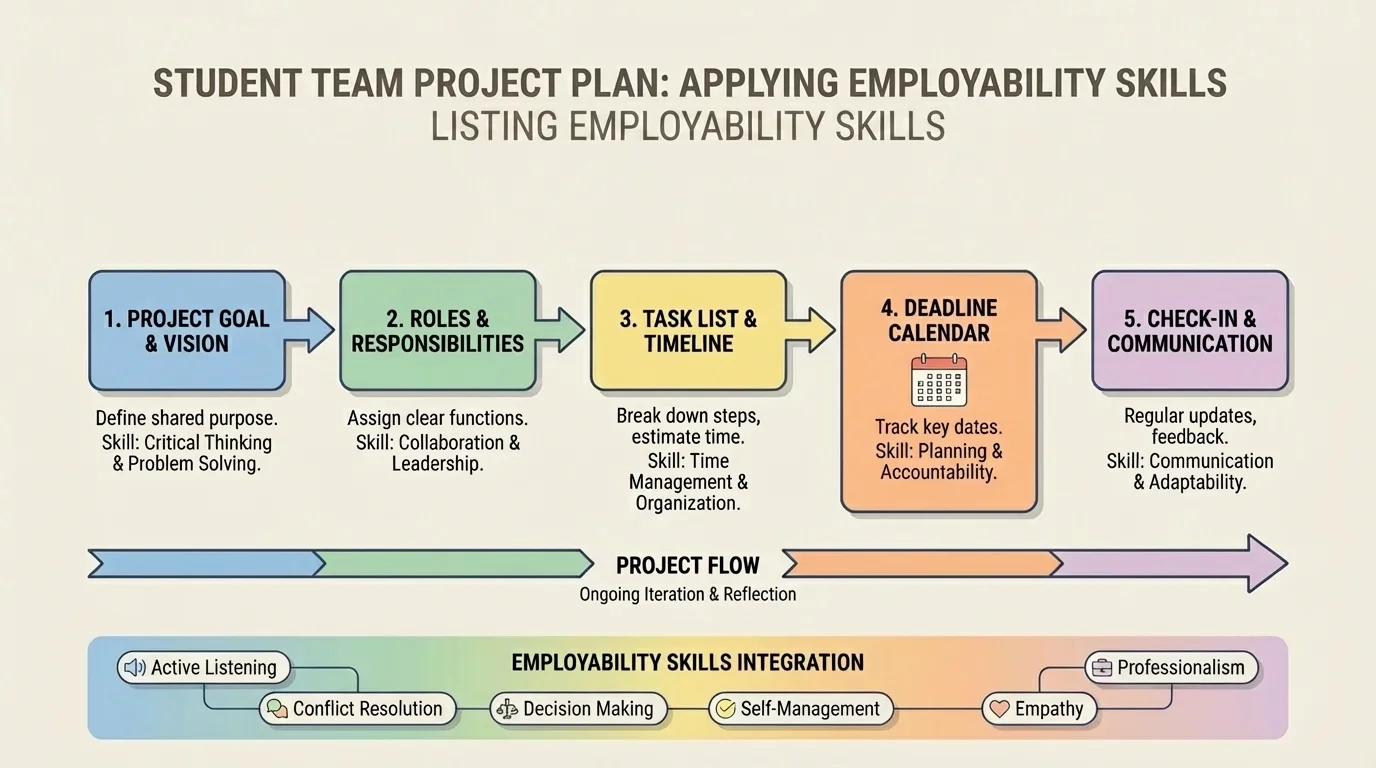
In a service activity, planning matters just as much. If you are helping with a food drive, for example, your team may need people to create digital flyers, collect sign-ups, track donations, send updates, and thank helpers. Without clear roles, people may accidentally repeat the same task while another task gets ignored.
Example: Starting a team project the right way
Your group is creating an online awareness campaign about saving water.
Step 1: Agree on the goal.
The team decides the goal is to create three social posts, one short video, and one information page by Friday.
Step 2: Assign roles.
One student researches facts, one designs graphics, one writes captions, and one edits everything for accuracy.
Step 3: Set checkpoints.
The team agrees to send progress updates on Tuesday and Thursday.
Step 4: Plan for problems.
If someone cannot finish a task, they must tell the group early so the work can be reassigned.
This kind of planning makes the group look organized and dependable.
Notice that the plan does not need to be complicated. It just needs to be clear. In many projects, a simple shared checklist works better than a fancy system no one uses.
Your tone and clarity affect whether people trust you. In online collaboration, people cannot always hear your tone of voice or see your facial expression, so your words matter even more.
[Figure 2] Good communication is specific. Instead of saying, "I did some of it," say, "I finished the first two slides and added two sources." Instead of saying, "I can't," say, "I'm having trouble finishing by tonight. Can I submit it by tomorrow morning?" Specific messages help people understand what is happening.
Good communication is also timely. If you wait until the last minute to say you are confused or behind, the group has little time to adjust. A short update early is much more helpful than a long apology late.
When you join a video call, be prepared. Know the purpose of the meeting, keep background noise low if possible, and stay focused. You do not need to be perfect, but you should show that you respect everyone's time.
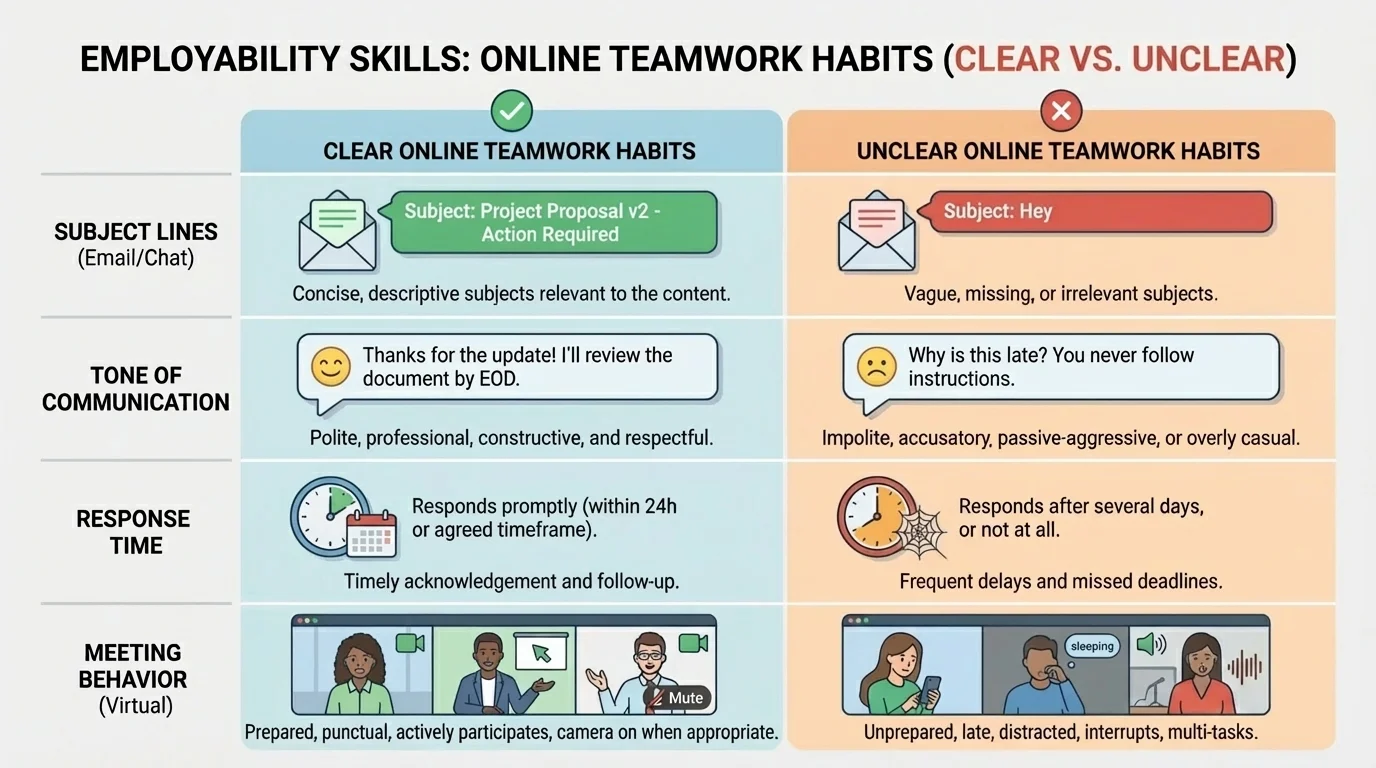
If you disagree with an idea, respond respectfully. You can say, "I see why you suggested that. What if we also try..." or "I'm not sure this part matches our goal. Can we look at another option?" That approach keeps the conversation productive instead of turning it into a fight.
Community service often involves adults, younger kids, or people you do not know well. That means respectful communication matters even more. Introduce yourself clearly, listen to instructions, and ask before making big changes to the plan.
Strong communication sounds calm, clear, and useful. You do not need fancy words. The goal is to help the group move forward. If your message answers who, what, when, and what help is needed, you are usually communicating well.
Later in the project, the same communication habits from [Figure 2] continue to matter. A team often succeeds not because every idea is amazing, but because everyone knows what is happening and what to do next.
One of the fastest ways to earn trust is simple: do your part. This sounds obvious, but it is a huge part of employability. Groups remember the person who follows through.
[Figure 3] Big tasks feel less stressful when you split them into smaller steps. If a task is due in four days, do not think of it as one giant job. Turn it into a short plan: gather materials on day one, complete a rough draft on day two, revise on day three, and submit on day four.
This is where deadline management matters. A deadline is not just the final date. Smart teammates create mini-deadlines so they have time to fix mistakes. If your final due date is Friday, your personal goal might be finishing by Thursday evening.
Another important habit is accountability. Accountability means you can be trusted to answer for your work. If you missed something, you do not hide. You say what happened, what you are doing to fix it, and how you will prevent the problem next time.
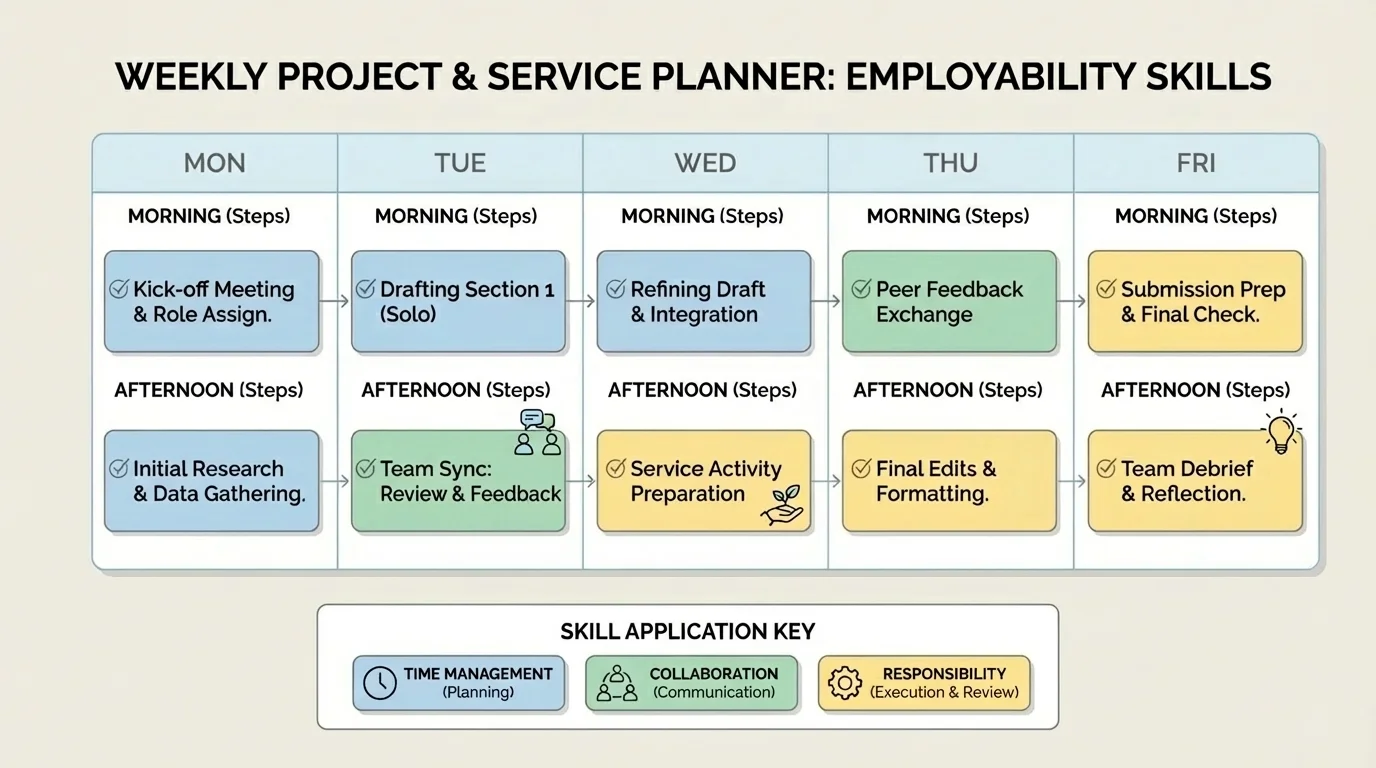
Here is a practical time-management method you can use: first list all tasks, next estimate how long each one may take, then choose when you will do them. Even simple estimates help. If slide design takes about 30 minutes and fact-checking takes about 20 minutes, you can plan roughly 50 minutes instead of hoping to "get to it later."
Be realistic. If you already have family responsibilities, sports practice, or other commitments, do not promise more than you can actually do. It is better to accept a smaller task and complete it well than accept a big task and disappear.
Example: Breaking a project into smaller steps
You need to create a thank-you message and photo post for a service activity by Thursday.
Step 1: Monday: collect photos and event details.
Step 2: Tuesday: write a rough draft of the message.
Step 3: Wednesday: check spelling, get approval, and choose the best image.
Step 4: Thursday: post or submit the final version.
This schedule is easier to manage than waiting until Thursday and rushing everything at once.
When you use a planner, checklist, or reminders, you are not being "extra." You are using tools that reliable people use all the time.
Even strong teams have problems. Someone misunderstands instructions. Two people want different ideas. A volunteer shows up late. The important skill is not avoiding every problem forever. It is handling problems calmly.
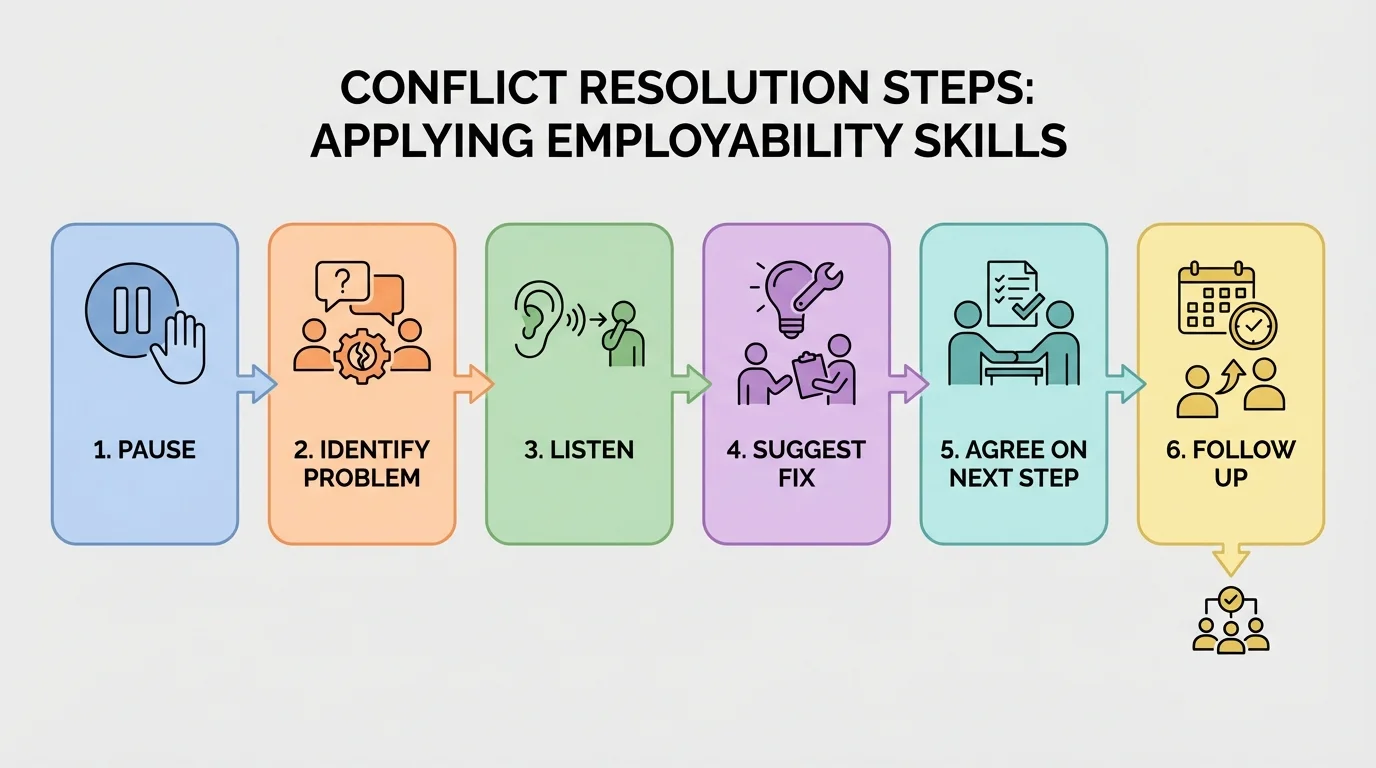
[Figure 4] Start by identifying the real issue. Is the problem about missed work, unclear instructions, unfair roles, or disrespectful tone? Teams sometimes argue about small details when the real problem is that expectations were never clear.
Then listen before reacting. If someone says they could not finish their task, ask what happened. Listening does not mean you excuse poor effort. It means you gather facts before deciding what to do next.
Next, focus on solutions. Instead of "You always mess this up," try "We still need this part finished. What is the fastest way to solve it?" That keeps the conversation aimed at progress.
Sometimes you also need to accept feedback. Feedback is information about what you did well and what needs improvement. If someone says your message was unclear or your part was late, try not to treat that as a personal attack. Useful feedback helps you grow.
If a teammate keeps causing problems, stay respectful but direct. You might say, "We need your part by tonight so the whole team can finish. Can you confirm whether you can do that?" Clear, calm language is stronger than sarcasm or anger.
Later, if another disagreement happens, the same steps from [Figure 4] still apply: pause, name the issue, listen, agree on the next action, and follow up. That process helps teams solve problems without damaging relationships.
"People may forget what you said, but they rarely forget whether you were dependable."
Sometimes the most employable choice is apologizing honestly. A strong apology is short and clear: what happened, ownership, and the fix. For example: "I missed the deadline. That affected the group. I am finishing it by 6:00 and will update you in one hour."
You do not have to be the oldest person or the official leader to show leadership. Leadership in collaborative work often looks quiet. It can mean organizing information, checking on progress, encouraging others, or helping the team make a decision.
Helpful leadership is different from controlling behavior. A leader does not boss everyone around or insist on their own idea every time. Instead, a leader helps the group stay focused on the goal and makes space for others to contribute.
Initiative also matters when you notice something that needs doing. If a shared document is messy, organize it. If instructions are confusing, ask for clarification. If the team forgot to thank volunteers, draft a thank-you note. Small helpful actions make a big impression.
You may already use these skills at home. When you remember chores, communicate about plans, and help solve problems without being asked repeatedly, you are practicing the same habits that matter in projects and jobs.
One important part of leadership is knowing when to ask for help. Pretending to understand everything can waste time. Strong leaders ask questions early so the group can move forward with confidence.
Service activities are a powerful place to practice employability skills because the work often helps real people. That makes your reliability even more important. If you are helping with a donation drive, tutoring younger students online, cleaning a community space, or supporting an awareness campaign, others may depend on your effort.
Service work also requires respect. You are not there to show off or collect praise. You are there to help. That means listening to community needs, following instructions, protecting privacy when needed, and treating everyone with dignity.
For example, suppose you are helping an online fundraiser for an animal shelter. Communication helps you keep the team updated. Responsibility helps you post accurate information. Teamwork helps everyone coordinate. Professionalism helps you represent the cause well in public messages.
These experiences can also help you later. When you apply for volunteer roles, clubs, internships, or jobs, being able to say, "I helped plan a service project, managed my tasks, and communicated with a team," shows maturity.
Example: Using employability skills in service
A small group is collecting school supplies for children in the community.
Step 1: One student designs a digital flyer and checks all event details for accuracy.
Step 2: Another student tracks donated items in a shared list.
Step 3: Another student sends polite reminders and thanks donors.
Step 4: If a problem comes up, the group updates the plan instead of blaming one another.
The group is not just collecting supplies. It is also building real-world skills.
When service is done well, people feel helped and respected. When it is done poorly—through confusion, lateness, or careless messages—it can damage trust. That is why employability skills belong in service work too.
Your reputation is the pattern people notice over time. One late message may not define you. But if you often communicate well, meet expectations, and stay respectful, people start to see you as reliable.
This matters online as well as offline. Shared chats, emails, comments, and posts can all affect how others view you. A strong digital reputation includes polite messages, honest work, and respectful behavior even when you are frustrated.
It also helps to end projects well. Thank teammates. Thank adult organizers or community partners. Make sure shared files are complete. If appropriate, reflect on what worked and what could be improved. Finishing well is part of professionalism.
Over time, these habits can lead to more opportunities. People recommend the students they trust. They invite dependable people back. They give more responsibility to those who have already handled small responsibilities well.
Here are simple actions you can start using now. Reply to group messages within a reasonable time. Keep your promises small and realistic. Ask questions early. Use a checklist. Speak respectfully during disagreements. Admit mistakes quickly. Offer help when you see a gap. Say thank you when others contribute.
Try This: Before your next group task or service activity, write down three things: your job, your deadline, and how you will update the team. This small habit can prevent a lot of stress.
Try This: If you feel annoyed with a teammate, wait a few minutes before responding. Then write a message that names the problem and suggests a solution. Calm communication protects both the project and the relationship.
Try This: After finishing any project, ask yourself: Did I communicate clearly? Did I meet my part of the deadline? Did I help the group move forward? Those questions help you grow faster.
