You check one video, then another, then somehow it is much later than you expected. That is not just bad luck or weak self-control. Many apps are built to keep your eyes, thoughts, and feelings engaged for as long as possible. Learning how that happens gives you something powerful: the ability to notice what is pulling you in and choose what happens next.
Your attention is one of your most valuable resources. It helps you finish homework, enjoy hobbies, listen to people you care about, and even notice how you are feeling. Your mood matters too. It affects your energy, motivation, patience, and confidence. When digital tools support you, they can help you learn, connect, and have fun. When they start running the show, they can leave you distracted, tense, tired, or down.
This is why being a strong digital citizen is not just about avoiding unsafe websites or protecting passwords. It is also about understanding how online spaces influence your thinking and emotions in everyday life.
Online life is not separate from real life. If you stay up late scrolling, you may feel groggy the next morning. If a group chat keeps buzzing during a task, your mind may keep jumping away from what you are trying to do. If you spend time watching content that makes you laugh, learn, or feel supported, your mood may improve. The same phone can be a helpful tool or a stress machine depending on how it is used.
Think about these everyday situations: you open a video app while eating a snack and forget what you were planning to do next; you post a photo and keep checking for likes; you see exciting updates from other people and start feeling like your own life is boring; or you join an online community about art, sports, or gaming and feel encouraged. All of these are examples of digital habits shaping attention and mood.
Algorithm means a set of rules a computer follows to decide what to show, sort, or recommend. Digital habits are the repeated ways you use devices and apps, such as checking notifications right away or watching videos before bed. Mood is your emotional state over time, such as feeling calm, irritated, excited, or discouraged.
Once you understand these forces, you can start asking better questions: Why did this appear in my feed? Why am I still on this app? How do I feel after using it? Those questions turn passive scrolling into active decision-making.
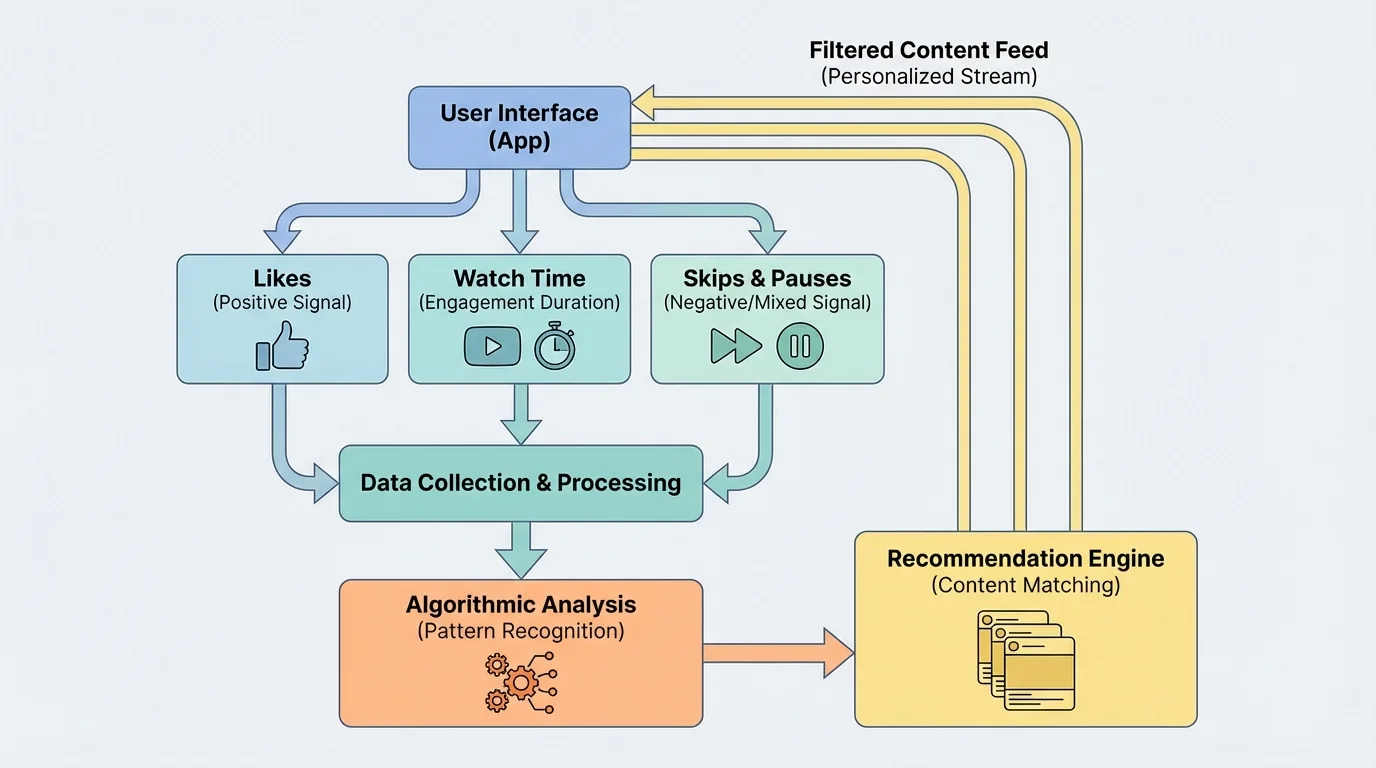
A algorithm on a social media app is like a sorting and guessing system. It studies signals about what keeps you interested, as [Figure 1] shows in a simple feedback loop. Those signals can include what you click, how long you watch, what you like, what you comment on, what you skip, and even where you pause.
If you watch several basketball clips all the way through, the app may decide you want more sports content. If you stop on dramatic or upsetting posts, it may show you more of those too. The algorithm is not reading your mind. It is making predictions based on your behavior.
This can be useful. Algorithms can help you find creators you enjoy, tutorials you need, or communities that match your interests. But they can also trap you in a narrow bubble. If you react to extreme, silly, or upsetting content, the system may keep sending more because strong reactions often keep people watching.
That is why your feed is not a neutral window into the world. It is a customized stream built to hold your interest. Two people can open the same app and see very different content because each person has trained the system in different ways.
Understanding this helps with media literacy. When you see post after post on one topic, it may feel like "everyone" is talking about it or that it must be extremely important. But sometimes you are really seeing what a platform thinks will keep you engaged. That is a big difference.
Platforms often learn from very small actions. Even a brief pause on a video can signal interest, which means your feed may change without you ever pressing the like button.
Later, when you clean up your feed or choose not to interact with certain content, you are also teaching the algorithm something new. In that way, you influence the system too, even if not perfectly.
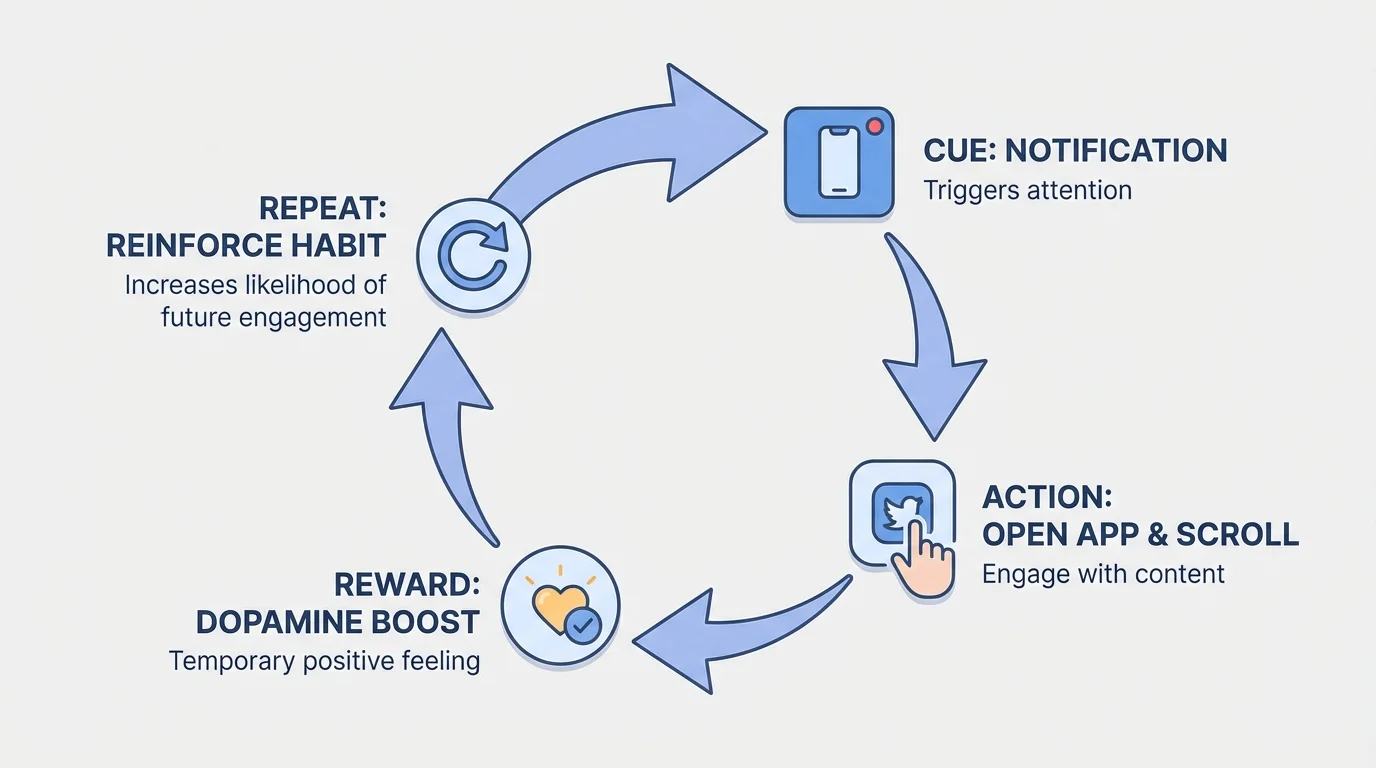
Apps compete for your attention, using notifications, taps, and time to draw you in. They do this through sounds, badges, streaks, autoplay, infinite scroll, and surprise content. The pattern often works like a habit loop, as [Figure 2] illustrates: a cue appears, you act, you get some kind of reward, and your brain becomes more likely to repeat the action.
For example, the cue might be a buzz from your phone. The action is opening the app. The reward might be a funny video, a message from a friend, or the small excitement of seeing something new. Because the reward is unpredictable, your brain may stay interested. Sometimes there is nothing important, but sometimes there is. That unpredictability can make checking feel hard to resist.
Another attention trap is multitasking. You may think you are doing two things at once, but your brain is usually switching back and forth. Each switch costs focus. If you are reading, then checking messages, then going back to reading, your task often takes longer and feels more tiring.
Autoplay and endless feeds remove stopping points. In real life, many activities have natural endings. A chapter ends. A TV episode ends. A game round ends. Infinite scroll is designed to remove that "done for now" moment. Without a stopping point, you have to create one yourself.
Attention can also be affected by the phone simply being nearby. Some people find it harder to focus even when the phone is face down and silent. Part of the brain is still expecting the possibility of interruption. This is one reason putting a device across the room can work better than relying only on willpower.
As we saw in [Figure 1], algorithms respond to what keeps you engaged. That means features that grab your attention and algorithms that learn from your reactions often work together. One pulls you in, and the other keeps serving more of what held you there.
Social media can affect mood in both helpful and harmful ways, as [Figure 3] makes clear. It can help you stay connected with relatives, find support when you feel alone, learn a new skill, laugh, share creativity, and feel part of a community. Those are real benefits.
But social media can also increase pressure, comparison, and stress. You may see other people's highlight reels and compare them to your ordinary moments. You may start thinking everyone else is doing more, looking better, or having more fun. That feeling is often connected to FOMO, which means fear of missing out.
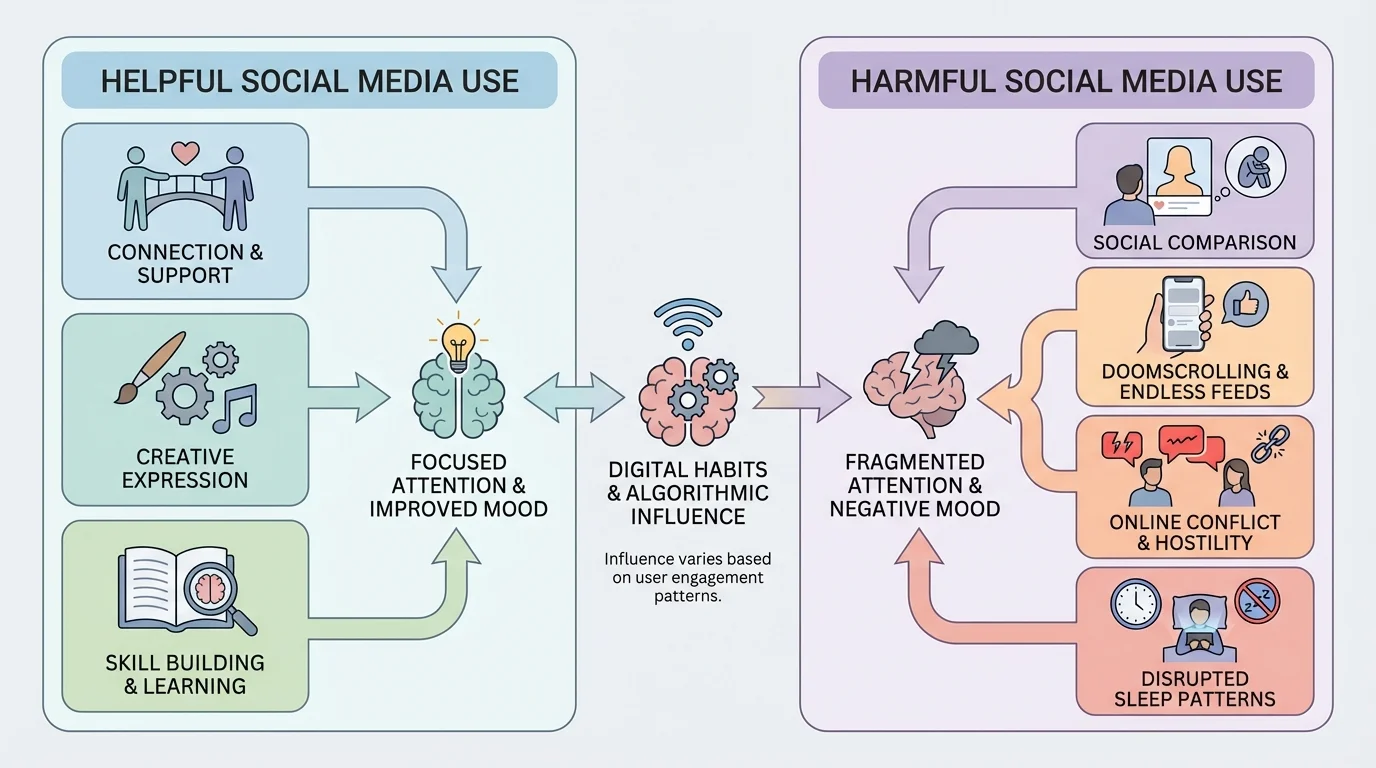
Another mood risk is doomscrolling, which means repeatedly consuming upsetting or stressful content for a long time. You may tell yourself you are trying to stay informed, but after a while you might feel more anxious, helpless, or emotionally overloaded.
Validation can also play a role. If your mood starts depending too much on likes, views, or replies, your emotions may swing up and down based on other people's reactions. Getting attention online can feel exciting, but not getting it can feel disappointing, even when the post itself was fine.
Sleep matters too. Bright screens, emotional content, and late-night checking can make it harder to wind down. Poor sleep then affects mood the next day. You may feel more impatient, less focused, and more sensitive to stress. A single habit before bed can create a chain reaction.
Why the same app can help one day and hurt the next
The effect of an app depends on how you use it, when you use it, and what you see there. Messaging a friend for support is different from comparing yourself to strangers for an hour. Watching one tutorial after dinner is different from getting pulled into upsetting videos late at night. The tool is the same, but the outcome changes with the pattern of use.
As shown in [Figure 3], positive use often leaves you feeling connected, informed, or inspired. Harmful use often leaves you feeling tense, distracted, jealous, or drained. The key skill is learning to notice the difference in your own life.
You do not need to panic every time you spend a long time online. The goal is not perfection. The goal is awareness. If your digital habits are becoming unhealthy, there are usually signs.
Here are some common warning signs:
These signs do not mean something is "wrong" with you. They mean your habits may need adjusting. Many platforms are designed to be sticky, so noticing these patterns is a strength, not a failure.
Real-life check-in example
A student notices that after using short-video apps at night, they feel wired, go to sleep late, and feel grumpy the next morning.
Step 1: Spot the pattern
The student connects three things: late scrolling, less sleep, and worse mood the next day.
Step 2: Name the trigger
The trigger is bringing the phone into bed and opening the app "for a minute."
Step 3: Make one practical change
The student charges the phone across the room and sets a cutoff time.
Step 4: Check the result
After a few nights, falling asleep gets easier and mornings feel less rushed and irritable.
This is how small digital habit changes can improve both attention and mood.
If your mood is getting much worse, if online experiences are leading to harassment or fear, or if you feel stuck in a pattern you cannot change alone, it is important to talk to a trusted adult, counselor, or caregiver. Asking for help is part of using technology wisely.
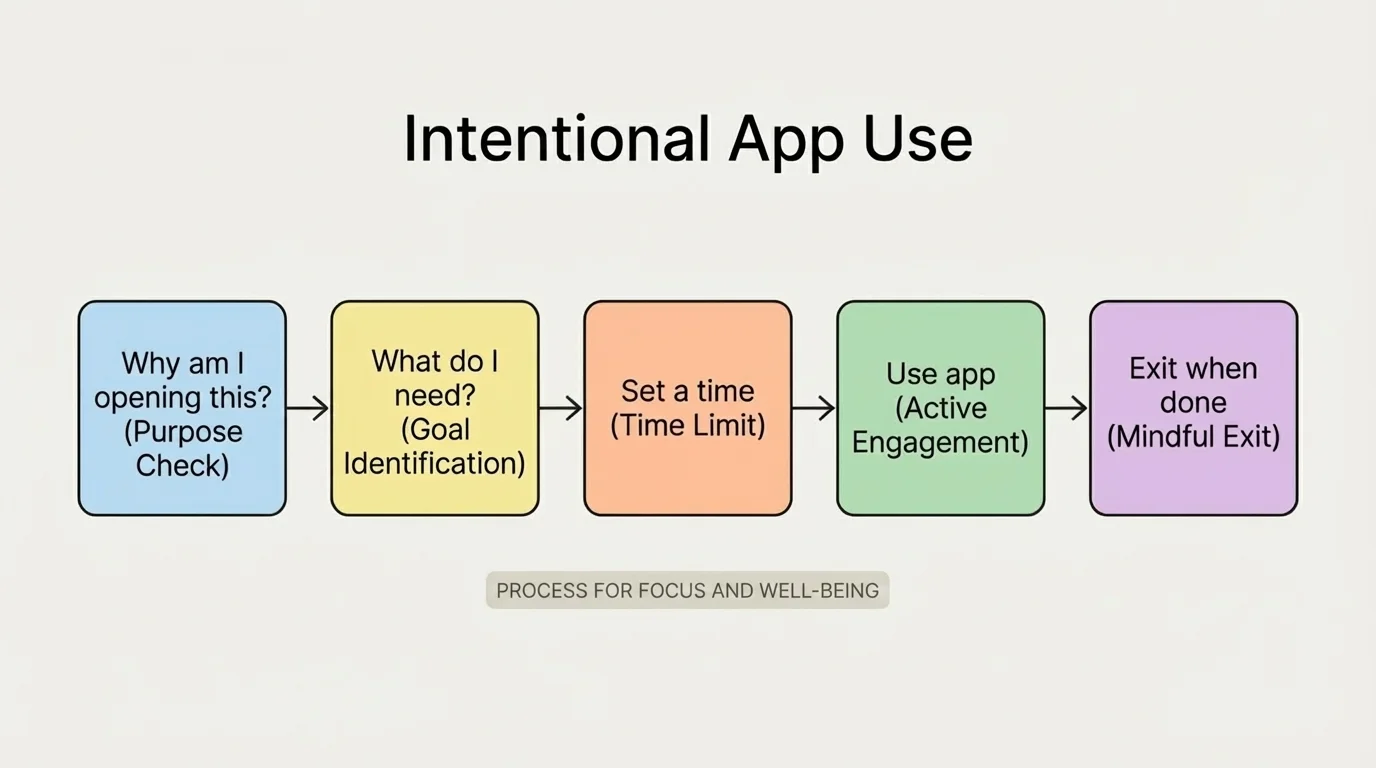
You cannot control every app design choice, but you can shape your environment and routines. One useful method is a quick pause-and-check routine, as [Figure 4] shows. Before opening an app, ask yourself: Why am I opening this right now? What do I want to do here? How long do I want to stay?
That tiny pause changes you from automatic user to intentional user. It creates a stopping point before the app starts making choices for you.
Here are practical strategies you can use right away:
Turn off nonessential notifications. If every app can interrupt you, your brain never settles. Keep only the alerts you truly need, such as messages from family or important reminders.
Move distracting apps. Put them off the home screen or inside a folder. Adding one extra step makes mindless opening less automatic.
Use time limits honestly. A timer is not magic, but it helps create awareness. Even setting a limit for 10 or 15 minutes before a task can protect your focus.
Create phone-free zones. For example, keep devices away during meals, homework time, or the first part of your bedtime routine.
Choose before you scroll. Decide on a purpose: answer messages, watch one tutorial, post an update, or check one group. When the purpose is done, leave the app.
Train your feed. Follow accounts that make you feel informed, calm, creative, or encouraged. Mute, unfollow, block, or mark "not interested" on content that makes you feel worse or wastes your time.
Keep the phone farther away when focusing. Across the room often works better than face down on the desk because it removes the constant possibility of quick checking.
The habit loop in [Figure 2] becomes weaker when you interrupt the cue or make the action less easy. For example, if the cue is a buzzing phone, turning off the buzz helps. If the action is opening an app instantly, moving the app or logging out adds friction. Friction is helpful when you are trying to protect your attention.
"If you do not choose where your attention goes, someone else will."
You do not need to quit all social media to use it more wisely. Often the biggest gains come from a few specific changes that reduce interruption and help you use apps on purpose.
Healthy digital habits are easier when they fit into your normal day. You are more likely to keep a simple routine than a complicated one.
Try building a morning rule. For example: no social media until you are dressed, fed, and ready for your first task. This helps your brain wake up before it gets flooded with updates, comparisons, and noise.
Build a night rule too. You might stop scrolling 30 minutes before sleep, plug your phone in away from your bed, and switch to music, reading, stretching, or another calm activity. Even a short screen-free wind-down can help.
A weekly reset can help as well. Once a week, look at which apps make you feel good, which ones leave you drained, and whether your feed still reflects your interests and values. As seen earlier in [Figure 1], your past clicks teach the algorithm. A reset helps teach it better patterns.
Strong habits usually come from repeating small actions, not from making one huge decision. A tiny change you can keep doing is more powerful than a perfect plan you abandon after two days.
Also remember that online connection is only one kind of connection. Time with family, hobbies, outdoor activity, reading, making art, playing music, building something, or talking with a friend on a call can balance your day in ways scrolling often cannot.
Here are a few realistic scenarios and what smart digital citizenship might look like.
Scenario 1: The endless short-video trap. You open an app to watch one sports clip, then keep swiping for 30 minutes. Your attention gets scattered, and now your planned task feels boring. A better move is to set a timer before you open the app and decide what "done" means first.
Scenario 2: The stressful group chat. Messages come in quickly, and you feel like you must answer right away. You keep checking, even during important tasks. A better move is to mute the chat temporarily, check it at planned times, and let close contacts know if you are away.
Scenario 3: The comparison spiral. You see people showing perfect outfits, skills, vacations, or achievements and start feeling behind. A better move is to notice that posts are often filtered, edited, and selected highlights, not a full picture of life. Unfollowing accounts that trigger unhealthy comparison can protect your mood.
Scenario 4: The helpful online community. You join a space where people share drawing tips, coding help, book discussions, or encouragement. You leave feeling inspired and ready to try something. This is a good example of technology supporting growth rather than draining energy.
A quick decision guide you can use today
Step 1: Notice your state
Ask: Am I bored, stressed, lonely, avoiding something, or using this for a clear reason?
Step 2: Check the likely result
Ask: Will this app probably help me right now, or will it pull me away from what matters?
Step 3: Set one boundary
Choose one: timer, purpose, phone location, or notification setting.
Step 4: Reflect after using it
Ask: Do I feel better, worse, or the same? That answer gives you useful information for next time.
This kind of self-check is not about guilt. It is about learning from your own patterns. Different people react differently to the same content, so your best guide is honest observation.
| Digital pattern | Possible effect on attention | Possible effect on mood | Better choice |
|---|---|---|---|
| Constant notifications | Frequent interruptions | Stress, jumpiness | Turn off nonessential alerts |
| Late-night scrolling | Tired focus the next day | Irritability, low energy | Set a screen cutoff before bed |
| Comparison-heavy feed | Distracting thoughts | Jealousy, lower confidence | Unfollow or mute certain accounts |
| Purposeful tutorial watching | Can support learning | Satisfaction, motivation | Watch with a clear goal |
| Stressful group chat checking | Task switching | Pressure, anxiety | Mute and check at set times |
Table 1. Common digital patterns, their effects on attention and mood, and healthier alternatives.
The big idea is simple: technology is not automatically good or bad. What matters is the design of the platform, the way algorithms respond to your behavior, and the habits you build around using it. When you notice these patterns, you become harder to manipulate and better able to protect your focus and emotional well-being.
That is an important life skill. Your attention helps shape your day, and your daily habits help shape your mood. Guarding both is part of growing into a thoughtful, capable digital citizen.
