Have you ever had a day when your brain felt foggy, your energy disappeared by afternoon, and even a small problem made you feel irritated or overwhelmed? That kind of day is not always about laziness, attitude, or "just trying harder." Very often, it is connected to your habits. The way you sleep, eat, drink water, move your body, use screens, and handle stress can strongly affect how well your brain works.
Your brain is part of your body, so it needs care just like muscles, skin, and bones do. If your body is low on sleep, dehydrated, overstimulated, or stuck in stress mode, your brain has a harder time paying attention, remembering information, and staying calm. This means that concentration, energy, and mood are not random. They are often signals that tell you something about your daily routine.
That is actually good news, because habits can be changed. You may not control everything in your life, but you can learn to notice patterns and make better choices. Small changes, repeated often, can lead to clearer thinking, steadier energy, and better emotional control.
Concentration is your ability to direct your attention to one task and stay with it. Energy is how physically and mentally awake and ready you feel. Emotional regulation means managing feelings in a healthy way so you can respond instead of just reacting.
These three areas affect each other. If your energy is low, your concentration often drops. If you are emotionally overwhelmed, it becomes harder to focus. If you cannot concentrate, tasks may pile up and create stress. That is why it helps to assess your habits as a whole instead of looking at only one problem.
When you assess your health habits, ask yourself three practical questions: Can I focus? Do I have steady energy? Can I handle my feelings without blowing up, shutting down, or spiraling? If the answer is often no, that does not mean something is "wrong" with you. It means it is time to look at the habits that may be influencing how you feel and function.
For example, maybe you stay up late watching videos, skip breakfast, sit in one spot for hours, and keep notifications on all day. None of those things automatically ruin your health, but together they can make it much harder to do online schoolwork, enjoy hobbies, or communicate calmly with family and friends.
Your brain uses a large amount of your body's energy even though it is only one organ. That is one reason sleep, food, water, and movement can change how well you think and feel.
A good self-check is not about being perfect. It is about being honest. You are looking for habits that help you and habits that get in your way.
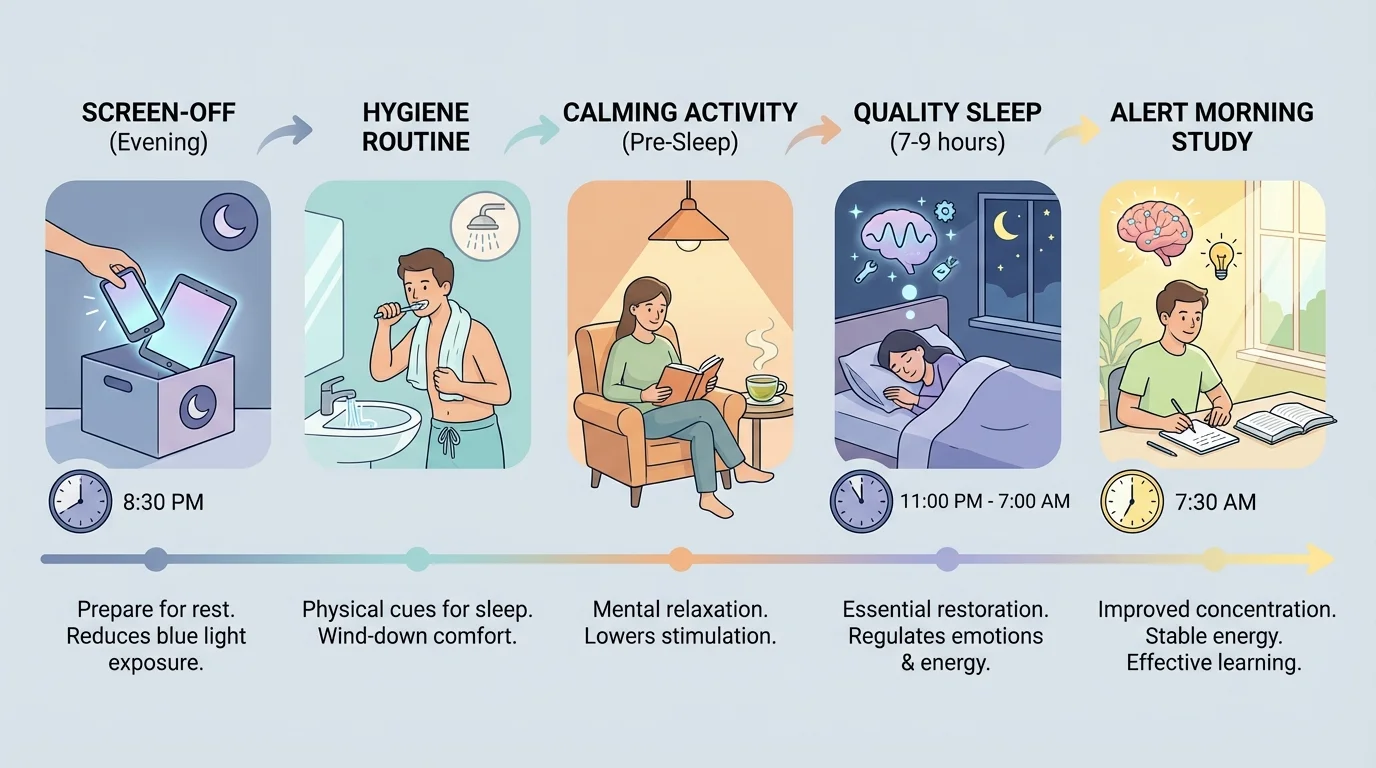
One of the biggest influences on focus and mood is sleep. A steady bedtime routine supports attention, memory, and emotional control the next day, as [Figure 1] illustrates. When you sleep well, your brain gets time to recover, sort information, and prepare for the next day. When sleep is too short or inconsistent, everything can feel harder.
At your age, getting enough sleep matters a lot. Even if two people need slightly different amounts, most adolescents do best with a consistent sleep schedule. Going to bed at wildly different times each night can leave you feeling groggy even if you slept late one day. Your body likes rhythm.
A helpful bedtime routine might include turning off bright screens ahead of sleep, dimming lights, brushing teeth, preparing for the next day, and doing something calming such as reading, stretching, or listening to quiet music. The routine trains your brain to expect rest.
Signs that sleep habits may be hurting you include trouble waking up, needing a long time to feel alert, forgetting simple things, zoning out during lessons, feeling extra emotional, or falling asleep during the day. Sometimes people think they are "bad at focusing" when they are actually tired.
Screens can be a major issue before bed. Bright light and exciting content can keep your brain active when it should be slowing down. Scrolling "for a few minutes" can easily become a much longer delay. A simple rule like putting your phone across the room or stopping screen use a set amount of time before bed can help.
Sleep quality also matters. If your room is noisy, too bright, too hot, or too distracting, your sleep may be lighter. Earplugs, darker curtains, a fan, or a cleaner sleep space may help, depending on what is safe and available in your home.
Real-life check: Is sleep affecting your schoolwork?
Step 1: Notice the pattern.
You keep rereading the same paragraph during online lessons and feel annoyed by small things.
Step 2: Check the habit.
You realize you have been going to sleep much later than usual because of gaming or videos.
Step 3: Try one change.
Choose a screen-off time, set an alarm for bedtime preparation, and keep that routine for several nights.
Step 4: Review the result.
If mornings feel easier and you focus better, sleep was likely part of the problem.
Later, when you assess all of your habits, the bedtime pattern shown in [Figure 1] can help you spot whether your evenings are setting you up for a better next day or making everything harder.
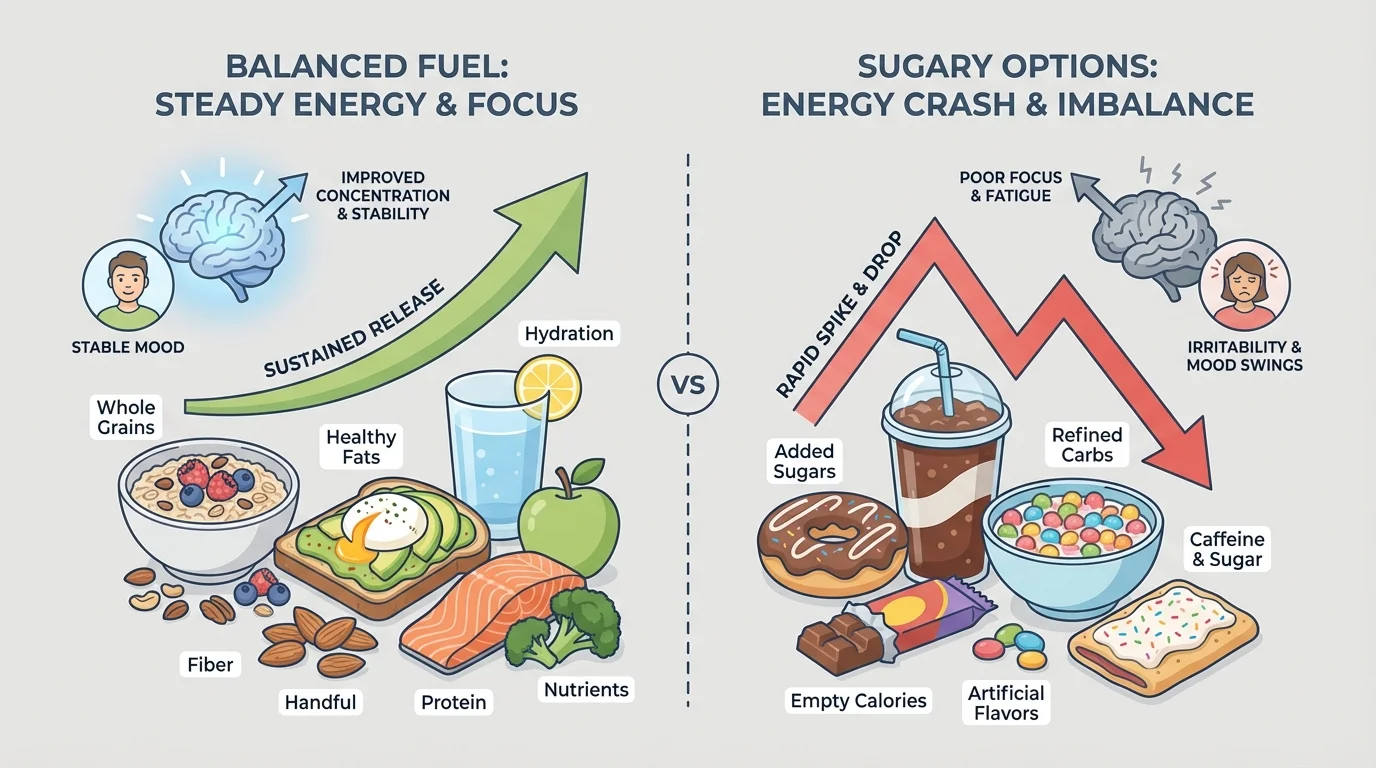
[Figure 2] Your body needs fuel, and your brain does too. Hydration and balanced meals help support steady focus and mood. Balanced foods and drinks are compared with sugary choices that often lead to a quick high followed by a crash.
If you regularly skip meals, go for long periods without eating, or mostly choose foods that give short bursts of energy, you may notice headaches, irritability, shakiness, or trouble concentrating. That does not mean you can never enjoy sweets or snacks. As shown in [Figure 2], your body usually works better with steadier fuel.
A balanced meal or snack often includes a mix of nutrients. For example, yogurt and fruit, peanut butter on toast, eggs with whole-grain bread, cheese and crackers, or rice with beans can help you feel full longer than candy or a sugary drink alone. Water matters too. Even mild dehydration can make you feel tired or foggy.
Many people mistake thirst for hunger, boredom, or tiredness. If you have been sitting at your desk for a long time and your focus drops, drinking water may help. Keeping a water bottle nearby can make this easier because it reduces the effort needed to drink water regularly.
Some students also start using caffeine too early or too often. Drinks with caffeine may seem like a quick fix for tiredness, but they can also cause jitteriness, headaches, sleep problems, or an energy drop later. If you are tired all the time, it is smarter to check your sleep and routine first instead of relying on a drink to force yourself awake.
| Habit | Likely Effect on Focus and Mood | Better Option |
|---|---|---|
| Skipping breakfast | Low energy, irritability, hard to start tasks | Eat something simple such as toast, fruit, yogurt, or eggs |
| Mostly sugary snacks | Quick energy followed by crash | Pair carbs with protein or healthy fat |
| Not drinking enough water | Headache, foggy thinking, tiredness | Keep water nearby and sip during the day |
| Late caffeine use | Trouble sleeping, restless feelings | Choose water or caffeine-free options later in the day |
Table 1. Common eating and drinking habits and how they can affect concentration, energy, and emotional regulation.
If you notice sudden mood changes, low patience, or a hard time focusing, ask yourself when you last ate and whether you have had water recently. That simple check can solve more problems than many students expect.
Steady energy beats fast energy. Habits that create a quick spike often cause a drop later. Habits that support your body steadily, such as regular meals, water, and sleep, usually help you think and feel more consistently.
This matters during online learning because no bell schedule forces your breaks. You may need to build your own routine for meals, water, and short reset times.
Your brain does not work best when your body stays still for too long. Sedentary habits, such as sitting in one position for hours with little movement, can leave you feeling sluggish and unfocused. Movement increases alertness, can improve mood, and helps release built-up stress.
This does not mean you need intense sports every day. Walking, stretching, dancing, biking, shooting hoops, following an exercise video, or doing a few minutes of movement between tasks can help. Even standing up, rolling your shoulders, and looking away from a screen can make a difference.
Breaks are especially important for online learning. If you push too long without stopping, your concentration often drops before you notice it. Then work takes longer, mistakes increase, and frustration rises. Short planned breaks are usually more effective than waiting until you are completely drained.
Outdoor time can help too. Sunlight, fresh air, and a change of environment often improve alertness and mood. You do not need a perfect workout plan. What matters is reducing long stretches of stillness and giving your body chances to reset.
Watch your body for clues: stiff muscles, sore eyes, restlessness, yawning, and zoning out can all mean you need movement or a break. If you know these signs, you can act sooner instead of waiting until you are irritated or exhausted.
Quick reset between tasks
Step 1: Stand up and move away from your screen.
Step 2: Drink water and stretch your neck, shoulders, and legs.
Step 3: Look at something far away to rest your eyes.
Step 4: Return and start one clear next task.
These short resets are not wasted time. They often save time because they help you return with a sharper brain.
Technology can help you learn, create, and connect, but it can also overload your attention. Constant notifications, switching between tabs, messaging while working, and scrolling through emotional or exciting content can make concentration weaker. Your brain has to keep shifting gears, and that uses energy.
Multitasking sounds productive, but it often means doing several things with less focus. If you are trying to watch a lesson, reply to messages, check social media, and listen to music with lyrics all at the same time, your attention is split. That can make schoolwork slower and more stressful.
Stress also affects the body. When you feel pressure, your heart may beat faster, muscles may tighten, and your thoughts may race. A little stress can help you act, but too much stress for too long can make emotional regulation harder. You may snap at people, cry more easily, shut down, or feel on edge.
Your brain is not a machine with unlimited tabs open. Attention works better when you reduce unnecessary switching and give your mind fewer things to track at once.
Healthy screen habits can include turning off nonessential notifications, using full-screen mode for one task, putting your phone out of reach during focused work, and taking breaks from social media when it starts affecting your mood. If certain accounts or content leave you feeling worse every time, that is useful information. Your emotional reaction is part of your health assessment.
Stress management can be simple. Slow breathing, journaling, talking to a trusted adult, prayer or meditation, spending time outside, drawing, or listening to calm music may help. The most effective strategy is one you will actually use consistently.
Notice warning signs of overload: feeling angry over small problems, doom-scrolling, procrastinating because everything feels like too much, or feeling "tired but wired" at night. Those signs often point back to habits involving sleep, screen use, and stress.
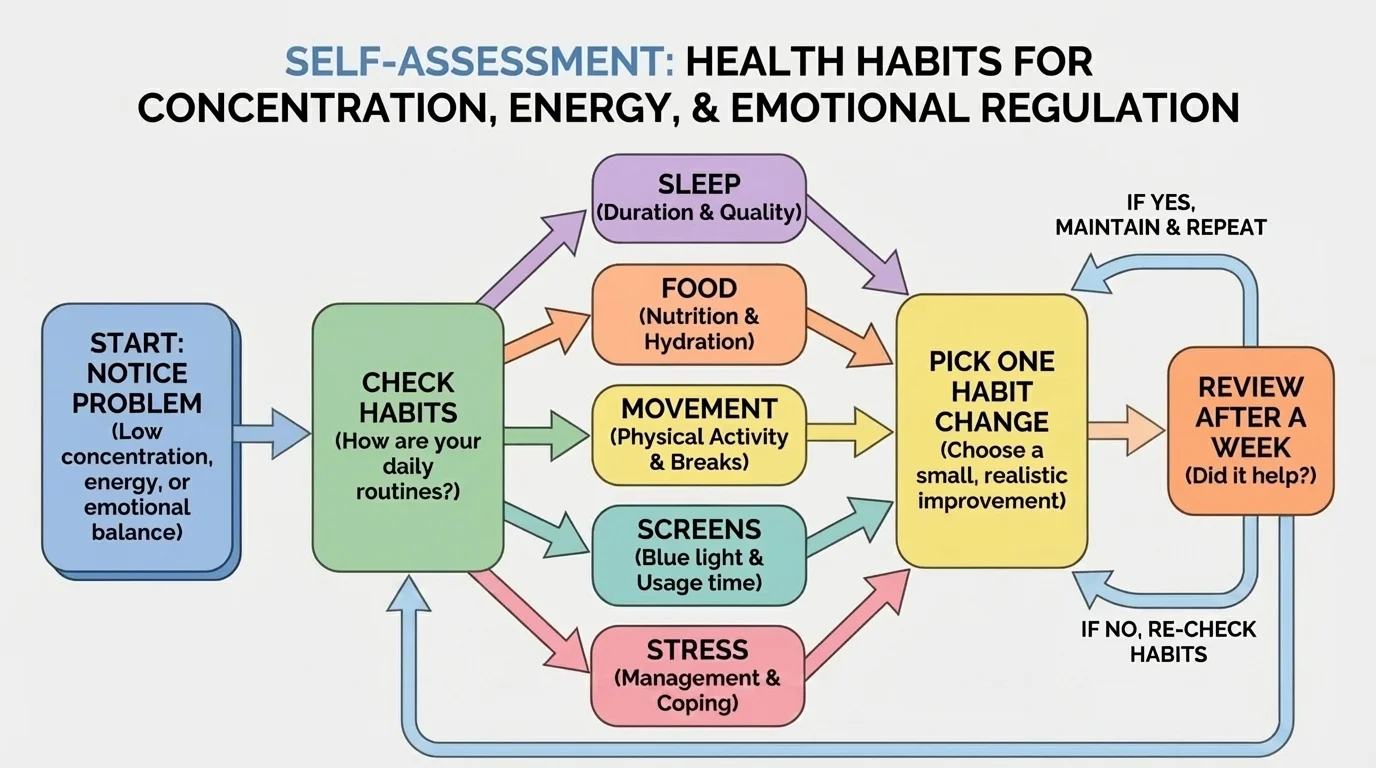
[Figure 3] You do not need to guess. A simple self-assessment process can help you figure out what is affecting you. The goal is not to judge yourself. The goal is to notice patterns and choose one useful next step.
Start by naming the main problem. As outlined in [Figure 3], ask whether the issue is concentration, low energy, emotional reactions, or a mix of all three. Then look back over the last several days and ask what your habits have been like.
Check these areas honestly: sleep schedule, bedtime screen use, meals, water intake, movement, breaks, stress level, and screen overload. You are looking for repeated patterns, not one bad day.
A practical way to do this is to rate each habit as helping, hurting, or unclear. For example, if you are sleeping at very different times each night, that habit may be hurting. If you are drinking water regularly, that habit may be helping. If you are not sure whether your afternoon snack helps, mark it unclear and pay attention to it this week.
Next, choose only one or two changes. Trying to fix everything at once usually fails because it is too hard to maintain. A better plan is to make one habit easier and more consistent. You might set a regular bedtime, prepare a simple breakfast, schedule movement breaks, or turn off notifications during study time.
After several days, check again. Did your focus improve? Did your energy become steadier? Did you react more calmly? The self-check process in [Figure 3] works best when you review results instead of giving up too early.
Personal habit check
Step 1: Name the problem.
"I get frustrated quickly during assignments and cannot stay focused."
Step 2: Find likely causes.
You notice late bedtimes, skipped lunch, and nonstop phone notifications.
Step 3: Pick one change.
For one week, you put your phone in another room during work time and eat lunch before your hardest task.
Step 4: Review.
If your work feels easier and you are calmer, those habits were affecting you.
A habit tracker, notes app, or simple checklist can help. You do not need anything fancy. You just need a way to notice cause and effect.
Good habits are easier to keep when your plan is realistic. If you currently go to bed very late, moving your bedtime a little earlier may work better than trying to change everything in one night. If you never take breaks, starting with one short break may be more realistic than creating a perfect schedule.
It also helps to set up your environment. Put water where you can reach it. Keep a simple snack ready. Charge your phone away from your bed. Use reminders for meals or movement. Lay out what you need before starting work. Good systems often work better than willpower alone.
Support from others matters too. Tell a parent, guardian, or trusted adult what you are trying to improve. If stress, sadness, anger, sleep problems, or low energy feel intense or do not improve, ask for help. Sometimes habits are part of the issue, but sometimes a bigger health concern needs attention. Reaching out is a strong choice, not a weak one.
"Small choices, repeated often, shape how you feel and function."
Pay special attention if you often feel hopeless, panicked, unable to sleep, unable to get out of bed, or too overwhelmed to handle normal daily tasks. Those are signs to involve a trusted adult and possibly a health professional. Self-care is important, but serious problems deserve real support.
The goal is not to become perfect. The goal is to understand your own patterns. When you know which habits support your concentration, energy, and emotional regulation, you can make choices that help you feel more in control of your day.
