Your brain is doing one of the most important jobs of your life right now: building the systems you will use for focus, memory, self-control, emotions, and decision-making for years to come. That means alcohol, tobacco, vaping, and other drugs do not just create a "bad moment." They can interrupt the way your brain and body are developing at the exact time they are growing fastest.
You may hear messages online that make substances sound small, funny, or harmless: "It's just one sip," "It's only vapor," "Everyone tries it," or "It helps you chill." But your body does not care what a trend says. It responds to chemicals in real ways. A choice made in a group chat, at a party, during a video call, or while hanging out in your neighborhood can affect your safety, your mood, your sports performance, your sleep, and even what you post or say.
At your age, being informed is a form of self-protection. You do not need scare tactics. You need clear facts and practical steps so you can spot risk, think ahead, and protect yourself.
A substance is a chemical that changes how your brain or body works. Some substances are legal for adults but unsafe for kids and teens. Some are illegal. Some are medicines that help when used correctly but are dangerous when misused.
Alcohol is a drug that slows down the brain and body. Tobacco products contain nicotine and other harmful chemicals. Vapes are devices that heat a liquid into an aerosol that is inhaled. Misuse means using a medicine in the wrong way, such as taking someone else's prescription or using more than directed.
Examples include alcohol, cigarettes, cigars, smokeless tobacco, vapes, cannabis, inhalants, prescription pain pills used without a doctor's directions, and stimulants taken without a prescription. One important rule to remember is this: legal for adults does not mean safe for a developing brain.
Another important point is that "natural" does not automatically mean safe either. Some dangerous substances come from plants. Some harmful chemicals are sold in attractive packaging. Safety depends on what the substance does to your body, not how it is advertised.
[Figure 1] Your developing brain is more sensitive to substances than an adult brain. The parts involved in reward, memory, and self-control are still maturing. The prefrontal cortex, which helps with planning, judgment, and impulse control, is still developing during the teen years.
At the same time, the brain's reward system reacts strongly to things that feel exciting or relieving. That is why substances can hook young people faster. A drug may create a quick feeling of pleasure, calm, or buzz, and the brain starts learning, "Do that again." This can make it harder to resist the next time.
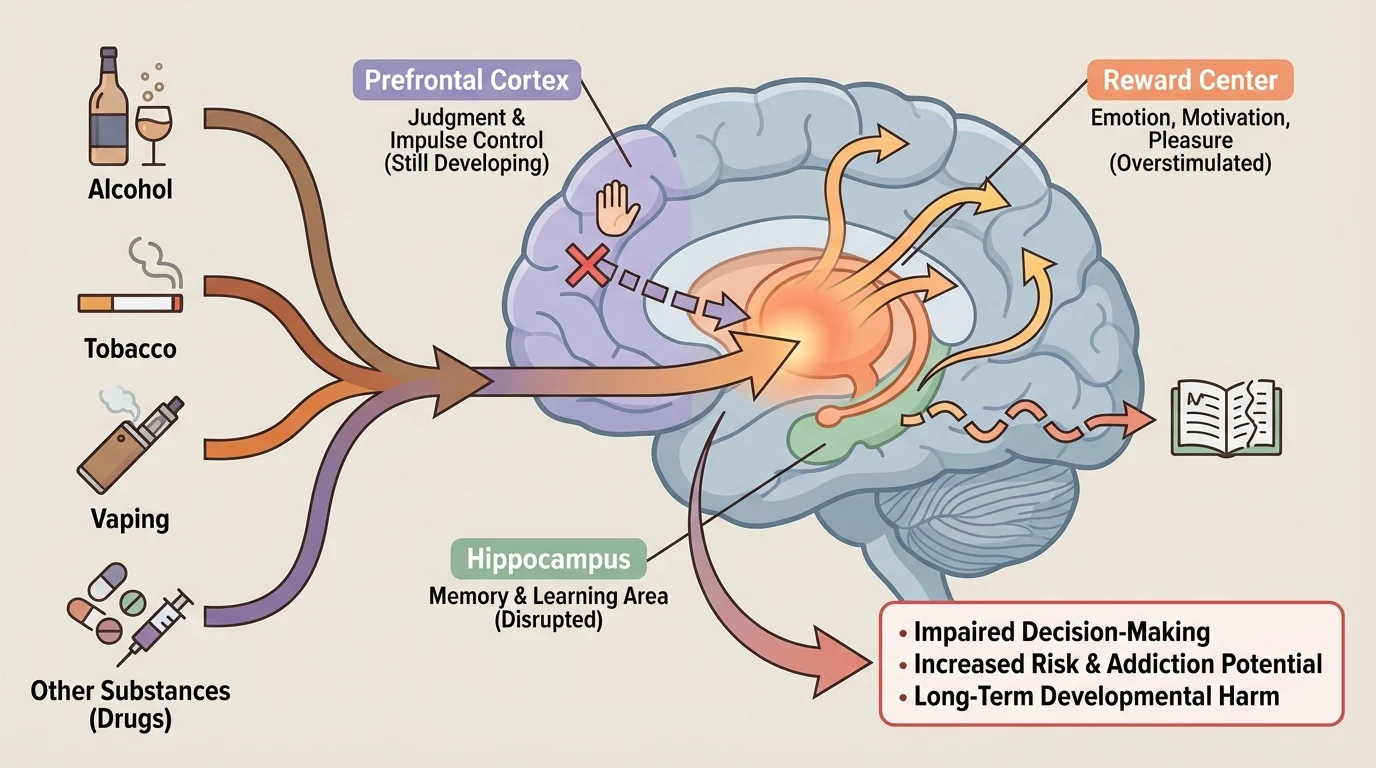
Many substances change the way brain cells communicate. Nicotine, alcohol, cannabis, and other drugs can affect attention, memory, mood, sleep, and learning. If the brain keeps adapting to a substance, the person may build tolerance, meaning the same amount no longer feels the same, and they may want more. That pattern can lead to dependence or addiction.
Why early use is riskier
When substances are used during adolescence, they can interfere with circuits for learning, emotional control, and decision-making. Because the brain is still wiring itself, repeated substance use can shape habits more strongly than many people realize.
Addiction is not about being "weak." It is a health problem in which the brain begins to crave a substance and has trouble stopping. That is one reason avoiding early use matters so much. Protecting your brain now helps protect your choices later.
The effects are not only long term. In the short term, substances can make it harder to remember directions, finish schoolwork, notice danger, or respond quickly. The same brain systems that help you think through consequences can get slowed down or hijacked, which means a person may act first and think later. That risk connects directly to safety, as we also see later in emergencies and refusal choices, building on what [Figure 1] shows about self-control and reward.
[Figure 2] Different substances affect different body systems through a side-by-side comparison of the brain, lungs, heart, and behavior. Some slow the body down. Some speed it up. Some affect breathing. Some make a person feel relaxed while quietly damaging organs or making judgment worse.
It helps to think in two time frames: short-term effects, which can happen right away or the same day, and long-term effects, which build up over time. Both matter.
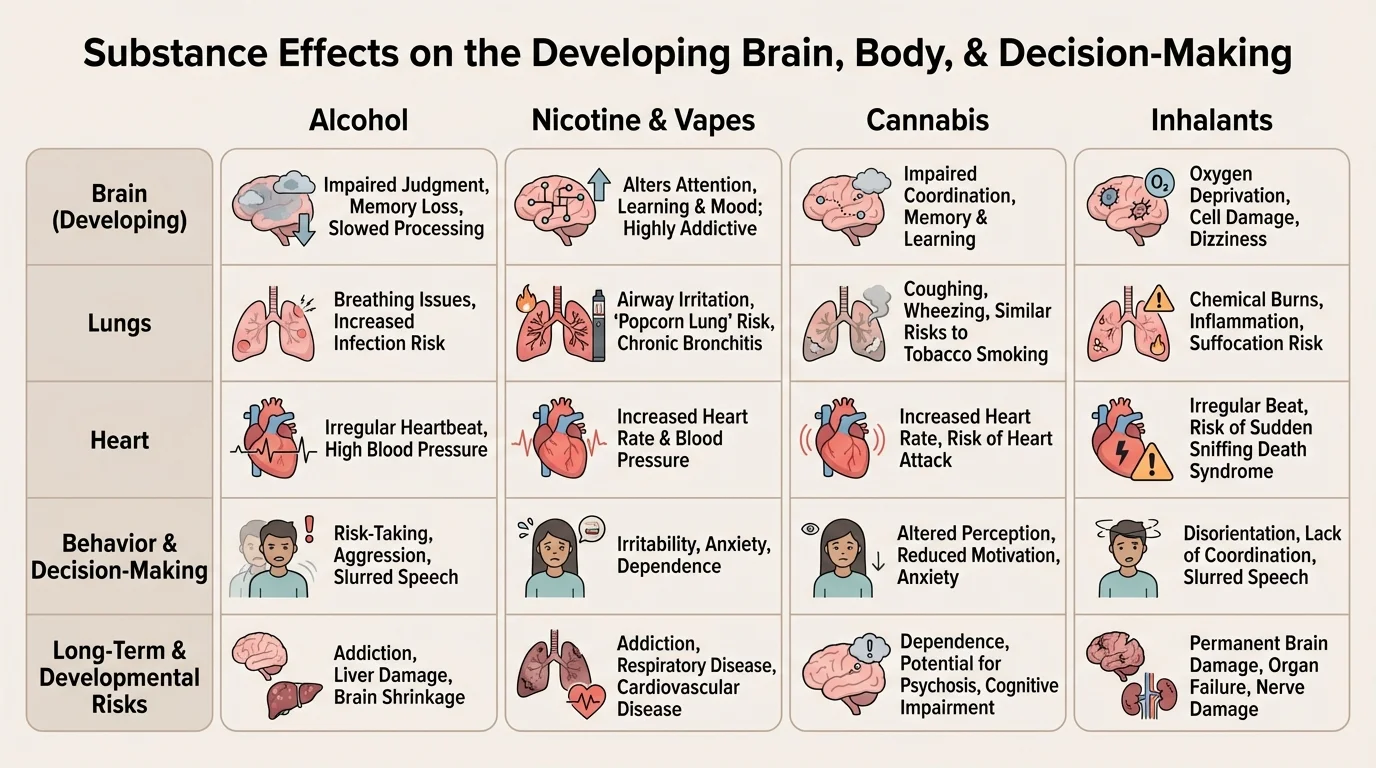
Alcohol slows down the brain and nervous system. Short-term effects can include poor balance, blurred vision, slurred speech, vomiting, risky behavior, and trouble making good decisions. In larger amounts, alcohol can cause alcohol poisoning, which can stop normal breathing and become life-threatening. Long-term heavy use can harm the liver, heart, and brain.
Tobacco and nicotine increase heart rate and can raise blood pressure. Nicotine is highly addictive, especially for young people. It can affect attention, mood, and memory. Smoking tobacco also damages the lungs and increases the risk of serious diseases later in life.
Vaping is not harmless. The cloud from a vape is an aerosol, not plain water vapor. That aerosol can contain nicotine, tiny particles, flavoring chemicals, and other substances that irritate the lungs. Some vaping liquids also contain very high amounts of nicotine, making addiction more likely.
Cannabis can affect memory, attention, reaction time, and coordination. A person may feel relaxed, but that does not mean they are functioning well. Some people experience anxiety, confusion, or panic. Regular use during the teen years may affect learning and motivation.
Inhalants are chemicals breathed in from products such as glues, sprays, or solvents. These are especially dangerous because they can quickly damage the brain, heart, and lungs. Even one use can be deadly.
Prescription drug misuse is also risky. Pain medicines called opioids can dangerously slow breathing. Stimulants can raise heart rate and blood pressure and may lead to anxiety, sleep problems, or heart issues when misused. "It came from a pharmacy" does not make it safe for someone it was not prescribed for.
| Substance | Common short-term effects | Possible long-term risks |
|---|---|---|
| Alcohol | Poor judgment, slowed reaction time, vomiting, loss of coordination | Brain, liver, and heart damage; addiction |
| Nicotine/tobacco | Faster heart rate, craving, irritability, trouble focusing without it | Addiction, lung damage, heart disease risk |
| Vaping products | Lung irritation, nicotine exposure, dizziness, coughing | Addiction, breathing problems, ongoing lung harm |
| Cannabis | Impaired memory, slower reaction time, altered judgment | Learning problems, dependence, mental health concerns |
| Inhalants | Dizziness, confusion, loss of consciousness | Brain damage, heart failure, sudden death |
Table 1. Major short-term and long-term risks of several commonly misused substances.
One of the biggest dangers is not just what a substance does to the body. It is what it does to choices. Substances can weaken judgment, which is your ability to think clearly, weigh consequences, and choose wisely.
That can look like sending messages you regret, sharing private information online, getting into arguments, taking dares, riding with an unsafe driver, wandering away from trusted people, or agreeing to something you do not really understand. A person under the influence may think, "I'm fine," even when they are making clearly unsafe choices.
Reaction time also matters. If someone is biking, crossing a street, swimming, using tools, or just trying to notice danger, slower brain processing can turn a small risk into an emergency. This is why substances and safety do not mix.
Real-life situation: one bad decision can grow fast
A teen takes several drinks at a gathering because others are doing it. At first, they laugh more and feel less nervous.
Step 1: Their judgment changes.
They stop noticing how much they have had and ignore warning signs like dizziness.
Step 2: Their decisions get riskier.
They post a video, send rude messages, and try to walk home alone.
Step 3: The safety risk grows.
They become sick, fall, and cannot explain clearly where they are when someone tries to help.
The problem is not only the drink. The problem is that alcohol changed the thinking needed to stay safe.
This is also why consent and substances are such an important safety issue. If someone is intoxicated or impaired, their ability to make clear decisions is affected. Safer choices protect not just your health, but your relationships and boundaries too.
Many young people are specifically targeted by marketing, flavors, and social media trends that make vaping seem clean or harmless. But the science says otherwise. A vape heats liquid into an aerosol that is inhaled deep into the lungs. That is very different from breathing steam from plain water.
Some vaping products can deliver nicotine levels high enough to create strong cravings quickly, especially in young users whose brains are still developing.
Nicotine can make a person feel temporarily more alert or less stressed, but that relief is tricky. Often the brain is just calming the discomfort of craving the next dose. This creates a loop: use nicotine, feel brief relief, crash, crave more, repeat.
Because vaping is easy to hide, some people use it more often than they realize. That repeated exposure can strengthen addiction. And as [Figure 2] shows, the effects are not limited to one body part. The lungs, heart, and brain can all be involved.
[Figure 3] If you are offered a substance, a simple plan helps. It presents a practical response path: pause, assess, say no clearly, leave the situation, and tell a trusted adult if needed. You do not have to invent a perfect answer on the spot.
Pressure is not always direct. It can sound like jokes, dares, teasing, "everyone does it," or "don't be dramatic." It can happen through texts, disappearing messages, live streams, or while hanging out in your community. Curiosity is normal. Putting a harmful chemical in your body is not the only way to handle curiosity.
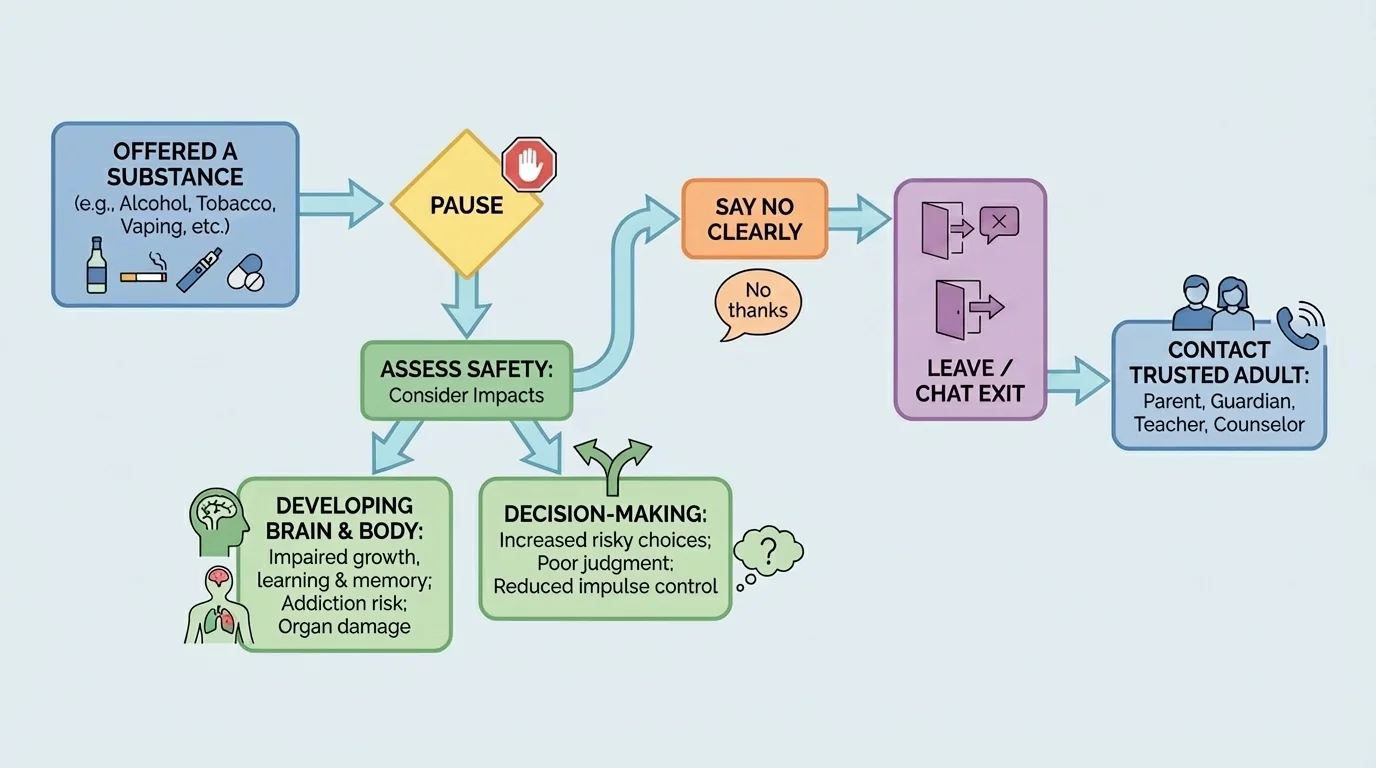
Here are practical refusal tools you can actually use:
Be direct. Say, "No, I'm not doing that." Short and calm works well.
Repeat if needed. You do not owe a long explanation. "No thanks. I said no."
Change the subject or suggest something else. "Let's go get snacks." "Want to play a game instead?"
Blame a rule if that helps. "My family would know." "I'm not messing up my sports season."
Leave. Exit the chat, end the call, move to another area, or contact someone safe for a ride or pickup.
Tell a trusted adult. If the situation feels out of control, safety matters more than avoiding awkwardness.
Refusal scripts you can borrow
Step 1: Keep it short.
"No thanks. I'm good."
Step 2: Add a boundary if needed.
"Stop asking. I'm not doing it."
Step 3: Exit.
"I'm heading out." or "I'm leaving this chat."
Simple words are often stronger than a long speech.
Planning ahead makes refusal easier. Think of one person you can text, one excuse you can use, and one way to leave quickly. The same pause-and-plan approach in [Figure 3] works online and offline.
[Figure 4] Some signs mean it is not safe to wait and hope things improve. Warning signs such as trouble breathing, bluish lips, seizure, repeated vomiting, passing out, or being impossible to wake up need immediate help.
If someone may have alcohol poisoning, an overdose, or a severe reaction, act fast. A person can be in danger even if they are still breathing or seem "just asleep."
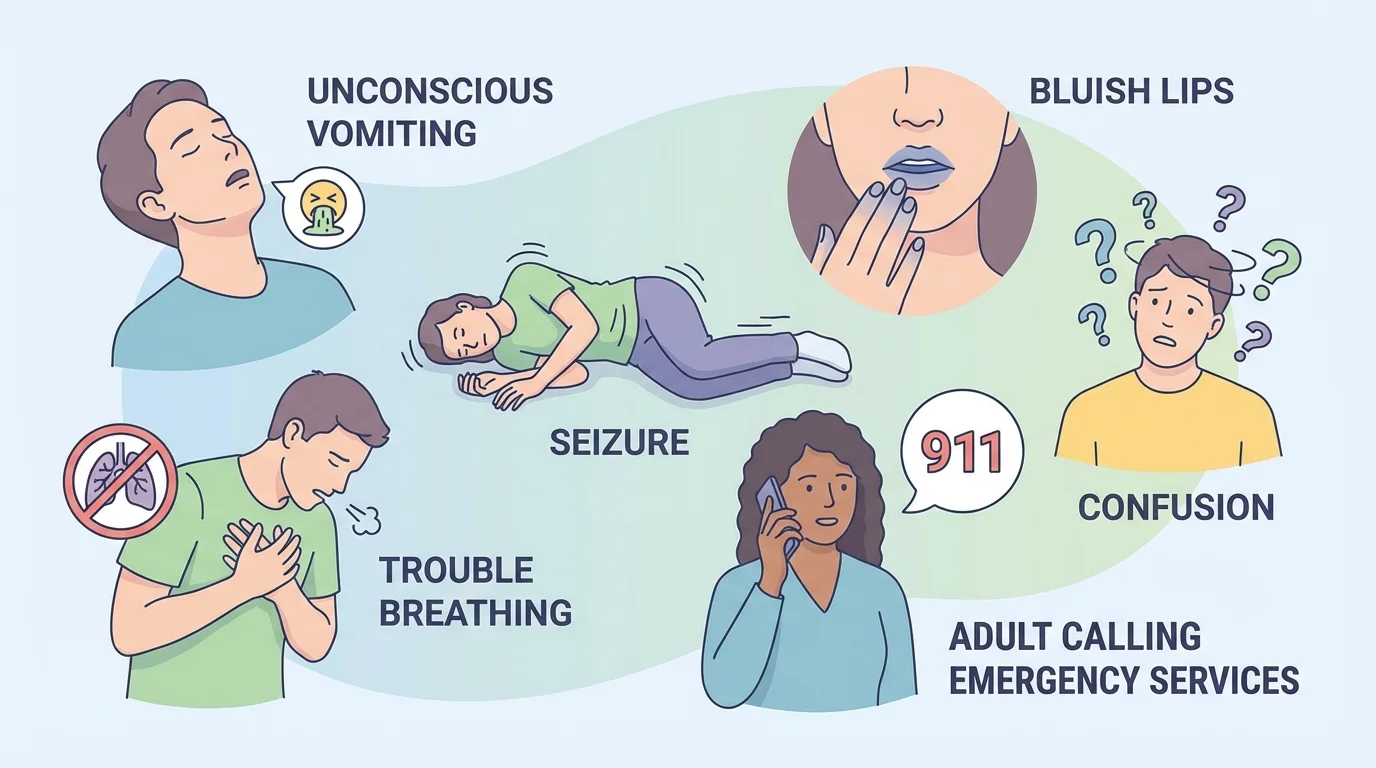
What to do:
Step 1: Call emergency services right away if the person is unconscious, having trouble breathing, having a seizure, or not responding normally.
Step 2: Get a trusted adult immediately.
Step 3: Stay with the person. If they are vomiting or unconscious but breathing, turn them on their side if you know how, to lower choking risk.
Step 4: Do not give them more substances, food, or a shower. Do not assume sleep will fix it.
Step 5: Be honest with responders about what may have been taken. Accurate information can save a life.
If opioids might be involved, some communities teach families how to use naloxone, a medicine that can temporarily reverse an opioid overdose. Even if naloxone is given, emergency help is still needed.
People sometimes hesitate to call for help because they fear getting in trouble. But a life is more important than embarrassment. The danger signs in [Figure 4] are signs to act, not signs to stay quiet.
A strong decision is not just saying no in one moment. It is building a life where harmful choices have less power over you. That can mean getting enough sleep, eating regularly, managing stress in healthy ways, spending time with safe people, and choosing activities that actually help your mood instead of borrowing relief from a chemical.
Your body and brain work best when basic needs are covered: sleep, food, movement, hydration, and emotional support. When those are missing, risky choices can feel more tempting.
Healthy alternatives to handle stress include talking to someone you trust, exercising, listening to music, drawing, journaling, gaming with limits, taking a walk, breathing slowly, or stepping away from social media for a while. None of these are magic, but they do not damage your brain or reduce your safety.
You can also make a personal safety plan. Write down three trusted adults, two friends who support healthy choices, and one exit plan for unsafe situations. Keep important phone numbers easy to reach. The goal is not fear. The goal is being ready.
"Protecting your brain now protects your choices later."
Every time you choose safety, you are training your brain too. You are strengthening the skills substances can weaken: judgment, self-control, and long-term thinking. That matters for sports, hobbies, friendships, family trust, and future opportunities.
