A single fake text can do more than annoy you. It can trick someone into sending money, giving away passwords, or sharing private information that leads to even bigger losses later. That is why learning to spot dishonest messages is a real-life money skill, not just an online safety skill.
Financial safety means protecting your money, accounts, personal information, and decision-making from harm. Even if you do not have a job, bank account, or credit card yet, scams still matter to you. You might use gaming platforms, payment apps through family accounts, online stores, social media, or email. Scammers know that young people are online a lot, and they design tricks to look normal, exciting, or urgent.
Fraud and scams can affect more than just the amount of money lost. They can cause stress, embarrassment, damaged trust, and problems that take a long time to fix. If a scammer gets access to an account, they may keep using that information again and again. One bad click can turn into password theft, fake purchases, or identity problems.
Good financial safety is not about being afraid of everything. It is about slowing down, checking facts, and making smart choices before you act. The goal is not to become suspicious of every person online. The goal is to learn how to tell the difference between a real opportunity and a trap.
Fraud is dishonest behavior meant to gain money, property, or personal information.
A scam is a type of fraud that tricks someone through lies, pressure, or false promises.
Misinformation is false or misleading information that can spread online, whether or not the person sharing it means to deceive.
Financial safety means protecting your money, accounts, personal data, and financial decisions from theft, loss, or manipulation.
These ideas are connected. A scam is often the method, fraud is the dishonest act, and misinformation helps the scam spread. For example, a fake social media post may claim a certain app gives away free money. That false post is misinformation. If the app or link steals account details or payment information, that becomes fraud.
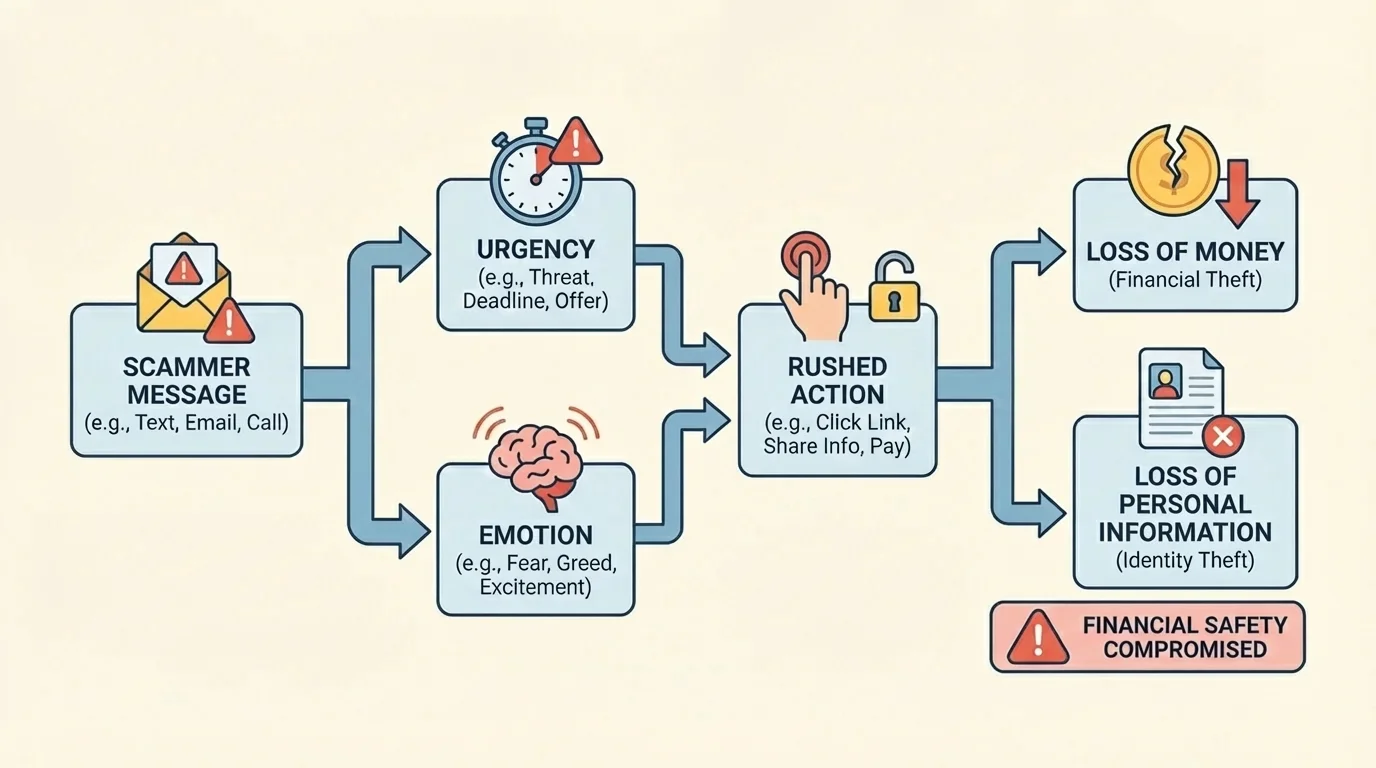
[Figure 1] Sometimes the lie is obvious. Other times it is mixed with true details, which makes it harder to notice. That is why you need both critical thinking and safety habits.
Scammers usually follow a pattern: they grab your attention, create strong emotion, rush you, and push you to act before you think clearly. They often want one of three things: your money, your account access, or your personal information.
They use emotions because emotions can overpower judgment. A scammer may create urgency by saying, "Your account will be locked in 10 minutes," or excitement by saying, "You have won a free phone." They may also create fear by pretending to be a bank, delivery company, or government office.
Another common trick is impersonation. That means pretending to be a trusted person or organization. A scammer might copy a company logo, use a fake email address that looks almost real, or message you while acting like a friend who needs help. If you only glance quickly, the message may seem believable.
Scammers also rely on distraction. If they can get you to focus on a reward, a fear, or a deadline, you may stop checking details. That is why smart money protection starts with one simple rule: slow down.
Why pressure works
When people feel rushed, they are less likely to notice warning signs. Scammers know this. A message that says "Act now," "Final chance," or "Your account is in danger" is trying to control your emotions so you will skip the checking step.
As you saw earlier in [Figure 1], the scam itself may change, but the pattern stays similar. First comes emotion, then speed, then a request for money, a password, a code, or private information.
[Figure 2] Scam types may look different on the surface, but many of them aim for the same result: getting money, account access, or personal details. Knowing the categories helps you spot the pattern faster.
One common example is the fake giveaway. A post may promise free shoes, gaming currency, a gift card, or concert tickets if you "claim now." It may ask you to log in, pay a small "processing fee," or share the post with others. Real prizes do not usually require strange payment steps or password entry through unofficial links.
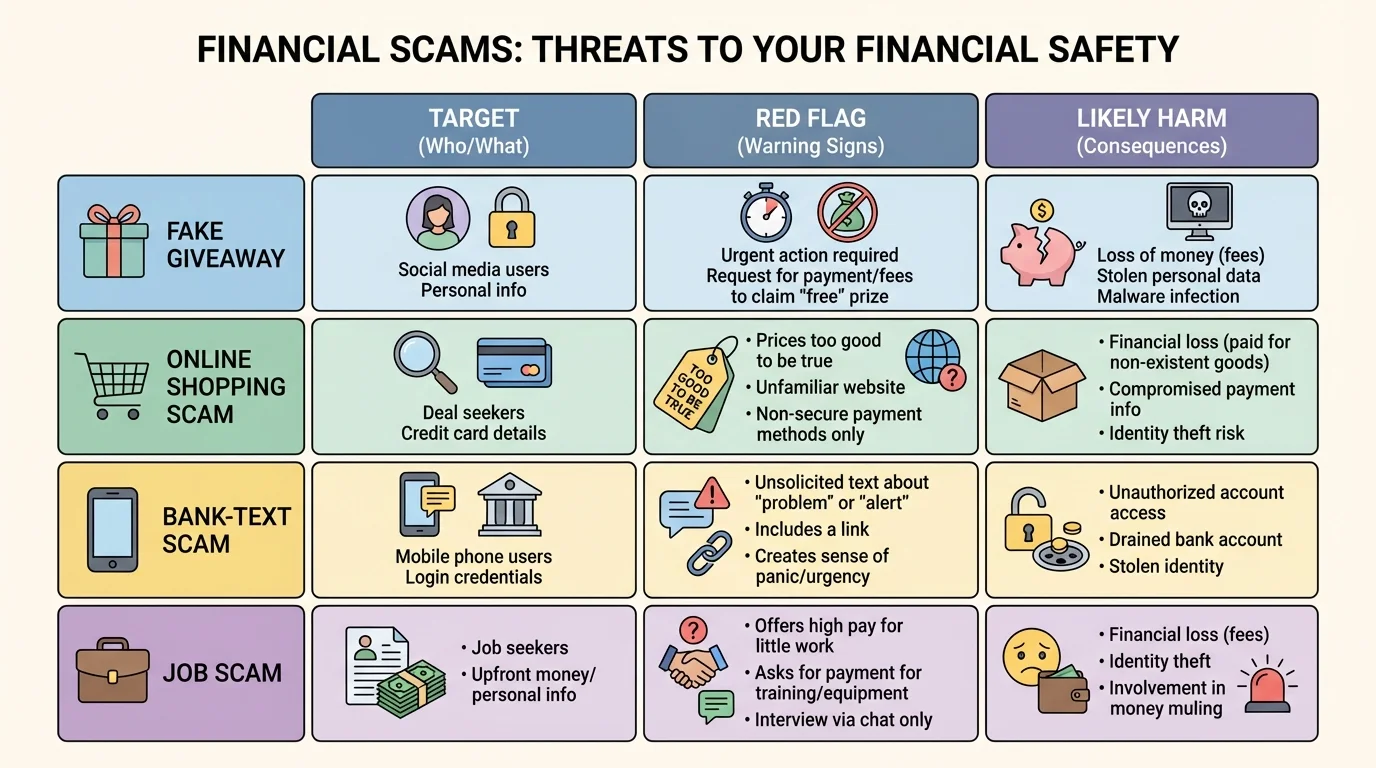
Another common scam is fake online shopping. A website may show popular items at unrealistically low prices, like a \(\$120\) item sold for \(\$15\). The pictures may be stolen from a real store. If someone pays, the item may never arrive, or a cheap fake may show up instead.
Bank-text scams are also very common. A text says there is suspicious activity and tells you to click a link right away. The link leads to a fake login page. If you type in the username and password, the scammer receives that information. A real bank usually tells you to sign in through its official app or website, not through a random text link.
Teens may also run into fake job offers. These often appear online and promise easy money for very little work. A message may say you can make hundreds of dollars per week just by reposting ads or receiving and forwarding packages. Some of these are traps to steal information, and others try to use people in illegal activity without them realizing it.
Charity scams can appear after storms, fires, or major news events. They use sympathy to get quick donations. The cause may sound real, but the payment link may go to a scammer instead of helping anyone.
| Scam type | What it often says | Major red flag | Possible harm |
|---|---|---|---|
| Fake giveaway | You won a prize | Asks for fee or login | Money loss or stolen account |
| Shopping scam | Huge discount today | Price far below normal | Fake item or no item |
| Bank-text scam | Your account is locked | Pushes you to click fast | Stolen password |
| Job scam | Easy money, no experience | Vague details or asks for private data | Identity theft or money loss |
| Charity scam | Donate immediately | No proof of real organization | Donation stolen |
Table 1. Common scam types, typical messages, warning signs, and likely harm.
Not every harmful money message is a direct scam. Sometimes false or misleading information spreads through videos, posts, group chats, or ads. This is where misinformation becomes dangerous.
For example, a post might say, "This secret method guarantees you will double your money in one week." That claim may not ask for money right away, but it can still lead someone to make risky choices. If the information is false, the person might waste savings, fall for a later scam, or copy harmful advice.
Another example is misleading product advertising. A seller may make an item seem much better than it really is by using edited photos, fake reviews, or exaggerated promises. If you believe the message without checking, you may spend money on something low quality or useless.
False money advice often spreads because it sounds simple, exciting, and confident. That does not make it true. Some of the most shared posts online are the least carefully checked.
Misinformation can also affect families. Suppose someone sees a post claiming a certain payment app is "giving away free cash" if users type in account details on a special page. If that information is fake, it can lead directly to account theft.
When money information comes from social media, ask: Who posted it? What evidence do they have? Are they trying to sell something? Can the claim be confirmed on a trusted site? Those questions protect both your wallet and your judgment.
Many scams use different stories but repeat the same warning signs. Learning those signs helps you respond fast. Watch out for messages, calls, websites, or posts that do any of the following:
A useful question is: Why would a real business handle this in such a rushed or unusual way? Real companies may contact customers, but they usually give official ways to confirm information. Scammers try to trap you before you verify.
Case study: A fake delivery text
A student gets a text saying a package cannot be delivered unless a \(\$2\) fee is paid right away.
Step 1: Notice the pressure
The message says the package will be canceled soon. That is a common pressure tactic.
Step 2: Check the source
The link does not match the real delivery company website.
Step 3: Verify another way
Instead of clicking, the student opens the official delivery app or asks a trusted adult to help check tracking information.
Step 4: Protect information
The student does not enter card details or payment information into the suspicious site.
The student avoids a small payment scam that could have turned into a stolen-card problem.
Notice that the amount was tiny. Scammers often use small charges because people may think, "It is only a little money." But even a small payment can lead to larger theft if the scammer gets account or card information.
[Figure 3] Before taking any money-related action online, use a safety routine. It works like a filter and follows a basic order: stop, check, verify, ask, then decide. This routine is simple enough to use every day.
Step 1: Stop. Do not react immediately, even if the message feels urgent. Give yourself time to think.
Step 2: Check the sender. Look closely at the username, email address, website address, and message style. Small differences matter.
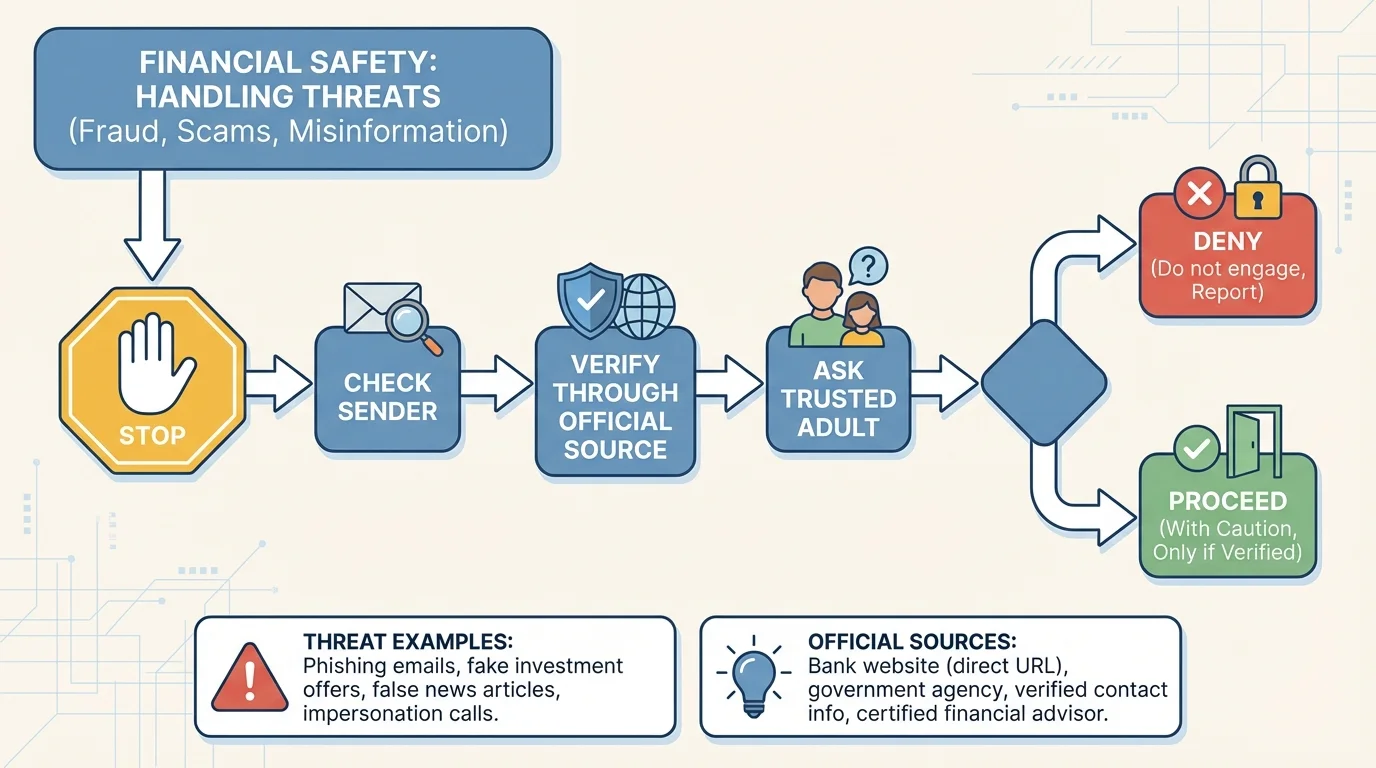
Step 3: Verify through an official source. If the message claims to be from a bank, store, app, or delivery service, open the official app or type the real website yourself instead of clicking the message link.
Step 4: Ask a trusted adult. If money, passwords, codes, or personal details are involved, pause and get another opinion. This is not a sign of weakness. It is a smart safety habit.
Step 5: Decide. If the message is suspicious, delete it, block it, report it, or ignore it. If it turns out to be real, you can respond through the verified source.
This process takes only a few minutes, but those minutes can protect much more than the amount of money being requested. As shown earlier in [Figure 3], the key is putting verification before action.
If something asks for money or private information, slowing down is a safety skill. Quick decisions are great for some situations, but not for financial choices.
Try This: The next time you get a message about a prize, payment, order, or account problem, do a full source check before doing anything. Look at the sender name, link, and reason for the message. This small habit builds strong instincts.
Even careful people can be fooled. Scammers are good at what they do, and getting tricked does not mean someone is careless or unintelligent. What matters most is responding quickly.
If you think a scam happened, tell a trusted adult right away. Then take action as soon as possible: change passwords, sign out of devices if needed, contact the bank or app company, save screenshots, and report the scam on the platform where it appeared. Fast action can reduce the damage.
If a payment card or bank account may be affected, an adult should contact the company directly using the official number or website. If an account password was shared, changing that password quickly matters even more if the same password was used on other accounts.
Why quick reporting matters
Some fraud can be stopped or limited if it is reported early. Banks, payment apps, online stores, and social platforms may be able to freeze activity, reverse charges, or block further access.
Try This: Create a short emergency plan with a trusted adult. Include who to tell first, where official account contact numbers are found, and what passwords should never be shared. Having a plan makes it easier to stay calm.
Protecting yourself from scams is not just about spotting one bad message. It is about building habits that make you harder to trick over time.
Use strong, unique passwords. Turn on extra account security when possible. Be careful with what personal details you post publicly. Review websites before buying. Read reviews from more than one source. If a deal seems unbelievably good, compare prices on trusted sites first.
It also helps to understand identity theft, which happens when someone uses another person's private information to pretend to be them, open accounts, make purchases, or commit fraud. Identity theft can start with something as simple as a stolen password, birthday, or account login.
Another strong habit is practicing source verification. That means confirming information with a trusted original source instead of trusting a random post, forwarded message, or copied link. Source verification is one of the best defenses against both misinformation and fraud.
"If someone is rushing you to make a money decision, slow down even more."
When you protect your information, question suspicious claims, and verify before acting, you are not just avoiding scams. You are building real financial judgment. That skill will help you for years when you start earning, saving, shopping, donating, and managing accounts of your own.
