You do not need to make one huge bad decision to feel the effects of unhealthy habits. Sometimes the biggest problems come from small choices repeated every day: going to bed too late, skipping water, sitting for hours, ignoring stress, or checking your phone while doing something that needs your full attention. These habits can change how you feel, how well you perform, and how safe you are.
A lifestyle habit is a repeated behavior that becomes part of your normal routine. One night of poor sleep or one missed meal will not define your health. But patterns matter. If a choice happens again and again, your body and mind start responding to it as your usual way of living.
This is why people can say they want to feel better, focus better, or stay safer, but still struggle. Good intentions help, but your regular actions matter more. If your routine supports your health, you usually feel stronger, think more clearly, and make safer decisions. If your routine works against you, everyday tasks start feeling harder than they should.
Health is your overall physical, mental, and social well-being. Performance means how well you carry out tasks, such as concentrating, exercising, learning, reacting, or making decisions. Personal safety is your ability to avoid harm and protect yourself in daily situations, both offline and online.
Think of your daily routine like charging and maintaining a device you depend on. If you charge it, update it, and handle it carefully, it works better. If you drain it, overload it, and ignore warning signs, it becomes unreliable. Your body and brain work in a similar way.
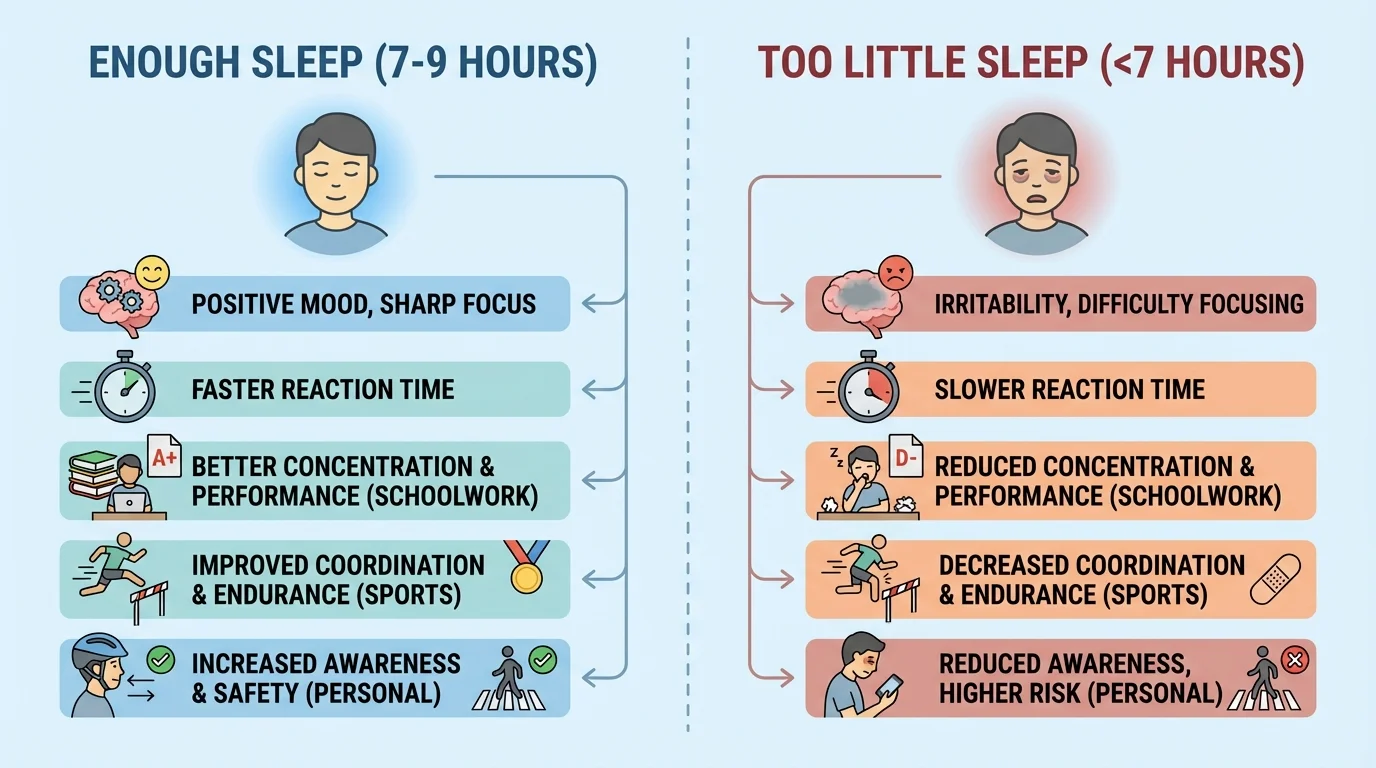
Sleep hygiene means the habits that help you get adequate, high-quality sleep, and it strongly affects your focus, mood, physical performance, memory, and personal safety, as [Figure 1] shows. When you are sleep-deprived, your brain processes information more slowly, and your reactions may be late even if you think you are "fine."
For teens, sleep is not something optional that comes only after everything else gets done. It is a basic need. Too little sleep can make you more irritable, less patient, more likely to forget instructions, and more likely to take risks without thinking them through. It can also affect athletic performance, coordination, and recovery after physical activity.
Sleep also connects directly to safety. If you are tired, you may miss warning signs, trip more easily, make mistakes in the kitchen, or respond poorly in a stressful situation. Even simple tasks become less safe when your attention is weak.
Healthy sleep habits are practical, not complicated. Try going to bed and waking up at about the same time each day. Lower lights at night, stop scrolling right before bed, and keep your sleeping space as calm as possible. If your mind races, write tomorrow's tasks down so your brain does not keep rehearsing them.
If you stay up very late watching videos and then try to do a workout, help cook, or join an important video call the next day, the cost is usually obvious. As shown in [Figure 1], less sleep often leads to a chain reaction: worse attention, lower mood, slower reaction time, and more mistakes. This is one reason healthy routines protect both performance and safety.
Your brain keeps organizing memories while you sleep. That means sleep helps not only with energy, but also with learning, problem-solving, and remembering what you practiced the day before.
A good question to ask yourself is not just, "How late can I stay up?" but "How well do I want to function tomorrow?" That shift in thinking helps you treat sleep as preparation, not as lost time.
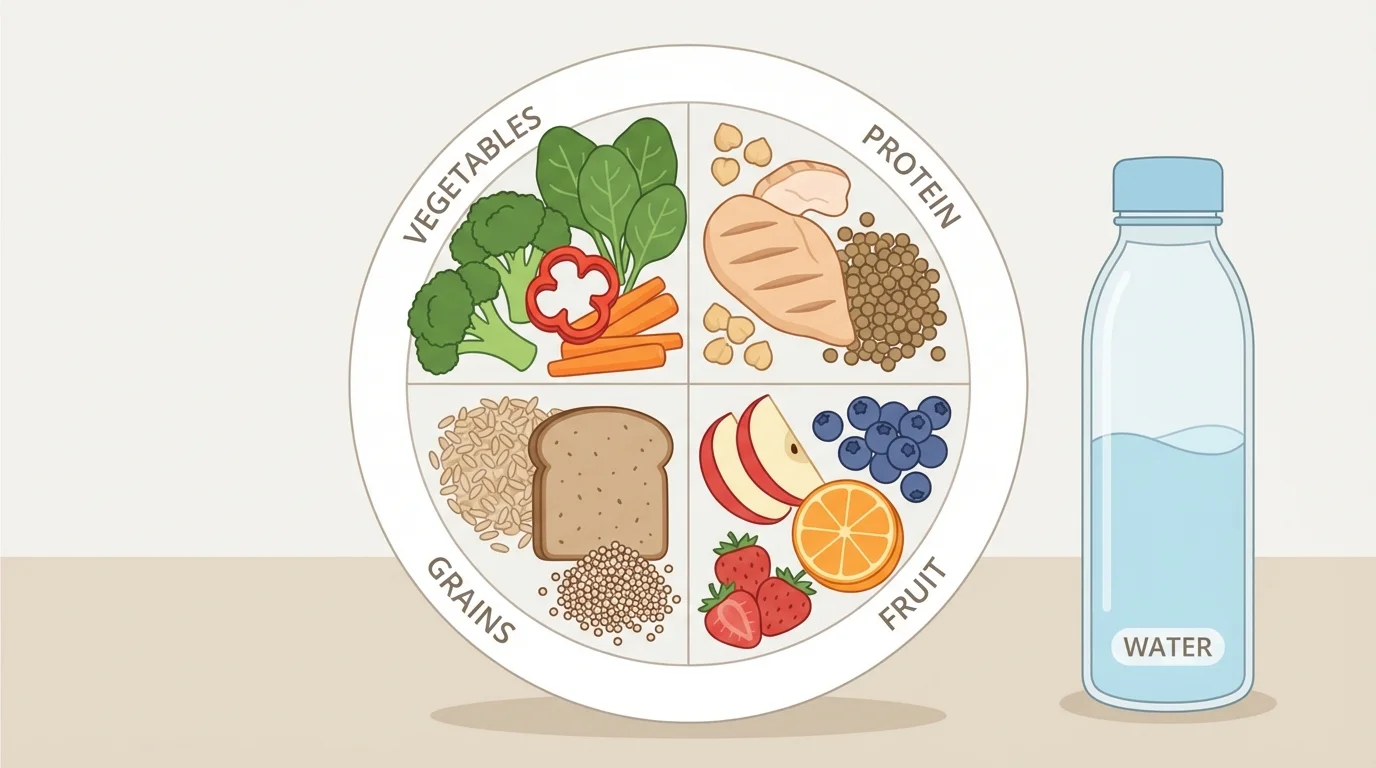
Your body needs steady fuel, not random fuel, and [Figure 2] illustrates what balanced choices can look like in real life. Food affects energy, attention, growth, recovery, mood, and even how patient you feel when something goes wrong.
Skipping meals can leave you feeling shaky, unfocused, or cranky. Eating mostly highly processed snacks may give a quick burst of energy, followed by a crash. A more balanced pattern usually includes protein, fruits or vegetables, whole grains when available, and enough water.
Hydration matters too. Dehydration happens when your body does not have enough fluid. Even mild dehydration can make you tired, give you a headache, and make it harder to focus. If you are active, outside in the heat, or not drinking regularly, this can happen faster than you expect.
A simple way to build better eating habits is to ask: "What will help me feel steady for the next few hours?" That might mean oatmeal and fruit in the morning, a sandwich with protein at lunch, or adding water and a banana before physical activity.
You do not need a perfect diet. You need consistent basics. For example, if you drink water throughout the day instead of only when you are already very thirsty, you are more likely to avoid headaches and low energy. If you add one filling food to a snack, such as yogurt, nuts if safe for you, cheese, eggs, or beans, you often stay full longer.
Food choices also affect safety in indirect ways. If you are dizzy, weak, or distracted because you have not eaten or had enough water, you are less likely to notice hazards around you. During sports, workouts, long walks, or even a crowded event, that matters.
Reading nutrition labels can help, but do not get stuck trying to analyze every detail. Start by noticing serving size, sugar, protein, fiber, and sodium. A label does not tell you everything about health, but it can help you compare options and make smarter choices.
| Habit | Likely Effect on Health | Likely Effect on Performance | Likely Effect on Safety |
|---|---|---|---|
| Skipping breakfast regularly | Low energy, irritability | Harder to focus | More careless mistakes |
| Drinking water consistently | Better hydration | Steadier attention and stamina | Less dizziness and fatigue |
| Eating balanced meals | Supports growth and recovery | Better mood and concentration | More reliable judgment |
| Too many sugary drinks | Energy swings | Crash after brief boost | Lower awareness when tired |
Table 1. Examples of how food and hydration habits can influence health, performance, and safety.
Later in the day, the balanced plate in [Figure 2] still applies. Meals do not have to be fancy. A simple plate with a protein source, a fruit or vegetable, a grain or starch, and water often supports your body better than grabbing whatever is fastest.
Sedentary means spending a lot of time sitting or being physically inactive. Many teens learn, relax, and socialize through screens, so long sitting can easily become normal. But your body functions better when it moves regularly.
Movement helps your heart, muscles, bones, and mood. It can improve sleep and reduce stress. It also sharpens performance by increasing alertness and helping you feel more awake. You do not need to become an athlete to benefit. Walking, stretching, bodyweight exercises, dancing, biking, sports practice, or active chores all count.
Screen balance matters because screens can crowd out sleep, movement, and face-to-face time with trusted people in your home or community. Screens are useful, but using them for hours without breaks may strain your eyes, tighten muscles, and leave you mentally overstimulated.
Movement as prevention
Regular movement is not only about fitness goals. It helps prevent stiffness, weak posture, low energy, and some stress-related symptoms. Short activity breaks can improve your concentration and lower the physical discomfort that comes from being in one position too long.
Try a simple routine: after every study block, stand up, stretch, refill your water, and walk for a few minutes. If you game, stream, or scroll for fun, build in checkpoints so your free time does not gradually turn into fatigue.
Posture also affects how you feel. If you spend hours hunched over a device, you may notice neck pain, headaches, or back tightness. A better setup with your screen closer to eye level and your body changing position regularly can reduce that strain.
Stress response is your body's reaction to pressure or challenge. Some stress is normal. It can help you prepare and respond. But when stress is constant and unmanaged, it drains your energy and affects your decisions.
Stress can show up as stomachaches, trouble sleeping, snapping at people, zoning out, procrastinating, or feeling overwhelmed by small problems. These are not character flaws. They are signals that something needs attention.
Healthy coping habits include getting enough sleep, moving your body, talking to a trusted adult, journaling, breathing slowly, limiting doom-scrolling, and breaking large problems into smaller steps. Unhealthy coping habits include isolating yourself, lashing out, hiding problems, or using risky behavior to escape feelings.
Your mental state affects personal safety more than many people realize. If you feel panicked, angry, ashamed, or desperate, you may ignore warning signs or make fast decisions just to stop the discomfort. Learning to pause can protect you.
Real-life coping reset
You have a deadline, a family responsibility, and messages piling up. You feel frozen and start avoiding everything.
Step 1: Name the problem clearly.
Say: "I am stressed and overloaded, not lazy."
Step 2: Lower the pressure for the next 10 minutes.
Drink water, breathe slowly, and put the phone face down.
Step 3: Choose one small action.
Start the first task for just 5 minutes, message someone if needed, or make a short to-do list.
Step 4: Ask for help early.
If the problem is bigger than you can handle, contact a parent, guardian, counselor, coach, or another trusted adult.
If stress lasts for a long time, affects sleep or appetite, or makes you feel hopeless or unsafe, reach out for support. Strong people ask for help. That is a safety skill, not a weakness.
Some healthy habits are not exciting, but they protect you every day. Hygiene includes washing hands, brushing and flossing teeth, showering regularly, caring for skin, wearing clean clothes, and covering coughs or sneezes when sick.
These habits reduce the spread of germs and help prevent infections, bad breath, dental problems, skin irritation, and illness. For example, handwashing before eating and after using the bathroom lowers the chance of bringing harmful germs into your body.
Preventive health also means paying attention before a small issue becomes a big one. If you keep getting headaches, feel unusually tired, notice pain that does not go away, or see changes in your mood, tell a trusted adult. Waiting too long can make problems harder to solve.
Prevention means taking action before something goes wrong. In daily life, prevention often looks boring: sleep, handwashing, hydration, helmets, breaks, and honest communication. Boring habits can be powerful protection.
Dental care is a strong example. Ignoring brushing and flossing may not seem serious right away, but cavities and gum problems build over time. The same pattern is true for many health habits: small prevention steps now can save pain and stress later.
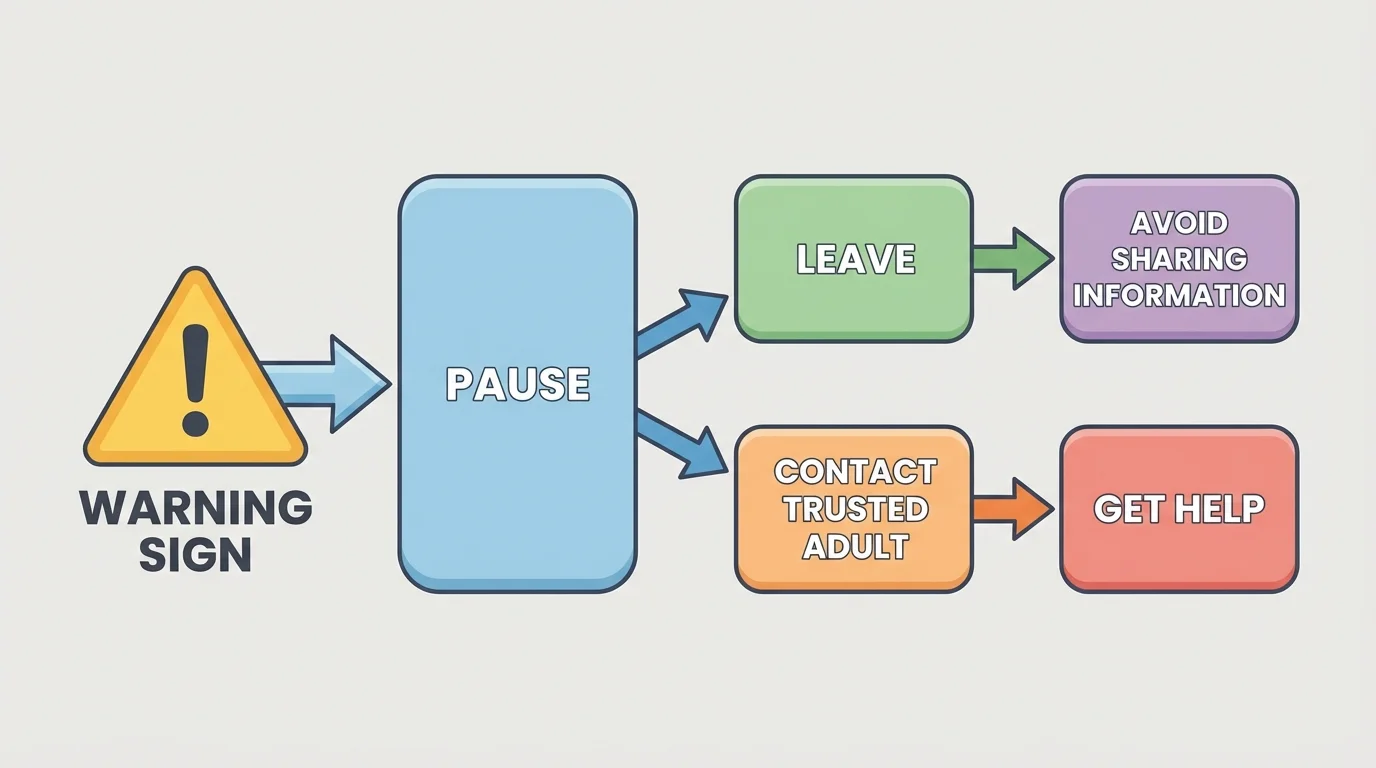
As [Figure 3] shows, safe decisions often follow a simple pattern in which noticing a warning sign leads to a safer next step. Lifestyle habits affect safety because they change how alert, prepared, and self-controlled you are.
Being overly tired, hungry, dehydrated, emotionally overwhelmed, or distracted can make you easier to pressure and slower to react. If someone online asks for personal information, if a situation in your neighborhood feels off, or if friends want to do something risky, your condition in that moment matters. Healthy habits make it easier to think clearly and trust your judgment.
Some habits directly increase danger. Examples include using a phone while walking near traffic, ignoring protective gear, experimenting with substances, staying in places where you feel unsafe because you do not want to seem rude, or meeting online contacts alone without adult knowledge and safety planning.
A strong safety routine includes practical actions: keep your phone charged when possible, let a trusted adult know where you are going, trust uncomfortable feelings, have an exit plan, and know who you can contact quickly. If something feels wrong, you do not need perfect proof to take yourself seriously.
Peer pressure can be quiet. It is not always someone saying, "Do this." Sometimes it is the fear of missing out, wanting approval, or not wanting to look scared. But real confidence includes saying no, leaving, blocking someone, or asking for help.
Online safety is part of personal safety. Oversharing your location, posting when you are home alone, or responding emotionally to strangers can create risks. Pausing before you post is a lifestyle habit too.
Later, when you face a real decision, the pattern in [Figure 3] still helps: notice the warning sign, pause, get distance if needed, contact support, and choose the safer option even if it feels awkward.
"You never regret protecting your safety as much as you regret ignoring a warning sign."
Good safety choices may feel inconvenient in the moment. But inconvenience is much easier to deal with than preventable harm.
Changing habits works better when you make the change small, clear, and repeatable. If you try to change everything at once, you usually end up frustrated. Start with one habit that has a high impact, such as sleep, water, movement, or phone limits before bed.
Step 1: Pick one target. For example: "I will put my phone across the room at night."
Step 2: Make it easy. Put the charger there now.
Step 3: Connect it to an existing routine. Plug in your phone right after brushing your teeth.
Step 4: Track it for a week. Notice patterns, not perfection.
Step 5: Adjust if needed. If the plan fails, change the system instead of insulting yourself.
This is where risk factor thinking helps. A risk factor is something that raises the chance of a problem. Poor sleep, high stress, and distraction are risk factors for mistakes and unsafe decisions. Protective habits lower those risks.
Try This: Choose one "anchor habit" for the next week. Good options include drinking water after waking up, stretching after study time, going to bed 15 minutes earlier, or checking in with a trusted adult when you feel overwhelmed.
Try This: Build a personal safety phrase you can use when you want to leave a situation. Example: "I need to head out now," or "I have to check in at home." Having the words ready makes it easier to act quickly.
Suppose you have a busy day with coursework, chores, and evening practice. One version of the day looks like this: you stay up too late, skip breakfast, forget water, and rush through everything while stressed. You may still get through the day, but your concentration, mood, and safety are all weaker.
Another version looks more stable: you sleep enough, eat something with protein and carbs, bring water, take short movement breaks, and ask for help before stress explodes. You are not magically problem-free, but you perform better and make safer decisions.
Or picture an online situation. Someone you do not know well starts pushing for personal details or asking you to keep a conversation secret. If you are lonely, tired, or upset, you may be more vulnerable to manipulation. If you are grounded in healthier routines and know your safety plan, you are more likely to pause, block, and tell a trusted adult.
The goal is not perfection. The goal is awareness. When you understand how your habits affect your health, performance, and safety, you gain more control over your life. Daily choices do not just shape how you feel today. They shape what becomes normal for you over time.
